Even if your knives are sharp, injuries can happen in chaotic kitchens if you’re distracted or rushing. Sharp blades require careful handling and respect, especially during busy moments. When multitasking or not paying attention, slips and mishaps increase. Proper safety practices, like cutting away from yourself and using stable surfaces, can reduce risks. Continuing your understanding can help you stay safer while working fast and fierce in the kitchen.

Get kitchen gear delivered free — and shop member deals
- Fast, free delivery on millions of items
- Access to Prime Big Deal Days deals on October 6–7
- Prime Video, Amazon Music and more included
Key Takeaways
- Sharp knives can cause injuries if mishandled or used without full attention amid chaos.
- Distractions increase the risk of slips, even with a sharp blade.
- Sharp knives require proper technique; improper handling leads to accidents.
- In a busy setting, quick movements may result in loss of control regardless of blade sharpness.
- Lack of proper storage and maintenance can cause unexpected slips and injuries.
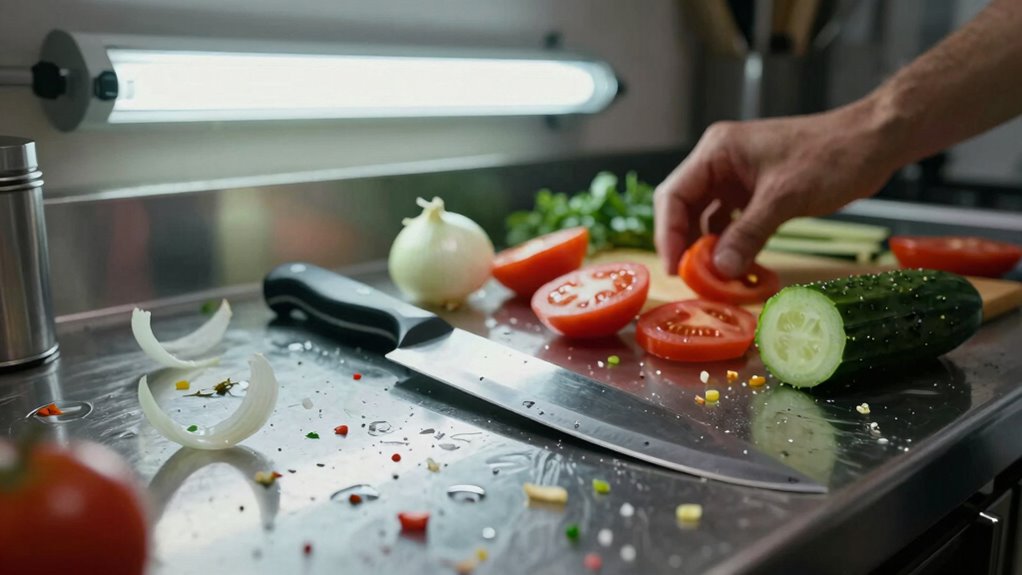
In busy kitchens where chaos often reigns, sharp knives can quickly turn routine tasks into dangerous situations. Even with the right skills, if you’re not paying close attention or neglecting proper knife maintenance, accidents happen. You might think that a sharper knife is safer because it requires less force to cut, but the reality is quite different. A dull blade often causes more slips and mishaps because you tend to apply more pressure, which increases the risk of losing control. That’s why keeping your knives sharp is a essential part of kitchen safety protocols. Regular knife maintenance isn’t just about keeping your blades in good condition; it’s about preventing injuries, especially when the environment is hectic.
Sharp knives reduce effort but require careful handling to prevent accidents in busy, chaotic kitchens.
In a chaotic kitchen, distractions are everywhere. You might be rushing to finish a dish or multitasking between multiple pots and pans. During these moments, a momentary lapse in concentration can lead to a slip, even with a razor-sharp knife. It’s easy to forget that, despite their cutting prowess, sharp knives demand respect. They cut more efficiently, but that means if you’re careless or hurried, the consequences can be severe. Proper knife handling is essential, and that starts with understanding that safety isn’t just about keeping blades sharp but also about following essential kitchen safety protocols. These include always cutting away from your body, using a stable cutting surface, and ensuring your hands are dry and secure on the handle.
Neglecting knife maintenance can also lead to uneven edges, which are more prone to catching or slipping during use. If your knives aren’t regularly sharpened or properly stored, you increase the risk of accidents. Many injuries happen because a blade unexpectedly slips or catches on something, especially if the knife is dull or damaged. That’s why you should set aside time for routine knife care—sharpening, honing, and proper storage. Keeping your knives in a designated knife block or sheath reduces the chance of accidental cuts when grabbing or passing them. Proper knife maintenance is crucial to ensure safety and prevent unexpected slips. Additionally, understanding the importance of knife safety protocols can make a significant difference in accident prevention. Incorporating regular sharpening into your routine helps maintain a consistent edge, reducing the likelihood of slips caused by dull blades. Moreover, learning about proper storage methods can further minimize risks, especially in fast-paced environments.
Furthermore, using appropriate safety gear such as cut-resistant gloves can provide an extra layer of protection in a chaotic kitchen environment. Ultimately, in a chaotic kitchen, the key to preventing injuries isn’t just about having sharp knives but about integrating consistent knife maintenance and strict safety protocols into your routine. When you respect your tools and stay vigilant, you minimize risks and keep the chaos from turning into catastrophe. Sharp knives, used properly and maintained well, are assets—when mishandled, they become hazards. Your best defense is awareness, care, and adherence to safety practices, especially when the kitchen’s energy is at its peak.
As an affiliate, we earn on qualifying purchases.
Frequently Asked Questions
How Do Professional Chefs Prevent Knife Injuries During Busy Hours?
To prevent knife injuries during busy hours, you should focus on maintaining a proper knife grip and using safe cutting techniques. Hold the knife firmly but comfortably, ensuring control. Keep your fingers tucked in using a claw grip to protect them from the blade. Stay focused, avoid rushing, and practice precise, deliberate cuts. These habits help minimize accidents, even in a hectic kitchen environment.
Are There Specific Knife Brands Safer for High-Pressure Kitchens?
Yes, certain knife brands are safer in high-pressure kitchens. You should look for brands with a strong reputation for quality and safety, like Wüsthof or Global. These brands focus on ergonomic design, reducing hand fatigue and improving control. By choosing knives with these features, you minimize the risk of accidents, even during hectic hours. Always guarantee your knives are well-maintained and properly handled to maximize safety.
What Are the Latest Innovations in Knife Safety Technology?
You’ll find that the latest innovations in knife safety technology include smart sensors and safety gloves. Smart sensors detect when a knife is too close to your fingers, alerting you instantly to prevent cuts. Safety gloves offer an extra layer of protection, especially during busy or chaotic kitchen moments. Combining these advancements helps you work more confidently, reducing injury risks even in hectic environments.
How Does Kitchen Layout Influence the Risk of Knife Injuries?
Your kitchen layout impacts your risk of knife injuries considerably. Proper knife storage keeps blades out of reach and organized, reducing accidental cuts. Incorporating ergonomic handles makes it easier to grip knives securely, even during quick, chaotic moments. When your workspace is designed with safety in mind, you minimize the chances of slips or mishandling, helping you stay safe despite the hustle and bustle of busy kitchen environments.
Can Training Reduce Accidents With Sharp Knives Significantly?
Yes, training can considerably reduce accidents with sharp knives. Studies show that proper knife handling and safety training decrease injury rates by up to 50%. When you focus on teaching correct techniques, you become more aware of how to control the knife and avoid slips. This knowledge helps you work confidently and safely, even in a chaotic kitchen. Consistent safety training is essential for preventing injuries and improving overall kitchen safety.
As an affiliate, we earn on qualifying purchases.
Conclusion
Even with sharp knives, chaos in the kitchen can lead to accidents. When your focus drifts or the space is cluttered, a slip is just a moment away. Think of a sudden gust of wind knocking over a glass—chaos causes accidents, not the tools themselves. So stay alert, keep your workspace tidy, and respect your knives. That way, you can enjoy cooking safely without the fear of unexpected cuts ruining your day.
As an affiliate, we earn on qualifying purchases.
As an affiliate, we earn on qualifying purchases.
Fall Picks
fall essentials
As an affiliate, we earn on qualifying purchases.