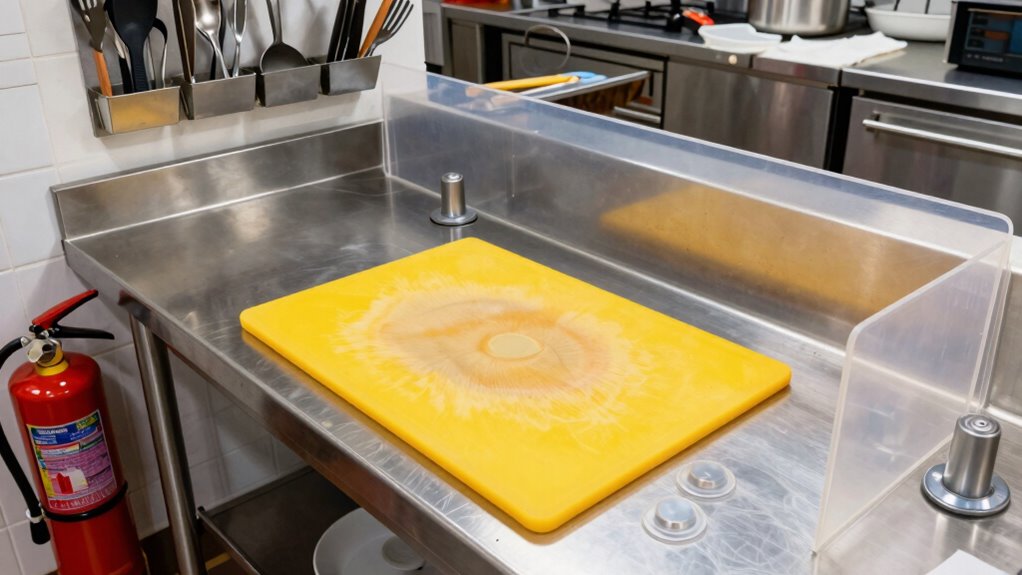

To set up a safer cutting zone, organize your tools with magnetic strips, knife blocks, and dedicated drawers to keep knives secure and accessible. Use non-slip cutting boards on stable surfaces and guarantee your workspace is well-lit. Keep safety equipment handy and always handle knives properly. Regularly sanitize surfaces and inspect knives for sharpness. For more tips on creating an efficient, injury-free kitchen zone, keep exploring how to optimize safety and organization.
Open a free Amazon Business account
Business pricing, bulk buying and tax-exempt orders.
As an affiliate, we earn on qualifying purchases.
Key Takeaways
- Designate a dedicated prep area with all necessary tools within arm’s reach to minimize movement and distractions.
- Use non-slip mats and stable surfaces for cutting boards to prevent slipping and ensure steady work.
- Store knives securely on magnetic strips or in designated slots away from traffic zones and clutter.
- Maintain proper lighting and ergonomic tools to improve control and reduce fatigue during prep.
- Keep the workspace organized, clutter-free, and sanitized to prevent accidents and cross-contamination.
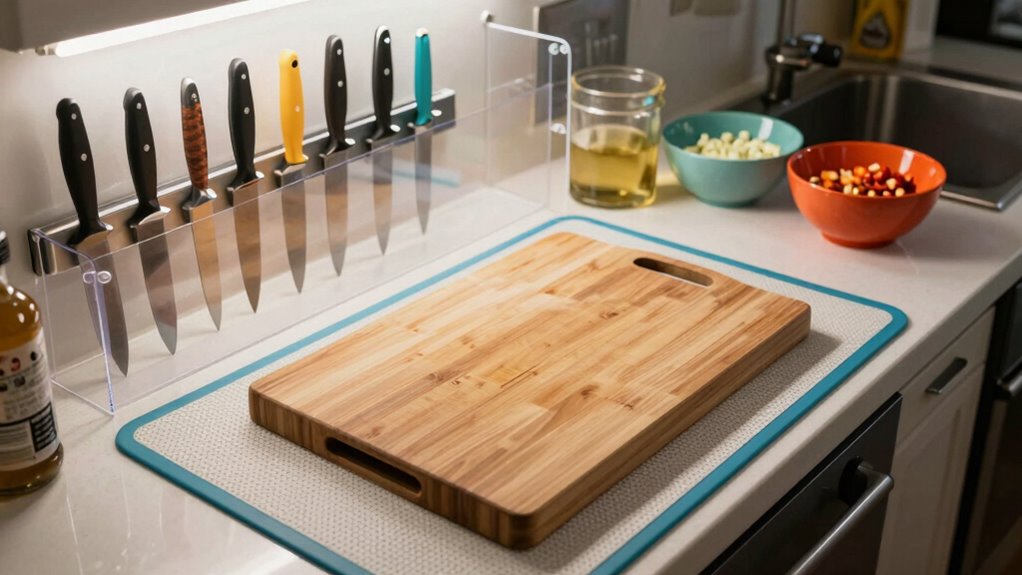
In a busy kitchen, safety often takes a backseat to speed, but establishing a dedicated, organized cutting zone can considerably reduce accidents. When you set up this area, start by carefully considering how you store your knives. Proper knife storage is vital—using a magnetic strip, knife block, or dedicated drawer insert keeps blades secure and easily accessible. This prevents you from rummaging through cluttered drawers or grabbing a dull or damaged knife, both of which can lead to slips or cuts, but also helps maintain sharpness and hygiene. Ensure knives are stored with blades pointing away from you and other hand areas to minimize injury risk. Regularly check your knives for sharpness; dull blades require more force and are more likely to slip.
Organize knives safely with magnetic strips or blocks, keeping blades sharp to prevent slips and injuries.
Next, focus on selecting the right cutting board material. The material you choose influences safety, hygiene, and knife longevity. Opt for a non-porous surface like plastic or composite boards, which are easier to sanitize and less likely to harbor bacteria. Wooden cutting boards are a good choice too, but they require more maintenance to prevent cracks and bacteria buildup. Avoid glass or marble boards—they’re hard and can dull your knives quickly, increasing the risk of slips. Position your cutting board on a stable, non-slip surface to prevent it from sliding during use. Consider placing a damp towel underneath if the surface isn’t grippy enough. Incorporating proper storage techniques can further enhance your workspace safety by keeping tools organized and accessible. Additionally, choosing ergonomic tools designed for comfortable grip can reduce fatigue and improve control during prep work. Proper knife handling techniques are also essential to avoid accidents and maintain control, especially when working quickly.
Designate a specific zone for your prep work, keeping all necessary tools within arm’s reach. Organize your knives, cutting boards, and utensils so you don’t have to search or reach over other items, reducing the chance of accidents. Use a tray or container to hold used knife blades or scraps, keeping your workspace clear and safe. Make sure your cutting area is well-lit so you can see precisely where you’re cutting, which helps maintain control and avoid slips. Incorporating smart appliances like motion-activated task lighting can enhance visibility and safety in your workspace. Additionally, considering the placement of safety equipment such as cut-resistant gloves can provide extra protection during busy periods.
Finally, keep your workspace clean and clutter-free. Regularly wipe down surfaces, sanitize cutting boards, and store knives properly after use. Establishing routine safety checks ensures that your knives remain sharp, your cutting boards are hygienic, and your tools are stored correctly. Proper organization and cleanliness are essential to prevent cross-contamination and accidents, especially during busy hours. Implementing these simple but effective measures transforms your busy kitchen into a safer environment, allowing you to focus on your culinary creations without worry. Remember, a well-organized cutting zone doesn’t just improve safety—it boosts efficiency and makes cooking more enjoyable.
As an affiliate, we earn on qualifying purchases.
Frequently Asked Questions
What Tools Are Best for Cutting Safety?
You should use sharp, high-quality knives for cutting safety, as dull blades increase the risk of slips. Guarantee proper knife maintenance by regularly sharpening and cleaning your tools. Practice safe cutting techniques, like keeping your fingers tucked and using a stable cutting surface. These tools and techniques help prevent accidents, making your workspace safer and more efficient. Always prioritize safety to avoid injuries in a busy kitchen.
How Often Should Cutting Boards Be Sanitized?
You should sanitize cutting boards after every use to prevent cross-contamination. For example, a restaurant maintained strict cleaning schedules, sanitizing boards between tasks, which reduced foodborne illness incidents. Incorporate regular cleaning routines into your hygiene protocols, especially during busy hours, to keep your kitchen safe. This practice guarantees bacteria don’t spread, maintaining food safety and protecting your customers’ health.
What Are Common Cutting Zone Hazards?
Common cutting zone hazards include improper knife grip and cutting at unsafe angles. You might slip or cut yourself if your grip isn’t firm or if your cutting angle is too steep. Always hold the knife correctly, with a secure grip, and keep your cuts controlled and consistent. Watch out for clutter or wet surfaces that can cause slips. Staying alert and maintaining proper technique helps prevent accidents.
How to Train Staff on Safe Cutting Practices?
Think of training your staff as teaching a seasoned swordsman—precision matters. You demonstrate proper glove usage to protect their hands and show knife sharpening techniques to guarantee clean, safe cuts. Reinforce these skills with regular hands-on practice and clear safety reminders. Encourage questions and monitor their technique, just like a mentor guiding a student. Consistent training keeps everyone sharp, safe, and ready to cut through the busiest shifts.
How to Handle Urgent Accidents in the Zone?
When an urgent accident occurs, you must act quickly. Initiate emergency response by calling for help and alerting others. Follow first aid procedures promptly—stop bleeding, immobilize injuries, and keep the injured person calm. Keep your focus on safety, avoid moving serious injuries unnecessarily, and guarantee emergency services arrive promptly. Your swift, calm response can prevent further harm and ensure the injured receive proper care.
As an affiliate, we earn on qualifying purchases.
Conclusion
By carving out a dedicated, clutter-free cutting zone, you turn chaos into calm, transforming your busy kitchen into a well-orchestrated symphony of safety. Think of your cutting space as the conductor’s baton—guiding each chop and slice with precision and care. When your zone is secure and organized, you’ll glide through meal prep like a skilled artist, confident and in control. A safe cutting area isn’t just a spot—it’s the heartbeat of a smoother, safer kitchen adventure.
As an affiliate, we earn on qualifying purchases.
As an affiliate, we earn on qualifying purchases.
Flea & tick season Picks
flea and tick prevention
As an affiliate, we earn on qualifying purchases.