
During busy holiday cooking, stay safe by keeping your knives sharp to reduce slips, and always cut away from your body using a secure, non-slip cutting board. Focus on proper technique, curling your fingers and taking small, controlled cuts. Store knives properly and handle them carefully when cleaning. Maintain good hygiene and workspace organization. Pay attention to your fatigue levels and guarantee good ventilation. Want to learn more tips for safe holiday cooking? Keep going to find out how to stay safe amid the chaos.

Get kitchen gear delivered free — and shop member deals
- Fast, free delivery on millions of items
- Access to Prime Big Deal Days deals on October 6–7
- Prime Video, Amazon Music and more included
Key Takeaways
- Keep knives sharp with regular honing to reduce slip risk during extended use.
- Use sturdy, non-slip cutting boards secured with damp cloths or mats.
- Organize your workspace to avoid clutter and accidental contact with knives.
- Practice proper cutting techniques, curling fingers and cutting away from your body.
- Take regular breaks to sharpen or inspect knives, ensuring safe and efficient cutting.
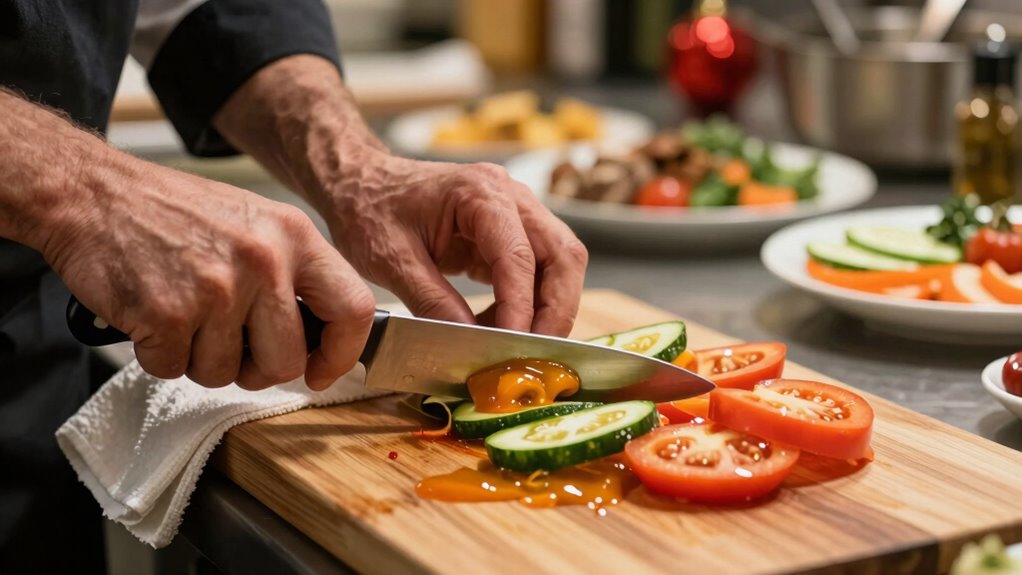
During busy holiday cooking sessions, it’s easy to get caught up in the excitement and rush through prep work, but safety should always come first. When handling knives, one of the best ways to stay safe is by ensuring your blades are properly sharpened. Dull knives require more force to cut through ingredients, increasing the risk of slips and accidental cuts. Regularly sharpening your knives keeps them cutting smoothly and makes your work more precise. Use a good quality sharpening tool or stone, and be consistent with maintenance. When your knives are sharp, you won’t have to apply excessive pressure, reducing the chances of losing control. Remember, a sharp knife is safer because it’s less likely to slip off the food and cause injury.
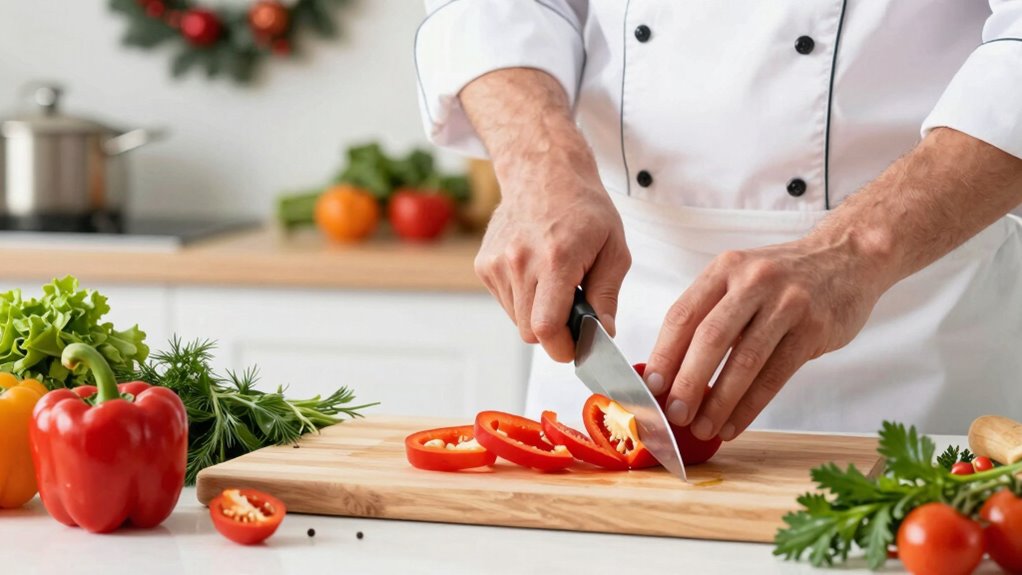
Alongside knife sharpening, paying attention to cutting board safety is essential. Always use a sturdy, non-slip cutting board, and secure it with damp cloths or a non-slip mat underneath. This prevents the board from sliding around as you chop, which can lead to accidents. Keep your cutting area organized and free of clutter, so you’re not reaching or juggling multiple items while holding a sharp knife. When chopping, curl your fingers inward on the hand holding the food—this “claw grip” keeps your fingertips safe from the blade’s edge. Also, cut away from your body, not toward it. These simple habits make a big difference during busy times when you’re handling many ingredients quickly. Additionally, understanding proper chemical safety protocols can help prevent accidents when cleaning or maintaining your knives and tools. Ensuring proper knife storage is another key step in maintaining safety and knife longevity. Proper storage not only protects your blades but also minimizes the risk of accidental cuts in your kitchen.
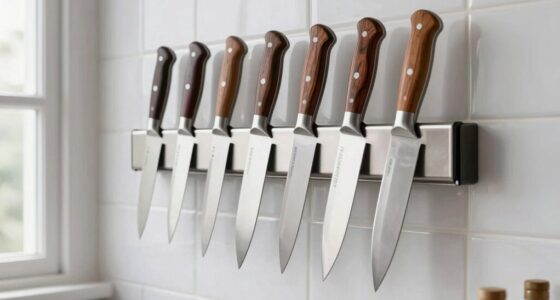
Maintaining good air quality in your kitchen can also contribute to a safer cooking environment by reducing fumes and airborne particles that might cause irritation or distractions. It helps to focus on your technique and stay attentive, especially when you’re tired or rushed. Take small, controlled cuts instead of rushing through large, hurried motions. If your knife becomes dull during prep, don’t try to force it through tough ingredients; instead, pause, sharpen or replace the blade, and resume working safely. Proper knife care routines, including regular honing and cleaning, can extend the lifespan of your blades and keep them performing safely. When cleaning knives, do so carefully—never leave them loose in the sink where you might accidentally grab the blade. Wash and dry your knives separately from other utensils with the handle first, and store them properly in a knife block or on a magnetic strip. Proper storage prevents accidental cuts and keeps your blades in good condition for future use. Furthermore, paying attention to kitchen ventilation can help remove fumes and improve overall safety during extensive cooking sessions.
Frequently Asked Questions
What Type of Knives Are Safest for Large Holiday Meals?
For large holiday meals, choose knives with a full tang and a comfortable grip, like chef’s knives, which are safest for you. Use proper knife grip techniques, such as gripping the handle firmly and keeping your fingers clear of the blade, while employing safe cutting techniques like the claw grip. These practices help prevent slips and injuries, making your big cooking session safer and more efficient.
How Should I Store Knives After Use During Busy Cooking Days?
Like a trusty knight’s armor, proper knife storage keeps your blades safe and sharp. After use during busy holiday days, you should store knives in a designated knife block, magnetic strip, or blade guard to prevent accidents and maintain sharpness. Avoid tossing them into drawers, which dull blades and pose risks. Regularly check your storage method to guarantee your knives stay in top shape, ready for the next culinary adventure.
Are Electric Knife Sharpeners Safe for Holiday Use?
Electric knife sharpeners are generally safe for holiday use if you follow proper electric sharpener safety tips. Always read the manufacturer’s instructions, keep your hands clear of moving parts, and make sure your knives are stable during sharpening. Regular holiday knife maintenance with an electric sharpener keeps blades sharp, reducing the risk of slips and accidents. By practicing safety, you can confidently use electric sharpeners and keep your knives in top condition throughout the busy season.
How Do I Teach Kids to Handle Knives Safely?
To teach kids to handle knives safely, start with proper knife grip, guiding them to hold the handle firmly and keep fingers away from the blade. Establish safety zones, like always cutting on a stable surface and keeping fingers tucked in. Demonstrate slow, controlled cuts and supervise closely. Reinforce the importance of never rushing or distracting during knife work, and praise careful handling to build confidence and good habits.
What Are Quick Safety Checks Before Starting Extensive Chopping?
Before you begin, perform quick safety checks to guarantee smooth slicing. Confirm your knife grip feels firm and secure, preventing slips. Inspect your cutting surface for stability—make sure it’s non-slip and clean, avoiding accidents. Check your knives for sharpness, as dull blades require more force and increase danger. These proactive precautions promote precise, safe prep, keeping your holiday cooking hassle-free and enjoyable.
Conclusion
As the holiday frenzy winds down, remember that safety doesn’t take a holiday. Keep your knives sharp, stay focused, and always cut away from your body—those small precautions can make a huge difference. But just when you think the chaos is over, there’s one final task that could surprise you. Are you ready to tackle it safely? Stay vigilant, stay sharp, and enjoy your holiday feast—safely and confidently.
Fall Picks
fall essentials
As an affiliate, we earn on qualifying purchases.