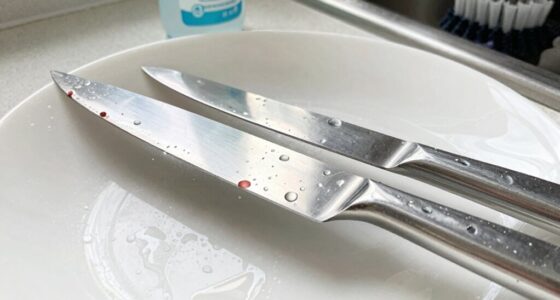
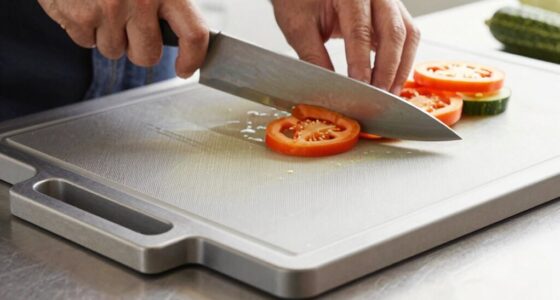
Good lighting considerably improves your knife work by helping you see details clearly, which boosts precision and safety. It allows you to judge thickness, angles, and alignment accurately, reducing mistakes and preventing accidents. Bright, even light also highlights ingredient colors, making identification easier and presentation better. Plus, proper lighting reduces eye strain, helping you stay focused, comfortable, and efficient during food prep. Keep exploring to discover how proper lighting can truly transform your kitchen experience.

Get kitchen gear delivered free — and shop member deals
- Fast, free delivery on millions of items
- Access to Prime Big Deal Days deals on October 6–7
- Prime Video, Amazon Music and more included
Key Takeaways
- Proper lighting improves accuracy in cutting, reducing mistakes and enhancing safety during knife work.
- It enhances color contrast, aiding ingredient identification and preventing mixing errors.
- Good illumination minimizes eye strain, allowing for sustained focus during prolonged prep tasks.
- Clear visibility helps judge thickness and angles precisely, ensuring consistent, professional cuts.
- Adequate lighting boosts overall safety by reducing accident risks and supporting better knife handling.
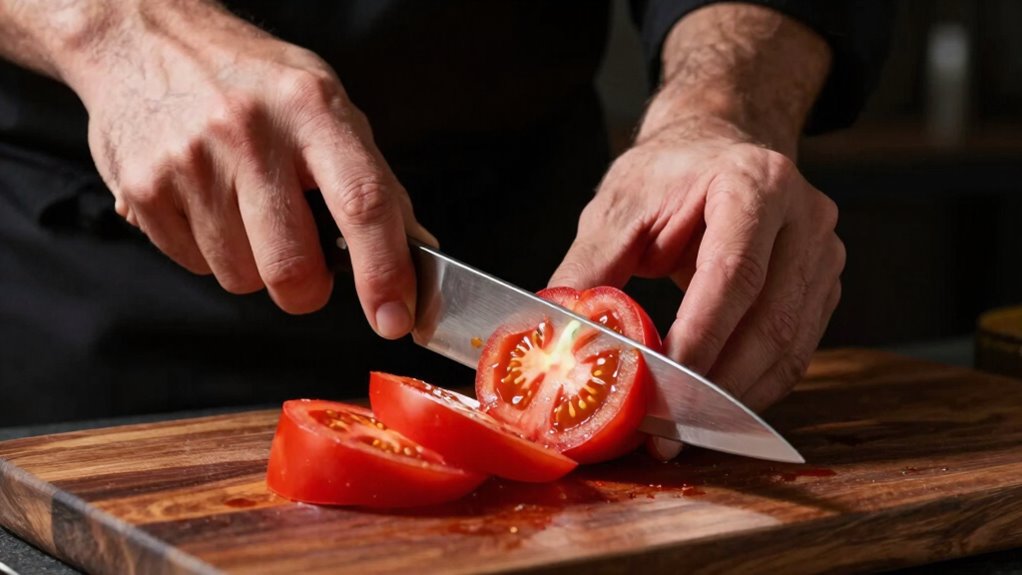
Good lighting is essential when working with knives because it directly affects your precision and safety. When you’re chopping, slicing, or dicing, proper illumination helps you see every detail clearly, minimizing mistakes and reducing the risk of accidents. Without adequate lighting, your ability to judge thickness, angle, and alignment suffers, which can lead to uneven cuts, wasted ingredients, or worse, injuries. Bright, well-distributed light ensures every cut is controlled and accurate, making your work more efficient and safer.
Good lighting enhances precision and safety in knife work, ensuring clear visibility and reducing mistakes.
One of the key benefits of good lighting is its impact on color contrast. When your workspace is properly lit, the colors of ingredients stand out vividly against the cutting surface. This contrast makes it easier to identify different foods, especially those that are similar in color, like green herbs versus leafy vegetables. Clear color differentiation helps you make precise cuts, avoid mixing ingredients unintentionally, and ensure presentation quality. It’s particularly important when working with delicate items like fish or fruits, where subtle color changes can indicate ripeness or freshness. Effective lighting highlights these nuances, allowing you to work with confidence. Additionally, proper lighting can reduce eye strain during extended prep sessions, which can help maintain your focus and prevent fatigue, especially during long cooking sessions.
Frequently Asked Questions
How Does Lighting Affect Knife Precision and Safety?
Good lighting directly impacts your knife precision and safety by reducing shadows and highlighting your work area. Ambient illumination with the right color temperature guarantees you see clear, true colors, preventing mistakes. Bright, consistent lighting helps you keep control, avoiding slips or accidents. When lighting is well-designed, you maintain better focus, make precise cuts, and stay safe, especially during detailed or lengthy tasks.
What Types of Lighting Are Best for Kitchen Knife Work?
Surprisingly, the best lighting for knife work isn’t just bright overhead lights. You want a setup with adjustable color temperature—warm to neutral tones—to see your precise cuts clearly. Light diffusion is key to avoid harsh shadows that can hide your blade’s edge or cause accidents. Opt for LED or halogen lights that let you tweak these factors, making your prep safer and more accurate, even if it seems ironic to need such finesse in lighting.
Can Poor Lighting Cause Injuries During Knife Handling?
Poor lighting can definitely cause injuries during knife handling. When lighting is inadequate, you might struggle with blade maintenance and lose focus on precise cuts, increasing the risk of slips or cuts. Proper lighting enhances kitchen ergonomics, allowing you to see the blade and food clearly, reducing accidents. Investing in good lighting helps you work safely, maintain your knives properly, and avoid unnecessary injuries.
How Does Lighting Influence the Visibility of Knife Edges?
Lighting acts like a spotlight in a shadow play, revealing every curve and edge of your knife. Good lighting enhances color contrast, making the sharp edge gleam like a silver sliver amid darkness. Poor lighting, on the other hand, can hide critical details, turning a precise cut into a risky gamble. Clear visibility sharpens your focus, reducing errors and keeping your fingers safe — because what you don’t see can hurt you.
What Are the Best Lighting Angles for Knife Cutting Tasks?
You should position your lighting at a 45-degree angle above and to the side of your cutting area. This creates ideal shadows that highlight the knife’s edge while reducing glare. Use lighting with a warm color temperature to enhance visibility and reduce eye strain. Adjust the lighting ambiance to keep the workspace bright but comfortable, ensuring precise cuts and better control during knife work.
Conclusion
If you think good lighting is just a small detail, think again—it’s the secret weapon that transforms your knife work from mediocre to masterful. Without it, you’re literally stabbing in the dark, missing the precision that makes your cuts perfect and your skills shine. Brighten up your workspace, and suddenly, every slice becomes a symphony of accuracy and control. Don’t underestimate the power of good lighting—it’s the difference between chaos and clarity in your culinary art.
Fall Picks
fall essentials
As an affiliate, we earn on qualifying purchases.