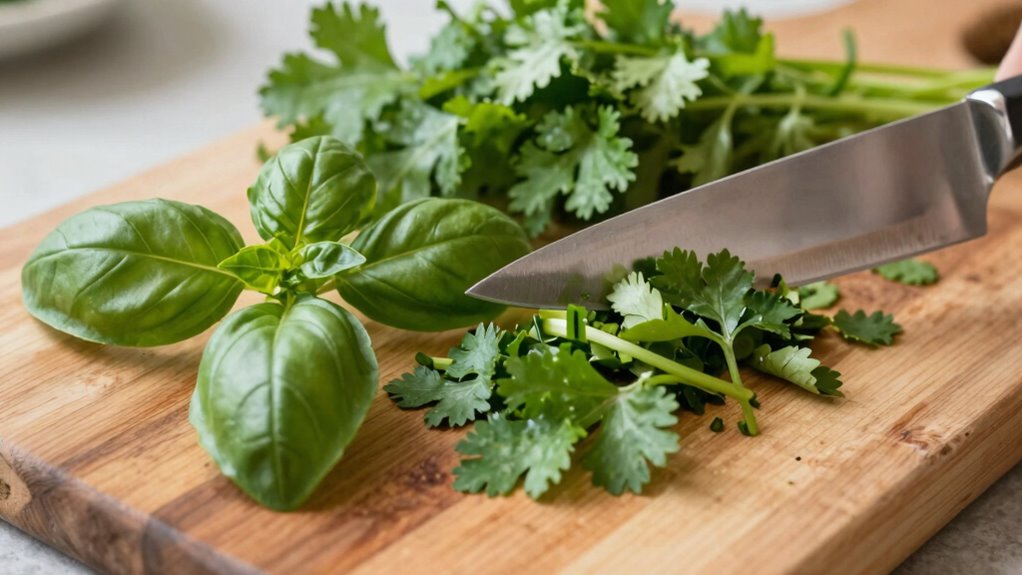

When cutting herbs for sauces, salads, and garnishes, choose fresh herbs and wash them gently in cold water. Use a sharp knife or scissors for precise, clean cuts, and hold the herbs firmly, slicing against the stem. For delicate presentation, roll leaves into a cigar shape and slice thinly for chiffonade. Proper techniques release flavor and enhance appearance. Keep mastering these steps to elevate your dishes even further—more tips await you.

Get kitchen gear delivered free — and shop member deals
- Fast, free delivery on millions of items
- Access to Prime Big Deal Days deals on October 6–7
- Prime Video, Amazon Music and more included
Key Takeaways
- Use sharp scissors or a chef’s knife for clean, precise cuts suitable for sauces, salads, and garnishes.
- Roll delicate leaves into a cigar shape and slice thinly for uniform chiffonade and presentation.
- For salads, chop herbs coarsely to add texture and visual appeal.
- Gently stack and cut herbs just before use to preserve flavor and aroma.
- Avoid over-chopping to prevent bruising and maintain fresh, vibrant appearance.
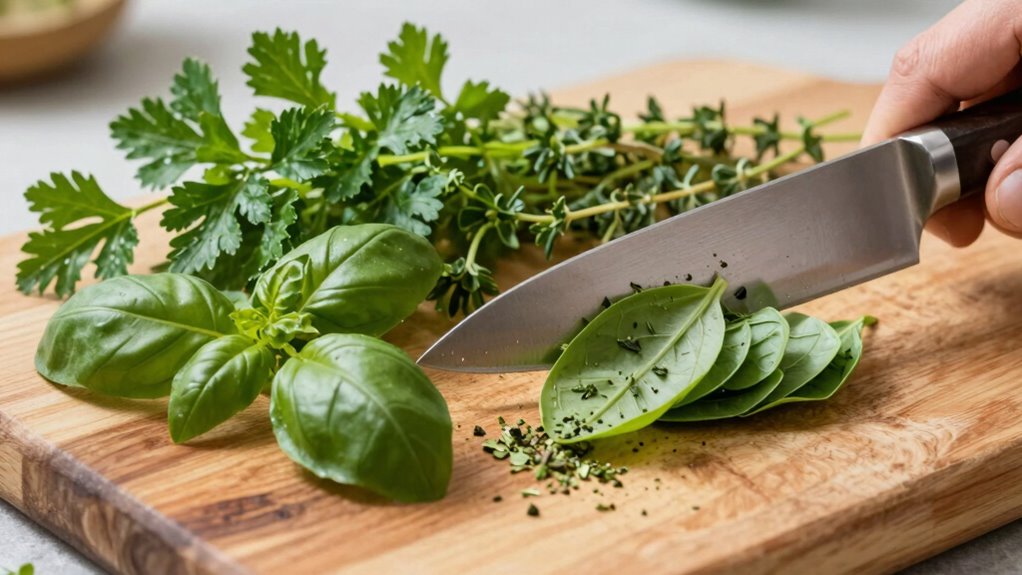
If you want your herbs to stay fresh and flavorful, knowing the right way to cut them is crucial. Proper herb cutting techniques not only enhance the taste and appearance of your dishes but also help conserve their aroma and nutrients. When preparing herbs for sauces, salads, or garnishes, start by selecting the freshest herbs possible. Wash them gently under cold water to remove dirt and any residual pesticides, then pat them dry with a clean towel. Moisture can cause herbs to spoil faster, so make sure they’re thoroughly dried before chopping.
Choose fresh herbs, wash gently, and dry thoroughly to preserve flavor and prevent spoilage.
When it comes to herb storage techniques, keep your herbs fresh by wrapping them in damp paper towels and placing them inside airtight containers or resealable bags in the fridge. This method extends their shelf life and maintains their vibrant flavor. If you find yourself with excess herbs, consider fresh herb substitutes that can work well in recipes. For example, if basil is unavailable, fresh mint or oregano can sometimes fill in, depending on the dish.
For cutting herbs for sauces, you want a fine, uniform chop to ensure they incorporate evenly into the mixture. Use sharp scissors or a sharp chef’s knife for precise cuts. Hold the herbs firmly, and slice against the stem, using a rocking motion if chopping with a knife. This technique prevents bruising and releases their essential oils, intensifying flavor. For salads, you may prefer a slightly coarser chop, so the herbs add texture and visual appeal. Gently stack the leaves, roll them into a tight cigar, and slice thinly to create delicate ribbons or chiffonade. For garnishes, focus on visual presentation—cut herbs into small sprigs or finely chop them for a more refined look. Additionally, understanding herb preservation methods can help you prolong their freshness and flavor even after cutting. Proper cutting techniques are essential to maximize both flavor and presentation, ensuring your herbs look as good as they taste. Being mindful of herb quality can also make a significant difference in the final outcome of your dishes. Using high-quality herbs and freshly harvested herbs can greatly improve the overall flavor profile of your dishes.
Using the correct herb chopping tools can make a noticeable difference in achieving the perfect cut and preserving the herbs’ delicate structure. Always remember to cut herbs just before using them. Pre-cut herbs tend to lose their flavor and aroma quickly, diminishing their impact on your dishes. When storing leftovers, wrap herbs tightly and keep them in the fridge, but avoid leaving them out at room temperature for extended periods. Proper cutting not only maximizes flavor and appearance but also ensures your herbs retain their freshness longer. If you want to experiment or need a quick substitution, fresh herb substitutes can help maintain your dish’s integrity without compromising taste. With the right techniques and storage methods, your herbs will elevate your cooking, making every sauce, salad, or garnish burst with fresh flavor.
As an affiliate, we earn on qualifying purchases.
Frequently Asked Questions
Which Herbs Are Best for Chopping Versus Tearing?
For herb flavor preservation and desired herb texture variation, you should chop delicate herbs like parsley, cilantro, and dill to maintain their fresh flavor and fine texture. Tearing sturdier herbs such as basil, mint, and rosemary releases essential oils gently and preserves their aromatic qualities. Use chopping for softer herbs and tearing for firmer ones to achieve the best flavor and texture, enhancing your dishes without overpowering their natural qualities.
How Do I Store Freshly Chopped Herbs?
You can store freshly chopped herbs effectively by using herb preservation techniques like wrapping them in a damp paper towel and placing them in an airtight container or resealable bag. To maximize herb flavor retention, keep them in the refrigerator’s crisper drawer, away from direct sunlight. Some people worry about herbs losing flavor quickly, but proper storage helps maintain their freshness and aroma for several days.
Can I Freeze Herbs After Chopping?
Yes, you can freeze herbs after chopping, but follow herb preservation tips to maintain flavor. For freezing herb varieties like basil, parsley, or cilantro, chop them first and place them in an ice cube tray with a little water or olive oil. Once frozen, transfer the cubes to a sealed bag. This method helps preserve herbs for future use, making it a convenient way to keep your herbs fresh longer.
What’s the Safest Knife for Herb Cutting?
Choosing the right knife is like selecting the perfect paintbrush for a masterpiece. To maintain herb flavor, opt for a sharp, lightweight paring or santoku knife. These knives allow precise cuts, minimizing bruising. Regular knife sharpening techniques ensure your blades stay sharp, preventing tearing or crushing herbs. Using a secure cutting board and proper technique also helps protect delicate herbs, keeping their flavor vibrant and fresh in your dishes.
How Fine Should Herbs Be for Different Dishes?
You should cut herbs finely for delicate dishes like salads, ensuring their flavor profiles blend seamlessly. For sauces, a medium chop preserves their essential oils without overpowering the dish. Garnishes benefit from a coarser chop, adding visual appeal. Keep cultural herb pairings in mind; for example, basil suits Italian cuisine, while cilantro complements Mexican dishes. Adjust your herb fineness based on flavor intensity and dish type for ideal results.
As an affiliate, we earn on qualifying purchases.
Conclusion
Now that you know how to cut herbs properly, you can elevate your dishes effortlessly. Imagine preparing a fresh basil pesto—by chopping the basil finely, you release its aromatic oils, making your sauce bursting with flavor. With these simple techniques, you’ll add vibrant, fresh herbs to salads, garnishes, and more, impressing your family or guests. Just a little practice transforms your cooking into a delightful, flavorful experience every time!
As an affiliate, we earn on qualifying purchases.
herb storage containers airtight
As an affiliate, we earn on qualifying purchases.
As an affiliate, we earn on qualifying purchases.
Fall Picks
fall essentials
As an affiliate, we earn on qualifying purchases.