To cut cabbage for slaw, stir-fry, and soup, start with a sharp knife and rinse the cabbage thoroughly. Quarter the head to remove the core easily, then slice into uniform pieces suited to each dish — thin shreds for slaw, thicker strips for stir-fry, and larger chunks for soup. Consistent cuts guarantee even cooking, better flavor, and longer freshness. Keep exploring the techniques to master each preparation and elevate your dishes further.

Get kitchen gear delivered free with Prime
- Fast, free delivery on millions of items
- Prime Video, Amazon Music and more included
- Member-only deals all year
Key Takeaways
- Use a sharp knife to create uniform, thin shreds for slaw, thicker strips for stir-fry, and larger chunks for soup.
- Rinse and remove damaged outer leaves before cutting to ensure cleanliness and quality.
- Cut cabbage into quarters to easily remove the core, then slice according to dish-specific thickness.
- Maintain consistent slicing thickness to ensure even cooking and fermentation.
- Pack shredded cabbage tightly during fermentation, pressing out air for optimal preservation and flavor.
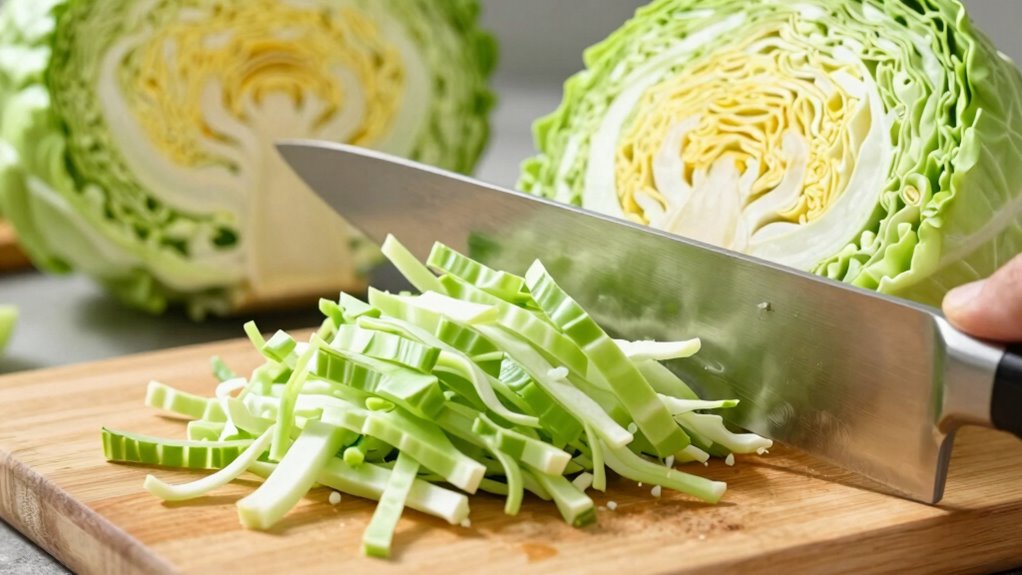
Have you ever wondered if you’re cutting cabbage the right way? It’s a common question because the way you prepare cabbage can profoundly affect the outcome of your dishes. Whether you’re making slaw, stir-fry, or soup, the cut matters. Proper cutting techniques help you achieve the desired texture and flavor, but they also influence how well you can store and ferment your cabbage later. If you’re interested in fermentation techniques, for instance, cutting cabbage into uniform shreds allows for even fermentation, which results in better sauerkraut or kimchi. Likewise, understanding cabbage storage methods is vital; properly cut cabbage can last longer and stay fresh when stored correctly.
Proper cabbage cutting enhances flavor, texture, fermentation, and storage longevity.
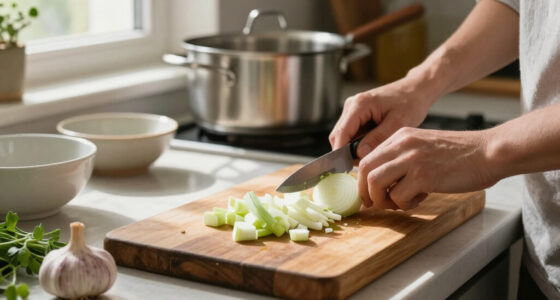
To start, choose a sharp knife. A dull blade crushes the cabbage fibers, making the cuts uneven and difficult to control. Rinse the cabbage thoroughly, then remove any damaged outer leaves. For slaw, you’ll want to create thin, consistent shreds. First, cut the cabbage into quarters, then remove the core from each wedge. Holding the cabbage firmly, slice it crosswise into thin strips. This technique ensures even shreds that will soften uniformly when mixed with other ingredients. If you’re preparing cabbage for stir-fry, you might prefer thicker slices or ribbons, which retain a bit more crunch. Simply slice the cabbage into strips of your desired width, making sure they’re uniform to cook evenly. For soup, you could chop the cabbage into larger chunks or coarse shreds, depending on your preference for texture.
When considering fermentation techniques, uniform shredded cabbage is essential. Even pieces ferment at the same rate, preventing spoilage and ensuring a consistent flavor. After cutting, pack the cabbage tightly into a fermentation vessel, pressing out air and liquid to create an anaerobic environment. Proper cabbage storage methods involve keeping the fermented cabbage in a cool, dark place, which slows down fermentation and preserves your batch. For fresh cabbage, store it in a plastic bag with some ventilation in your fridge. Keep in mind that the way you cut your cabbage can influence how you store it later: larger pieces tend to last longer but may take longer to cook or ferment, while shredded cabbage ferments faster but needs to be stored carefully to avoid spoilage. Additionally, cutting techniques can impact how well your cabbage maintains its quality over time. Understanding the nutritional benefits of cabbage can motivate you to handle it properly from the start. Proper handling and cutting are also important for preserving the cabbage’s vitamin content, which is essential for a healthy diet. Being mindful of the storage methods will help you maximize freshness and reduce waste, especially when dealing with larger quantities of cabbage.
In short, mastering the right way to cut cabbage isn’t just about aesthetics—it’s about optimizing your cooking, fermentation, and storage methods. The way you cut influences texture, flavor, and shelf life. Whether you’re preparing cabbage for a fresh slaw or fermenting it into tangy sauerkraut, paying attention to your cutting technique will elevate your culinary results and ensure your cabbage stays fresh for longer.
sharp chef's knife for vegetables
As an affiliate, we earn on qualifying purchases.
As an affiliate, we earn on qualifying purchases.
Frequently Asked Questions
How Do I Store Cut Cabbage to Keep It Fresh?
To keep cut cabbage fresh, store it in an airtight container or tightly wrapped with plastic wrap in your fridge. This helps preserve its crunch and flavor. For fermentation tips, make sure the cabbage stays cold to prevent spoilage. Remember, cabbage retains its nutrition best when fresh, so consume it within a few days. Proper storage minimizes nutrient loss and keeps your cabbage crisp for salads, stir-fries, or fermenting projects.
Can I Use a Food Processor to Shred Cabbage?
Yes, you can use a food processor to shred cabbage, but beware of food processor myths—over-shredding or uneven cuts can happen if you’re not careful. Only pulse a few times to achieve consistent cabbage chopping techniques, which guarantees your shredded pieces are uniform and perfect for slaw or stir-fry. Using a food processor saves time, but always watch closely to prevent mushy results and maintain the texture you want.
What’s the Best Type of Cabbage for Slaw?
You should choose a green cabbage variety like Napa or Savoy for slaw, as they offer tender leaves and mild flavor profiles that work well raw. Red cabbage also makes a vibrant, crunchy option with a slightly peppery taste. These varieties provide the perfect balance of crispness and flavor, ensuring your slaw has the right texture and taste. Pick your favorite based on color and flavor preferences!
How Do I Prevent Cabbage From Browning After Cutting?
To prevent cabbage from browning after cutting, immerse it in cold water with a splash of vinegar or lemon juice, which acts as a natural barrier. This simple step preserves its color and crunch. Additionally, if you’re fermenting, proper fermentation techniques, like maintaining an anaerobic environment, enhance flavor and prevent spoilage. Storing cut cabbage in an airtight container also helps keep it fresh and vibrant longer.
Is It Necessary to Remove the Core Before Chopping?
You don’t have to remove the core before chopping, but doing so makes food processor shredding easier and results in more uniform pieces. For cabbage storage, keep it whole or wrapped tightly to prevent browning. If you prefer, you can cut around the core or discard it, especially if you’re making slaw or stir-fry. Removing the core guarantees even chopping and helps your dish look and taste better.
As an affiliate, we earn on qualifying purchases.
Conclusion
Now that you know the proper way to cut cabbage, your dishes will reach new heights. But don’t stop here—there’s more to uncover about how each cut can release different flavors and textures. Are you ready to experiment further and discover the secrets hidden in every leaf? The next step could change your entire approach to cooking, revealing surprises you never expected. Stay curious—your culinary journey has only just begun.
As an affiliate, we earn on qualifying purchases.
As an affiliate, we earn on qualifying purchases.
Halloween Picks
halloween
As an affiliate, we earn on qualifying purchases.