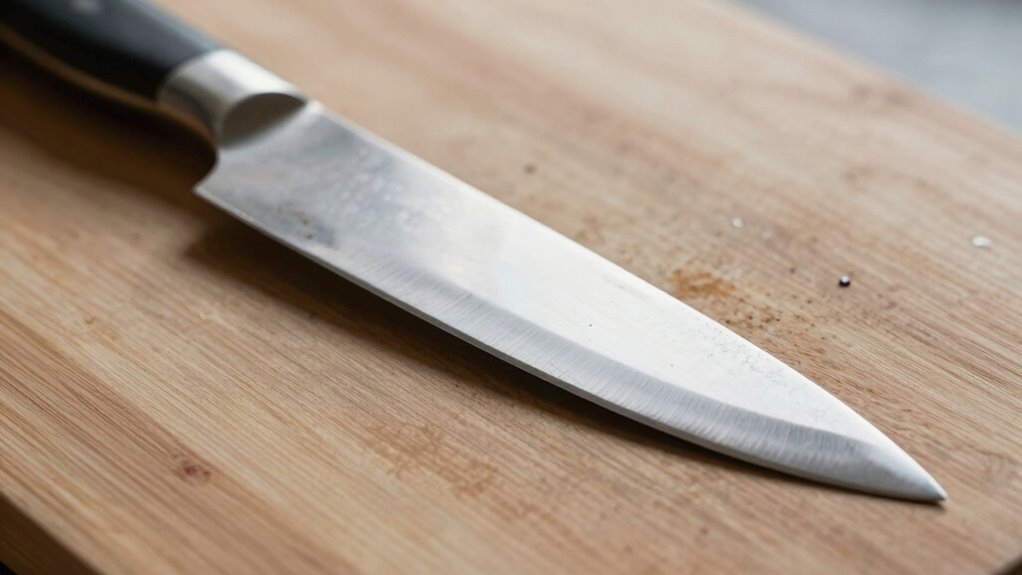

Before replacing a knife, check its sharpness by slicing paper or a tomato; dull blades require sharpening or honing. Inspect the handle for looseness, cracks, or splinters, as damage can affect safety and grip. Examine the blade for chips, cracks, or rust—damage here might mean it needs substituting. Also, make certain all components work together smoothly and test the knife’s performance in different tasks. If you want to learn how to assess each aspect more thoroughly, keep exploring these key points.
Listen free for 30 days with Audible
Thousands of audiobooks and originals — cancel anytime.
As an affiliate, we earn on qualifying purchases.
Key Takeaways
- Test the blade’s sharpness by cutting paper or a tomato; dullness indicates a need for sharpening rather than replacement.
- Inspect the handle for looseness, cracks, or damage that could compromise safety and control.
- Examine the blade for chips, cracks, rust, or corrosion that may impair function or safety.
- Ensure all components are intact, secure, and functioning properly for optimal performance.
- Consider ergonomic comfort and ease of use during testing to identify if damage or wear affects handling.
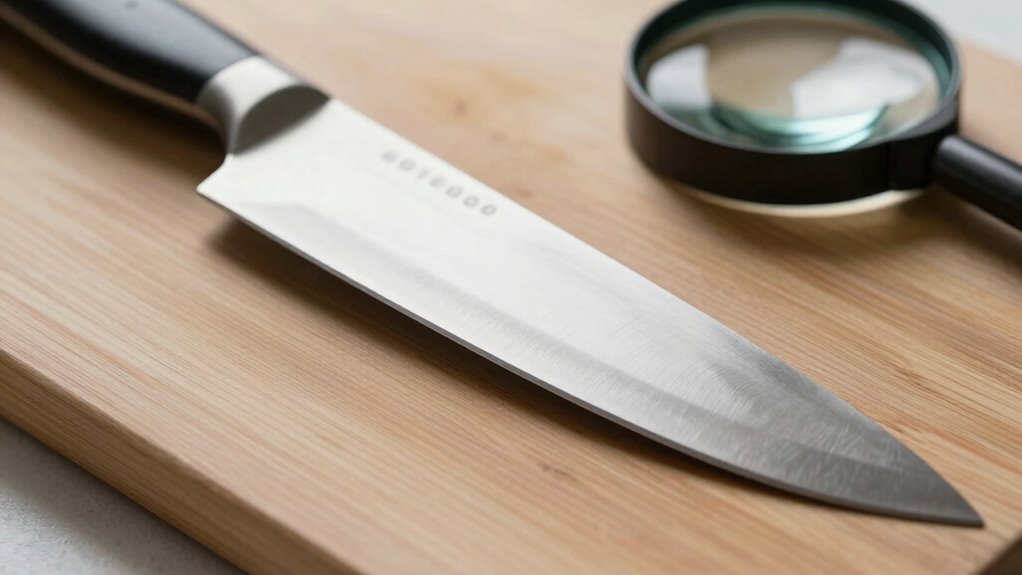
Before rushing to replace your knife, it’s important to assess whether it truly needs it. Sometimes, the problem isn’t the entire tool but specific issues that can be fixed or addressed. The first thing to check is blade sharpness. Over time, even the best knives dull, making cutting more difficult and dangerous. A dull blade forces you to apply more pressure, increasing the risk of slips and injuries. To test blade sharpness, try slicing through a piece of paper or a tomato. If the knife struggles or tears at the surface, it’s likely dull and needs sharpening. Keep in mind that sharpening isn’t the same as replacing; you can restore a dull blade with a honing rod or a professional sharpening service, often extending its life considerably.
Next, evaluate the handle integrity. A sturdy, well-maintained handle is essential for safe and comfortable use. If the handle feels loose, cracked, or wobbly, it compromises your grip and control, which can lead to accidents. Check for any signs of damage, such as splintering or separating from the blade. Sometimes, handles can be tightened or repaired, especially if they’re glued or screwed on. If the handle is extensively damaged or degraded, replacing the entire knife might be the safest choice. While it’s tempting to overlook minor imperfections, neglecting handle integrity can result in unsafe handling, especially when applying force. Also, consider blade condition to determine if the blade itself remains functional or needs replacement. Additionally, understanding the condition of the blade helps you decide whether repair or replacement is more appropriate, saving time and money in the long run. Proper maintenance, including regular cleaning and sharpening, can also help extend the life of your knife and prevent unnecessary replacements. Moreover, assessing the overall condition of the knife ensures that all components are functioning harmoniously, which is vital for safety and efficiency.
In addition, examine the overall condition of the blade. Look for chips, cracks, or considerable corrosion. A chipped or cracked blade not only hampers your cutting precision but also poses safety risks, as fragments could break off during use. If the blade is heavily corroded, it might be beyond salvage, especially if cleaning and honing don’t restore its condition. In such cases, replacement becomes necessary. However, if only minor rust or stains are present, thorough cleaning and proper maintenance could suffice, saving you money and prolonging your knife’s lifespan.
Finally, consider your comfort and ease of use. Even if the blade is sharp and the handle intact, the knife might not suit your hand size or cutting style. A well-balanced knife with a comfortable grip can make a noteworthy difference in your efficiency and safety. Before assuming a replacement, try out your current knife on different tasks. Often, adjustments or better maintenance can resolve performance issues. Only when these checks reveal irreparable damage or persistent problems should you proceed with replacing your knife. Proper ergonomic design and understanding your cutting technique are also key factors in ensuring safe and effective use.
As an affiliate, we earn on qualifying purchases.
Frequently Asked Questions
How Often Should I Sharpen My Kitchen Knives?
You should sharpen your kitchen knives every 1-2 months, depending on how often you cook and the knife’s use. Proper knife maintenance involves regular sharpening to keep blades sharp and safe. Focus on good cutting techniques—avoid cutting on hard surfaces—to prevent dulling. Frequent honing can also help maintain the edge between sharpenings. By staying consistent with these practices, your knives stay sharper longer, making meal prep safer and easier.
Can a Dull Knife Still Be Safe to Use?
A dull knife is like a sleeping dragon—dangerous because it’s unpredictable. While it might seem safe, a dull blade risks slips and accidents, compromising knife safety. Don’t assume it’s safe to use; instead, sharpen it regularly or replace it if needed. A sharp knife guarantees cleaner cuts, reducing dull blade risks and keeping you safe in the kitchen. Always prioritize sharpness for safer, more effective cooking.
What Types of Knives Are Most Prone to Damage?
You’ll find that knives with softer blade materials, like certain stainless steels, are more prone to damage such as chipping or bending. Knives with handles made from less durable materials, like low-quality plastic or weak rivets, can also break or loosen over time. To avoid damage, choose knives with high-quality blade materials and sturdy handle construction. Regularly inspecting these parts helps guarantee your knives stay safe and functional longer.
How Does Proper Storage Affect Knife Longevity?
Think of your knife as a race car; proper storage techniques fuel its performance and longevity. If you store it in a dull, crowded drawer, it’s like leaving your car exposed to the elements—wear and tear happen faster. Using knives made of quality material and storing them in knife blocks, sheaths, or on magnetic strips keeps the blade sharp and prevents damage. Good storage is key to a long-lasting, efficient knife.
When Should I Consider Professional Sharpening Services?
You should consider professional sharpening services when your knife no longer slices smoothly despite proper knife maintenance and regular honing. If you notice dullness that you can’t restore with sharpening techniques at home, it’s a sign to seek expert help. Professionals use specialized tools and skills to restore edge sharpness effectively, ensuring your knife performs safely and efficiently. Don’t delay if your usual methods don’t bring back its cutting power.
As an affiliate, we earn on qualifying purchases.
Conclusion
Before tossing out your knife, take a moment to inspect it thoroughly. For example, if your chef’s knife feels dull, try honing it first—sometimes, a quick sharpening restores its edge. If that doesn’t work, check for chips or warping. Remember, proper maintenance can extend your knife’s life considerably. Don’t rush to replace; instead, evaluate the condition carefully. With a little effort, you might save your favorite knife and avoid unnecessary expenses.
As an affiliate, we earn on qualifying purchases.
As an affiliate, we earn on qualifying purchases.
Flea & tick season Picks
flea and tick prevention
As an affiliate, we earn on qualifying purchases.