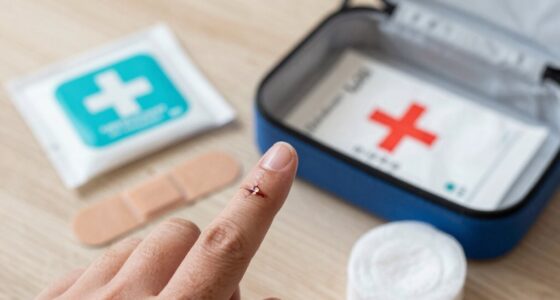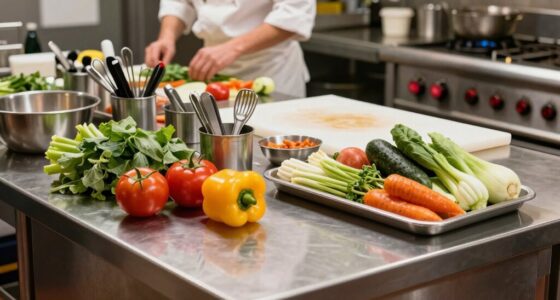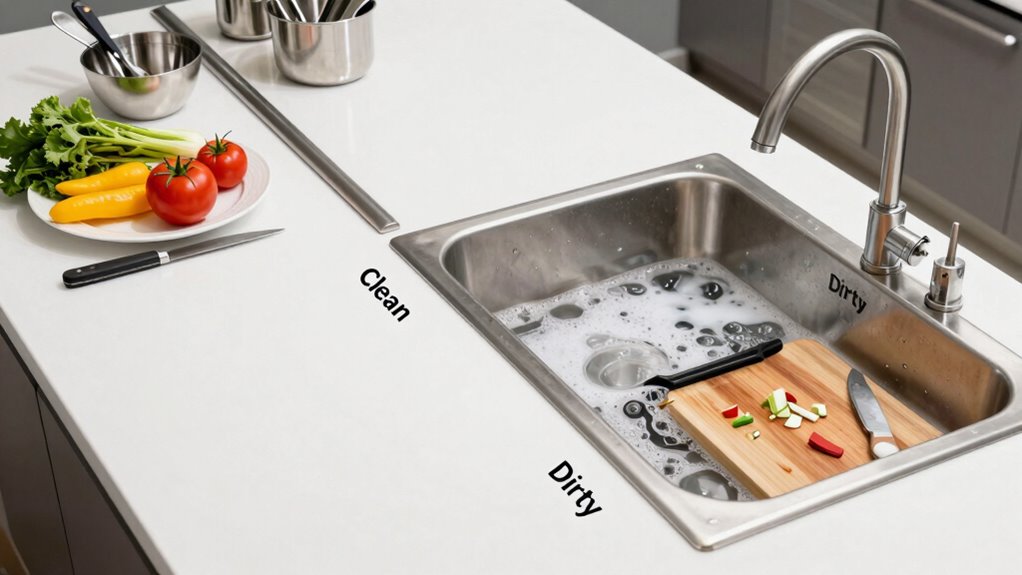

To set up clean and dirty zones during prep, clearly designate specific areas for raw and cooked ingredients. Use color-coded equipment or signage to mark each zone and keep raw meats or seafood confined to the dirty zone. Regularly disinfect surfaces, utensils, and equipment in each area, and use separate tools for raw and cooked foods. Train your staff on maintaining zone separation and proper sanitation protocols. Learning more will help you master effective zone management to prevent cross-contamination.

Get kitchen gear delivered free with Prime
- Fast, free delivery on millions of items
- Prime Video, Amazon Music and more included
- Member-only deals all year
Key Takeaways
- Clearly define and mark separate areas for handling raw ingredients (dirty zone) and cooked or ready-to-eat foods (clean zone).
- Use color-coded equipment and signage to distinguish zones and prevent cross-contact.
- Implement strict handwashing protocols before transitioning from the dirty to the clean zone.
- Disinfect surfaces, utensils, and tools regularly in each zone to maintain hygiene standards.
- Train staff on zone responsibilities and enforce workflow procedures to minimize contamination risks.

When preparing food in a professional kitchen, establishing clear clean and dirty zones is vital to guarantee food safety and sustain efficiency. Proper sanitation in these zones is essential to prevent cross contamination, which can lead to foodborne illnesses. By creating distinct areas, you minimize the risk of raw ingredients coming into contact with cooked or ready-to-eat foods, maintaining the integrity of your dishes and protecting your customers.
Establishing clean and dirty zones is essential for food safety and operational efficiency in professional kitchens.
Start by designating specific spaces for different tasks. The clean zone should be dedicated to handling ready-to-eat foods, final plating, and tasks that require minimal contact with raw ingredients. This area should be free of any raw meats, seafood, or unwashed utensils. Conversely, the dirty zone is where raw ingredients are prepared, washed, and where any potential contaminants are introduced. Keep all raw meat, poultry, and seafood within this zone, along with used utensils and cutting boards. Clearly marking these zones with signage or color-coded equipment helps reinforce their purpose and reduces the chance of accidental cross contamination.
Maintaining proper sanitation practices in each zone is crucial. Regularly disinfect surfaces, utensils, and equipment, especially when transitioning between zones. Use separate cutting boards and knives for raw and cooked items to prevent cross contamination. Always wash your hands thoroughly after handling raw ingredients and before moving to the clean zone; this simple step halts the transfer of bacteria and other pathogens. Stock the clean zone with sanitized tools and containers, and ensure that used utensils from the dirty zone are promptly cleaned and stored away.
Organization plays a key role in establishing effective zones. Keep raw ingredients, packaging, and cleaning supplies in their designated areas. Use trays or containers to segregate different types of raw items, which simplifies workflow and reduces accidental contact. When moving ingredients or tools between zones, do so carefully, avoiding any contact that might cause contamination. Implementing a strict workflow, where you always work from the clean zone toward the dirty zone, helps reinforce proper sanitation and cross contamination prevention.
Additionally, incorporating proper airflow within the kitchen can help maintain hygiene standards by reducing airborne contaminants and keeping different zones appropriately separated.
Finally, train your staff to understand the importance of these zones and the procedures associated with them. Consistent enforcement and regular reminders ensure everyone adheres to safety protocols. When everyone follows these practices, you create a safe, efficient environment where food quality is preserved, and the risk of foodborne illness drops substantially. Proper sanitation combined with clear zone separation is your best defense against cross contamination, safeguarding both your reputation and your customers’ health.
color-coded cutting boards for kitchen
As an affiliate, we earn on qualifying purchases.
As an affiliate, we earn on qualifying purchases.
Frequently Asked Questions
How Do I Train Staff on Zone Protocols Effectively?
You train staff effectively on zone protocols by emphasizing staff accountability and using clear visual signage. Make sure they understand their responsibilities and regularly monitor adherence. Conduct hands-on demonstrations, reinforce key points, and provide visual cues like signs and floor markings to guide proper zone separation. Encourage open communication, address mistakes promptly, and foster a culture where everyone feels responsible for preventing cross-contamination.
What Materials Are Best for Separating Clean and Dirty Zones?
Think of your clean and dirty zones as two separate worlds. Use color-coded signage to clearly mark each area, making it easy for staff to identify. Portable barriers serve as physical boundaries, reinforcing separation. These materials create a visual and physical cue, reducing cross-contamination. Consistently maintain these tools, and your team will instinctively respect the boundaries, keeping your prep area safe and hygienic.
How Often Should Zone Boundaries Be Reassessed or Changed?
You should reexamine zone boundaries regularly, ideally daily or whenever there’s a change in workflow, to maintain effective zone boundary maintenance. Conduct contamination risk assessments during these reviews to identify potential breaches or contamination hazards. Frequent evaluations ensure that your clean and dirty zones stay properly separated, reducing cross-contamination risks. Adjust boundaries as needed based on your findings, especially after busy periods or when new equipment or tasks are introduced.
Can Zones Overlap During Peak Prep Times?
During peak prep times, zones can temporarily overlap if you’re careful. It’s common to see some zone overlap when workload is high, but you should minimize it to prevent cross-contamination. Keep close watch, reassign tasks quickly, and guarantee staff understand the importance of maintaining zone boundaries. Always prioritize clear separation, and reassess your zone setup afterward to prevent issues during future peak prep periods.
How Do I Handle Emergencies Within a Designated Zone?
When an emergency strikes in your zone, don’t panic—think of it as a surprise guest. Quickly execute your emergency response plan, prioritizing safety. Reconfigure your zones if needed, temporarily merging clean and dirty areas if it helps control chaos. Stay calm, communicate clearly, and swiftly restore order. Afterward, reassess and re-establish your zones, ensuring everyone knows how to handle future emergencies without turning the prep area into a disaster zone.
As an affiliate, we earn on qualifying purchases.
Conclusion
By establishing clear clean and dirty zones, you protect your food, protect your environment, and protect your reputation. Keep your workspace organized, keep your zones separate, and keep cross-contamination at bay. Remember, a clean zone is for preparation, a dirty zone is for disposal, and both are essential for safe cooking. Stay vigilant, stay consistent, and stay committed to maintaining separation—because safety begins with how you set up and stick to your zones.
professional kitchen zone signage
As an affiliate, we earn on qualifying purchases.
As an affiliate, we earn on qualifying purchases.
disinfectant spray for food prep
As an affiliate, we earn on qualifying purchases.
As an affiliate, we earn on qualifying purchases.
Fall Picks
fall essentials
As an affiliate, we earn on qualifying purchases.