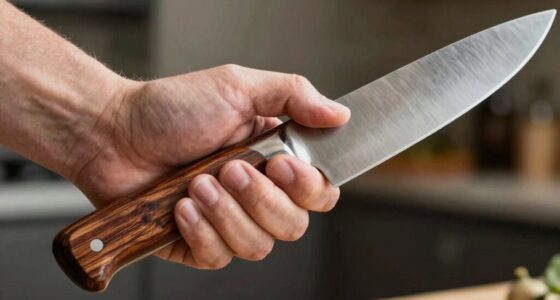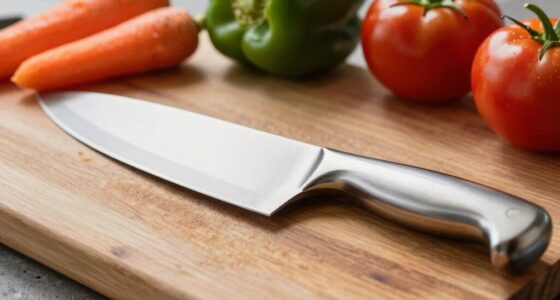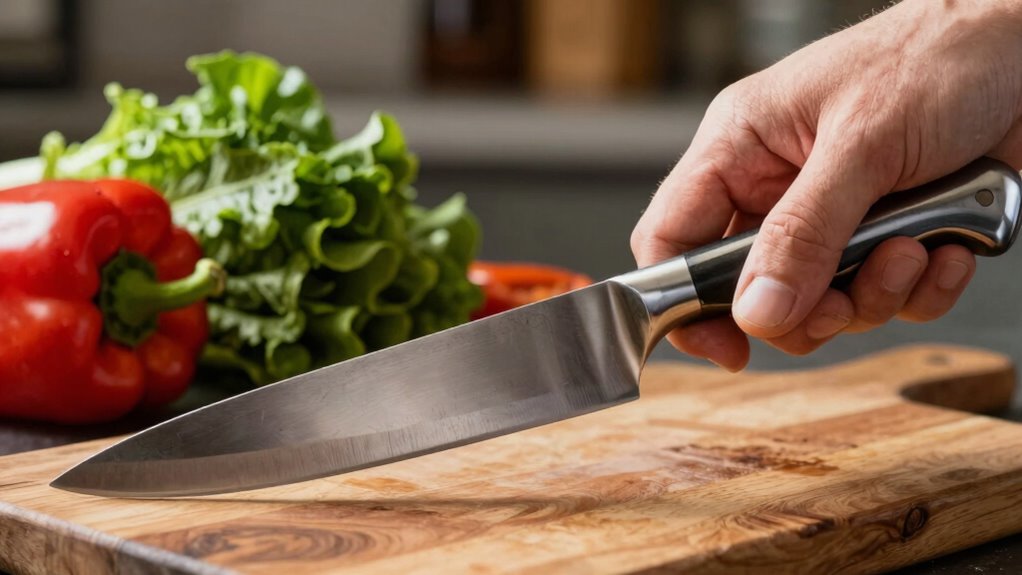
You might prefer slightly heavier chef knives because they offer better control and precision, making cutting easier and more accurate. The added weight helps the blade sink into ingredients with less effort and reduces slippage for slippery foods. It also gives you a confident feel, allowing for smoother, more seamless movements. With proper balance and ergonomic design, heavier knives can reduce fatigue during long prep sessions. Keep exploring to discover how the right weight can truly transform your cooking experience.

Get kitchen gear delivered free with Prime
- Fast, free delivery on millions of items
- Prime Video, Amazon Music and more included
- Member-only deals all year
Key Takeaways
- Heavier knives provide better control and stability for precise cuts and slicing accuracy.
- The added weight reduces fatigue during long prep sessions, making cooking more comfortable.
- They offer enhanced tactile feedback, helping cooks gauge pressure and improve technique.
- Proper balance in heavier knives makes handling more intuitive and reduces strain on the hand and wrist.
- The weight supports confidence and consistency, especially when working with tougher ingredients.
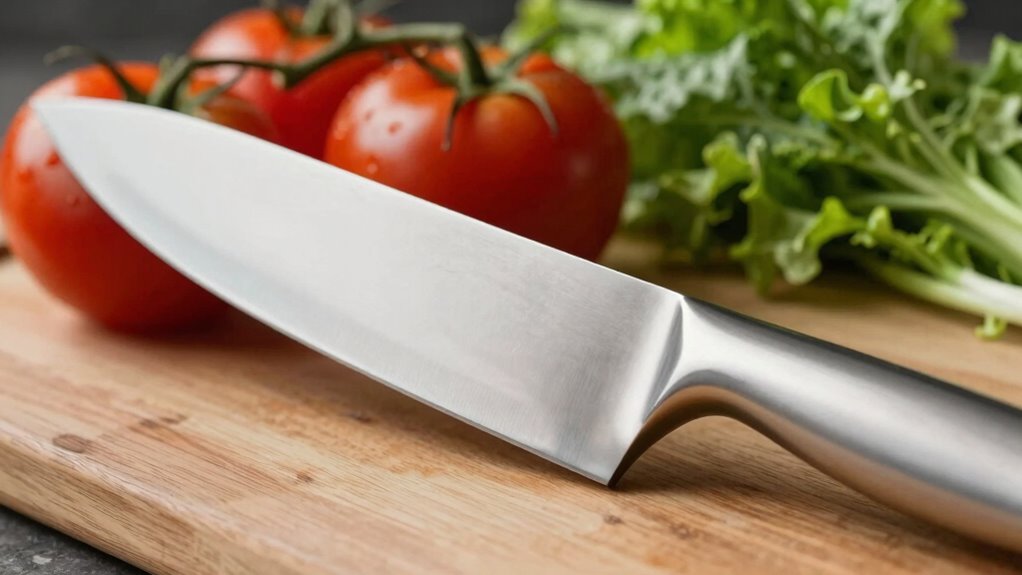
Ever wonder why some home cooks opt for slightly heavier chef knives? It’s often about how the knife feels in your hand and how effectively you can work with it. Heavier knives tend to have a different knife balance, which can make a significant difference in your cooking experience. When a knife has a good balance, it feels naturally centered, making it easier to control during chopping, slicing, or dicing. You might find that a heavier blade provides more stability, especially when you’re working with tougher ingredients. This added weight can help you exert less effort, reducing fatigue over long prep sessions.
Heavier knives offer better balance, stability, and control for precise, effortless cutting.
The key benefit of a heavier chef knife is improved cutting precision. When you have more weight behind your cut, the blade naturally sinks into ingredients with less force. This means you can make cleaner, more accurate cuts, which is essential for presentation and even cooking. The extra mass helps keep the blade steady and reduces the chances of slippage, especially when working with slippery or delicate foods. As a result, you can achieve thin, uniform slices or dice with less effort and better control. This precision is especially useful when working in professional kitchens or when you want your home cooking to look restaurant-quality.
Furthermore, a slightly heavier knife can give you confidence in your techniques. The weight provides tactile feedback, letting you feel exactly how much pressure you’re applying. This helps improve your skills over time and makes you more aware of the force needed for different ingredients. For some cooks, this added weight acts almost like an extension of their hand, creating a seamless connection between movement and cut. When you’re comfortable with your knife’s weight and balance, it becomes an intuitive tool rather than a cumbersome one. Additionally, knife weight and balance are crucial factors that influence overall comfort and efficiency in the kitchen. Understanding how knives are designed for balance can help you choose the right tool for your needs. Incorporating biodiversity and sustainable practices into your kitchen choices can also lead to more eco-friendly cooking habits that support conservation efforts and sustainable living. Moreover, selecting knives with a focus on ergonomic design can further enhance comfort and reduce strain during prolonged use.
heavier chef knife for home cooking
As an affiliate, we earn on qualifying purchases.
As an affiliate, we earn on qualifying purchases.
Frequently Asked Questions
How Does Weight Affect Knife Balance?
When a knife is heavier, it improves your knife precision by providing better stability and control. The weight shifts the balance point closer to the handle, making handling dynamics more intuitive. You’ll find it easier to perform precise cuts without tiring your hand, as the extra weight reduces the effort needed for slicing. Overall, a heavier knife offers a more balanced feel, enhancing your comfort and efficiency in the kitchen.
Are Heavier Knives Safer to Use?
Heavier knives aren’t automatically safer, but they do give you more control, making accidents less likely. Think of it like wielding a trusty sword—you can feel every slice. When storing your knife, make sure it’s secure to avoid accidental cuts. Comparing weight helps you choose the right tool; a heavier knife can be more stable, but if it’s too heavy for you, it might lead to mishaps. Find that perfect balance for safety and efficiency.
Do Heavier Knives Require More Maintenance?
Heavier knives generally require more maintenance, especially regarding sharpening because the added weight can cause more blade wear over time. You’ll also want to take into account handle ergonomics, as a well-designed handle helps balance the knife, reducing strain during use. Regular sharpening keeps the blade effective, and choosing knives with ergonomic handles makes maintenance easier and safer, ensuring your knife stays in good condition with less effort.
What Materials Are Used in Heavier Chef Knives?
Heavier chef knives often feature blade composition made from high-carbon stainless steel or layered Damascus steel, providing durability and sharpness. Handle materials usually include wood, resin, or composite materials, adding weight and balance. These materials contribute to the knife’s overall heft, making chopping easier for some cooks. The choice of blade and handle materials influences the knife’s weight, feel, and performance, catering to those who prefer a more substantial, balanced cutting experience.
Can Beginners Handle Heavier Chef Knives Easily?
Yes, beginners can handle heavier chef knives easily if they focus on proper knife sharpening and mastering cutting techniques. You build confidence by practicing controlled cuts and maintaining balance. Heavier knives provide stability, making slicing and chopping feel more natural. Just start with lighter tasks, keep your grip firm, and gradually increase your skill level. With patience, you’ll find that handling heavier knives becomes comfortable and enhances your cooking experience.
As an affiliate, we earn on qualifying purchases.
Conclusion
Choosing a slightly heavier chef knife is like finding the perfect dance partner—you feel more in sync and confident with each move. I once watched a home cook effortlessly chop through tough vegetables, her knife’s weight giving her control and comfort. Studies show that many prefer heavier knives for precision and less fatigue. So, don’t be afraid to pick up a heftier blade; it might just turn your kitchen into your personal culinary stage.
ergonomic heavy duty kitchen knife
As an affiliate, we earn on qualifying purchases.
As an affiliate, we earn on qualifying purchases.
As an affiliate, we earn on qualifying purchases.
Halloween Picks
halloween
As an affiliate, we earn on qualifying purchases.