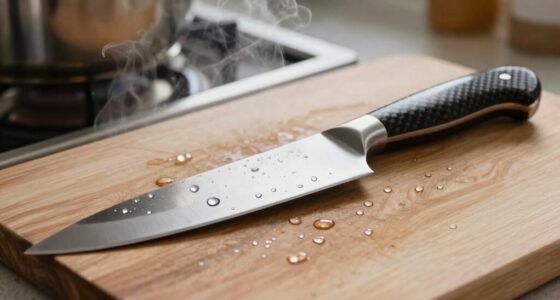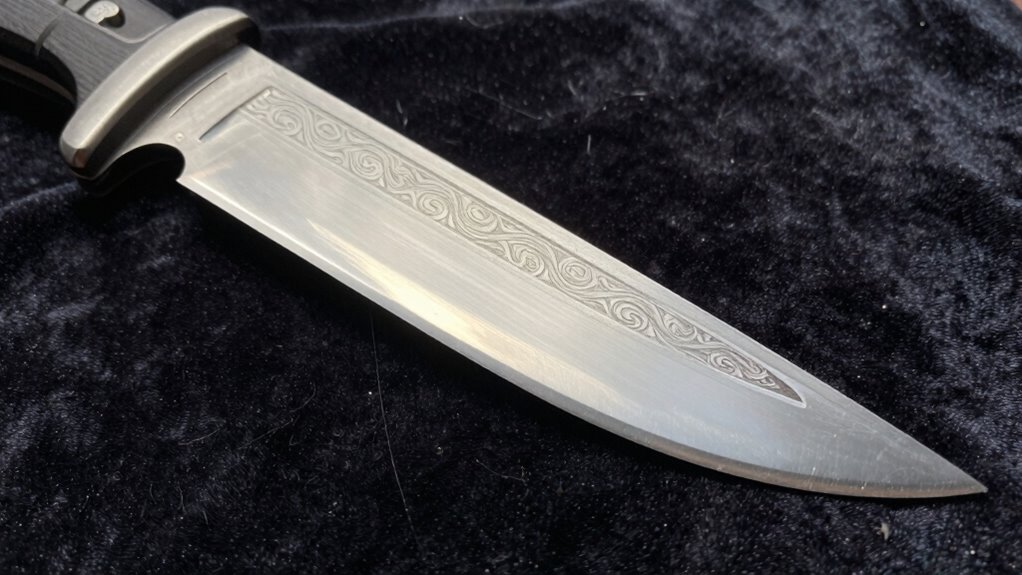

To protect patterned or etched blades while cleaning, use gentle, non-abrasive tools like microfiber cloths and soft-bristled brushes. Avoid harsh chemicals that can cause corrosion or damage delicate surfaces. Rinse with distilled water and dry immediately to prevent water spots. Applying a protective coating or oil can offer extra safeguard. Being careful and choosing the right methods guarantees your blades stay pristine and preserved. Keep exploring to discover more tips for ideal care.

Get kitchen gear delivered free with Prime
- Fast, free delivery on millions of items
- Prime Video, Amazon Music and more included
- Member-only deals all year
Key Takeaways
- Use soft, non-abrasive cloths like microfiber to gently clean patterned or etched surfaces.
- Select mild, chemically compatible cleaning agents specifically formulated for delicate surfaces.
- Avoid harsh chemicals and abrasive scrubbers to prevent damage to intricate designs.
- Rinse thoroughly with distilled water and dry immediately to prevent water spots and corrosion.
- Apply protective coatings or oils post-cleaning to shield delicate surface details from future harm.
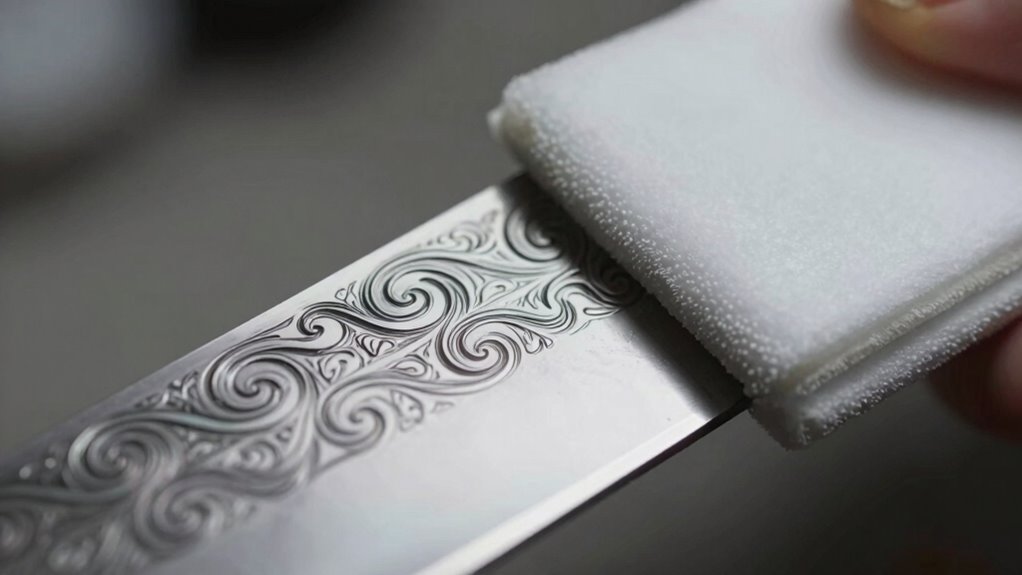
Cleaning patterned or etched blades requires careful attention because these delicate surfaces can easily be damaged during the process. If you’re not cautious, surface damage, such as scratches or etched loss, can occur, ruining the blade’s intricate design and compromising its functionality. To protect these blades effectively, you need to understand the significance of chemical compatibility and choose cleaning methods that won’t harm the surface. Using incompatible chemicals can lead to corrosion or deterioration, so selecting cleaning agents specifically formulated for delicate surfaces is essential.
When cleaning patterned or etched blades, you should avoid harsh abrasives or aggressive scrubbing, which can cause surface damage. Instead, opt for gentle cleaning solutions that are compatible with the material of your blade. Many blades are made from stainless steel, titanium, or other alloys, each with specific chemical sensitivities. Before applying any cleaning product, check the manufacturer’s recommendations or test it on a small, inconspicuous area to verify it won’t cause discoloration or etching. This step helps prevent unintended damage and extends the lifespan of your blades. Additionally, understanding chemical compatibility is vital to ensure the cleaning process does not inadvertently harm the surface.
A key aspect of protecting etched blades is understanding chemical compatibility. Not all cleaning solutions are suitable for every material; some chemicals may react negatively, leading to corrosion or etching. For example, chlorinated solvents, strong acids, or alkalis can compromise the integrity of etched surfaces. Instead, use mild, non-abrasive cleaners designed for sensitive metals. These solutions often contain gentle surfactants that lift dirt without damaging the pattern or etched details. You should also avoid soaking blades for extended periods, as prolonged exposure to certain chemicals can weaken the surface or cause discoloration. Properly understanding surface sensitivity can help you select the most suitable cleaning methods and chemicals, preventing accidental damage.
Another effective method involves using soft, non-abrasive cloths or brushes for cleaning. Microfiber cloths are a safe choice because they gently lift debris without scratching the surface. When brushing, use soft-bristled brushes to dislodge particles from intricate patterns carefully. After cleaning, rinse the blade thoroughly with distilled water to remove any residual chemicals, then dry it immediately with a soft cloth to prevent water spots or corrosion. Applying a protective coating or oil afterward can also help shield the surface from future damage, especially if the blade will be stored for a while. Being aware of chemical reactions is also essential, as some cleaning agents can cause unexpected damage if not chosen carefully.
Products Worth Considering

Breville Bambino Espresso Machine, Brushed Stainless Steel

Breville Barista Pro Espresso Machine with Grinder, Brushed Stainless Steel

Instant Pot InstantChill Ice Cream Maker with Rolled Ice Cream Cold Plate, 2-Pint
As an affiliate, we earn on qualifying purchases.
Frequently Asked Questions
Can These Protective Methods Be Used on Ceramic Blades?
These protective methods can be used on ceramic blades if they are ceramic compatible, meaning the coatings won’t damage or weaken the ceramic material. Look for protective coatings specifically designed for ceramics to guarantee compatibility. Applying suitable protective coatings helps prevent scratches and corrosion during cleaning. Always test a small area first to confirm ceramic compatibility, and follow manufacturer instructions to avoid any damage to your ceramic blades.
Are There Eco-Friendly Options for Blade Protection During Cleaning?
Yes, eco-friendly options like biodegradable sprays and plant-based coatings are great for protecting blades during cleaning. You can apply these environmentally safe products to shield your blades without harming the environment. They create a protective barrier that prevents damage and corrosion while being biodegradable, meaning they break down naturally. Using plant-based coatings guarantees your blades stay in good condition, and you’re making an eco-conscious choice for cleaning and maintenance.
How Often Should Patterned Blades Be Protected During Maintenance?
You should protect patterned blades every time you clean them to keep up blade durability and prevent damage. Regular maintenance is key—if you clean your blades frequently, safeguard them after each session. Think of it as giving your blades a spa day; consistent protection extends their life and ensures sharpness. By sticking to this routine, you avoid unnecessary wear and tear, saving you time and money in the long run.
Do Protective Coatings Affect Blade Sharpness or Performance?
Protective coatings generally don’t harm blade sharpness or performance if you choose the right type. They can actually enhance blade durability by reducing corrosion and wear, extending coating longevity. Proper application and regular maintenance guarantee the coating stays effective without dulling the blade. So, when used correctly, protective coatings help maintain ideal performance, making your blades last longer and stay sharper for more precise cuts.
Can These Techniques Be Applied to Industrial-Scale Blade Cleaning?
Yes, these techniques can be scaled up for industrial applications. You can adapt protective coatings and cleaning procedures to large-scale procedures by using specialized equipment and materials designed for industrial use. Implementing automated systems guarantees consistent application, minimizes damage, and maintains blade sharpness. Proper planning and customization allow you to efficiently protect and clean patterned or etched blades on a large scale, ensuring performance and longevity in industrial settings.
Conclusion
By adopting specialized protective measures during cleaning, you can markedly extend the lifespan of your patterned or etched blades. Using appropriate coatings or shields reduces wear and prevents damage, ensuring precision and efficiency in your processes. Notably, studies show that proper protection can increase blade longevity by up to 30%, saving you both time and money. So, take proactive steps now—your blades will thank you, and your results will improve with every use.