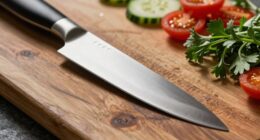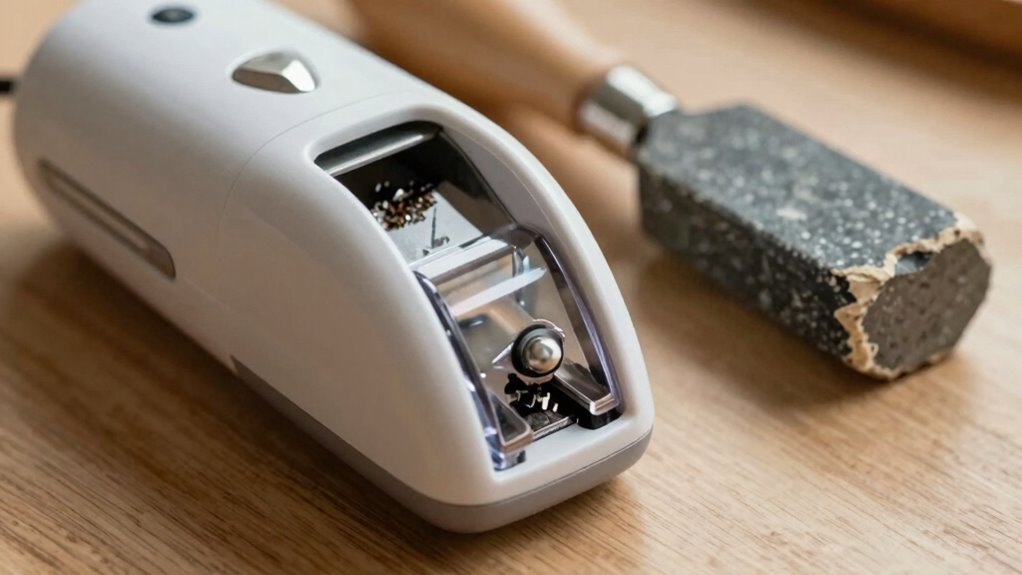

If you’re choosing between electric sharpeners and stones, consider your priorities. Electric sharpeners are quick, easy, and great for routine maintenance, making them ideal for busy home cooks. Stones give you more control, allowing you to craft a precise, gentle edge if you’re willing to invest time and skill. Both options have unique benefits, and your choice depends on your comfort level and schedule. Keep exploring to find out more about how each option can suit your needs.

Get kitchen gear delivered free — and shop member deals
- Fast, free delivery on millions of items
- Access to Prime Big Deal Days deals on October 6–7
- Prime Video, Amazon Music and more included
Key Takeaways
- Electric sharpeners offer quick, user-friendly sharpening ideal for routine maintenance; stones require skill and more time but provide greater control.
- Stones allow precise angle control and gentler sharpening, extending blade life, while electric devices risk over-sharpening if not used carefully.
- Electric sharpeners are suitable for busy home cooks needing fast results; stones suit enthusiasts seeking a traditional, hands-on approach.
- Regular honing and proper technique, whether with stones or electric, are essential for safety and maintaining blade sharpness.
- Eco-friendly, sustainable sharpening methods favor stones, aligning with biodiversity principles, while electric sharpeners are more convenient but less eco-conscious.
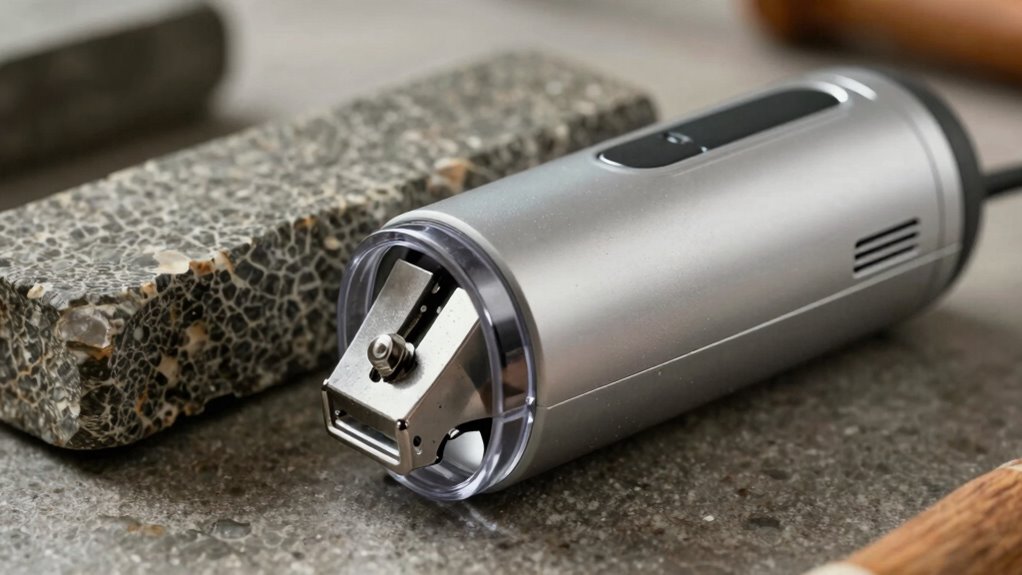
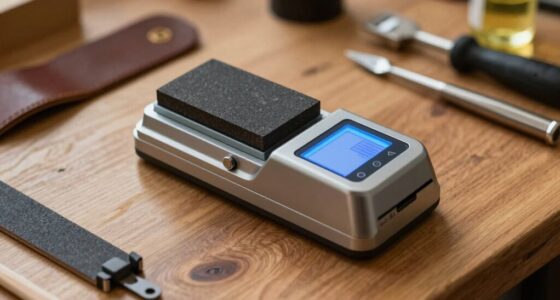
When it comes to maintaining your kitchen knives, choosing the right sharpening method can make a big difference in performance and convenience. If you’re deciding between electric sharpeners and stones, understanding their strengths and limitations will help you make an informed choice. Both options impact your kitchen safety and require proper maintenance tips to keep your knives in top shape. Electric sharpeners offer quick, consistent results, making them appealing for busy home cooks. They’re designed to be user-friendly, often featuring guides or multiple stages to ensure your blades are sharpened evenly. Because of their ease of use, you can sharpen your knives more frequently, which is essential for maintaining cutting efficiency and reducing the risk of accidents caused by dull blades. However, it’s important to use them carefully, following manufacturer instructions to prevent over-sharpening or damaging the edge. Proper technique and regular maintenance tips—like cleaning the device and checking the sharpening angles—enhance safety and prolong the lifespan of your knives.
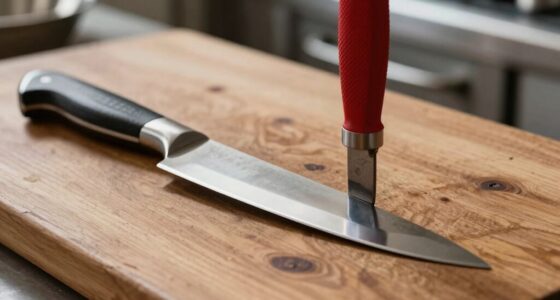
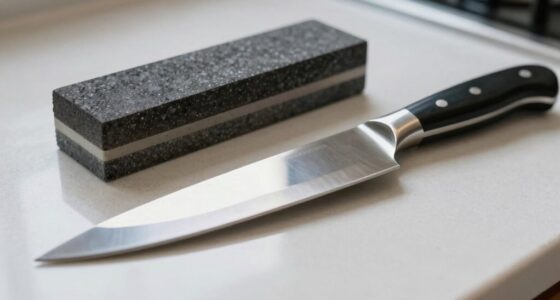
On the other hand, sharpening stones give you more control over the process. They require a bit more skill and patience but allow for a more precise edge. When you use stones, you need to maintain a consistent angle and apply even pressure, which helps prevent uneven sharpening that could lead to accidents. This method is also gentler on your knives, preserving the integrity of the blade longer. As a maintenance tip, always keep your stones clean and soak them if necessary, to ensure smooth, effective sharpening. Using stones regularly can extend the life of your blades and keep them performing at their best. While the process takes longer and might seem intimidating at first, many home cooks find it rewarding because it offers a hands-on approach. Plus, it reduces the risk of damaging your knives compared to electric sharpeners, which can sometimes be too aggressive if misused. Additionally, understanding the importance of proper sharpening techniques and technique mastery can significantly improve your results and extend the lifespan of your knives. Incorporating biodiversity principles into your approach to knife maintenance—such as using sustainable and environmentally friendly sharpening tools—can further enhance your eco-conscious kitchen practices. Furthermore, practicing consistent sharpening angles can help achieve more reliable and professional results over time. Developing a regular sharpening routine can also help maintain optimal blade performance and safety.
Ultimately, your choice depends on your comfort level, schedule, and how much control you want over the sharpening process. Electric sharpeners are excellent for quick, routine maintenance, especially if you value convenience and safety. Conversely, stones are better suited for those willing to invest time and effort into mastering a traditional, precise technique. Whichever method you choose, remember that regular maintenance tips—like honing your knives between sharpenings—will help keep them safe to use and performing optimally. Proper care ensures your knives stay sharp longer, making your kitchen safer and your cooking more enjoyable.
electric knife sharpener for home use
As an affiliate, we earn on qualifying purchases.
As an affiliate, we earn on qualifying purchases.
Frequently Asked Questions
How Long Do Electric Sharpeners Typically Last Before Needing Replacement?
Electric sharpeners typically last around 3 to 5 years before needing replacement, depending on usage and maintenance. Their electric durability can vary, but many are designed to handle regular sharpening without issue. The sharpening lifespan depends on how often you use the device and the quality of the motor and abrasive wheels. Proper care, like cleaning and avoiding overuse, can extend the lifespan, ensuring you get the most out of your investment.
Can Sharpening Stones Be Used on Ceramic or Only Metal Knives?
Sharpening stones can be used on ceramic blades, but you need to choose the right type. Generally, diamond stones are best because they’re hard enough to grind ceramic effectively. Not all sharpening stone types suit ceramic knives; oil stones and softer stones may damage the delicate blade. For metal knives, most stones work well, but always verify if your sharpening stone is compatible with ceramic blades to avoid damage.
Are Electric Sharpeners Suitable for Sharpening Serrated Knives?
Electric sharpeners generally aren’t suitable for sharpening serrated knives because their design targets straight-edged blades. You might worry about damaging a serrated knife, but using the right tool is key. For serrated knives, a honing rod or a specialized serrated knife sharpener works best. Electric suitability is limited here, so sticking to manual tools preserves your knife’s integrity and keeps it performing at its best.
How Much Maintenance Do Sharpening Stones Require Over Time?
Maintenance frequency for sharpening stones depends on how often you use them and the knife’s condition. You should flatten the stones regularly to keep their surface even, which might be needed every few months or after several uses. Proper sharpening techniques, like maintaining a consistent angle, help prolong the stone’s life and guarantee effective sharpening. With proper care, your stones can last for years, providing reliable results.
Do Electric Sharpeners Remove More Metal Than Stones?
Electric sharpeners tend to remove more metal than stones because they use motorized grinding wheels for quick, manual precision. This can lead to faster dulling of your blades if you’re not careful. Stones, on the other hand, give you more control, allowing you to remove only the necessary metal. So, if you want to preserve your blades longer, stones are the gentler option, while electric sharpeners are more aggressive but less precise.
As an affiliate, we earn on qualifying purchases.
Conclusion
Ultimately, whether you choose electric sharpeners or stones depends on your cooking style. While some worry electric options lack the precision of stones, modern models offer excellent control and consistency. If you prefer quick, hassle-free sharpening, electric tools are perfect. However, if you enjoy a hands-on approach and want to maintain your knives’ longevity, stones are worth the effort. Either way, sharpening your knives will elevate your home cooking—so pick what suits you best and get sharpening!
automatic electric knife sharpener
As an affiliate, we earn on qualifying purchases.
As an affiliate, we earn on qualifying purchases.
professional sharpening stones for knives
As an affiliate, we earn on qualifying purchases.
As an affiliate, we earn on qualifying purchases.
Fall Picks
fall essentials
As an affiliate, we earn on qualifying purchases.