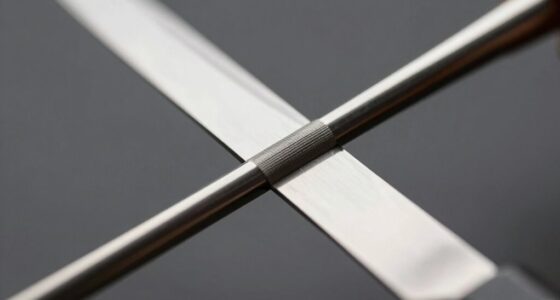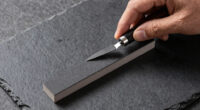
Honing rods come in materials like ceramic and steel, each with specific uses. Steel rods realign edges and maintain your blade’s sharpness through regular use and are durable, while ceramic rods are softer but great for fine-tuning and polishing without removing much metal. Ceramic is brittle and needs gentle handling, whereas steel is more robust. Proper care, like gentle cleaning and careful storage, is key. Keep exploring to discover tips that will help you get the most from your honing tools.
Key Takeaways
- Honing rods realign and maintain knife edges, improving sharpness and extending blade lifespan.
- Ceramic honing rods are durable but brittle, requiring gentle handling to prevent chipping.
- Proper care includes cleaning with a soft cloth and storing in a dry place to preserve effectiveness.
- Material differences, such as ceramic versus steel, influence maintenance techniques and suitability for specific tasks.
- Using appropriate sharpening methods and handling techniques ensures optimal performance and longevity of the honing rod.
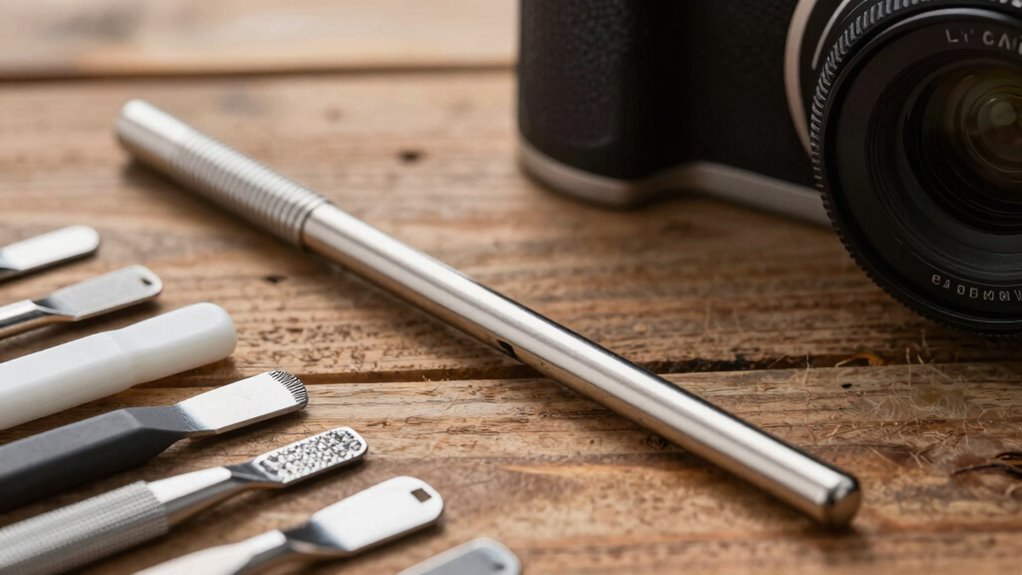
Honing rods are known for their ability to realign and maintain the edge of your knives through regular use. They’re perfect for fine-tuning and polishing your knife’s edge, especially after using a steel rod. When you use a ceramic rod, your sharpening techniques should be gentle to prevent chipping or damaging the surface. Ceramic rods retain their shape well over time but are more brittle than steel, so you need to handle them carefully. Maintenance tips for ceramic rods include avoiding dropping them, as they can chip or crack. Clean them with a soft cloth and mild detergent, and ensure they’re completely dry before storing to prevent any moisture buildup. Proper maintenance is essential to keep your honing rod performing optimally and extending its lifespan. Regular cleaning, gentle handling, and storing it in a dry place will help preserve its effectiveness. Additionally, understanding the material differences can help you select the best honing rod for your needs, ensuring optimal performance and longevity. Proper handling and knowledge of material properties also contribute significantly to the longevity of your honing tools. It’s helpful to recognize that different materials may require specific care techniques to maintain their quality over time. Applying the correct sharpening techniques based on the material type can make a notable difference in achieving a fine edge. Proper maintenance tips are vital to maximize your honing rod’s lifespan. Regular cleaning, gentle handling, and storing it in a dry place will help preserve its effectiveness. By understanding the material differences and applying correct sharpening techniques, you guarantee your knives stay sharp and your honing rod remains a reliable tool for years to come.

Kimura Professional Ceramic Honing Rod, 10 inch Honing Steel, Ceramic Knife Sharpener, 1200 Grit Finish, Ergonomic & Balanced Polypropylene Handle, Ideal for All Chef Knives, Japanese Gift Box
[ PREMIUM MATERIALS ] – The 10 inch honing rod is made from pure white ceramic using Kimura's…
As an affiliate, we earn on qualifying purchases.
As an affiliate, we earn on qualifying purchases.
Frequently Asked Questions
How Often Should I Replace My Honing Rod?
You should replace your honing rod when its lifespan is reached or if it becomes noticeably less effective at realigning your knife’s edge. Typically, honing rods last about 1 to 2 years with regular use, but this depends on how often you sharpen. Replacement frequency varies based on usage and the rod’s condition. If you notice grooves or a duller edge, it’s time for a new honing rod to maintain peak sharpening.
Can Honing Rods Damage Non-Stick Knives?
Honing rods generally won’t damage non-stick knives if you choose one with the right non-stick compatibility. However, there’s an abrasion risk if the honing rod’s material is too rough or abrasive, which can scratch or wear down the non-stick coating. To keep your non-stick knives safe, opt for a ceramic or fine steel honing rod and use gentle, controlled strokes. Always check the manufacturer’s recommendations for your knives.
Are Ceramic Honing Rods Suitable for All Knife Types?
Imagine a delicate dance between your knife and honing rod—ceramic durability makes ceramic honing rods suitable for many blades, but not all. They excel with most kitchen knives, yet may not be compatible with serrated or high-end Japanese blades. You need to take into account honing rod compatibility carefully. While ceramic rods offer a smooth, consistent sharpening experience, guarantee your knife’s material aligns to prevent damage and achieve ideal sharpness.
How Do I Clean and Maintain My Honing Rod?
To clean and maintain your honing rod, start by wiping it with a damp cloth after each use to remove metal particles. For ceramic rods, avoid harsh abrasives; for steel or diamond rods, use mild soap and water. Regularly inspect for wear and replace if the surface becomes dull. Proper cleaning and understanding honing rod materials help you preserve your sharpening technique, ensuring your knives stay sharp and effective.
What Is the Best Honing Rod for Professional Chefs?
For professional chefs, the best honing rod combines durability and precision, often crafted from high-quality ceramic or tungsten. These honing rod materials withstand daily use and maintain their edge sharpness. A top-tier honing rod is essential among professional chef tools, ensuring your knives stay razor-sharp with every use. Its reliable performance adds confidence to your culinary skills, making it a must-have in any professional kitchen—because precision isn’t optional when perfection is the goal.

Utopia Kitchen Knife Sharpener Rod 12 Inch, Professional Honing Rod for Knife Sharpening with Hanging Hook, Black
Premium Steel Construction – The steel rod is made of carbon steel and plated with nickel-chrome; the fine…
As an affiliate, we earn on qualifying purchases.
As an affiliate, we earn on qualifying purchases.
Conclusion
Think of honing rods like trusty guides for your knives—they keep your blades sharp and ready to slice through anything. Choosing the right material guarantees you’re not just maintaining your knife but enhancing its performance. With the right honing rod in hand, you’ll feel like a skilled chef in your own kitchen, effortlessly tackling every task. Remember, a good honing rod is your knife’s best friend—like a loyal companion that keeps your edge razor-sharp.
Utopia Kitchen Knife Sharpener Rod 12 Inch, Professional Honing Rod for Knife Sharpening with Hanging Hook, Black
Premium Steel Construction – The steel rod is made of carbon steel and plated with nickel-chrome; the fine…
As an affiliate, we earn on qualifying purchases.
As an affiliate, we earn on qualifying purchases.

Messermeister 12” Ceramic Sharpening Rod – Knife Sharpener – Fine 1200 Grit – Ceramic Core, Large Sharpening Surface & Soft-Grip Handle
SHARPENING ROD – Messermeister provides a variety of must-have tools for maintaining, sharpening & honing the edge of…
As an affiliate, we earn on qualifying purchases.
As an affiliate, we earn on qualifying purchases.