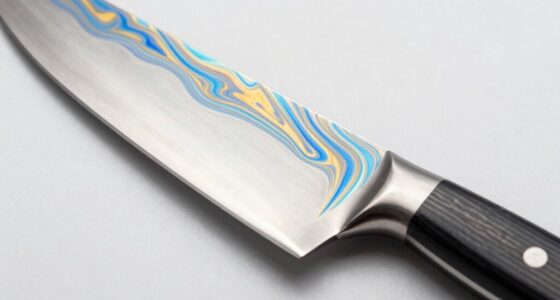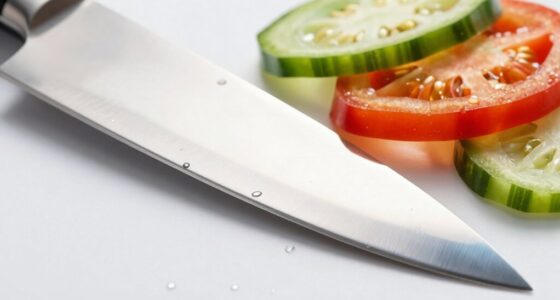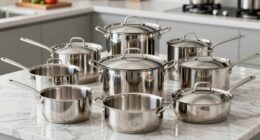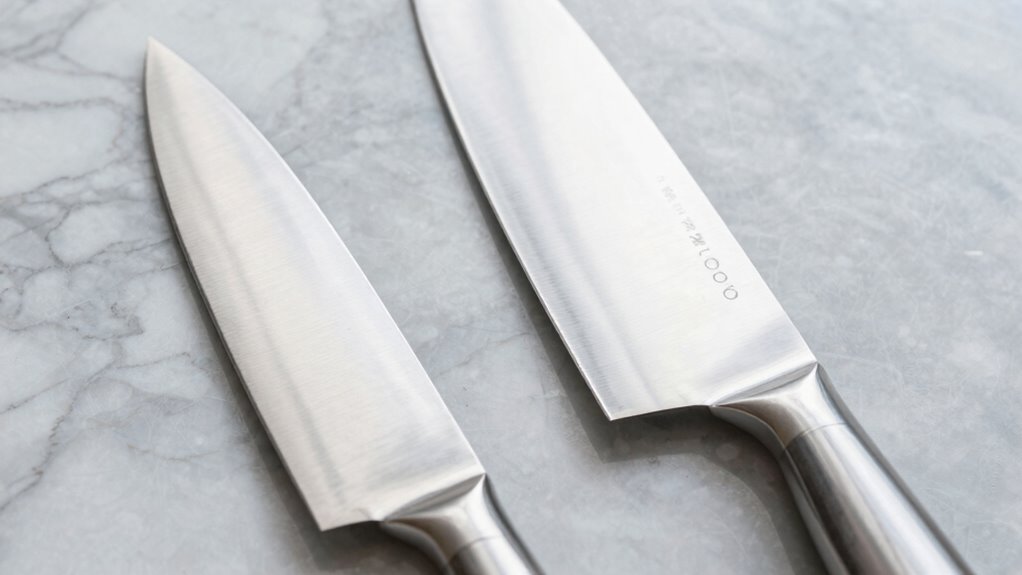
Stiff kitchen blades are made from strong, rigid materials like high-carbon stainless steel or ceramic, making them ideal for straight, forceful cuts in dense ingredients. Flexible blades, crafted from softer metals or plastics, bend easily, allowing for more delicate, curved cuts like filleting fish or garnishing. Choosing between them depends on whether you need strength or finesse for your tasks. Keep exploring to discover how each type can improve your cooking techniques.

Get kitchen gear delivered free — and shop member deals
- Fast, free delivery on millions of items
- Access to Prime Big Deal Days deals on October 6–7
- Prime Video, Amazon Music and more included
Key Takeaways
- Stiff blades are made from harder materials, providing stability for forceful, straight cuts, while flexible blades are softer, allowing for more maneuverability.
- Rigid blades excel at cutting tough ingredients, whereas flexible blades are ideal for delicate tasks like filleting or intricate carving.
- Flexibility in blades enhances control, reduces slips, and is safer during detailed or finesse cutting techniques.
- Material choice affects durability and sharpness retention; stiff blades maintain edges longer under pressure.
- Properly matching blade flexibility to the task improves efficiency, safety, and overall cutting performance.
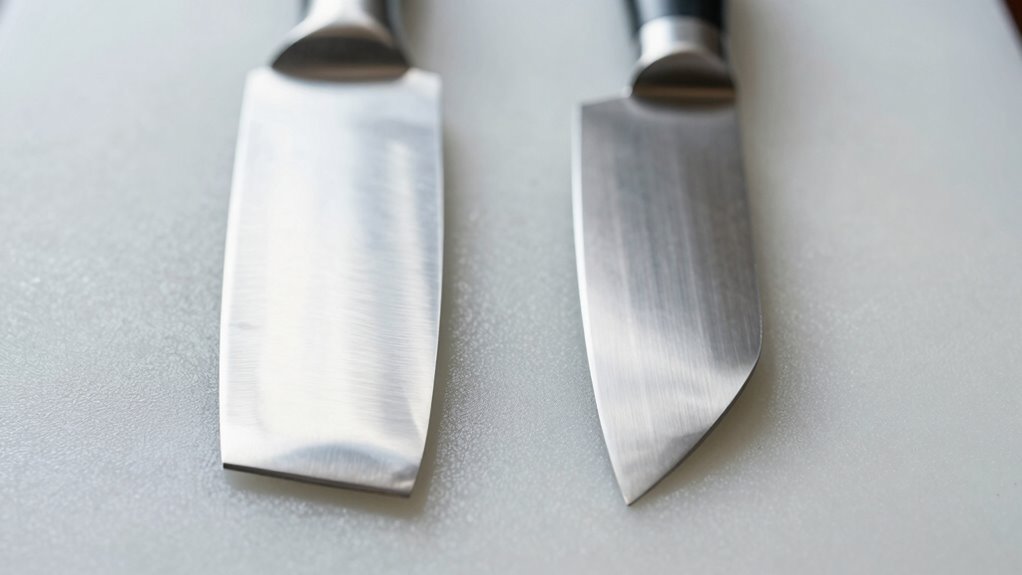
When choosing kitchen blades, understanding the difference between stiff and flexible options can considerably impact your cooking experience. The key factor that influences this is the blade material, which determines not only the blade’s durability and sharpness but also how it performs with various cutting techniques. Stiff blades are typically made from high-carbon stainless steel, ceramic, or harder alloys. These materials tend to be rigid, providing a solid, stable edge that’s excellent for precise, straight cuts. If you’re slicing through dense vegetables or meats, a stiff blade allows you to apply pressure without the blade bending or losing its edge. The rigidity helps maintain control during chopping, dicing, and slicing, especially when you need clean, uniform cuts.
On the other hand, flexible blades usually feature softer metals or specialized materials that allow some give. These blades are often made from thinner, more pliable steel or even flexible plastic composites designed for delicate tasks. The flexibility benefits your cutting techniques when working with tasks that require a gentle touch or curved cuts. For example, when filleting fish or carving intricate shapes, a flexible blade can bend to follow the contours of the item, reducing the risk of tearing or damaging the food. This adaptability is especially useful in tasks where precision and finesse matter, as it allows you to make intricate cuts that a stiff blade might struggle with. Additionally, flexible blades give you better leverage for peeling or slicing thin layers, making them ideal for delicate fruits or garnishing. Incorporating blade ergonomics can also improve comfort and reduce fatigue during extended use.
Furthermore, the choice of blade flexibility can influence safety by reducing the chances of slips and accidental cuts during tricky maneuvers. Your choice between stiff and flexible blades should align with your preferred cutting techniques and the types of foods you handle most often. If you tend to work with tougher ingredients and prioritize straight, forceful cuts, a stiff blade made from durable blade material will serve you well. Conversely, if your kitchen tasks involve more finesse, such as filleting or detailed carving, opting for a flexible blade enhances your control and accuracy. Remember, the blade material plays a vital role in how well the blade performs over time, resisting corrosion and maintaining sharpness. By matching your blade’s flexibility with your cutting techniques, you’ll find it easier to achieve professional results and enjoy a smoother, more efficient cooking process.
high-carbon stainless steel kitchen knife
As an affiliate, we earn on qualifying purchases.
As an affiliate, we earn on qualifying purchases.
Frequently Asked Questions
How Do I Determine the Best Blade Type for My Cooking Style?
To choose the best blade for your cooking style, consider how often you’ll sharpen the blade and its ergonomic design. If you prefer precise cuts and frequently sharpen your knives, a stiff blade offers control. For more flexible, delicate slicing, a flexible blade is ideal. Test different types to see which feels comfortable and suits your prep needs, ensuring you maintain sharpness through regular blade sharpening for peak performance.
Can Flexible Blades Replace Stiff Blades in All Kitchen Tasks?
Flexible blades can’t replace stiff blades in all kitchen tasks because they excel in precision but lack the blade durability needed for heavy-duty jobs. You might find flexible blades perfect for delicate slicing and intricate work, but when it comes to chopping hard vegetables or bones, stiff blades provide the necessary strength. So, for versatile performance, using both types ensures the best cutting accuracy and durability for different tasks.
Are There Specific Materials That Influence Blade Flexibility?
Yes, certain blade materials considerably influence flexibility factors. For example, high-carbon stainless steel offers a good balance of strength and flexibility, while flexible blades often use softer materials like silicone or flexible plastics. The blade material determines how much a blade can bend without breaking. So, if you need a more flexible blade, opt for materials designed for that purpose, ensuring it suits your specific kitchen tasks.
How Should I Care for and Maintain Flexible Versus Stiff Blades?
Caring for your blades is like tending a delicate garden—each needs attention. For flexible blades, hand wash and dry immediately to preserve their bend, and regularly sharpen to keep them nimble. Stiff blades require gentle cleaning and occasional sharpening to maintain sharpness. Store both safely in blade guards or on magnetic strips, avoiding clutter. Proper storage solutions and regular blade sharpening guarantee your knives stay sharp and ready for action.
What Safety Precautions Are Necessary When Handling Flexible Blades?
When handling flexible blades, prioritize knife safety by always cutting away from your body and keeping your fingers clear of the blade’s path. Use a secure grip and make certain the blade is sharp to prevent slipping. Handle the blade carefully during cleaning and storage to avoid accidental cuts. Proper blade handling reduces risks, and it’s important to stay attentive when working with flexible blades to prevent injury.
As an affiliate, we earn on qualifying purchases.
Conclusion
Choosing between stiff and flexible kitchen blades is like picking the right brush for a painting; each has its purpose and beauty. Stiff blades provide precision and power for tough tasks, while flexible blades offer agility for delicate cuts. Ultimately, your choice shapes your culinary masterpiece. Think of your blades as the brushstrokes of your kitchen art—select wisely, and you’ll create a masterpiece every time.
As an affiliate, we earn on qualifying purchases.
As an affiliate, we earn on qualifying purchases.
Halloween Picks
halloween
As an affiliate, we earn on qualifying purchases.