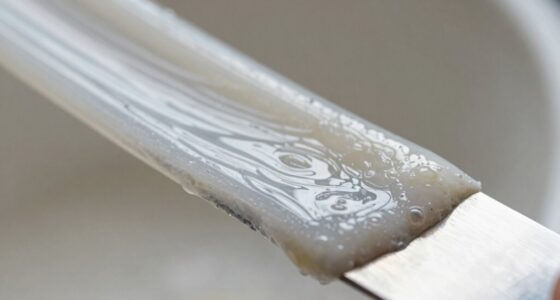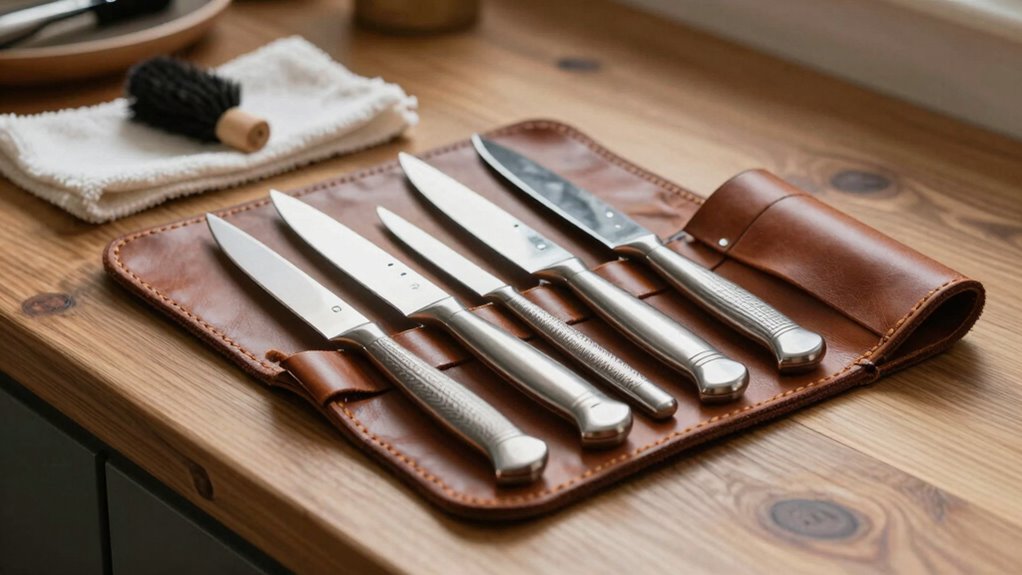

To keep your knife roll clean and safe between uses, always remove the knives before cleaning the interior. Wipe it with a damp cloth, using mild soap or specialized cleaners for tougher stains, and dry thoroughly to prevent moisture buildup. Regularly inspect for wear or damage and clean slots to avoid debris transfer. Store it in a cool, dry place, and disinfect periodically. Continuing will help you master maintenance tips that prolong your roll’s lifespan and safety.

Get kitchen gear delivered free — and shop member deals
- Fast, free delivery on millions of items
- Access to Prime Big Deal Days deals on October 6–7
- Prime Video, Amazon Music and more included
Key Takeaways
- Remove knives and wipe the interior with a damp cloth after each use to prevent residue buildup.
- Regularly inspect for wear, loose stitching, or damage, and repair promptly to ensure safety.
- Store in a cool, dry place away from sunlight and moisture to prevent material degradation.
- Clean and disinfect the roll periodically with mild soap or sanitizer for hygiene.
- Keep slots and pockets free of debris to avoid transferring dirt onto knives.

Keeping your knife roll clean and safe between uses is crucial to preserve your knives and guarantee safe storage. Proper knife roll maintenance isn’t just about cleanliness; it’s about extending the lifespan of your blades and ensuring they stay sharp and safe to handle. When you regularly care for your knife roll, you prevent rust, corrosion, and the buildup of debris that can compromise storage safety. Remember, a well-maintained knife roll is a fundamental part of your culinary toolkit, helping you stay organized and confident in your prep work.
Regular cleaning and maintenance extend your knife roll’s lifespan and ensure safe, organized storage of your blades.
To start, make it a habit to clean your knife roll after every use. Once you’re done, carefully remove all knives and wipe down the interior with a damp cloth to remove any food particles, moisture, or grease. Avoid soaking the roll, as excess water can lead to mold or mildew, especially if it’s made of fabric or leather. For tougher stains or residues, use a mild soap solution or a specialized cleaner suited for your roll’s material. Be thorough but gentle, ensuring you don’t damage any seams or fabric. Once cleaned, dry the interior completely with a soft towel to prevent moisture buildup, which can cause rust on your blades and jeopardize storage safety. Regular inspections can also help identify signs of wear and tear, including loose stitching or weakened elastic straps, early, preventing further damage. Additionally, understanding the materials used in your roll can help you select appropriate cleaning methods and prolong its lifespan. Knowing the proper cleaning techniques for different materials will also help maintain the integrity of your knife roll. Incorporating regular maintenance routines into your culinary practice can significantly extend the usability of your gear.
In terms of knife roll maintenance, inspect your roll regularly for signs of wear and tear. Check the stitching, elastic straps, and closures to ensure they’re secure. Replace any damaged parts promptly to keep your knives protected. If your roll has slots or pockets, make sure they’re clean and free of debris; dirt or food particles left inside can transfer onto your knives over time. Keep the roll stored in a cool, dry place to avoid exposure to humidity or direct sunlight, both of which can degrade materials and impact storage safety. It’s also helpful to periodically disinfect your roll with a gentle sanitizer to maintain hygiene, especially if you handle raw ingredients frequently. Proper storage conditions and routine maintenance will ensure your knife roll continues to serve you well over time.
As an affiliate, we earn on qualifying purchases.
Frequently Asked Questions
How Often Should I Disinfect My Knife Roll?
You should disinfect your knife roll weekly, especially if you use it frequently or handle raw ingredients often. For cleaning frequency, aim for a thorough wipe-down after each use with a damp cloth. Use disinfectant sprays or wipes containing alcohol or diluted bleach for disinfection methods. Regular cleaning prevents bacteria buildup and keeps your tools safe, ensuring your knife roll stays hygienic and in good condition.
Can I Wash My Knife Roll in the Dishwasher?
You shouldn’t wash your knife roll in the dishwasher, as it can damage the material and compromise knife roll organization. Instead, for knife roll cleaning, spot clean with a damp cloth and mild soap, then air dry thoroughly. Regularly cleaning your knife roll helps prevent bacteria buildup and keeps it in good shape, ensuring your knives stay organized and safe. Avoid harsh chemicals to preserve the material.
What Materials Are Best for Knife Roll Liners?
A stitch in time saves nine, and choosing the right knife roll fabrics is key. Opt for liner materials like durable nylon, waterproof canvas, or leather, as they resist stains and are easy to clean. These high-quality knife roll fabrics protect your knives and keep your roll safe. Avoid flimsy or porous materials, which can trap dirt and compromise hygiene. Stick to sturdy, water-resistant fabrics for lasting protection.
Is It Safe to Store Other Utensils in My Knife Roll?
Storing other utensils in your knife roll can be safe if you prioritize utensil organization and storage safety. Keep sharp or bulky tools separate from knives to avoid damage or accidents. Use designated pockets or compartments for each utensil, making sure they’re secure and won’t move around. Regularly clean your roll to prevent bacteria buildup. By organizing carefully and maintaining cleanliness, you guarantee both safety and longevity of your utensils and knife roll.
How Do I Prevent Mold and Mildew in My Knife Roll?
Ever wonder how to keep your knife roll fresh and mold-free? To prevent mold and mildew, guarantee proper knife roll maintenance by thoroughly drying it after each use and avoiding damp environments. Mold prevention tips include storing it in a well-ventilated area and occasionally wiping it with a mixture of vinegar and water. Do you regularly inspect and clean your knife roll to maintain its hygiene and longevity?
As an affiliate, we earn on qualifying purchases.
Conclusion
Keep your knife roll spotless and secure, and you’ll never face the chaos of a messy, dangerous kitchen again. Imagine your knives, perfectly organized and gleaming like tiny swords, ready to slice through anything. With just a little effort, you can turn your knife roll into a fortress of cleanliness—so pristine, even a detective would be impressed. Stay vigilant, clean regularly, and your culinary tools will stay sharp, safe, and always prepared for your next masterpiece!
professional knife roll organizer
As an affiliate, we earn on qualifying purchases.
As an affiliate, we earn on qualifying purchases.
As an affiliate, we earn on qualifying purchases.
Fall Picks
fall essentials
As an affiliate, we earn on qualifying purchases.