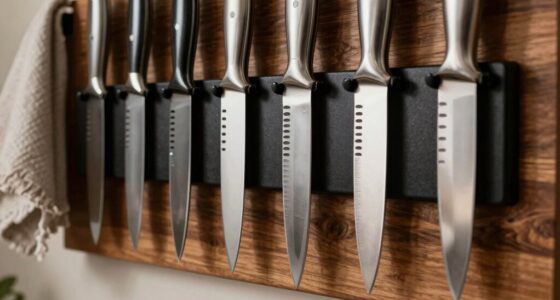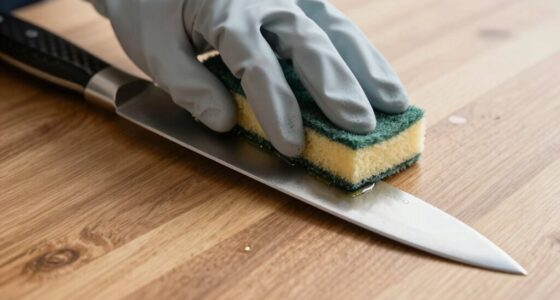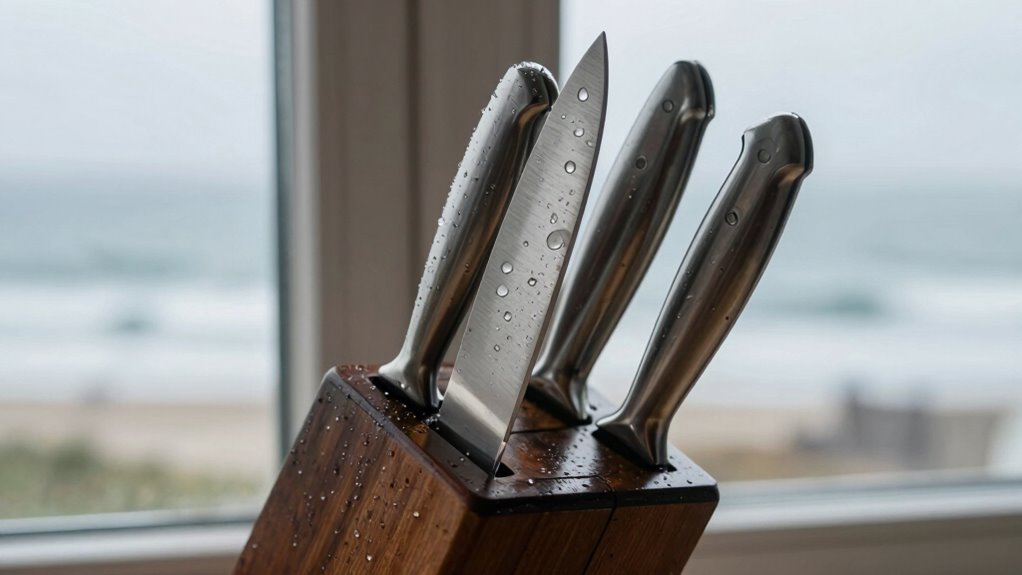

In humid apartments and coastal homes, you should dry your knives thoroughly after each use, wiping blades with a soft cloth to remove moisture. Store them in a dry, ventilated space like a magnetic strip or knife block, and apply a light coating of mineral oil to prevent rust. Rinse and dry blades more frequently to combat salt buildup and corrosion. To discover more tips on maintaining your knives in challenging environments, keep exploring these simple care strategies.

Get kitchen gear delivered free with Prime
- Fast, free delivery on millions of items
- Prime Video, Amazon Music and more included
- Member-only deals all year
Key Takeaways
- Regularly dry and wipe knives to prevent moisture buildup and salt residue in humid or coastal environments.
- Apply a thin layer of food-grade mineral or knife oil after cleaning to create a protective barrier.
- Store knives in dry, well-ventilated areas like magnetic strips or knife blocks to minimize exposure to humidity and salt.
- Rinse and dry blades frequently, especially in coastal areas, to remove salt deposits and prevent corrosion.
- Use desiccants or dehumidifiers in storage spaces to control moisture levels and reduce rust risk.
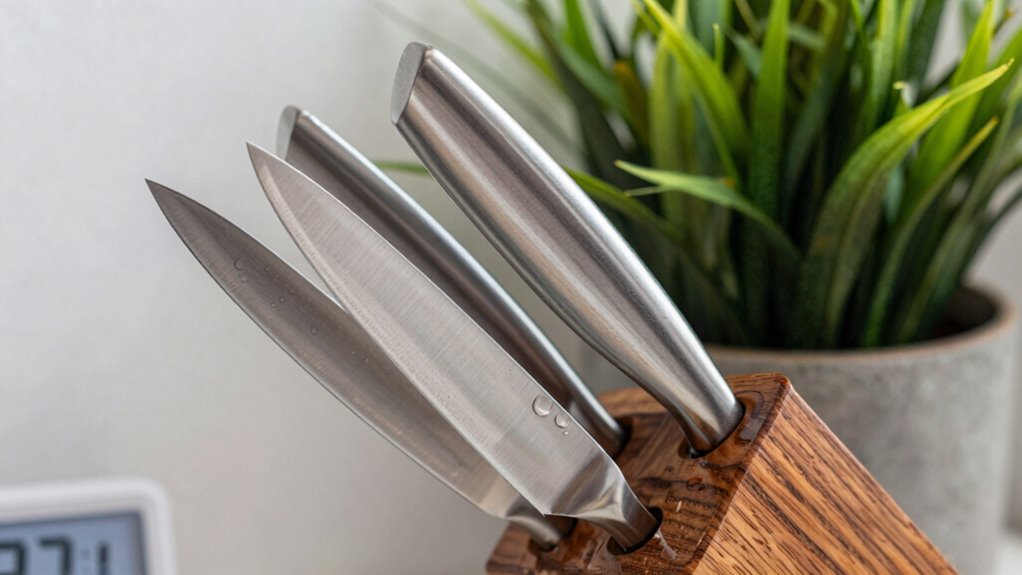
Have you ever wondered how to keep your knives sharp and safe for years to come? Living in a humid apartment or a coastal home introduces unique challenges to maintaining your knives, but with the right approach, you can ensure they stay in top shape. The key to longevity lies in proper knife sharpening and consistent blade maintenance. Humidity accelerates rust and corrosion, so taking proactive steps is essential.
Start by drying your knives thoroughly after each use. Never leave them wet on the countertop, as moisture promotes rust. After washing, wipe the blades with a soft, dry cloth to remove any residual water. This simple habit prevents moisture from settling and damaging your blades over time. When it comes to knife sharpening, avoid relying solely on electric or mechanical sharpeners, especially if your knives are high-quality and require delicate handling. Instead, sharpen your blades regularly with a whetstone or a honing rod. This not only keeps the edge sharp but also aligns the blade’s microscopic teeth, ensuring clean cuts and reducing the need for frequent sharpening. Proper blade maintenance also involves honing your knives every few uses, which realigns the edge without removing metal, preserving the integrity of your blades.
Dry and wipe knives after each use to prevent rust and keep blades sharp.
In humid environments, rust prevention becomes critical. Apply a thin coat of food-grade mineral oil or specialized knife oil after cleaning and drying your blades. This creates a protective barrier against moisture. Store your knives in a dry, ventilated area, ideally in a knife block or on a magnetic strip, to prevent blades from knocking against each other and dulling prematurely. Avoid storing knives in drawers without a blade guard, as this can cause scratches and damage that make blades more susceptible to corrosion. Regularly inspecting your knives for signs of moisture and corrosion further helps extend their lifespan. Using desiccants in your storage area can also help absorb excess moisture and protect your blades from rust. Additionally, understanding how humidity levels impact metal surfaces can help you adapt your maintenance routine more effectively. Keeping the air dry and circulating around your knives is essential for preventing moisture buildup, especially in coastal homes.
For blades exposed to salty air, such as near the coast, rinse and dry them more frequently to prevent salt buildup, which can accelerate corrosion. Additionally, understanding the importance of proper storage and air quality can help reduce moisture and salt accumulation that contribute to rust.
Products Worth Considering

Vitamix 5200 Professional-Grade Blender, 64 oz. Container, Black

Vitamix VX1 Professional-Grade Blender, 64 oz, Black

Le Creuset Stainless Steel Roasting Pan with Nonstick Rack, 16.25 x 13.25 in
As an affiliate, we earn on qualifying purchases.
Frequently Asked Questions
Can Humidity Cause Stainless Steel Knives to Rust?
Yes, humidity can cause stainless steel knives to rust, especially if you don’t practice proper knife maintenance. Humidity effects include moisture buildup that promotes rust formation over time. To prevent this, you should dry your knives thoroughly after each use and store them in a dry place. Regularly inspecting and maintaining your knives helps combat humidity effects and keeps them sharp and rust-free, ensuring they last longer.
How Often Should I Oil My Knife Blades?
Back in the day, knights kept their blades sharp and shiny with regular care. Now, for your kitchen knives, you should oil the blades every few weeks, especially in humid environments. Proper knife maintenance involves consistent oil application to prevent rust and corrosion. If you notice a dull or sticky edge, it’s time for another round of oil. Regular oil application keeps your knives rust-free and slicing smoothly.
Are Ceramic Knives Affected by Humid Environments?
Ceramic knives are less affected by humid environments because of their high ceramic durability, which makes them resistant to moisture-related damage like rust. However, you should still practice proper knife maintenance. Keep blades dry and clean after use, and avoid exposing them to extreme humidity for prolonged periods. This helps preserve their sharpness and prevents any potential cracking or weakening over time, ensuring your ceramic knives stay in top condition.
What Storage Options Prevent Rust in Coastal Homes?
To prevent rust in coastal homes, you should store your knives in a dry, airtight container or a knife block with ventilated slots. After knife sharpening or cleaning, guarantee you thoroughly dry each blade to prevent moisture buildup. Using silica gel packs in your storage can absorb excess humidity. Regularly inspecting and oiling your knives also helps maintain their quality, especially in humid environments.
Does Salt Air Accelerate Knife Corrosion?
Salt air acts like a relentless villain, speeding up corrosion on your knives. It’s as if the ocean whispers secrets that tempt rust to settle. To combat this, you need corrosion prevention strategies, like oiling your blades regularly and storing them in moisture-resistant containers. By doing so, you shield your knives from the salty kiss of the sea, keeping them sharp and rust-free despite the coastal environment’s seductive, yet corrosive, charm.
Conclusion
To keep your knives sharp, rust-free, and shining bright, clean them thoroughly, dry them completely, and store them properly. Protect your blades from moisture, prevent corrosion, and preserve their edge by staying vigilant and consistent. Think of your knives as your trusted culinary partners—resilient, ready, and sharp. With care, they’ll serve you well, slicing through your kitchen tasks effortlessly, just as a well-tended blade slices through ingredients with ease and grace.