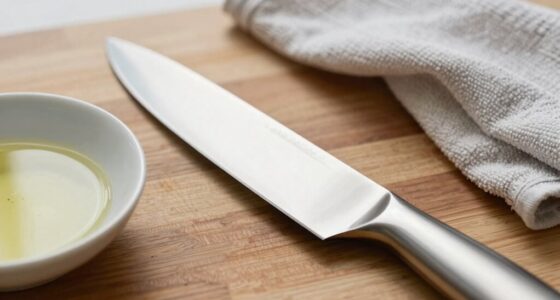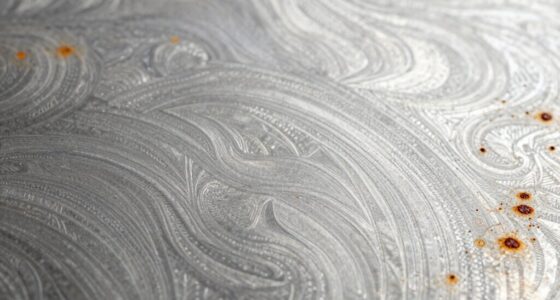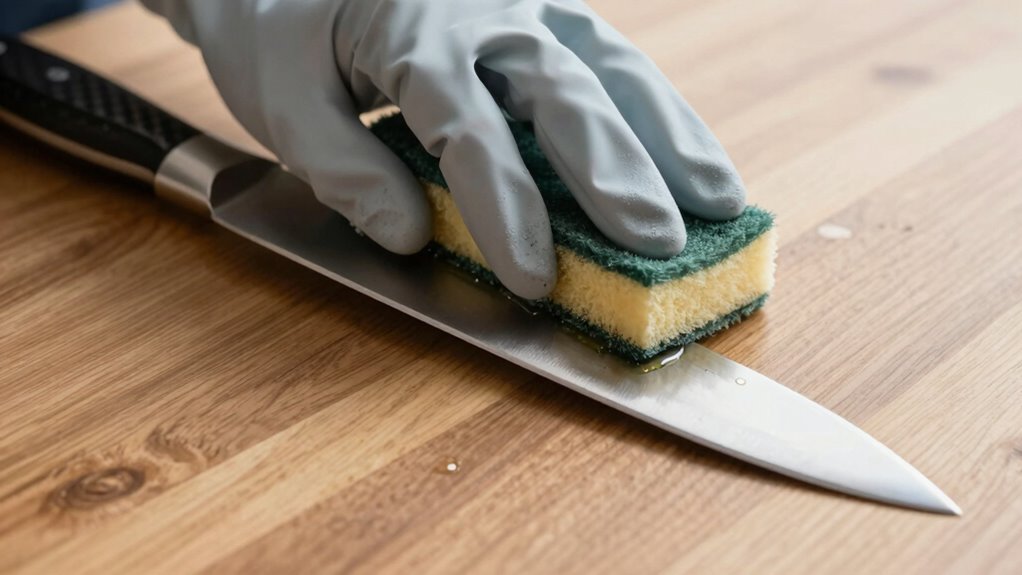

To clean your carbon steel knife without fuss, rinse it right after use with warm water and a soft sponge, avoiding abrasive scrubbers. Dry it immediately with a soft towel to prevent rust, and apply a thin layer of food-grade oil to protect the blade. For rust spots, gently use fine steel wool before cleaning and oiling again. Proper storage in a dry place will keep your knife sharp and rust-free—continue to discover simple tips for long-lasting care.

Get kitchen gear delivered free — and shop member deals
- Fast, free delivery on millions of items
- Access to Prime Big Deal Days deals on October 6–7
- Prime Video, Amazon Music and more included
Key Takeaways
- Rinse the knife immediately after use with warm water and a soft sponge or cloth.
- Dry thoroughly with a soft towel to prevent moisture and rust formation.
- Apply a light coat of food-grade mineral or camellia oil to protect the blade.
- Remove rust spots gently with fine steel wool or a rust eraser, then re-oil.
- Store in a dry, protected environment to minimize rust risk and maintain sharpness.
Cleaning a carbon steel knife properly is essential to maintain its sharpness and prevent rust. Unlike stainless steel, carbon steel is more prone to corrosion if not cared for correctly, making regular cleaning and maintenance vital. When you handle your knife, you’re not just keeping it looking good—you’re actively engaging in good knife maintenance that guarantees it performs well over time. The key to effective care is understanding how to clean your knife without fuss, so you can enjoy its cutting power without worrying about damage or rust.
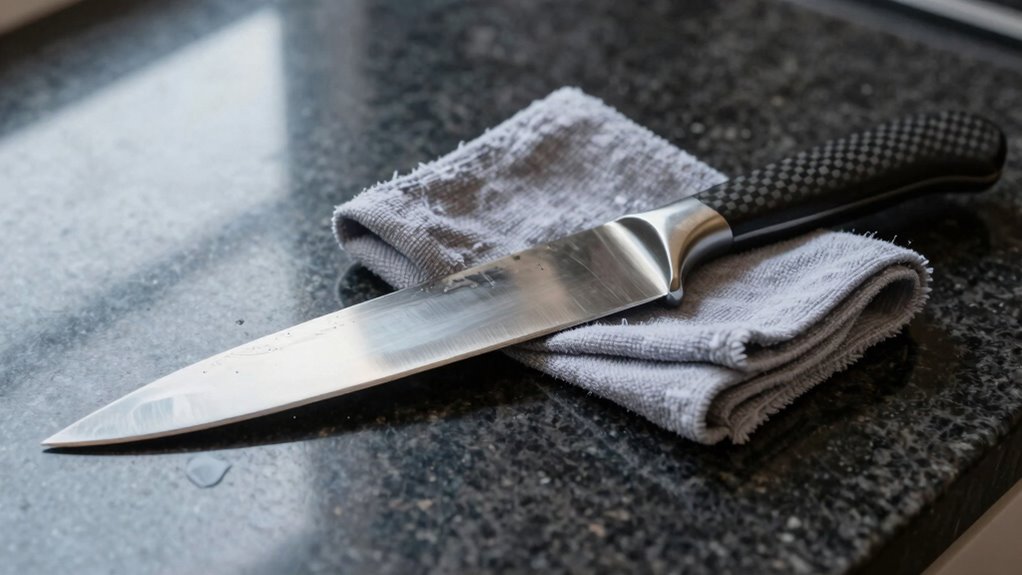
Start by rinsing your knife immediately after use to remove any food particles, especially acidic substances like citrus or vinegar, which can accelerate rust formation. Use warm water and a soft sponge or cloth to wipe it down gently. Avoid abrasive scrubbers, which can scratch the blade and compromise its edge. If there’s stubborn residue, a little dish soap can help, but make sure you rinse thoroughly afterward. Dry the knife immediately with a soft towel—never let it air dry, as moisture lingering on the surface promotes rust. Proper drying is perhaps the most critical step in rust prevention, as even a tiny amount of water can cause corrosion over time.
Rinse, wipe gently, dry immediately—prevent rust by removing moisture after every use.
When it’s time for a more thorough cleaning, you might consider occasional oiling. Applying a light coat of food-grade mineral oil or camellia oil helps create a protective barrier, shielding the blade from moisture and oxygen that can cause rust. This oiling step is especially important if you’re storing your knife for a while or in humid conditions. Regularly inspecting your knife for signs of rust formation allows you to catch and address issues early, prolonging its lifespan. Additionally, understanding the properties of carbon steel can help you better care for your knife and prevent issues like rust or corrosion. Knowing the proper storage techniques and keeping your knife in a dry environment further reduces the risk of rust developing on your blade. Using appropriate storage solutions, such as a knife block or a protective sheath, can also help maintain the blade’s condition.
If your knife develops rust spots, don’t panic. You can remove surface rust with a fine steel wool or a rust eraser gently rubbed along the affected area. Follow up with a thorough cleaning, drying, and reapplication of oil. By maintaining your knife properly, you guarantee it stays sharp and rust-free. The effort you put into cleaning and rust prevention pays off with a longer-lasting, better-performing tool. With just a little attention and the right techniques, you can keep your carbon steel knife in top shape, making knife maintenance feel effortless rather than a chore.
food-grade mineral oil for knives
As an affiliate, we earn on qualifying purchases.
As an affiliate, we earn on qualifying purchases.
Frequently Asked Questions
Can I Put My Carbon Steel Knife in the Dishwasher?
You shouldn’t put your carbon steel knife in the dishwasher. Dishwasher risks include exposure to harsh detergents and high heat, which can cause rust and damage. Hand washing is best for rust prevention and maintaining the knife’s sharpness. Use warm water and mild soap, then dry immediately. Avoid soaking, as prolonged moisture accelerates corrosion. Proper care guarantees your knife stays rust-free and in great condition longer.
How Often Should I Clean My Carbon Steel Knife?
You should clean your carbon steel knife after every few uses to maintain its sharpness and prevent rust. For example, imagine preparing a meal and noticing a slight tarnish; regular knife maintenance keeps rust prevention at bay. Wipe it down with a damp cloth, dry thoroughly, and occasionally oil the blade. This routine helps preserve your knife’s quality, ensuring it stays sharp and rust-free longer.
Is It Safe to Use Soap on a Carbon Steel Knife?
Yes, you can use soap on a carbon steel knife, but do so carefully. Soap can cause chemical reactions that might tarnish or rust the surface if not thoroughly rinsed and dried. To preserve the surface, use mild soap, rinse well, and dry immediately with a soft cloth. Avoid soaking the knife, and never leave it wet, as this can compromise its surface preservation over time.
What Is the Best Way to Dry a Carbon Steel Knife?
A stitch in time saves nine, and the same goes for drying your carbon steel knife. After washing, dry it immediately with a soft cloth using gentle, thorough drying techniques to prevent rust. For storage tips, keep it in a dry, moisture-free environment, preferably in a knife block or on a magnetic strip. Proper drying and storage safeguard your knife’s blade and ensure it stays sharp and rust-free.
Can I Use Metal Scrubbers to Clean My Knife?
You can use metal scrubbers to clean your carbon steel knife, but be careful. Metal scrubbers are effective for tough stains and rust, but they can scratch the blade if you’re not gentle. For alternative cleaning, try a softer sponge or a baking soda paste to avoid damage. Regular, light cleaning with non-abrasive tools helps maintain your knife’s sharpness and appearance long-term.
As an affiliate, we earn on qualifying purchases.
Conclusion
Think of your carbon steel knife as more than just a tool—it’s a trusted partner in your kitchen. Proper cleaning not only preserves its sharpness but also keeps rust at bay. Some believe that neglecting it might cause the blade to weaken over time, almost like losing a trusted friend. Show your knife the care it deserves, and it’ll reward you with years of reliable performance. After all, a well-maintained blade is a true reflection of your culinary passion.
As an affiliate, we earn on qualifying purchases.
knife storage block for carbon steel knives
As an affiliate, we earn on qualifying purchases.
As an affiliate, we earn on qualifying purchases.
Halloween Picks
halloween
As an affiliate, we earn on qualifying purchases.