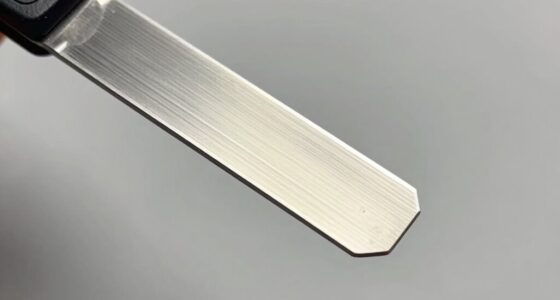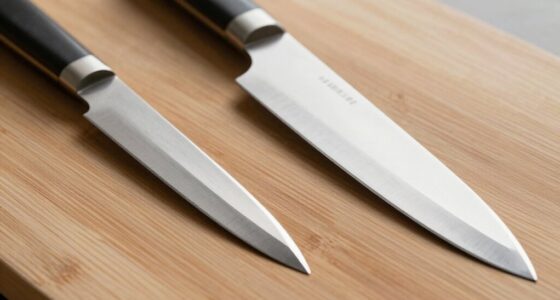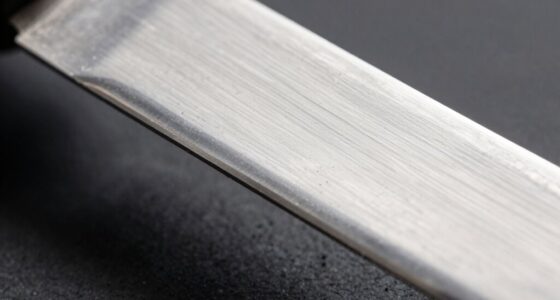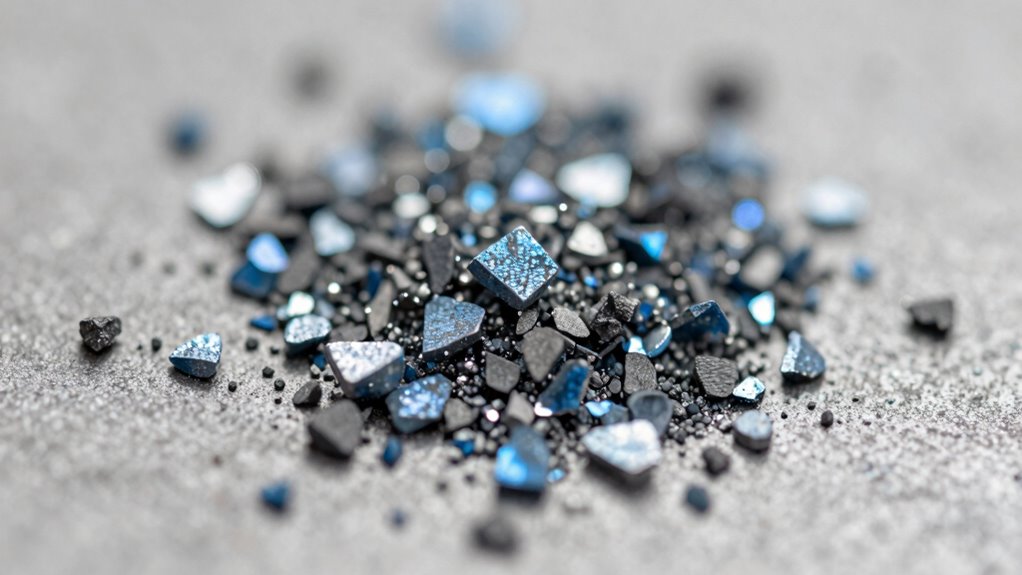
Carbides are tiny, hard particles embedded in steel or coated on tools, which substantially impact how your tools sharpen and perform. They reinforce the material, making it more resistant to wear and helping your blades stay sharp longer. These particles also enhance cutting edges, allowing tougher, more durable tools. When coated with diamond or other carbides, tools resist wear even better. Keep exploring to discover how these small particles can improve your sharpening experience and tool longevity.

Get kitchen gear delivered free — and shop member deals
- Fast, free delivery on millions of items
- Access to Prime Big Deal Days deals on October 6–7
- Prime Video, Amazon Music and more included
Key Takeaways
- Carbides are hard compounds of carbon with metals, used to reinforce steel and improve durability.
- Tiny carbide particles embedded in steel enhance resistance to wear and maintain sharpness longer.
- Carbides provide a tougher cutting edge, influencing the feel and performance during sharpening.
- Diamond coatings, a form of carbon allotrope, further improve tool hardness and lifespan.
- Overall, carbides significantly extend tool longevity and optimize cutting efficiency in industrial applications.
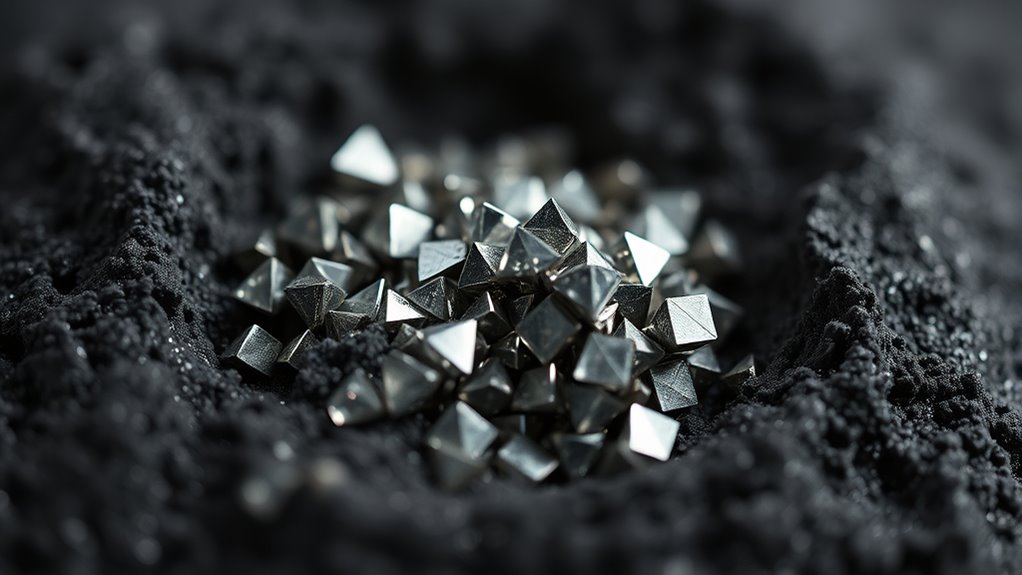
Have you ever wondered what carbides are and why they matter? These tiny particles play a crucial role in many materials, especially when it comes to cutting tools and sharpening processes. Carbides are compounds composed of carbon and a metal or semi-metal element, like tungsten, titanium, or silicon. They’re incredibly hard, which makes them ideal for industrial applications where durability and edge retention are essential. One of the most well-known types of carbides is tungsten carbide, often used in cutting tools, drills, and industrial machinery. When you’re working with steel alloys or trying to keep your tools sharp, understanding carbides can help you grasp why some materials outperform others.
Carbides are ultra-hard compounds crucial for cutting tools and sharpening durability.
In the world of cutting and sharpening, carbide’s presence substantially influences performance. For example, steel alloys, which are popular for their strength and flexibility, often contain carbides embedded within their matrix. These carbides act as tiny, hard particles that reinforce the steel, making it more resistant to wear and deformation. When you sharpen steel tools, the carbides provide a cutting edge that stays sharp longer because they’re tougher than the surrounding material. This is why high-quality steel tools often incorporate specific carbides—like tungsten carbide—to boost their durability. The presence of carbides in steel alloys means you get a tool that can withstand tougher conditions and maintain its edge over time.
Another key aspect is the application of diamond coatings, which are a form of carbon allotrope used to enhance cutting surfaces. Diamond coatings are incredibly hard and can be applied to various tools and blades, providing an extra layer of resistance against wear. When you’re cutting or grinding hard materials, diamond coatings help reduce friction and prolong the life of your tools. These coatings often work in tandem with carbides, especially in industries where precision and longevity are essential. Diamond coatings can be applied to carbide tools or steel alloys, enhancing their cutting capabilities and making them ideal for high-performance applications.
Understanding how carbides function within steel alloys and how diamond coatings can improve tool performance gives you insight into why certain tools last longer and perform better. Whether you’re sharpening blades, drilling into tough materials, or manufacturing complex parts, recognizing the role of carbides helps you appreciate the science behind durable tools. They might be tiny particles, but their impact on sharpening feel, tool longevity, and overall efficiency is enormous. This knowledge empowers you to choose the right materials and coatings for your specific needs, ensuring better results and a more efficient workflow. Additionally, advancements in AI-powered automation are increasingly helping industries optimize the use and manufacturing of carbide tools for enhanced performance.
As an affiliate, we earn on qualifying purchases.
Frequently Asked Questions
How Do Carbides Influence the Longevity of Sharpening Tools?
Carbides notably boost the longevity of sharpening tools by providing enhanced durability when used on steel alloys. Their hardness allows diamond coatings to cut more effectively, reducing wear and tear. With carbides, your tools stay sharper longer, making maintenance easier and extending their lifespan. This means you can sharpen more steel alloys with less frequent replacements, saving you time and money while maintaining ideal performance.
Are All Carbides Equally Effective for Different Types of Blades?
Imagine a toolbox where different carbide variations sit side by side, each suited for specific blades. Not all carbides are equally effective, as blade compatibility varies. You’ll find that certain carbides excel with kitchen knives, while others work best for industrial blades. By matching carbide types to your blade’s material and purpose, you maximize sharpening results. So, selecting the right carbide variation is key to maintaining peak performance and longevity.
Can Carbides Be Replaced or Upgraded on Existing Sharpening Equipment?
Yes, you can replace or upgrade carbides on existing sharpening equipment. First, check for carbide compatibility with your machine to guarantee proper fit and performance. Follow the replacement procedures carefully, which usually involve removing old carbides and installing new ones securely. Upgrading carbides can enhance sharpening efficiency, so choose high-quality options suited for your blades. Regular maintenance and correct installation help maintain ideal sharpening results.
What Safety Precautions Should Be Taken When Handling Carbide Particles?
Did you know that improper handling of carbide particles can cause respiratory issues in over 30% of users? When handling carbide particles, you should always take safety precautions seriously. Use proper safety gear like gloves, masks, and eye protection to avoid skin contact and inhalation. Work in well-ventilated areas, and wash your hands thoroughly afterward. These precautions help keep you safe from potential health risks associated with carbide particles.
How Do Carbides Affect the Cost of Sharpening and Maintenance?
Carbides impact your sharpening and maintenance costs by making tools more durable, reducing how often you need to replace or sharpen them. While carbide tools might cost more upfront, their longer lifespan lowers overall maintenance costs. The cost implications are favorable if you value reduced downtime and consistent performance, but you should weigh the initial investment against long-term savings to determine if carbides are right for your work.
diamond coated sharpening stones
As an affiliate, we earn on qualifying purchases.
As an affiliate, we earn on qualifying purchases.
Conclusion
Understanding carbides helps you grasp why some knives sharpen differently. These tiny particles, often just nanometers in size, markedly influence the feel and performance of your blades. Did you know that adding tungsten carbides can increase hardness by up to 30%? Next time you sharpen, remember that these small particles are making a big difference in your experience. Paying attention to carbides can help you achieve sharper, longer-lasting blades, giving you better control and confidence in every cut.
As an affiliate, we earn on qualifying purchases.
industrial carbide grinding wheels
As an affiliate, we earn on qualifying purchases.
As an affiliate, we earn on qualifying purchases.
Halloween Picks
halloween
As an affiliate, we earn on qualifying purchases.