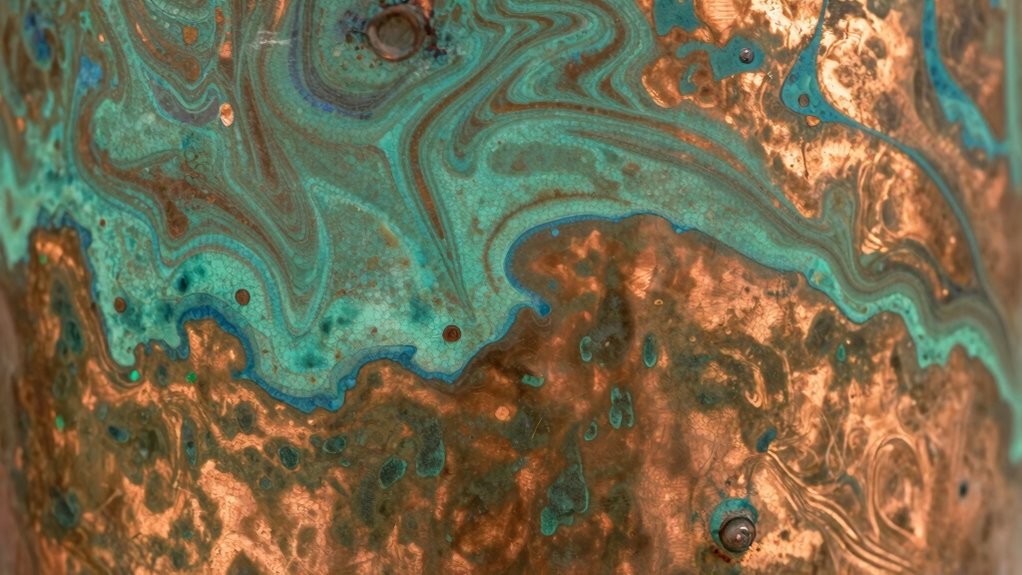

Food acids like lemon juice and vinegar react chemically with metals such as copper or brass, forming surface layers called patinas that change their appearance. These acids influence the surface chemistry, creating colorful or matte effects without damaging the metal’s core if used correctly. Their acidity levels determine whether the changes are subtle or aggressive, but they generally don’t weaken the metal structure. Continuing explores how to achieve desired effects safely while preserving the metal’s integrity.

Get kitchen gear delivered free — and shop member deals
- Fast, free delivery on millions of items
- Access to Prime Big Deal Days deals on October 6–7
- Prime Video, Amazon Music and more included
Key Takeaways
- Food acids like vinegar and lemon juice chemically react with metal surfaces, forming surface patinas.
- These acids modify surface chemistry and coloration but generally do not weaken the metal’s core if used properly.
- Acid application causes surface oxidation and color changes, creating decorative effects known as patinas.
- Proper control of acid concentration and exposure time prevents structural damage or pitting.
- The core metal remains unchanged structurally; only surface appearance is affected by food acids.
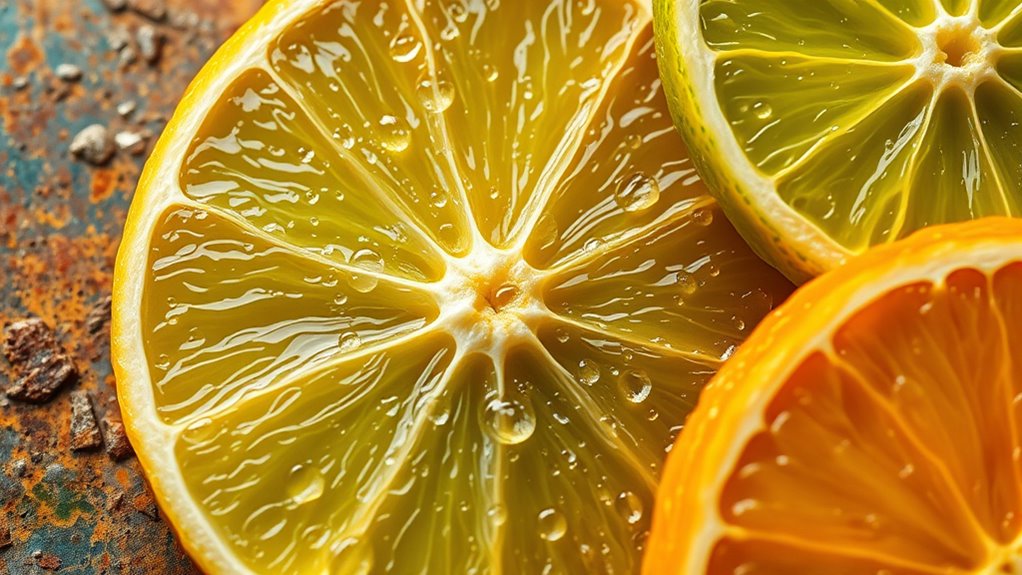
Have you ever wondered how food acids like lemon juice or vinegar can change the appearance of metal surfaces? When you apply these acids to metals, you’re fundamentally engaging in a chemical process that can lead to visible changes, often resulting in a patina. This patina isn’t just about aesthetics; it involves a chemical transformation of the metal’s surface, influenced heavily by metal corrosion and the pH balance of the substance. The acidity level, or pH, determines how aggressively the acid reacts with the metal. For example, highly acidic substances with low pH values tend to accelerate corrosion, breaking down the metal’s surface and creating a layer of oxidation. This oxidation can form colorful, sometimes iridescent layers known as patinas, which add character to objects like copper or bronze. Additionally, controlling application time and concentration is essential to prevent unintended damage.
However, not all food acids cause the same level of change. Vinegar, which contains acetic acid, has a moderate pH and typically produces a gentle patina on copper or brass. Lemon juice, rich in citric acid, is slightly more potent but still mild enough that, with brief exposure, it mainly cleans or lightly etches the surface rather than severe corrosion. The key is understanding that these acids influence the pH balance of the metal’s environment. If the pH drops too low, rapid corrosion can occur, leading to pitting or even structural damage over time. Conversely, a more neutral pH, or shorter exposure, results in a subtle, aesthetically pleasing layer rather than a harmful corrosion process. It’s also important to consider metal surface chemistry**** to understand how different acids interact with various metals.
What doesn’t change is the fundamental nature of the metal itself. While acids can alter the surface appearance, they don’t fundamentally weaken the core structure unless exposure is prolonged and aggressive. This is why careful control over application time and concentration is vital. Using food acids intentionally, you can create a controlled patina without risking significant metal corrosion. The process involves a delicate balance—leveraging the pH to produce the desired visual effect without compromising the integrity of the metal. In a nutshell, food acids modify the surface chemistry, creating attractive patinas, but with proper handling, you avoid destructive corrosion. Understanding these interactions allows you to manipulate the metal’s appearance safely and artistically, turning simple acids into tools for beautiful, enduring finishes.
As an affiliate, we earn on qualifying purchases.
Frequently Asked Questions
How Do Food Acids Affect Different Types of Metals?
Food acids can cause metal corrosion, especially in reactive metals like iron or copper, by breaking down their surface layers. Some metals, like stainless steel or aluminum, have better acid resistance and won’t corrode easily. You should be cautious when storing or using acidic foods with different metals, as prolonged contact can weaken their structure. Always select metals that resist corrosion to ensure durability and safety in food-related applications.
Can Patina Be Intentionally Altered With Acids?
Yes, you can intentionally alter patina with acids. You’ll notice changes in metal color and surface texture as acids react with the metal’s surface. Applying acids carefully allows you to deepen or create specific hues, while controlling exposure prevents unwanted damage. This technique gives you the power to customize your metal’s appearance, enhancing its visual appeal and unique character through deliberate manipulation of color and texture.
Are There Health Risks Associated With Acid-Treated Patina?
Yes, acid-treated patina can pose health risks like metal toxicity if ingested, especially with prolonged exposure. You might also experience skin irritation if you handle it without gloves. To stay safe, avoid ingesting patina or touching it with bare skin. Always use protective gear, work in a well-ventilated area, and wash your hands thoroughly after handling. Prioritizing these precautions keeps you safe from potential health issues.
How Long Does It Take for Acids to Change Patina?
It usually takes just a few minutes to hours for acids to change patina, depending on the material and concentration. During this time, the oxidation process accelerates as acids trigger a chemical reaction on the surface. For example, a light vinegar treatment can produce noticeable color changes in metal within 15-30 minutes. The speed varies based on acidity, surface thickness, and exposure, so monitor closely for desired results.
Do All Acids Produce the Same Patina Effects?
Not all acids produce the same patina effects because acid strength and metal reactivity vary. Stronger acids tend to react more aggressively, creating more pronounced changes, while weaker acids result in subtler effects. Your metal’s reactivity also influences outcomes; some metals develop unique patinas with specific acids. So, depending on these factors, you’ll notice different colors, textures, and patterns forming over time, giving each piece a distinctive look.
metal patina solution for copper
As an affiliate, we earn on qualifying purchases.
As an affiliate, we earn on qualifying purchases.
Conclusion
As you embrace the dance between food acids and your cherished pieces, you’ll see that some changes shimmer like a gentle sunrise—subtle, beautiful, and fleeting. Yet, others remain steadfast, like ancient mountains carved by time. Together, they craft a story on your surfaces, a tapestry of life and history. So, keep exploring, and let each mark and patina remind you of the vibrant, ever-evolving journey you’re part of—beautiful, authentic, uniquely yours.
As an affiliate, we earn on qualifying purchases.
As an affiliate, we earn on qualifying purchases.
Fall Picks
fall essentials
As an affiliate, we earn on qualifying purchases.