
You’ll notice less control near the tip of your knife because it’s more flexible or softer, causing wobbling when pressure is applied. The pivot point, where the blade connects to the handle, also plays a role—leverage shifts away from it as you move toward the tip, reducing stability. Additionally, blade design and weight distribution impact your ability to guide the tip smoothly. Understanding these factors can help you improve your technique for more precise cuts. Keep exploring to learn more.

Get kitchen gear delivered free — and shop member deals
- Fast, free delivery on millions of items
- Access to Prime Big Deal Days deals on October 6–7
- Prime Video, Amazon Music and more included
Key Takeaways
- Flexible or soft blades can wobble or bend near the tip, reducing control and precision during cutting.
- The pivot point acts as a fulcrum; leverage decreases farther from it, amplifying small hand movements near the tip.
- Increased distance from the handle diminishes mechanical advantage, making fine control more difficult at the blade’s tip.
- Blade design and stiffness influence wobbling and stability, affecting control during detailed cuts.
- Applying controlled pressure close to the handle and practicing specific techniques improves tip control.
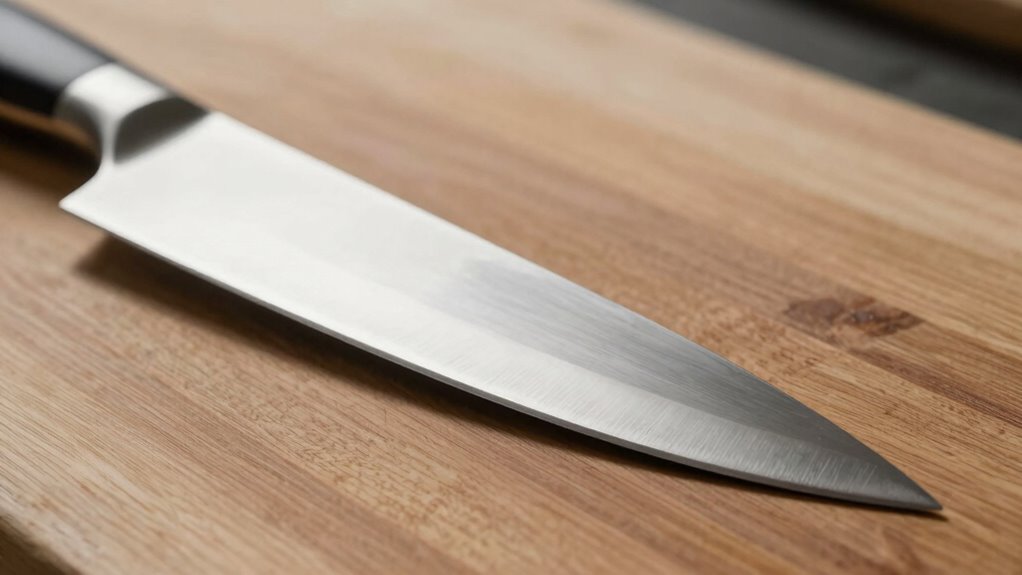
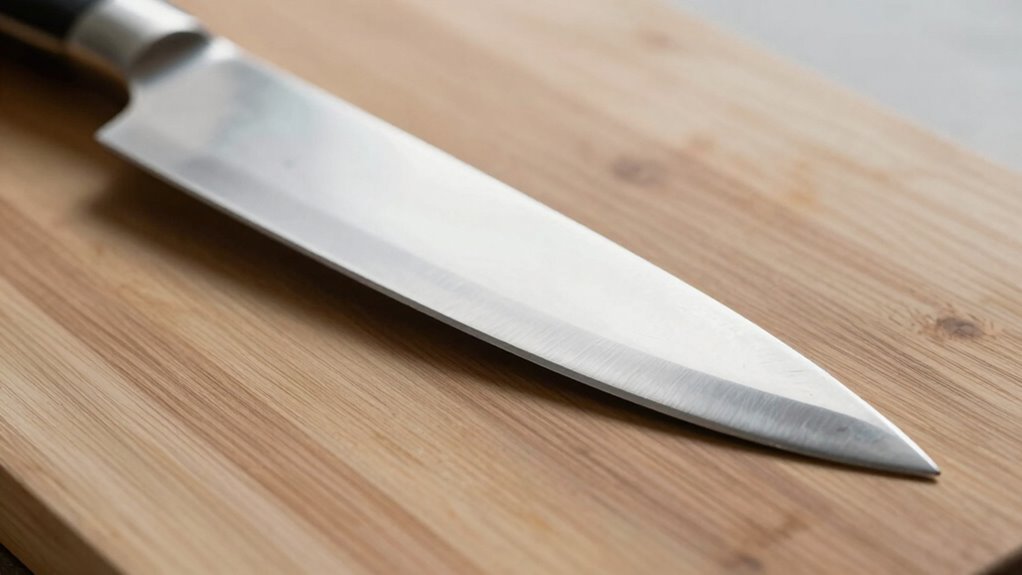
Have you ever noticed that your knife feels less controlled when you reach the tip? That’s a common experience, and it largely comes down to the way the blade’s flexibility and the pivot point influence your control. When you’re chopping, slicing, or dicing, the part of the blade near the handle offers more stability, but as you move toward the tip, things change. The tip acts more like a free-moving extension, which affects how precisely you can guide it.
The knife tip feels less controlled because of blade flexibility and the pivot point’s influence on stability.
Blade flexibility plays a major role here. Most knives have a certain amount of bend or flexibility, especially thinner or softer blades. When you apply pressure near the handle, the blade remains firm and predictable because it’s anchored at the pivot point—the fulcrum where the blade connects to the handle. However, as you shift your focus toward the tip, the blade’s inherent flexibility causes it to bend or wobble slightly. This bending reduces your ability to control the movement smoothly, making the tip feel loose or unpredictable. Fundamentally, the more flexible the blade, the more pronounced this effect becomes.
The pivot point is another key factor. It’s the area where the blade is attached to the handle and acts as the main fulcrum during cutting. When you press near the handle, the pivot point provides stability, acting as a reliable anchor. When your movements involve the tip, which is farther from this pivot point, the leverage shifts. The farther you go from the pivot, the more your actions translate into small, uncontrolled movements at the tip. This is because the mechanical advantage decreases, and even slight hand tremors or pressure variations become amplified at the blade’s end. Additionally, blade design influences how well control is maintained near the tip, with some designs offering enhanced stability. Being aware of the blade shape can also help you select knives that are easier to control in this critical area. Understanding how blade stiffness affects control can further help you choose the right tool for precise cutting. Using knives with a balanced weight distribution can also improve overall handling and control during intricate tasks.
To improve control near the tip, you might consider choosing a knife with a stiffer blade, which reduces flexibility and minimizes wobbling. Alternatively, adjusting your grip or technique can help, such as applying more controlled pressure and keeping your fingers close to the blade’s base for added stability. Recognizing the role of the pivot point can also guide you in making more precise cuts by consciously limiting the amount of force applied toward the tip or by adjusting your hand positioning. Moreover, practicing specific cutting techniques focused on stability near the tip can gradually improve your control in this area.
In the end, understanding how blade flexibility and the pivot point influence your control can help you become more confident and precise in your cutting techniques. When you’re aware of these factors, you can adapt your grip and pressure, making your knife feel more predictable, even near the tip.
As an affiliate, we earn on qualifying purchases.
Frequently Asked Questions
How Does Blade Length Affect Control Near the Tip?
A longer blade often reduces control near the tip because of increased blade flexibility, making it more prone to bending during precise cuts. The weight distribution shifts, putting more emphasis on the handle and less on the tip, which decreases your ability to maneuver accurately. As the blade length increases, you need to adjust your grip and technique to compensate for these factors, ensuring better control during detailed work.
Can Different Handle Materials Influence Tip Control?
Yes, handle materials can influence your tip control. Handles with better ergonomics provide a more secure grip, helping you maneuver the knife with precision. If the handle is too smooth or uncomfortable, you might struggle to maintain grip security, especially near the tip. Choosing a handle material that fits your hand comfortably and offers good traction ensures better control, allowing you to work more confidently and accurately with your knife.
Does Sharpening Angle Impact Tip Precision?
Yes, sharpening angle greatly impacts tip precision. A consistent sharpening angle maintains blade stability, especially near the tip, allowing for more precise cuts. If you change the angle unevenly, it can destabilize the tip, making it harder to control. By sticking to a steady angle during sharpening, you guarantee better blade stability and improve your overall control, especially towards the tip, leading to cleaner and more accurate cuts.
Are Certain Knife Styles Better for Tip Control?
Certain knife styles, like chef’s knives with a curved blade, offer better tip control because of their blade ergonomics. The handle grip also plays a essential role, providing stability and precision during delicate cuts. You’ll find that knives with a balanced weight distribution and ergonomic handles allow you to maneuver near the tip more confidently. Choosing the right style helps improve control, making detailed tasks easier and safer.
How Does User Technique Improve Control Near the Tip?
Think of your technique as a dance; smooth, controlled movements improve tip control. You can do this by adjusting your grip to suit the knife’s blade flexibility and ensuring ergonomic grip ergonomics, which give you better leverage and precision. Keep your hand steady and use lighter pressure near the tip. Practicing these techniques helps you develop a more sensitive touch, making it easier to control the tip during intricate cuts.
As an affiliate, we earn on qualifying purchases.
Conclusion
So, the next time your knife feels like it’s about to take over your hand near the tip, remember—it’s not just a quirk, it’s a warning! Don’t let a tiny part of your knife control your cooking destiny. Master this, and you’ll wield your blade with the precision of a culinary ninja. Take control now, or forever live in fear of the wild, unruly tip that threatens to turn your kitchen into chaos!
As an affiliate, we earn on qualifying purchases.
precision slicing Japanese knife
As an affiliate, we earn on qualifying purchases.
As an affiliate, we earn on qualifying purchases.
Evergreen bestsellers Picks
bestsellers
As an affiliate, we earn on qualifying purchases.