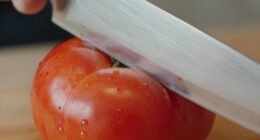
Understanding the differences between flat, hollow, and convex edges helps you pick the right knife for your needs. Flat grinds are versatile and easy to sharpen, feeling stable and balanced during use. Hollow grinds are lightweight and razor-sharp, making precise cuts but needing frequent maintenance. Convex edges are strong and durable, ideal for heavy-duty chopping and outdoor tasks. To improve your technique and choose wisely, explore how each shape feels and performs in action.
Key Takeaways
- Hollow grinds are thin, razor-sharp, and ideal for precision slicing but are more fragile and require frequent sharpening.
- Flat grinds offer balanced strength and versatility, providing a stable feel suitable for various tasks and easier maintenance.
- Convex grinds are durable and shock-resistant, feeling sturdy and excellent for heavy-duty chopping and outdoor use.
- Hollow edges feel lightweight and precise, while convex edges provide robustness; flat edges offer a stable, middle-ground feel.
- Sharpening difficulty increases from hollow (easiest) to convex (most complex), affecting maintenance and edge retention.
As an affiliate, we earn on qualifying purchases.
Understanding the Basic Shapes of Knife Edges

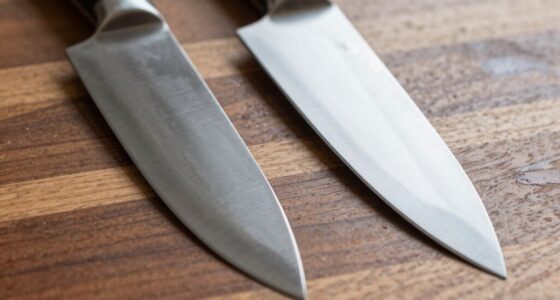
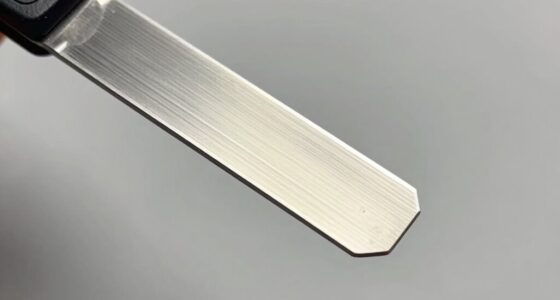
Understanding the basic shapes of knife edges is essential because each design affects how the knife cuts, sharpens, and handles stress. The hollow grind creates a concave shape along the blade, allowing for a very sharp, thin edge that’s easy to sharpen but more fragile under heavy use. Flat grinds feature symmetrical, steep V-shaped bevels that cut efficiently and are versatile for various tasks. Convex grinds arc outward toward the edge, providing extra steel support and durability, making them stronger and more shock-resistant. Each shape influences performance: hollow edges excel in slicing, flat edges balance strength and cutting, and convex edges prioritize durability. Knowing these shapes helps you choose the right knife for your specific needs and understand how they’ll perform during use. Additionally, edge geometry plays a crucial role in how a knife performs and responds to different cutting tasks.
As an affiliate, we earn on qualifying purchases.
The Strengths and Weaknesses of Flat Grinds
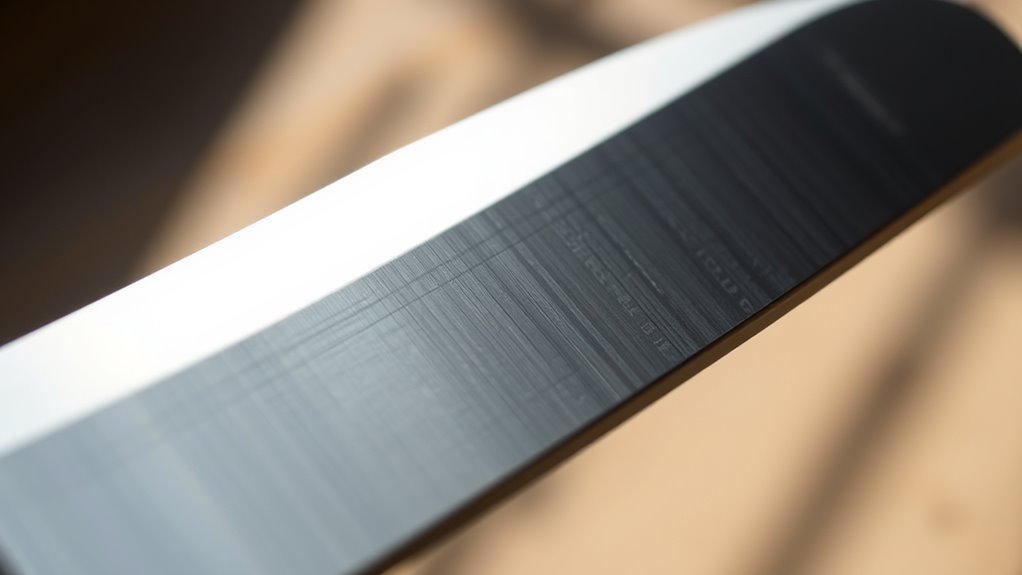
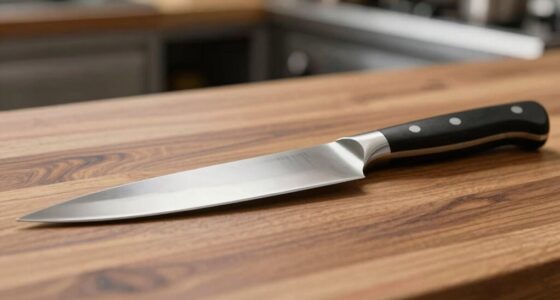
Flat grinds offer a balanced combination of strength and cutting efficiency, making them a popular choice for many users. They excel in versatility, handling a variety of tasks with decent performance. They provide good slicing ability, with minimal resistance through food or materials. They are easy to sharpen, as the straight bevels allow for consistent, straightforward honing. They are durable enough for general use, without the fragility seen in hollow grinds. Additionally, their straightforward design often results in better color accuracy and easier calibration, which can be important for precision tasks. However, flat grinds aren’t perfect. They can lack the robustness needed for heavy-duty chopping, and their thinner edges may chip if used improperly. Still, overall, they strike a solid balance for everyday tasks.
convex edge outdoor hunting knife
As an affiliate, we earn on qualifying purchases.
As an affiliate, we earn on qualifying purchases.
How Hollow Grinds Affect Cutting Performance
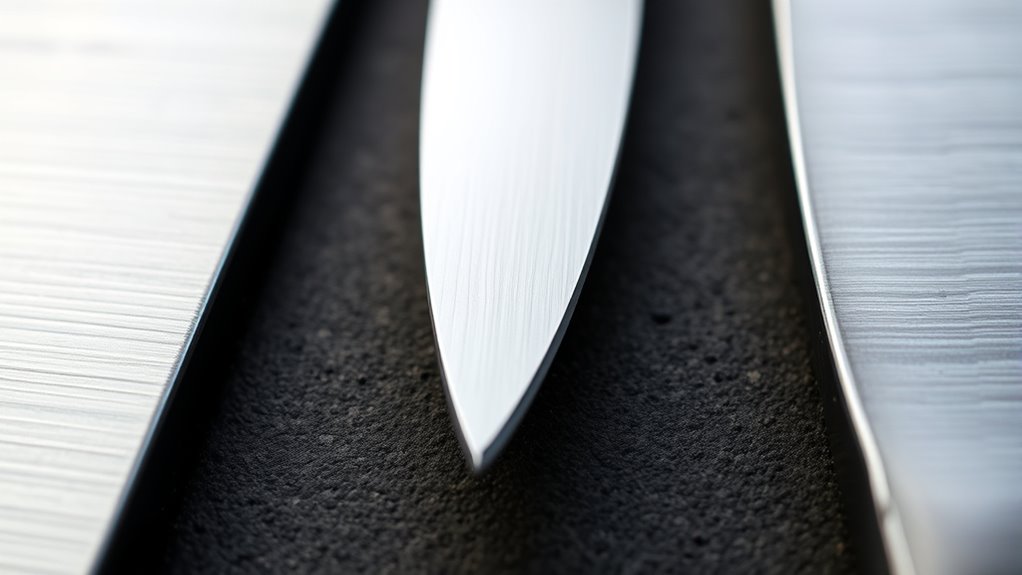
Hollow grinds excel at precision in light tasks like slicing and detailed work, thanks to their thin edges. However, this sharpness makes them more susceptible to chipping or rolling under heavy use or impact. If you rely on your knife for tougher jobs, you might find hollow grinds less durable over time. Additionally, understanding the importance of edge geometry can help you choose the right knife for various tasks and prolong its lifespan. To optimize performance, maintaining proper blade maintenance is essential to preserve the integrity of the thin edge. Proper sharpening techniques are also crucial to sustain the hollow grind’s effectiveness and durability. Using the correct sharpening tools can significantly impact the longevity and performance of your knife. Research indicates that dreams of deceased loved ones can also reflect emotional processing related to loss, highlighting the importance of understanding your tools and your feelings when choosing and maintaining them.
Precision in Light Tasks
If you’re focusing on precision during light cutting tasks, the hollow grind offers notable advantages. Its thin edge allows for razor-sharp cuts, making delicate slicing easier. Plus, the hollow grind maintains this thinness longer through multiple sharpenings, ensuring consistent accuracy. Here are three key benefits:
- Sharpness Maintenance: The thin edge stays fine, providing precise, clean cuts.
- Ease of Sharpening: The concave shape simplifies honing, keeping your knife razor-ready.
- Lightweight Control: The reduced material at the edge offers nimbleness, enhancing finesse during detail work. Additionally, the hollow grind’s cutting efficiency is often superior in delicate tasks due to its geometry. This configuration is ideal for tasks like slicing small vegetables, fine meats, or delicate fillets, where accuracy and a smooth finish matter most. The hollow grind excels in scenarios demanding precision and finesse, making it a popular choice among chefs and home cooks alike. Proper maintenance and understanding of blade geometry can further optimize its performance in culinary applications, especially when paired with appropriate sharpening techniques.
Susceptibility to Chipping
While hollow grinds excel at maintaining sharpness and precision, their thin edges are more vulnerable to chipping during hard use. Because the cutting edge is so thin, any impact or excessive force can cause small chips or rolls, weakening the blade’s overall integrity. This makes hollow grinds less suitable for tasks involving heavy chopping, batoning, or cutting through hard materials like bone or dense wood. The narrow edge lacks the steel backing needed to withstand shocks, increasing the risk of damage. You’ll notice that, after some tough use, the edge may require more frequent sharpening or repair. Edge durability is significantly impacted by the grind geometry, especially under demanding conditions. If you need a blade for demanding tasks, a hollow grind’s susceptibility to chipping can compromise performance and longevity. Additionally, proper maintenance can also help extend the lifespan of hollow-ground blades by minimizing unnecessary damage. Recognizing the material properties of the steel used can further influence how well a hollow grind performs under stress. Furthermore, understanding the blade geometry helps in selecting the right tool for specific needs.

Intelitopia Complete Knife Sharpening Stone Set – Dual Grit Whetstone 400/1000 3000/8000 Knife Sharpener with Leather Strop, Flattening Stone, Bamboo Base, 3 Non-slip Rubber Bases & Angle Guide
- Complete Knife Sharpening Kit: Includes all essential sharpening tools
- Dual Grit Whetstone: 400/1000 and 3000/8000 grit for versatile sharpening
- Durable Corundum Material: High-quality aluminum oxide for longevity
As an affiliate, we earn on qualifying purchases.
As an affiliate, we earn on qualifying purchases.
The Advantages of Convex Edges in Heavy Use

Convex edges excel in heavy use because their outward arc provides superior steel support behind the cutting edge, making them much more durable and resistant to damage. This reinforced support helps the edge withstand chopping, impact, and shock better than other grind types. With a convex edge, you benefit from:
Convex edges offer increased durability and support for heavy-duty chopping and impact.
- Increased strength against chips and rolls during tough tasks like splitting or heavy chopping.
- Better durability, reducing the frequency of re-sharpening or maintenance.
- Enhanced resilience when facing hard materials, from dense wood to bone.
- Proper maintenance is essential to keep the convex edge performing at its best over time, ensuring consistent edge integrity.
- Understanding blade geometry can help you select the right edge profile for specific tasks and prolong the lifespan of your tools. Additionally, the manufacturing process for convex edges often results in a more robust and uniform finish, further contributing to their durability. Recognizing the importance of material hardness can also influence how well the convex edge maintains its sharpness under heavy use.
These features make convex edges ideal for outdoor, survival, and heavy-duty kitchen tasks. They deliver a robust performance, maintaining sharpness longer and enduring rough use without compromising integrity.
Comparing Edge Maintenance and Sharpening Ease
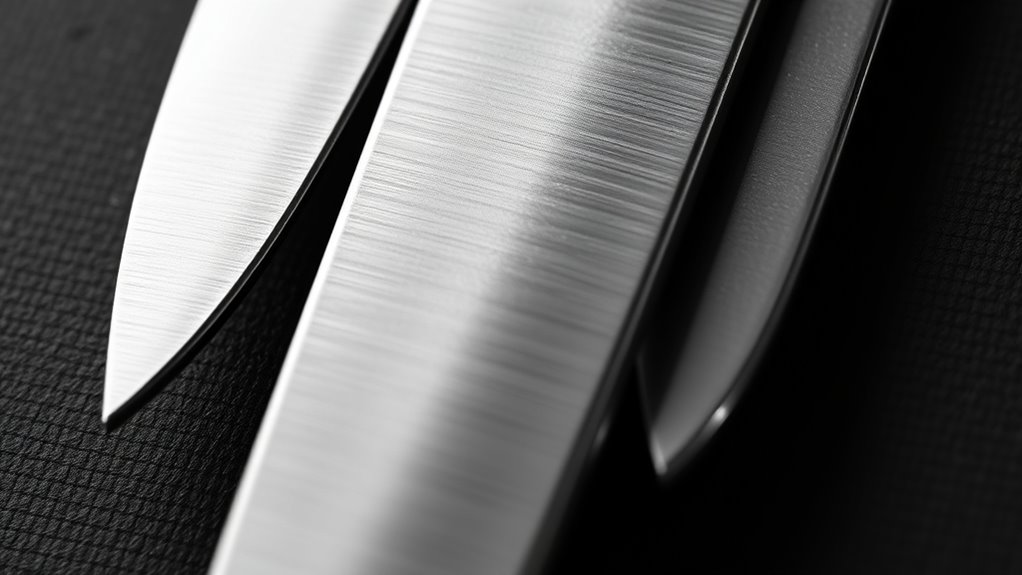
When it comes to maintaining your knife, the ease of sharpening can vary greatly depending on its edge geometry. Some edges, like flat grinds, are straightforward to sharpen and keep sharp, while others, like convex edges, require more skill and effort. Considering durability and how well your edge holds its sharpness over time helps determine which maintenance approach suits your needs best.
Sharpening Difficulty Levels
Sharpening difficulty varies considerably among edge geometries, affecting how easily you can maintain a sharp edge over time. Generally, the shape influences how quickly sharpening wears you out or how precise you need to be.
- Hollow grinds are the easiest to sharpen because their thin edge requires fewer strokes and less effort, making them ideal for quick touch-ups.
- Flat grinds are moderate; they have a straightforward bevel, but maintaining symmetry can take more time and attention.
- Convex edges are the most challenging; their rounded shape demands more skill and patience to restore, often requiring specialized tools or techniques.
Understanding these differences helps you choose the right knife for your sharpening skills and maintenance preferences.
Edge Durability and Retention
Edge durability and retention determine how well a knife maintains its sharpness over time and how often you need to sharpen it. Hollow grinds tend to dull faster because their thin edges are more susceptible to damage and rolling under hard use, making them less suitable for heavy tasks. Flat grinds generally hold their edge longer due to their balanced strength and easier maintenance. Convex grinds offer superior durability because of their reinforced edge support, resisting chips and dings better during chopping or impact-heavy work. Sharpening a hollow grind is usually easier because the thin, consistent bevel requires less effort, but it may need more frequent touch-ups. Convex edges, while stronger, are more challenging to sharpen evenly. Flat edges strike a good balance, offering decent retention and manageable maintenance. Proper edge maintenance is essential to prolonging the sharpness and performance of all grind types.
Practical Feel and Handling of Different Grind Types
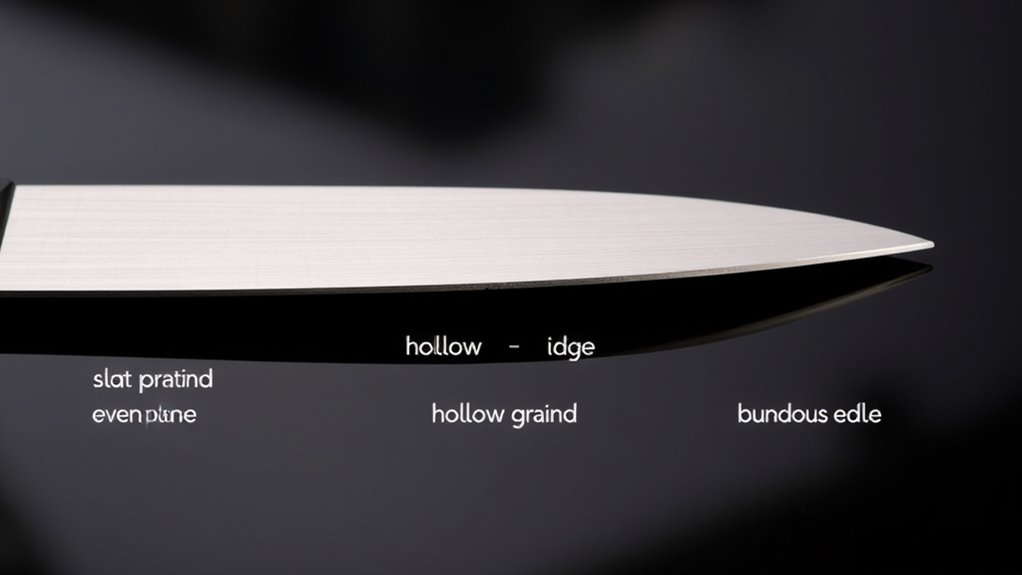
The practical feel and handling of different grind types considerably influence how you control and maneuver a knife during use. You’ll notice distinct behaviors with each grind:
- Hollow Grind: It feels lightweight and nimble, offering precise control for delicate cuts. Its thin edge glides easily through soft materials but can feel fragile under tough use. Proper blade geometry can help optimize performance and durability. Selecting the right grind for your specific tasks can improve cutting efficiency and overall safety. Additionally, understanding edge geometry can help you maintain a sharp edge longer and prevent damage during use. A well-designed grind profile contributes to the knife’s overall handling and longevity.
- Flat Grind: It provides a balanced, stable feel, giving you confidence for general tasks. The straight bevel ensures smooth, predictable slicing with less effort.
- Convex Grind: It offers a sturdy, robust handle with a slightly rounded edge. This grip is ideal for heavier chopping and outdoor work, feeling more substantial and resilient in your hand.
Choosing the right grind enhances your control and comfort during different tasks. A well-chosen grind also contributes to the overall durability and ease of maintenance of your knife systems.
Choosing the Right Grind for Your Cutting Tasks
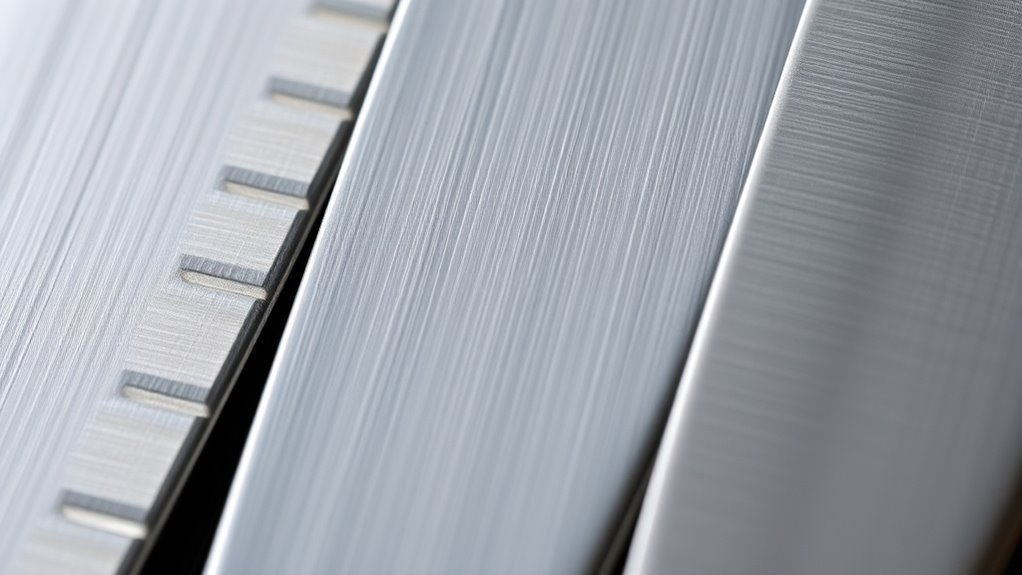
Choosing the right grind depends on the specific tasks you’ll perform with your knife. If you need precision and delicate slicing, a hollow grind is ideal because it creates a thin, sharp edge that stays sharp longer. Use it for light tasks like filleting or utility work. For general kitchen use, a flat grind offers a good balance of strength and cutting efficiency, suitable for slicing, chopping, and everyday tasks. If you require durability and heavy-duty chopping, a convex grind provides maximum support behind the edge, making it robust and resistant to chipping. Avoid hollow grinds for heavy, hard work, as they are more fragile. Select the grind based on how much force you’ll apply and the type of material you’re cutting, ensuring *best* performance and longevity. Understanding edge geometry and its impact on cutting performance can help you choose the most suitable grind for your needs.
Frequently Asked Questions
How Does Edge Geometry Influence Knife Durability Over Time?
Your knife’s edge geometry directly impacts its durability over time. Convex edges, with their reinforced steel support, resist chipping and rolling better during heavy use, making them last longer. Flat edges offer a balanced strength, suitable for general tasks, while hollow grinds are more prone to damage under stress because of their thin edges. So, choose the right geometry based on your cutting needs to guarantee your knife stays sharp and durable longer.
Can a Single Knife Have Multiple Grind Types?
Yes, a single knife can have multiple grind types, often seen in Scandinavian or Japanese blades. You might find a flat grind on the main bevel, with a convex or hollow edge at the tip or spine for specific tasks. This combination enhances versatility, strength, and cutting performance, allowing you to enjoy the benefits of different grinds in one tool. However, it can complicate sharpening and maintenance.
Which Grind Type Is Best for Outdoor Survival Knives?
Think of your outdoor survival knife as a dependable shield—convex grind is your best choice. Its outward curve symbolizes strength and resilience, giving you maximum support for chopping, batoning, and shock resistance. You’ll find it more durable in tough tasks, preventing chips and rolls. This robust edge guarantees your knife remains reliable through heavy use, making it an essential tool when you need strength and endurance in the wild.
How Does Grind Shape Affect Slicing Precision in Culinary Use?
Your slicing precision depends heavily on the grind shape. A flat grind offers the most control, allowing you to make clean, straight cuts with minimal resistance. Hollow grinds excel at fine slicing, especially for delicate tasks like soft fish or meat. Convex grinds provide durability and a stronger edge, but may slightly reduce precision. Choosing the right grind depends on your specific culinary needs and the balance you want between sharpness and strength.
Are Convex Edges Suitable for Sharpening With Standard Tools?
Yes, convex edges are suitable for sharpening with standard tools. You can use a sharpening stone, guided systems, or guided sharpening tools to maintain or restore the convex shape. Just take your time, use consistent strokes, and follow the natural curve. Keep the angle steady, and you’ll achieve a sharp, durable edge. Regular maintenance prevents chipping and keeps your convex-edged knife performing its best.
Conclusion
Ultimately, choosing the right edge geometry depends on your cutting needs and preferences. Whether you favor the flat grind’s balance, hollow grind’s precision, or convex edge’s strength, each shape offers a unique feel and performance. Sometimes, it’s the small details—like the way a knife balances in your hand—that reveal an unexpected harmony. In the end, your perfect cut is as much about intuition as it is about geometry.