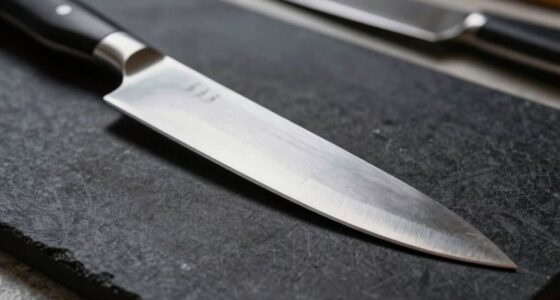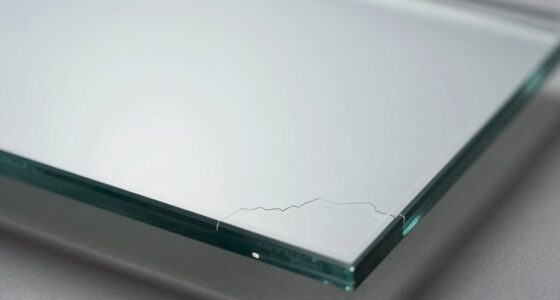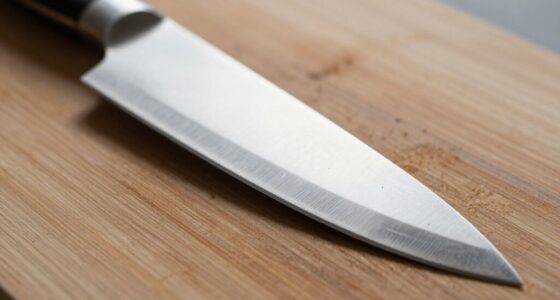
You should regrind your knife when you notice visible cracks, chips, or warping, as these damage safety and performance. Also, if the edge becomes rounded, dull, or won’t sharpen despite honing, it’s time for regrinding. Handle instability and increased effort during cuts are signs too. Recognizing these early helps prevent accidents and prolongs your blade’s life. If you want to learn how to plan and choose the right professional, keep going.
Key Takeaways
- Dullness persists despite honing, and cutting requires increased force or causes tearing of ingredients.
- Visible chips, cracks, or warping indicate the blade needs regrinding or replacement.
- The edge appears rounded, asymmetrical, or fails to produce clean, precise cuts.
- The knife exhibits increased effort during use or feels uneven, compromising safety and control.
- Regular inspections and logging help determine optimal regrinding intervals before damage worsens.
Recognizing Visible Cracks and Chips

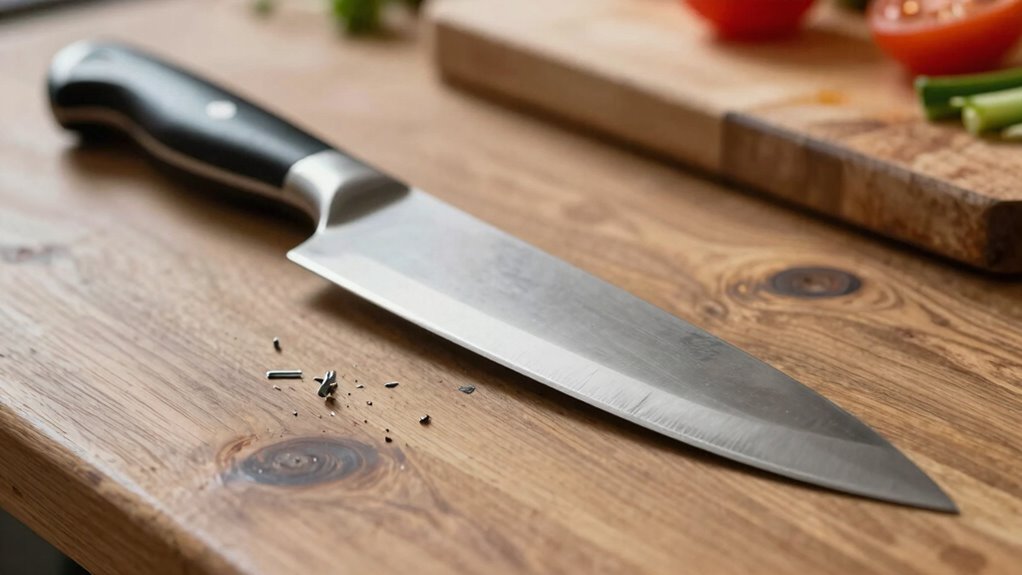
Have you ever noticed small imperfections along your knife’s edge? Look closely at the blade’s surface—cracks near the bolster or along the spine mean serious trouble. These fractures weaken the blade’s structure and can lead to sudden breakage during use. Cracks are often hard to spot without good lighting, so inspect carefully. Chips and nicks are more visible—they appear as dents or broken bits along the edge. Small chips might be sharpened out, but larger ones or multiple damage points signal it’s time for a replacement. Both cracks and chips can cause uneven cuts, food catching, and contamination risks. Recognizing these signs early helps you avoid accidents and ensures your knife remains safe and effective for your kitchen tasks.
Assessing Blade Bending or Warping
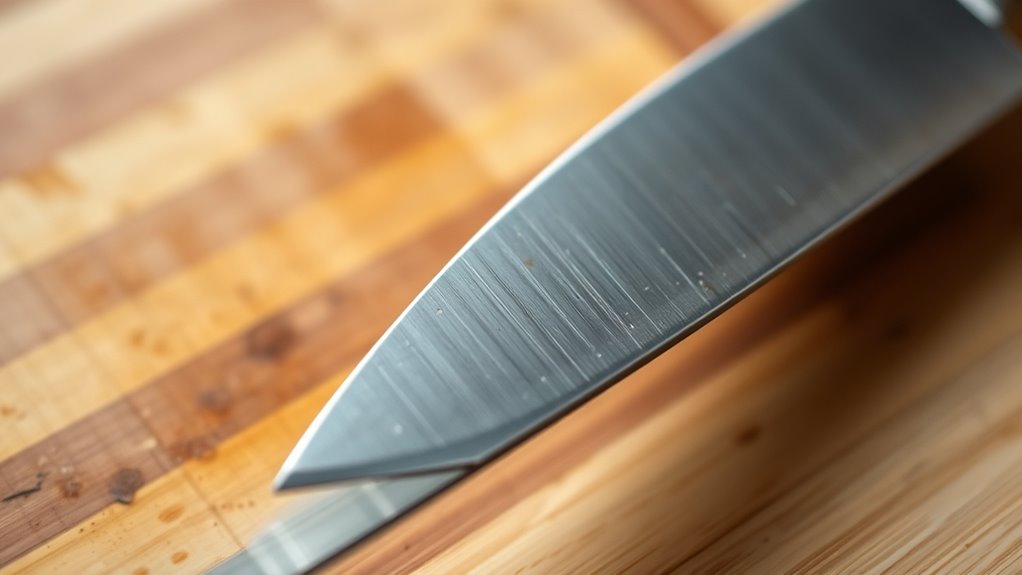
To assess if your knife is bent or warped, hold it up to a light source and check for any visible curves or twists. Warping can prevent the blade from making clean contact with the cutting surface, affecting your control. Significant warping often means the knife needs replacing, as minor bends might be corrected professionally. Ensuring that your tools are properly maintained aligns with sustainable practices, and helps extend their lifespan. Additionally, considering blade integrity can help identify whether repair or replacement is the best option.
Visual Inspection Techniques
How can you tell if your knife blade is bent or warped just by looking at it? First, hold the knife level and examine it under good lighting. Look for any visible curves or twists along the blade’s length. You can also place the blade flat on a smooth, straight surface—if gaps appear between the blade and the surface, it’s warped. Another method is to hold the knife up to a light source; a bent or warped blade often shows uneven reflections or shadows. Be attentive to slight deviations in alignment, especially near the handle or tip. Minor bends might be subtle, but significant warping is usually obvious. Regular visual checks help catch warping early before it impacts your control or safety during use. Additionally, sustainable materials used in high-quality knives can sometimes influence the degree of warping over time, so understanding material properties can assist in maintenance.
Impact of Warping on Use
Warping or bending in a knife blade can considerably diminish your control and safety during use. When the blade is warped, it doesn’t sit flat on the cutting surface, leading to uneven cuts and slipping hazards. You might notice the knife twisting or curving when you hold it up to the light, indicating significant warping. This misalignment reduces your precision, making tasks like slicing or chopping more difficult and dangerous. Minor bends can sometimes be corrected professionally, but severe warping often means the blade’s structural integrity is compromised. Continuing to use a warped knife increases the risk of accidents and further damage. When you see signs of warping, it’s best to contemplate regrinding or replacing the blade to restore proper function and safety. Additionally, understanding proper maintenance can help prevent warping from occurring in the first place, especially when considering factors like paint sprayer care and avoiding excessive heat exposure.
Identifying Edge Wear and Rounding Signs
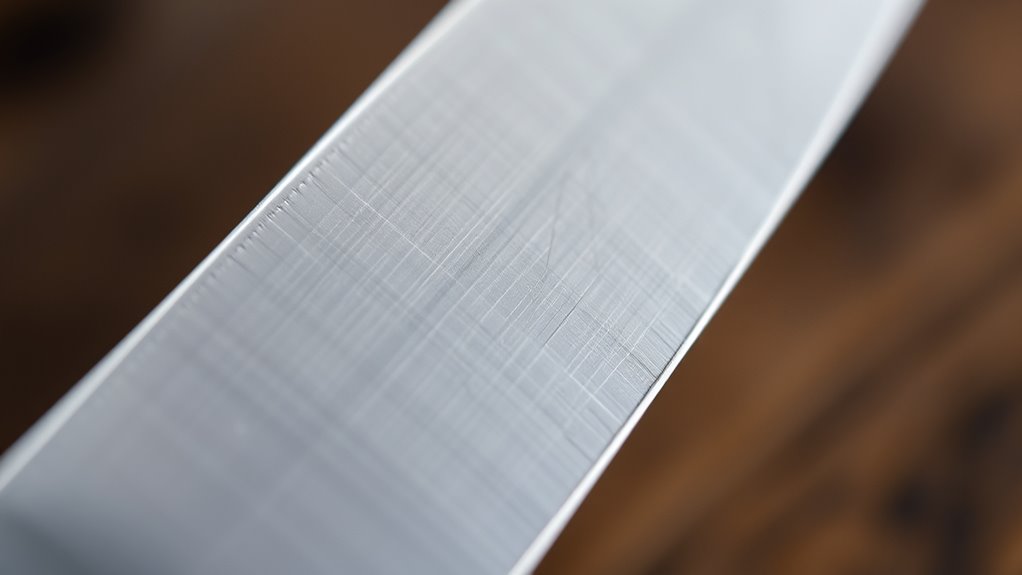
You’ll notice when your knife’s edge becomes rounded or no longer tapers to a fine point, which signals wear. An asymmetrical edge profile or loss of sharpness also indicates the blade is dulling and may need regrinding. Recognizing these signs early helps maintain cutting performance and prevents further damage. Incorporating passive voice detection into your editing process can further improve clarity and effectiveness. Additionally, observing if your knife struggles with slicing through materials or requires increased force can be key indicators that regrinding is necessary.
Rounded Blade Appearance
Are your knife’s edges starting to look rounded or no longer taper to a fine point? This change signals that the blade has experienced significant wear. You might notice the edge losing its sharpness and becoming dull quickly, even after sharpening. The original crisp line diminishes, and the blade appears thicker or more blunted. This rounding results from repeated use and sharpening, which gradually wears down the steel. Additionally, understanding precious metal investments can help you recognize the importance of maintaining quality tools, much like maintaining valuable assets. Recognizing these signs early can prevent further damage and prolong the life of your knife.
Look for these signs:
- Edges no longer taper to a sharp point
- Blade looks thicker or more blunt
- Dulling occurs faster despite sharpening
If you observe these signs, it’s likely time to regrind or replace your knife. Continuing to use a rounded edge can compromise cutting performance and safety. Regrinding restores the edge’s geometry, ensuring better control and efficiency. Regular maintenance and understanding edge geometry are crucial for keeping your knives in optimal condition.
Loss of Sharpness
As your knife begins to lose its sharpness, you’ll notice it struggles to cut through ingredients with the same ease as before. Foods like tomatoes or herbs may crush or tear instead of cleanly slicing. You might need to apply more pressure, which increases fatigue and reduces control. The edge may look dull, no longer tapering to a fine point, or appear rounded and asymmetrical. Repeated sharpening can alter the original blade profile, further diminishing sharpness and cutting performance. Over time, the steel weakens, making it harder to maintain a crisp edge. If you find yourself constantly pushing or struggling during prep, it’s a clear sign that your knife’s edge has worn down. Recognizing these signs helps you decide when regrinding is necessary to restore ideal sharpness.
Asymmetrical Edge Profile
An asymmetrical edge profile is a clear sign that your knife has experienced uneven wear or damage, affecting its cutting efficiency. You might notice one side of the edge is more rounded or duller than the other, or the blade no longer tapers evenly. To identify this, look for:
- One side appearing more rounded or flattened
- Uneven contact with cutting surfaces
- A blade that no longer slices smoothly or evenly
This imbalance often results from improper sharpening or consistent mis-use. It can cause your knife to require more force, reduce control, and compromise safety. Recognizing an asymmetrical edge early allows you to plan regrinding or professional sharpening, restoring balance and performance while preventing further damage.
Detecting Handle Damage and Stability Issues
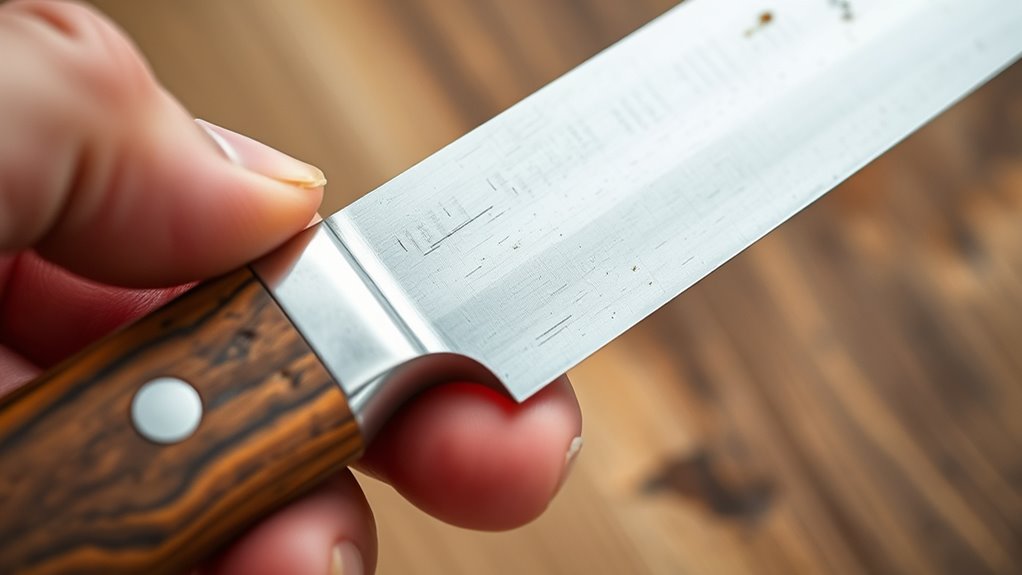
Detecting handle damage and stability issues begins with a close inspection of how the knife feels during use. If you notice wobbling, slipping, or discomfort, it’s a sign something’s wrong. Check for cracks, chips, or looseness around the handle joint. Loose handles can cause unsafe control and uneven cuts. To visualize, consider this table:
| Issue | Visual/Feel Indicators |
|---|---|
| Cracks or splits | Visible lines or gaps in the handle |
| Wobbly or loose handle | Handle feels unstable or shifts during use |
| Discomfort or pain | Grip feels awkward, causing fatigue or pain |
Address handle problems promptly; they compromise safety and balance, signaling it’s time for repair or replacement. Regular inspection practices can help identify issues before they become hazardous, preventing further damage and ensuring optimal safety. Additionally, understanding material durability can aid in selecting handles that resist wear over time. Recognizing signs of wear and tear early can extend the lifespan of your knife and maintain its performance. Proper handle maintenance and timely replacement can also prevent accidents caused by handle failure.
Monitoring Dullness and Cutting Performance
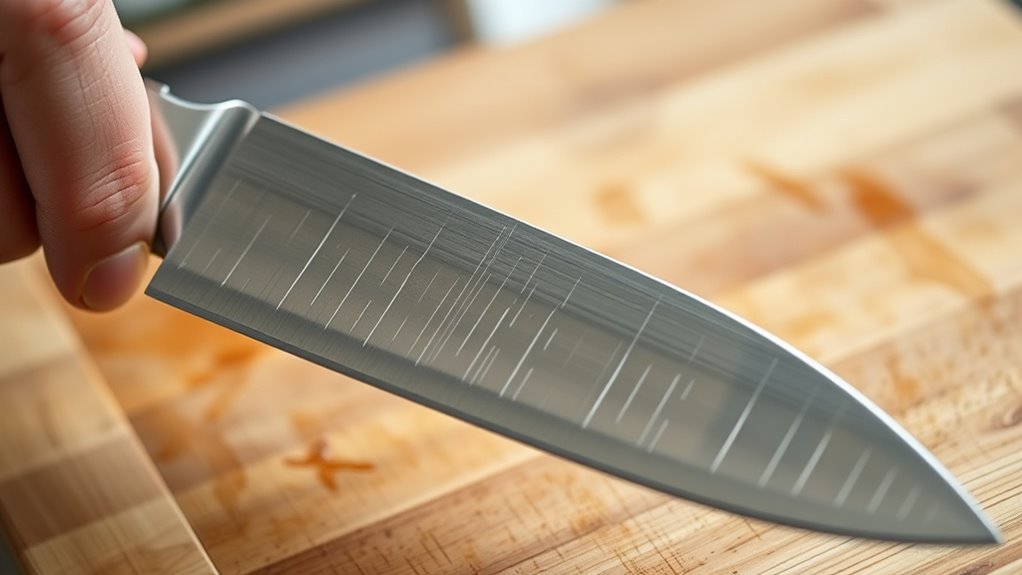
Monitoring dullness and cutting performance is essential for maintaining a sharp, safe knife. You should regularly evaluate how well your knife slices through different foods. If you notice specific signs, it’s time to reconsider regrinding. For example:
- Difficulty cutting tomatoes, meat, or herbs cleanly
- Slipping or excessive pressure needed during cuts
- Frayed or torn edges on the food
These indicators suggest your blade is losing its edge. You might also experience increased fatigue or longer prep times. Keep track of these changes to determine when sharpening no longer restores performance. Regularly testing cutting ease helps prevent accidents caused by dull blades and ensures your knife remains safe and effective for everyday use.
When Sharpening No Longer Restores Sharpness
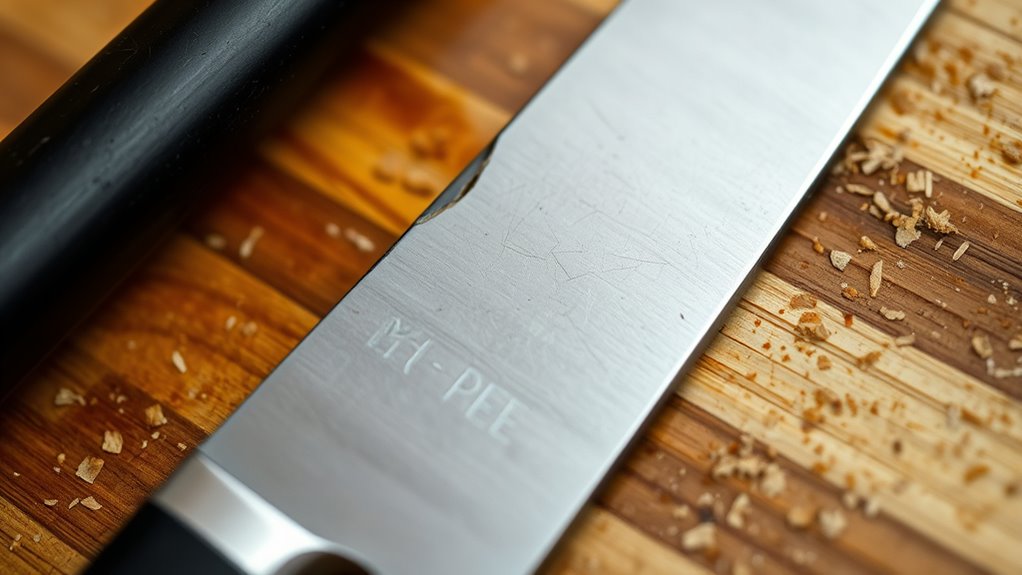
When sharpening no longer brings back your knife’s edge, it’s usually because the edge has lost its effectiveness or too much material has been removed. You might notice the blade dulls quickly again or feels uneven despite sharpening efforts. In these cases, continuing to sharpen can weaken the blade further and won’t restore its original sharpness.
Diminished Edge Effectiveness
As you sharpen your knife, you might notice that it no longer regains its edge or cuts as efficiently as before. This diminished edge effectiveness means sharpening isn’t restoring the performance it once had. You’ll observe that slices are less clean, requiring more effort and force. The blade may feel dull even after multiple passes on your stone or sharpener. Regular maintenance, such as checking for filter indicators, can help detect when tools like water air purifiers need attention, similar to recognizing when a knife’s edge has worn down beyond a simple touch-up. Signs include:
- The knife struggles to cut through tomatoes or herbs smoothly
- Increased slipping or food tearing during slicing
- You need frequent sharpening to maintain acceptable performance
- Over time, the steel may develop microfractures or fatigue signaling the need for regrinding
This indicates the edge has worn down beyond a simple touch-up. The steel may be too thin or fatigued, making regrinding necessary to restore the blade’s original cutting ability.
Excessive Material Removal
Excessive material removal occurs when sharpening a knife beyond its ideal limit, causing the blade to thin dangerously. This weakens the edge and risks blade failure. As you remove more steel, you compromise its structural integrity, making it prone to chipping, cracking, or bending. Use the table below to identify signs you’re removing too much material:
| Sign | Effect | Solution |
|---|---|---|
| Blade feels thin | Increased risk of breakage | Regrind sooner, replace if too thin |
| Loss of blade profile | Reduced cutting precision | Stop sharpening, reprofile or replace |
| Difficult to sharpen | Steel weakened, dulling faster | Limit sharpening, regrind if necessary |
| Visible thinning edge | Structural instability | Regrind before damage occurs |
The Dangers of Using a Damaged Knife
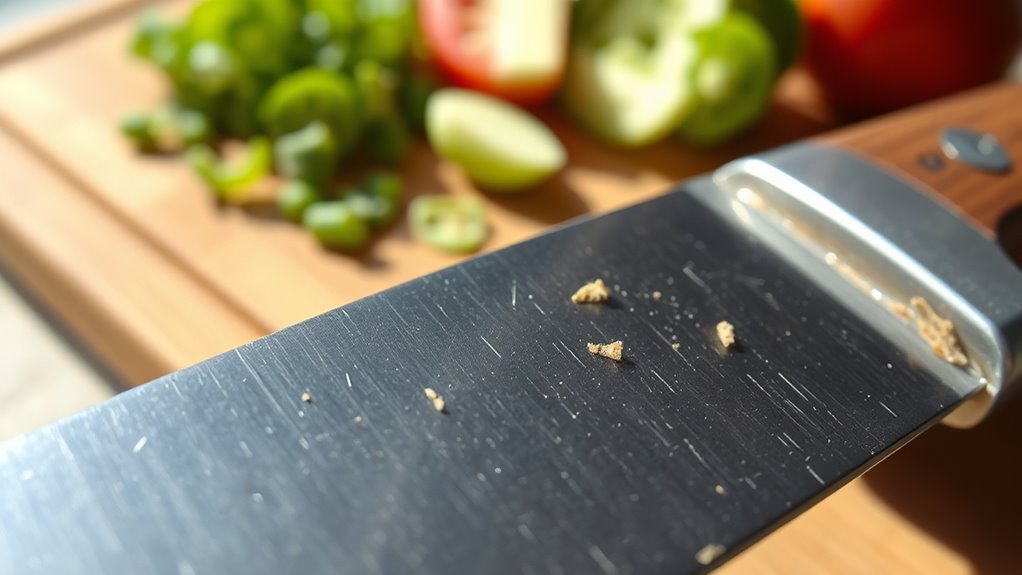
Have you ever considered the risks of using a damaged knife? Using a compromised blade can lead to serious injuries or food contamination. Cracks near the bolster or along the spine may cause unexpected blade failure during use. Chips and nicks can catch on food, leading to uneven cuts or tearing. Bent or warped blades reduce control, increasing the chance of slips. Additionally, dull or rounded edges require more force, risking slips and cuts. Proper maintenance and timely regrinding help ensure your knife remains safe and effective. Regular honing and sharpening extend the lifespan of your blades and maintain their cutting precision. Be cautious if your knife:
Using a damaged knife risks injury, contamination, and poor food prep—inspect regularly and maintain your blades carefully.
- Has visible cracks or chips
- Feels wobbly or unbalanced
- Fails to cut cleanly or slips easily
Continuing to use a damaged knife increases safety hazards, compromises food quality, and can cause further blade damage. Never ignore signs of damage; prioritize safety and proper knife care. Proper regrinding can help restore the blade’s integrity and extend its usability.
Planning Your Regrinding Schedule
Planning your regrinding schedule is essential to maintaining a sharp, safe, and effective knife. Regularly inspecting your blade helps you catch signs of dullness, nicks, or cracks early. Set a routine—perhaps after every few uses or weekly—to check for edge wear, nicks, or handle issues. Keep a log to track when you last sharpened or regrinded your knife, so you don’t wait too long. Remember, over-sharpening can weaken the steel, while delaying regrinding risks safety and performance. Adjust your schedule based on how often you cook and the type of tasks your knife handles. Being proactive ensures your knife stays in top shape, reducing the likelihood of accidents and prolonging its lifespan. Proper maintenance also helps preserve the knife’s edge and overall condition over time.
Choosing the Right Professional for Regrinding
Choosing the right professional to regrind your knife can make all the difference in maintaining its performance and safety. You want someone with experience and proper equipment to avoid damaging the blade. Look for a specialist who:
- Is certified or has reputable reviews from other home cooks or chefs
- Uses professional-grade sharpening tools and stones
- Offers repair or consultation services if your blade has cracks or chips
Avoid amateurs or general hardware stores that might lack the expertise needed for delicate or high-quality knives. A skilled pro understands how to preserve your blade’s integrity while restoring its edge. Proper piercing care and hygiene are essential for preventing complications if your knife has been used in a kitchen environment. Additionally, selecting a professional familiar with soul sanctuaries and holistic approaches can contribute to a more mindful and respectful maintenance process, ensuring your tools serve you well over time. Recognizing signs like blade dullness or chips can help you decide when regrinding is necessary before performance suffers. Being aware of blade geometry can also influence the regrinding process to maintain optimal cutting angles and efficiency. A knowledgeable regrinder will also consider the net worth of a skilled professional to ensure you receive quality service that justifies the investment.
Preventative Care to Extend Blade Life
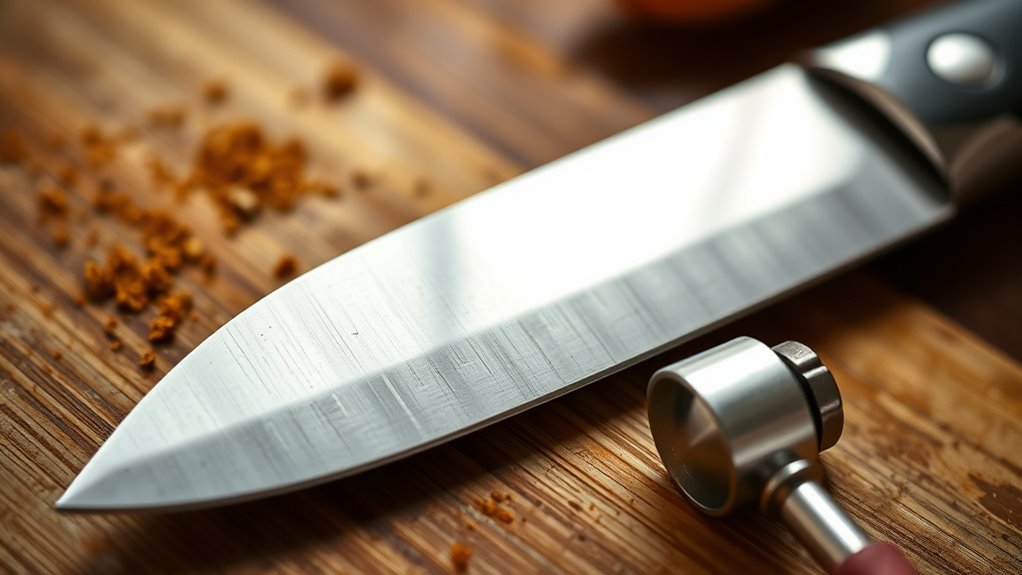
Regular preventative care is essential for extending your knife’s blade life and maintaining ideal performance. Start by hand washing your knife immediately after use, avoiding the dishwasher to prevent handle damage and corrosion. Dry it thoroughly to prevent rust and corrosion, especially along the edge and bolster. Regularly hone your blade using a honing steel to realign microscopic edge micro-serrations and maintain sharpness. Use a proper cutting surface, like a wooden or plastic cutting board, to prevent unnecessary dulling or chips. Periodically inspect for cracks, chips, or warping, addressing issues early. Proper maintenance practices include choosing the right support breakfast to keep your knife in top condition. Proper sharpening should be done only when needed, avoiding excessive grinding that weakens the steel. These simple steps keep your knife sharp, safe, and ready for precise cuts, ultimately extending its lifespan.
Frequently Asked Questions
Can Minor Chips Be Fixed Without Full Blade Replacement?
Minor chips can often be fixed through professional sharpening or regrinding, which smooths out the damaged edge. You should take your knife to a skilled sharpener, who can carefully remove a small amount of steel to restore a clean edge. However, avoid attempting to fix large or multiple chips yourself, as improper techniques can worsen the damage or compromise the blade’s integrity. Regular maintenance helps prevent chips from forming.
How Can I Safely Inspect for Hidden Cracks?
To safely inspect for hidden cracks, hold the knife under a bright light and gently tilt it at various angles. Look closely along the bolster, spine, and edge for fine lines or irregularities. Use a magnifying glass if necessary, and run your fingers lightly over the surface to feel for cracks or rough spots. Always handle the blade carefully to avoid injury, and if unsure, consult a professional for a thorough inspection.
Is Professional Regrinding Suitable for All Types of Knives?
Oh, absolutely, professional regrinding is suitable for all knives—except maybe your plastic butter knife. In reality, it’s best for high-quality or expensive knives, not cheap or specialized ones. Cheaper knives often don’t justify the cost, and some specialty blades can be ruined by improper grinding. So, if you value your fancy chef’s knife, yes, get it professionally regrinded. Otherwise, consider replacement or DIY sharpening.
What Are the Risks of Regrinding a Heavily Damaged Blade?
Regrinding a heavily damaged blade risks weakening the steel, causing cracks or chips to worsen or even leading to blade failure. It can remove too much material, reducing the knife’s durability and altering its balance, making it unsafe or less effective. If the damage is extensive, replacing the knife is safer. Always assess the extent of damage before considering regrinding, and consult a professional if unsure.
How Often Should I Have My Knife Professionally Sharpened?
Like a car needs regular tune-ups, your knife benefits from professional sharpening every 6 to 12 months, depending on use. If you notice dullness, increased effort, or uneven edges, it’s time to get it sharpened. Frequent use, especially daily, may require more frequent visits. Keep an eye on blade condition, and don’t wait until it’s seriously dull—timely sharpening keeps your knife performing safely and efficiently.
Conclusion
Think of your knife like a trusted friend on a long journey — with proper care and timely regrinding, it stays sharp and reliable. I once ignored a tiny chip, only to find it worsened, making chopping dangerous. Regularly checking for signs and planning regrinding keeps your tools in top shape, just like tending a garden ensures healthy growth. Stay attentive, and your knife will serve you well for many adventures ahead.