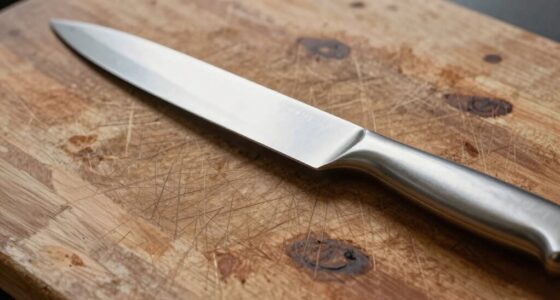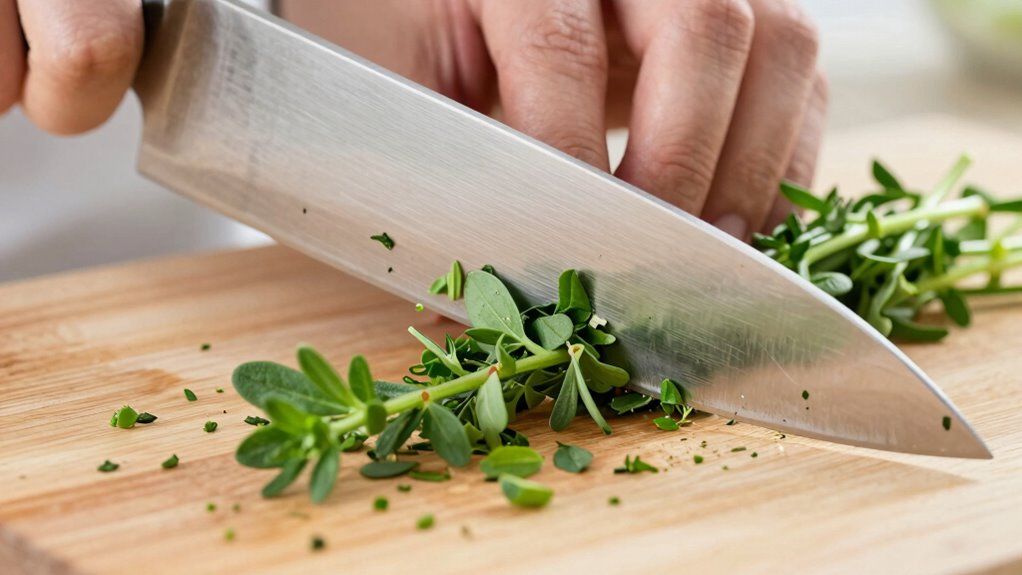

If your knife grabs, tears, or cracks delicate herbs, it’s likely because the blade isn’t sharp enough or has an improper shape, causing more resistance and uneven cuts. Dull or broad-angle blades tend to crush herbs instead of slicing cleanly, especially if moisture makes the herbs tender. Using the right technique and maintaining a sharp, well-shaped blade can make a big difference. Keep going to discover how your tools can work better for perfect cuts.

Get kitchen gear delivered free with Prime
- Fast, free delivery on millions of items
- Prime Video, Amazon Music and more included
- Member-only deals all year
Key Takeaways
- Dull or improperly shaped blades increase resistance, causing herbs to tear or crack during cutting.
- High moisture content in herbs weakens cell walls, making them more prone to tearing when cut with dull knives.
- Using excessive force or improper technique leads to grabbing and damaging delicate herbs.
- Lack of regular blade maintenance reduces sharpness, resulting in uneven cuts and herb tearing.
- Cutting with the wrong angle or force disrupts herb structure, causing cracking or grabbing.
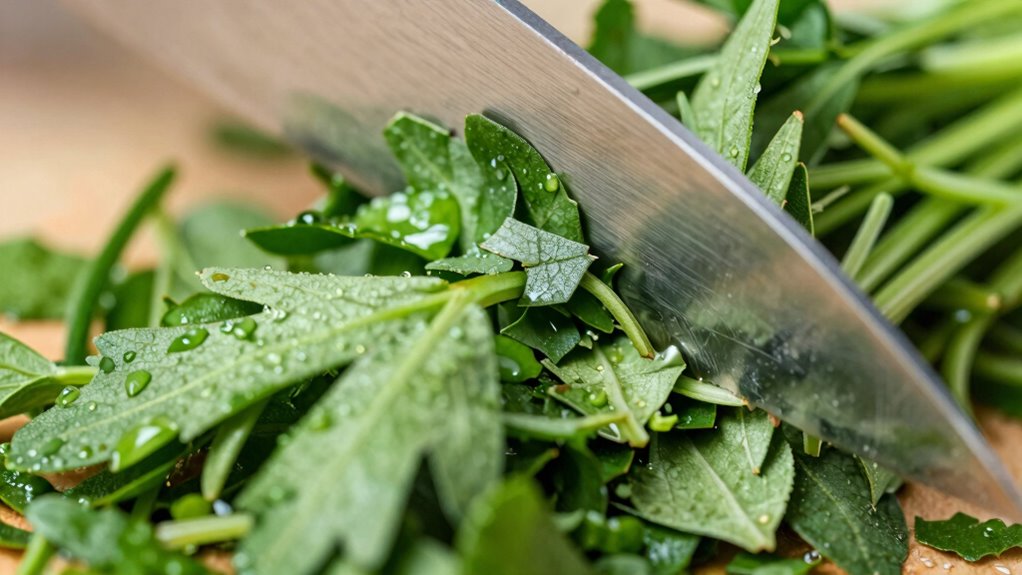
If you’ve ever noticed your delicate herbs tearing instead of slicing cleanly, the problem often lies in your knife’s technique or condition. One key factor is the knife blade geometry. A blade with a dull edge or an inappropriate shape can cause you to exert more pressure, which increases the likelihood of tearing. For delicate herbs like basil, cilantro, or mint, you need a very sharp, precise edge—ideally a thin, fine bevel that allows for clean, effortless cuts. A blade with a broader angle or dull edge tends to crush or tear the herbs rather than slice through smoothly. That’s because the geometry of the blade determines how the force is distributed across the cutting edge. When the edge is fine and well-maintained, it glides through herbs with minimal resistance, preserving their fragile structure. Regularly inspecting and maintaining your knife’s edge sharpness can make a significant difference in achieving clean cuts.
Another essential aspect is the herb’s moisture content. Herbs with high moisture levels are more prone to tearing because their cells are full of water, making them tender and delicate. When you try to cut through moist herbs with a dull or improperly shaped knife, the resistance can cause the herbs to rip apart instead of slicing cleanly. Conversely, herbs that are slightly dried or have a lower moisture content tend to hold up better during slicing. To prevent tearing, consider dry-harvesting your herbs or patting them gently with a paper towel before cutting. This reduces excess moisture and makes them easier to handle. Additionally, using a proper cutting technique can help minimize tearing and preserve the herbs’ delicate structure. Practicing a gentle, controlled slicing motion ensures that you do not apply unnecessary force, which helps maintain the integrity of delicate herbs.
Products Worth Considering

Ninja Luxe Café Premier 3-in-1 Espresso Machine, Drip Coffee & Cold Brew

De’Longhi Classic Matte Black Espresso Machine with Milk Frother

Le Creuset Enameled Cast Iron Round Dutch Oven, 5.5 Qt, Flame
As an affiliate, we earn on qualifying purchases.
Frequently Asked Questions
Can Using a Dull Knife Prevent Tearing Herbs?
Using a dull knife can actually prevent tearing herbs, as it requires less force to cut through delicate leaves, reducing damage. When you keep your knives sharp, you enhance herb preservation and guarantee cleaner cuts. This also promotes knife safety, minimizing slipping risks. So, regularly sharpening your knives helps you handle herbs gently, maintaining their freshness, flavor, and appearance while keeping your cutting process safe and efficient.
Does the Type of Knife Affect Herb Damage?
Think of your knife as the brushstroke that paints your dish—its type truly influences herb preservation. A well-balanced, sharp knife with good ergonomics glides through herbs gently, preventing tears and cracks. Conversely, a dull or poorly designed knife fights against the herbs, causing damage. Selecting the right knife guarantees your herbs stay intact, maintaining their flavor and appearance, and making your culinary art shine brighter.
Should Herbs Be Dried Before Chopping?
No, herbs shouldn’t be dried before chopping if you want to maximize herb preservation and flavor retention. Fresh herbs contain more essential oils, which give them their vibrant flavor and aroma. Drying can cause these oils to evaporate, diminishing flavor. To keep herbs fresh and flavorful, chop them just before use and store leftovers properly. This approach guarantees maximum herb preservation and flavor retention for your dishes.
How Does Cutting Technique Influence Herb Integrity?
Your cutting technique directly influences herb preservation by maintaining their delicate structure. Use sharp knives and precise, gentle motions to avoid crushing or tearing herbs, which helps retain their flavor and appearance. Practice cutting with a rocking or slicing motion, rather than pressing down hard, to prevent damage. This careful approach guarantees your herbs stay intact, vibrant, and flavorful, enhancing your dishes and reducing waste.
Are There Specific Knives Better for Delicate Herbs?
You should choose a paring or ceramic knife for delicate herbs, as they’re gentler and help preserve herb integrity. Did you know that improper knife maintenance can dull blades quickly, increasing the risk of tearing herbs? Using the right knife not only improves herb preservation but also minimizes damage. Keep your knives sharp and clean to guarantee smooth cuts, which helps maintain the delicate structure of your herbs and enhances flavor.
Conclusion
To keep your herbs looking their best, handle your knife with gentle confidence, allowing their delicate nature to shine through. A light touch can turn a rough experience into a graceful dance, preserving their fragile beauty and flavor. When you respect their tenderness, you create a harmony of flavors and textures that elevates your culinary creations. Remember, sometimes the subtle art of patience and care yields the most exquisite results.