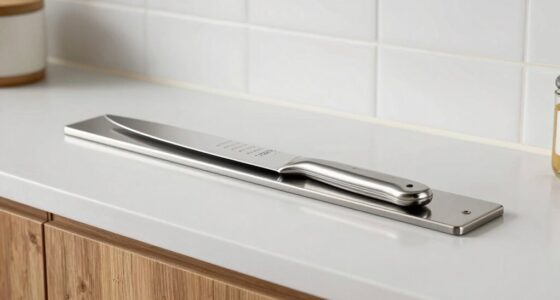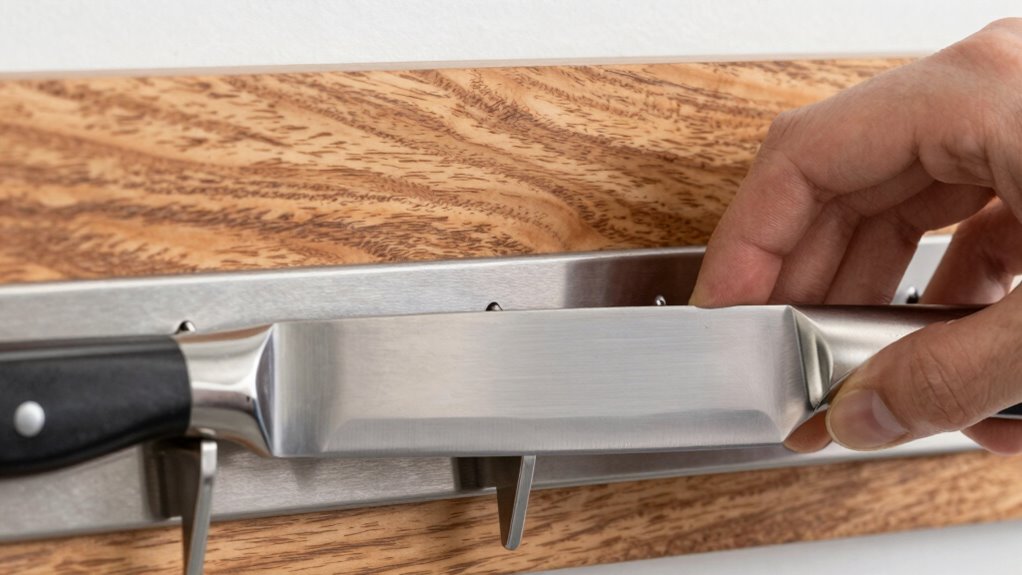

To remove knives from a magnetic strip without side loading the edge, start by ensuring your hand is steady and grip the handle firmly away from the blade. Gently tilt the knife slightly away from the strip and lift at a mild upward angle, using slow, controlled motions. Wiggle gently if needed to loosen the magnetic hold. By mastering these techniques, you’ll safely and efficiently take knives off without damaging the edge or magnet. Keep exploring for more tips to sharpen your skills.

Get kitchen gear delivered free with Prime
- Fast, free delivery on millions of items
- Prime Video, Amazon Music and more included
- Member-only deals all year
Key Takeaways
- Tilt the knife gently away from the magnetic strip, aligning your removal direction with the tilt.
- Grip the handle firmly away from the blade’s edge, maintaining control throughout the process.
- Lift the knife at a slight upward angle, avoiding lateral or sideward movements.
- Wiggle the knife back and forth slowly if it resists removal, to reduce side loading.
- Keep the blade’s edge away from the magnet, applying controlled force to prevent dulling or damage.
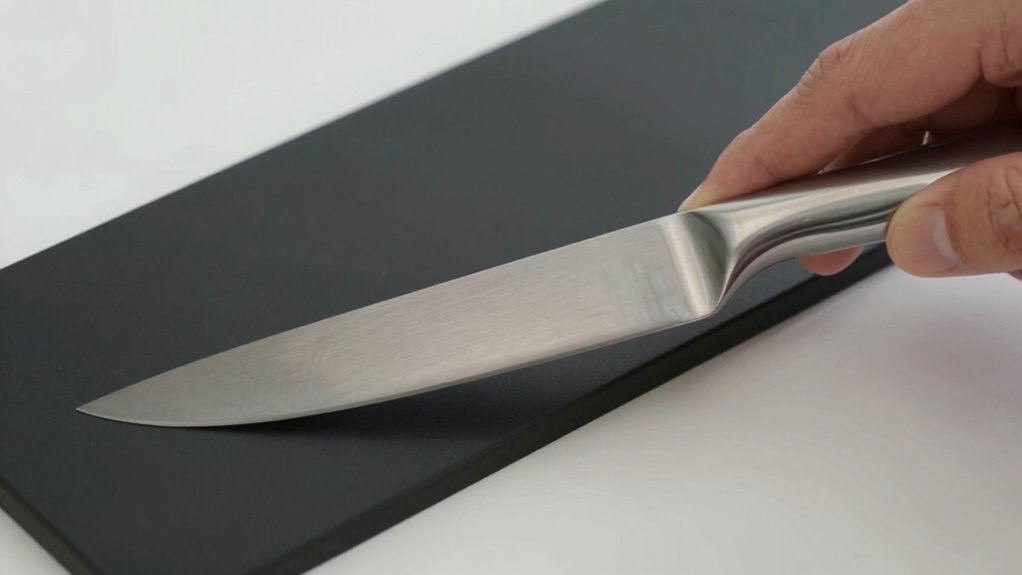
Have you ever struggled to remove a knife from a magnetic strip without risking injury or damaging the blade? It’s a common dilemma, especially if you’re focused on maintaining knife safety and preserving the sharpness of your blades. The key to safely taking knives off a magnetic strip lies in understanding how the magnets hold the knives and using proper techniques to avoid side loading the edge. When you approach the process with care, you prevent accidental cuts and prolong the life of your knives.
First, always confirm your hand is stable and your grip is firm before attempting to lift the knife. Place your fingers on the handle, away from the blade’s edge, to get a solid hold. Instead of pulling the knife straight up or from the side, gently tilt the blade away from the magnetic strip, aligning it with the direction of removal. This minimizes lateral pressure on the edge, reducing the risk of dulling or chipping your knife. Remember, magnetic strips are designed to hold blades securely, so a slow, controlled motion is best.
When removing the knife, try to lift it at a slight angle, rather than pulling it directly outward. This technique helps to avoid side loading, which can damage the edge or cause the magnet to loosen over time. If the knife feels stubborn, don’t yank it; instead, gently wiggle it back and forth while maintaining that slight upward tilt. This loosens the magnetic grip without applying excessive force that might bend or nick the blade. Over time, this careful approach becomes second nature, making knife removal safer and more efficient. Additionally, understanding the magnetic hold can help you develop better techniques for removal.
Maintaining your magnetic strip is equally important for knife safety and longevity. Regularly check the magnet’s strength and cleanliness. Dust, grease, or debris can weaken the magnetic hold, making knives more prone to slipping or falling. Use a soft cloth to clean the strip periodically, ensuring it’s free of residue. If the strip’s magnet weakens considerably, consider replacing it to keep your knives secure. Proper magnetic strip maintenance not only safeguards your blades but also prevents accidents in the kitchen.
knife removal tool for magnetic strip
As an affiliate, we earn on qualifying purchases.
As an affiliate, we earn on qualifying purchases.
Frequently Asked Questions
Can I Use a Magnet to Remove Other Metal Tools From the Strip?
Yes, you can use a magnet for tool retrieval from a magnetic strip, but it depends on the magnetic strength. A stronger magnet will easily attract and lift metal tools, making removal simple without side loading the edge. Just hover the magnet near the tool, and it should come free. Keep in mind, weaker magnets may not be effective, so choose a magnet suited for the tool’s metal type and weight for smooth removal.
Is It Safe to Use My Hand Directly on the Knife Edge?
You shouldn’t risk your fingers dancing along the knife’s razor-sharp edge. For safe knife safety, always handle with care and avoid direct contact with the cutting edge. Use a cloth, a pair of tongs, or a gentle tool to protect your fingers from accidental cuts. Remember, edge protection isn’t just about safeguarding the blade—it’s about keeping your hands safe from harm’s way. Safety first keeps your fingers intact.
What Type of Gloves Should I Wear When Handling Knives?
For knife safety, you should wear cut-resistant gloves when handling knives. Look for gloves made from materials like Kevlar, Dyneema, or other high-performance fibers designed to prevent cuts. These gloves provide a strong barrier, allowing you to grip and handle knives safely without risking injury. Always choose gloves that fit well and are specifically designed for knife handling to guarantee maximum protection during your tasks.
How Often Should I Clean My Magnetic Knife Strip?
You should clean your magnetic strip at least once a month to maintain knife maintenance and guarantee safety. Regular cleaning removes dust, debris, and any residue that could reduce grip or cause rust. Use a damp cloth and mild soap, avoiding abrasive cleaners that might damage the strip. Proper cleaning keeps your knives secure and prevents accidents, promoting magnetic strip safety. Consistent maintenance extends the life of your knives and keeps your kitchen organized.
Can I Adjust the Magnetic Strength of My Strip?
You can’t really adjust the magnetic strength of your strip, but you can optimize tool removal by repositioning knives or tools. If your strip’s magnetic strength isn’t holding items securely, consider replacing it with a stronger one or adding a magnetic enhancer. Think of it as fine-tuning your storage—improving magnetic strength ensures safer tool removal, preventing slips during knife or tool retrieval, and keeps your kitchen organized and secure.
magnetic knife strip safety accessories
As an affiliate, we earn on qualifying purchases.
As an affiliate, we earn on qualifying purchases.
Conclusion
Now that you know how to remove knives from a magnetic strip without side-loading the edge, you’re practically a ninja in kitchen safety. With just a gentle lift and careful grip, you’ll keep your blades sharp and your fingers safe—saving yourself from a cut that’s more dramatic than a Hollywood stunt. Master this simple trick, and you’ll handle your knives like a pro, transforming your kitchen into a sanctuary of precision and safety.
knife edge protector for magnetic strips
As an affiliate, we earn on qualifying purchases.
As an affiliate, we earn on qualifying purchases.
magnetic knife strip cleaning and maintenance
As an affiliate, we earn on qualifying purchases.
As an affiliate, we earn on qualifying purchases.
Fall Picks
fall essentials
As an affiliate, we earn on qualifying purchases.