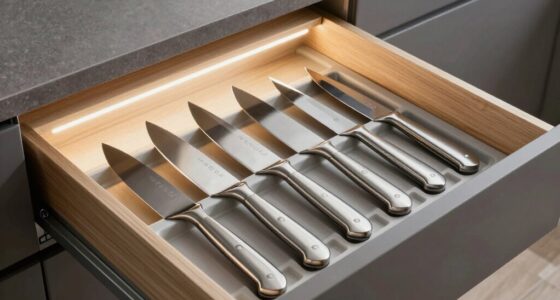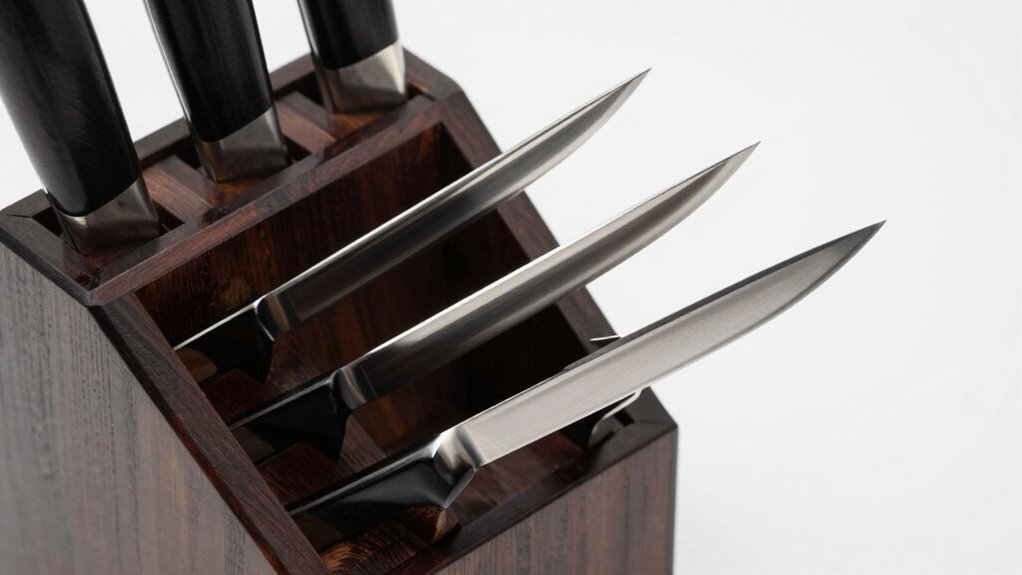

To store long Japanese knives without damaging the tips, use a fitted knife tray with individual slots that support the entire blade length, including the tips, or mount a smooth magnetic strip on the wall to hold the knives securely. Avoid loose storage in drawers, which can cause nicks or bends. Handle the knives carefully during storage to prevent accidental damage. If you want to learn more about proper techniques, keep exploring the best practices.

Get kitchen gear delivered free — and shop member deals
- Fast, free delivery on millions of items
- Access to Prime Big Deal Days deals on October 6–7
- Prime Video, Amazon Music and more included
Key Takeaways
- Use fitted knife trays with individual, snug slots that support the entire blade length, including tips.
- Mount smooth, even magnetic strips securely to prevent knives from slipping or falling.
- Store knives with tips facing upward or downward as recommended, avoiding tips from bending or getting knocked.
- Keep knives dry and clean before storage to prevent rust and corrosion, especially for long blades.
- Handle knives carefully during storage to prevent accidental damage to tips and maintain blade integrity.
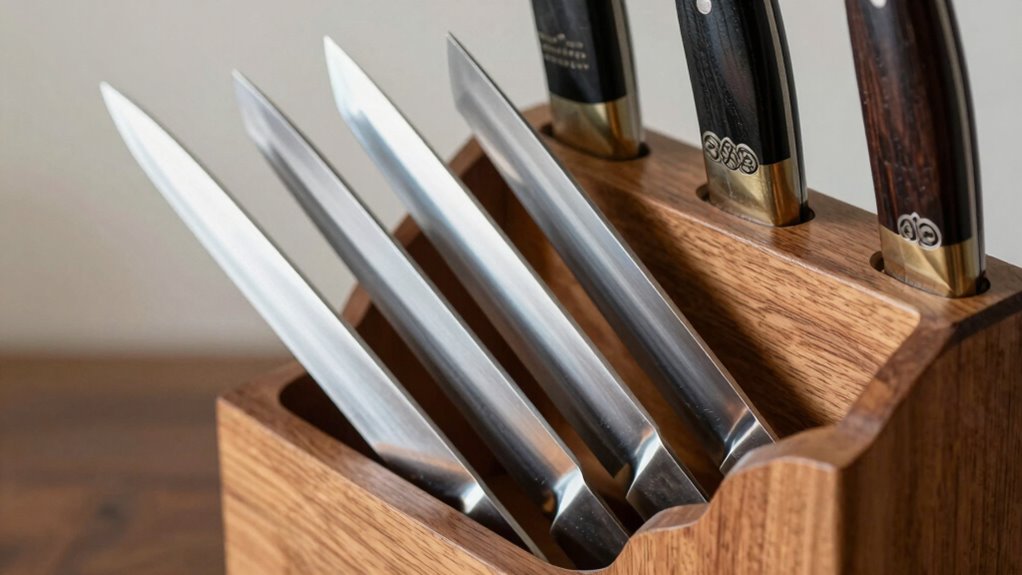
Long Japanese knives are prized for their sharpness and precision, but storing them improperly can easily damage their delicate tips. To keep your knives in top condition, you need to pay close attention to how you store them. Improper storage can lead to dulling edges or, worse, chipped tips. When storing, always consider both safety and the longevity of your blades. Avoid tossing them into drawers with other utensils, as this can cause accidental nicks or dulling. Instead, invest in a proper knife storage solution designed specifically for long Japanese knives.
Proper storage safeguards your long Japanese knives’ tips, sharpness, and craftsmanship for lasting performance and safety.
A knife block with individual slots is a great option. Look for one with narrow, snug-fitting slots that support the entire length of the blade, including the tip. This prevents the tip from bending or getting knocked around. Alternatively, a magnetic knife strip mounted on the wall can be a safe and space-efficient choice. Just ensure the strip isn’t too rough or uneven, which could scratch or chip the blade. When using a magnetic strip, make sure the knife is securely held so it doesn’t fall or slide out. Proper storage techniques are essential for maintaining the integrity of your blades over time. Additionally, choosing the right storage environment can help prevent corrosion and damage caused by humidity or temperature fluctuations. Proper environmental conditions are vital for preserving the steel and preventing rust or other damage.
You should also keep your knife clean and dry before storing it. After each use, wash the blade with warm water and mild detergent, then dry it thoroughly. This prevents moisture from corroding the steel or causing rust, which can weaken the blade over time. Proper knife cleaning extends the lifespan of your Japanese knives and keeps them performing at their best. When it’s time to sharpen your blades, avoid using rough abrasive materials that could damage the edge. Instead, opt for gentle knife sharpening tools designed for delicate blades, and do this regularly to maintain their razor-sharp edge.
Additionally, understanding blade maintenance and proper storage techniques can significantly prolong the life of your knives. It’s essential to handle your knives with care during storage. Never store them loosely in a drawer, as this risks the tips getting nicked or broken. If you prefer drawer storage, consider a fitted knife tray with individual slots to keep each blade protected. Always store your long knives with the bevel side facing up or down, as recommended by knife experts, to avoid unnecessary stress on the edge. Remember, the key to preserving your Japanese knives is consistent, gentle knife cleaning, proper sharpening, and thoughtful storage. By doing so, you’ll ensure your knives stay sharp, safe, and in excellent condition for years to come. Proper storage not only protects the tips but also preserves the craftsmanship and performance that make Japanese knives so highly regarded.
As an affiliate, we earn on qualifying purchases.
Frequently Asked Questions
Can I Store Japanese Knives in a Drawer Safely?
Yes, you can store Japanese knives in a drawer safely if you prioritize knife storage safety and drawer organization. Use a knife guard or a dedicated knife tray to protect the blades and prevent accidents. Make certain blades don’t touch other utensils to avoid damage. Keep the knives in a designated section of the drawer, and regularly check to maintain safety and organization. Proper storage keeps your knives sharp and ready to use.
What Materials Are Best for Knife Storage?
Did you know that choosing the right knife storage materials can extend your knives’ lifespan by up to 50%? For ideal knife storage safety, opt for materials like wood, bamboo, or silicone. These materials cushion blades, prevent scratches, and reduce corrosion. Avoid metal or plastic blocks that may damage tips or dull edges. Proper storage materials protect your knives, keep them sharp, and guarantee safe handling every time you use them.
How Often Should I Sharpen My Japanese Knives?
You should sharpen your Japanese knives every 6 to 12 months, depending on your usage. Regular knife maintenance is essential to keep your blades sharp and efficient. If you notice a dull edge or increased effort while cutting, it’s time for sharpening. Remember, consistent sharpening frequency helps preserve the blade’s integrity, especially for long Japanese knives, ensuring they stay in peak condition and last longer with proper care.
Is It Okay to Store Knives With Other Utensils?
Storing your knives with other utensils can be risky if you’re not careful. Imagine accidentally dulling or damaging your Japanese knives—it’s frustrating! To avoid this, use a knife rack or magnetic strip designed for proper separation. These options keep your blades safe, prevent accidents, and preserve their sharpness. Don’t just toss your knives in a drawer—give them the dedicated space they deserve for safe, long-lasting use.
What Signs Indicate My Knife Needs Professional Sharpening?
You’ll know your knife needs professional sharpening when it no longer slices cleanly or requires more pressure. Look for dullness, nicks, or a rounded edge. When you notice these signs, it’s time to seek professional services. Skilled sharpeners use proper sharpening techniques that restore your knife’s edge without damaging it. Regular professional sharpening maintains your Japanese knives’ performance and longevity, keeping them safe and effective for all your culinary tasks.
magnetic knife strip for long knives
As an affiliate, we earn on qualifying purchases.
As an affiliate, we earn on qualifying purchases.
Conclusion
Think of your long Japanese knives as delicate arrows, each tip a precise point aimed at perfection. Proper storage is your quiver, protecting these sharp projectiles from unnecessary harm. When you store them carefully — whether in a knife guard or on a magnetic strip — you’re ensuring they’re always ready to fly straight and true. With thoughtful care, your knives will remain as sharp and essential as the day you first wielded them, ready for your next culinary adventure.
fitted knife tray for Japanese knives
As an affiliate, we earn on qualifying purchases.
As an affiliate, we earn on qualifying purchases.
knife sharpening tools for delicate blades
As an affiliate, we earn on qualifying purchases.
As an affiliate, we earn on qualifying purchases.
Fall Picks
fall essentials
As an affiliate, we earn on qualifying purchases.