Storing knives loose in drawers can seem convenient, but it secretly harms your blades and risks safety. The blades can get chipped or dulled from constant jabbing or rubbing against other utensils, which shortens their lifespan. Plus, moisture trapped between the blades can lead to rust and corrosion, making your knives less effective over time. This disorganization also makes accidents more likely when you reach for one in a cluttered drawer. If you want to protect your cutlery and stay safe, there’s more to contemplate.
Open a free Amazon Business account
Business pricing, bulk buying and tax-exempt orders.
As an affiliate, we earn on qualifying purchases.
Key Takeaways
- Loose knives can dull or chip blades due to constant contact with other utensils or drawer sides.
- Unorganized storage increases the risk of accidental cuts when reaching into the drawer.
- Sharp blades may damage drawer surfaces or nearby utensils over time.
- Moisture trapped between blades can cause rust and corrosion, reducing knife lifespan.
- Poor storage practices compromise safety and lead to higher maintenance and replacement costs.
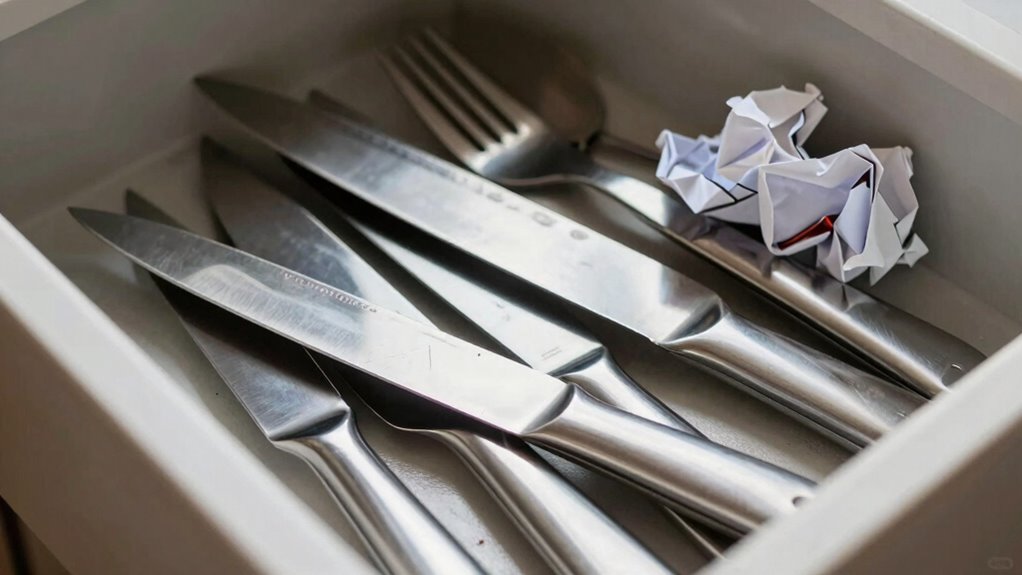
Storing knives loose in drawers might seem convenient, but it can lead to unexpected problems that compromise safety and efficiency. When you toss knives into a drawer without any organization, you risk dulling or damaging their blades, making knife maintenance more challenging later on. The constant jabbing against other utensils or the sides of the drawer can chip the edges or dull the sharpness, which means you’ll need to sharpen or replace them sooner than expected. Plus, a lack of proper storage can cause rust or corrosion, especially if moisture gets trapped between the blades and other items. Proper knife care and maintenance are essential to extend their lifespan. Over time, neglecting these issues increases the risk of your knives becoming unsafe to use.
Storing knives loose risks damage, rust, and accidents, emphasizing the importance of proper organization for safety and longevity.
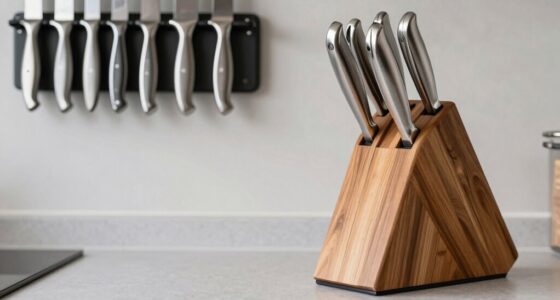
Drawer organization is essential if you want to keep your knives in top shape and prevent accidents. When knives are loose, it’s easy to accidentally grab the wrong one or even cut yourself when reaching into the drawer. The chaos also makes it hard to find the right knife quickly, wasting your time during meal prep. Investing in proper drawer inserts or knife blocks keeps blades secure and separated, reducing the risk of injury and making your kitchen more efficient. These organizers help you maintain the sharpness of your knives and prevent unnecessary wear and tear, which is a key part of good knife maintenance. Proper storage solutions can also help you keep track of your entire cutlery collection, preventing loss or misplacement. Additionally, proper storage can help prevent accidental injuries caused by mishandling or unexpected slips.
Moreover, loose knives in drawers can cause damage to other utensils and your drawer itself. Sharp blades can scrape or nick the surfaces they come into contact with, leading to a cluttered, worn-out look over time. This not only impacts the longevity of your drawer but also adds to the difficulty of keeping everything clean and organized. When knives are stored properly, they’re less likely to cause such damage, and cleaning becomes easier because each item stays in its designated space. Additionally, improper storage can lead to blade corrosion, which diminishes the quality of your knives and can be costly to repair or replace. Using appropriate storage solutions can also prevent moisture buildup, which is a common cause of rust and corrosion. Furthermore, implementing these measures can prolong the overall lifespan of your cutlery collection.
Finally, neglecting proper storage and knife maintenance can compromise safety in your kitchen. Sharp blades stored haphazardly increase the chance of accidental cuts, especially when rummaging through cluttered drawers. You might think it’s just a minor inconvenience, but over time, it can lead to serious injuries. Proper drawer organization and regular knife maintenance go hand in hand to ensure your knives stay sharp, safe, and ready for use. Taking a few minutes to organize your knives properly not only extends their lifespan but also makes your cooking experience safer and more enjoyable.
As an affiliate, we earn on qualifying purchases.
Frequently Asked Questions
How Can I Safely Store Knives Without a Knife Block?
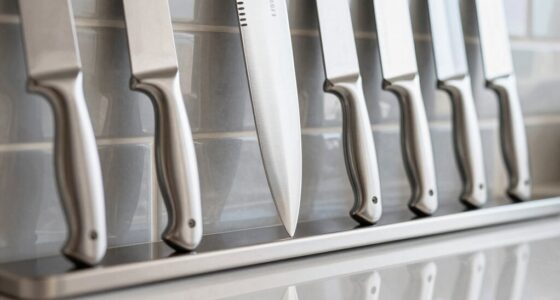
You can safely store knives without a knife block by using a magnetic strip on your wall or a knife drawer organizer. These solutions keep knives securely separated, promoting knife safety and maintaining drawer organization. Make sure to store blades with the sharp edges facing down or away from you, and handle knives carefully when inserting or removing them. This way, you protect yourself and keep your kitchen tidy and safe.
Are There Alternative Storage Options to Drawers for Knives?
You can explore alternatives like magnetic strips or knife blocks for safer storage. These options enhance knife safety and improve drawer organization by keeping blades visible and easily accessible. Magnetic strips attach to walls, saving space and reducing clutter, while knife blocks provide a secure, dedicated spot for each knife. Both methods prevent accidental cuts and keep your knives in good condition, making kitchen prep safer and more efficient.
What Materials Are Best for Knife Drawer Inserts?
You should choose knife drawer inserts made from materials like bamboo, silicone, or high-quality plastic. These materials prioritize knife storage safety by preventing slips and scratches, while offering excellent material durability to withstand daily use. Bamboo is eco-friendly and sturdy, silicone provides a cushioned grip, and durable plastic resists cracking. Selecting the right material improves safety, protects your knives, and guarantees your storage solution lasts over time.
How Often Should I Sharpen Knives Stored in Drawers?
You should sharpen your knives every 1-2 weeks if you use them regularly, ensuring ideal knife safety and sharpness maintenance. Dull blades force you to apply more pressure, increasing the risk of slips and accidents. Visualize a razor-sharp knife gliding smoothly through ingredients—this is what frequent sharpening maintains. Regular honing and sharpening keep your blades safe, effective, and ready for any task, preventing accidents caused by dullness.
Can Improper Storage Affect a Knife’s Edge Longevity?
Yes, improper storage can affect a knife’s edge longevity. When you store knives loosely in drawers, they’re more likely to bump into other utensils, causing dulling and chipping. This compromises knife safety and makes edge maintenance harder over time. To keep your knives sharp and safe, consider using a knife block or sheath. Proper storage helps preserve the edge and guarantees safe handling every time you use your knives.
As an affiliate, we earn on qualifying purchases.
Conclusion
Storing knives loose in drawers might seem convenient, but it increases the risk of accidents and dulls your blades faster. Did you know that nearly 70% of knife injuries occur in home kitchens, often from grabbing a seemingly safe knife? Investing in a proper knife organizer not only keeps you safer but also preserves your knives’ sharpness. So, next time you’re tidying up, consider a better storage solution—you and your knives will thank you.
As an affiliate, we earn on qualifying purchases.
As an affiliate, we earn on qualifying purchases.
Flea & tick season Picks
flea and tick prevention
As an affiliate, we earn on qualifying purchases.