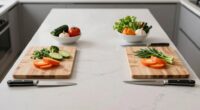
To keep your cutting board stable, using a damp towel is an easy, inexpensive fix—just dampen a clean cloth and place it underneath for quick friction. A non-slip mat offers a more durable, reusable solution with a silicone or rubber surface that stays in place longer and requires less upkeep. Both methods improve safety and efficiency, but if you want to find out which is best for your routine, keep exploring your options.
Key Takeaways
- Wet towels provide a quick, inexpensive fix by increasing friction on smooth countertops but require re-wetting over time.
- Non-slip mats offer a durable, reusable solution that maintains grip without reapplication, ideal for frequent use.
- Both methods improve cutting board stability, enabling safer knife handling and better control during meal prep.
- Wet towels are best for occasional stabilization; non-slip mats are better for consistent, long-term stability.
- Choosing between them depends on routine needs, convenience, and preference for quick fixes versus durable solutions.

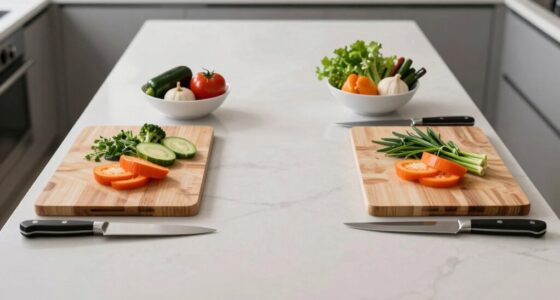
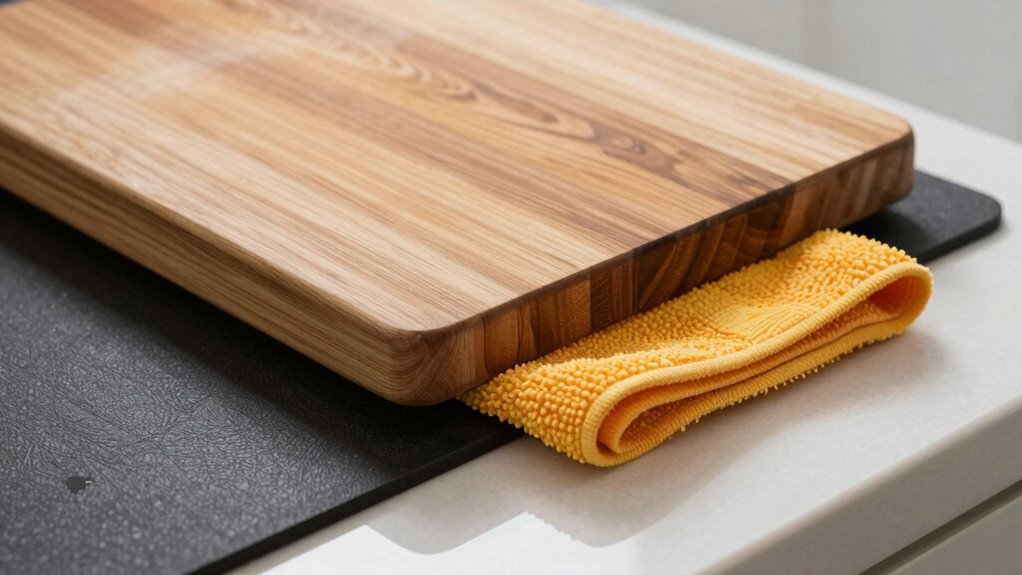
A unstable cutting board can turn meal prep into a frustrating chore, but with a few simple hacks, you can keep your board steady and your work efficient. Whether you’re slicing vegetables, dicing meat, or mincing herbs, a secure cutting surface is essential. One effective method is to use a wet towel underneath your board. Simply dampen a clean dish towel and place it on your countertop before setting your cutting board on top. The moisture creates friction, preventing slipping and giving you a stable platform to work on. It’s especially handy if you’re working with a lightweight or thin board that tends to shift during ingredient prep.
Another popular option is a non-slip mat. These mats are typically made of rubber or silicone and designed specifically to grip both your countertop and the bottom of your cutting board. Simply cut the mat to size if needed, place it on your work surface, and then set your board on top. Unlike a wet towel, a non-slip mat provides a consistent grip without the need for re-wetting, making it a more durable solution for frequent meal prep. Plus, they’re easy to clean and reusable, which makes them a practical choice for everyday use.
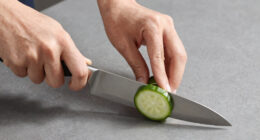
When it comes to knife grip, stability becomes even more critical. A stable cutting surface allows you to hold your knife properly, which is key for safe and precise ingredient prep. With a secure board, you can maintain a proper knife grip—whether a pinch grip or a full-hand grip—without your hand slipping. This control reduces the risk of accidents and improves your efficiency, enabling you to work faster and more accurately. Plus, when your board stays put, you can focus on your technique instead of fighting to keep everything in place.
Both hacks—wet towel and non-slip mat—are simple, inexpensive, and easy to implement. The choice depends on your routine and preferences. If you prefer a quick fix and don’t mind re-wetting, the towel works well. If you want a long-term, low-maintenance solution, investing in a good non-slip mat is worthwhile. Either way, these hacks help ensure your cutting board remains stable during ingredient prep. With a secure surface, you’ll find that chopping, slicing, and dicing become safer and more enjoyable. You’ll also notice your knife grip stays firm, giving you better control and confidence as you prep your ingredients efficiently.
Top picks for "cutt board stability"
Open Amazon search results for this keyword.
As an affiliate, we earn on qualifying purchases.
Frequently Asked Questions
Which Method Is Safer for Cutting Slippery Meats?
Using a non-slip mat is safer for cutting slippery meats because it provides better meat safety and prevents accidents. It keeps your cutting board stable, giving you improved knife control, which reduces the risk of slips and cuts. A wet towel may slide or shift, compromising safety. For better control and safer meat handling, opt for a non-slip mat to guarantee your cuts are precise and safe.
Can These Hacks Damage My Cutting Board?
Did you know that 60% of cutting board damage comes from improper use? These hacks, like using a wet towel or non-slip mat, typically won’t harm your board if you choose the right material and maintain hygiene. For wooden boards, avoid excessive moisture to prevent warping, while plastic ones are more resistant. Always clean thoroughly afterward to reduce hygiene concerns and keep your cutting surface safe and durable.
Are There Eco-Friendly Options for Securing Cutting Boards?
Yes, eco-friendly options exist for securing your cutting board. You can use biodegradable options like silicone mats made from natural or recycled materials, which provide a non-slip surface without harming the environment. Recycled cork or bamboo mats also work well, offering stability while being sustainable. These alternatives are effective, eco-conscious, and help reduce plastic waste, making your kitchen more environmentally friendly.
How Often Should I Replace Non-Slip Mats?
You should replace your non-slip mat every 6 to 12 months, depending on board material and mat durability. Over time, mats wear out, lose grip, or accumulate bacteria, which can affect safety. Regularly inspect the mat for signs of deterioration, such as tears or reduced grip. If you notice slipping or damage, it’s time for a new one to guarantee your cutting board stays stable and safe during food prep.
Do These Hacks Work With All Types of Cutting Boards?
These hacks work well with most cutting boards, but material compatibility matters. For wooden boards, a wet towel can provide extra grip, while silicone or rubber mats suit plastic or composite boards better. Keep in mind the aesthetic impact; some solutions may not match your kitchen decor. Always test a small area first to confirm stability without damaging or discoloring your cutting board.
Conclusion
So, next time your cutting board slides around, don’t bother with fancy gadgets. Just grab a wet towel or a non-slip mat—your kitchen’s best kept secrets. Ironically, these simple tricks are often overlooked, yet they save you from more dangerous slips and cuts. Who knew that the solution to a wobbly board was just a splash of water or a tiny rubber pad? Sometimes, the simplest hacks make the biggest difference—without any high-tech fuss.