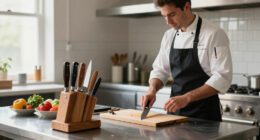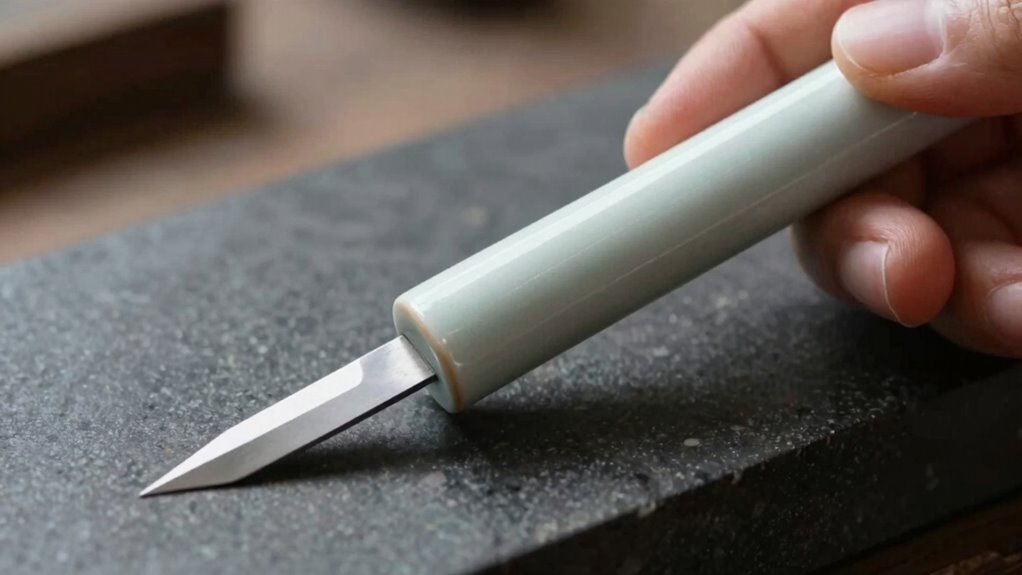
To use a ceramic rod without damaging your edge, hold the rod at about 20° and keep that angle consistent throughout each stroke. Use smooth, controlled motions from heel to tip, applying steady pressure but avoiding forceful movements. Focus on evenly polishing both sides of the blade, and make sure the entire edge contacts the surface. Regularly clean and store your rod properly. If you want to master these techniques and extend your tool’s lifespan, you’ll find more helpful tips ahead.
Key Takeaways
- Maintain a consistent 20° angle throughout all strokes to prevent edge damage.
- Use smooth, controlled heel-to-tip motions with gentle, steady pressure.
- Regularly clean the rod to remove debris and avoid scratching the edge.
- Avoid excessive force or aggressive strokes that could chip the ceramic surface.
- Store the rod properly in a dry, protected environment to preserve its surface integrity.
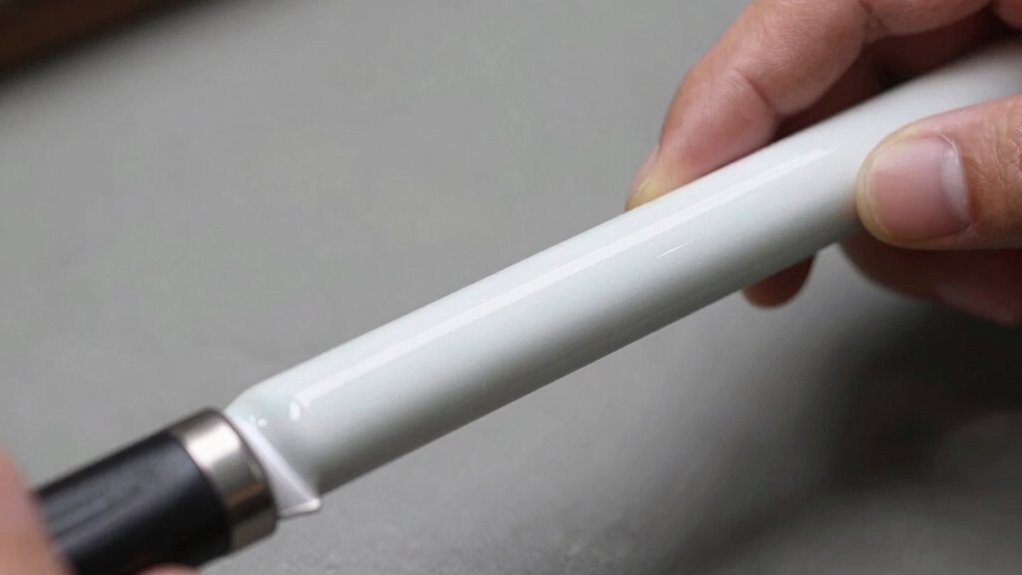
Using a ceramic rod effectively requires understanding its purpose and proper handling. This tool is designed to refine and straighten your blade’s edge, helping you maintain sharpness without resorting to more aggressive sharpening methods. To get the best results, you need to master the right polishing techniques, which involve gentle, consistent strokes that remove microscopic burrs and align the edge. When you use the rod correctly, you prevent damage like chipping or dulling that can occur from improper technique.
Start by holding the rod at the correct angle — usually around 20 degrees — relative to your blade. Maintaining this angle throughout your strokes is essential for preserving the integrity of your edge. Use smooth, controlled motions, pushing the blade down the rod from heel to tip, ensuring that the entire length of the blade contacts the ceramic surface. Don’t press too hard; applying excessive force can cause uneven wear or micro-chipping. Instead, let the ceramic’s abrasive surface do the work, guiding the blade along the rod with steady pressure. As you move through your polishing techniques, keep consistent strokes on each side of the blade to balance the edge evenly. Additionally, understanding the proper maintenance of your ceramic rod is crucial for ensuring its longevity and effectiveness. Regularly clean your ceramic rod with a damp cloth to remove any metal particles or debris that could scratch or dull your blade. Store the rod in a dry, safe place, away from other hard objects that might chip its surface. When not in use, avoid dropping or knocking the ceramic rod—its surface can chip or crack if mishandled. Additionally, inspect the rod periodically for signs of wear or damage; a damaged rod can cause more harm than good when sharpening or honing your blade. Proper storage and handling also help to preserve the rod’s surface, preventing unnecessary damage over time. Being aware of ceramic surface durability can help you better care for your tool and ensure it remains effective for a long time. Moreover, understanding the wear resistance of ceramic can guide you in choosing the right maintenance routines to extend its lifespan.

Kimura Professional Ceramic Honing Rod, 10 inch Honing Steel, Ceramic Knife Sharpener, 1200 Grit Finish, Ergonomic & Balanced Polypropylene Handle, Ideal for All Chef Knives, Japanese Gift Box
- Premium Material: 10-inch ceramic honing rod with 1200 grit finish
- Ergonomic Handle: Non-slip polypropylene handle for comfort and control
- Versatile Use: Suitable for all knife sizes and shapes, with hanging loop
As an affiliate, we earn on qualifying purchases.
As an affiliate, we earn on qualifying purchases.
Frequently Asked Questions
Can I Sharpen Serrated Knives With a Ceramic Rod?
You can sharpen serrated knives with a ceramic rod, but it requires careful serrated sharpening. Use the ceramic rod to target the beveled edges of each serration, maintaining the original angle. Be gentle to avoid damaging the delicate edges, and regularly check your knife’s sharpness. Proper ceramic maintenance, like cleaning the rod after use, guarantees consistent results. With patience, you’ll keep your serrated knives sharp without risking damage.
How Often Should I Use a Ceramic Rod on My Knives?
You should use a ceramic rod on your knives every few weeks to maintain their sharpness, depending on how often you cook and the knife’s usage. Regular knife maintenance keeps your blades in top shape and prolongs their life. Follow proper sharpening techniques, like gentle, consistent strokes at the right angle, to avoid damaging the edge. Consistent, careful use guarantees your knives stay sharp and functional with minimal wear.
Is a Ceramic Rod Suitable for Sharpening Scissors?
A ceramic rod isn’t ideal for sharpening scissors, as its durability and grit are designed for knives, not scissors’ delicate edges. Remember, “a stitch in time saves nine,” so proper edge preservation techniques matter. Using a ceramic rod on scissors can damage their fine edges, so opt for a pair of sharpening scissors or a fine grit stone instead. This preserves the scissors’ longevity and maintains a sharp, precise cut.
What Temperature Should the Ceramic Rod Be During Use?
You should keep the ceramic rod at room temperature during use to guarantee effective sharpening. Temperature control is essential because excessive heat can weaken the blade’s temper, risking damage. Always follow safety precautions by avoiding overheating the rod or pressing too hard, which can cause chips or cracks. Using the rod at a consistent, moderate temperature helps maintain both your safety and the longevity of your blades.
Can Ceramic Rods Be Used to Fix Chipped Blades?
Yes, ceramic rods can help fix chipped blades by restoring the edge and improving blade durability. You should gently run the ceramic rod along the damaged edge at the proper angle, focusing on realigning the edge rather than removing a lot of material. This process helps smooth out chips, enhances sharpness, and prolongs your blade’s lifespan. Just be careful to avoid applying excessive pressure, which could cause further damage.
Kimura Professional Ceramic Honing Rod, 10 inch Honing Steel, Ceramic Knife Sharpener, 1200 Grit Finish, Ergonomic & Balanced Polypropylene Handle, Ideal for All Chef Knives, Japanese Gift Box
- Premium Material: 10-inch ceramic honing rod with 1200 grit finish
- Ergonomic Handle: Non-slip polypropylene handle for comfort and control
- Versatile Use: Suitable for all knife sizes and shapes, with hanging loop
As an affiliate, we earn on qualifying purchases.
As an affiliate, we earn on qualifying purchases.
Conclusion
Now that you know the gentle touch needed, your ceramic rod can become a trusted ally in keeping your edges sharp and smooth. Handle it with care, and it’ll reward you with years of faithful service, quietly whispering promises of precision every time you pick up your knife. Think of it as a quiet partner, guiding you to culinary perfection without a hint of wear or worry. With a little respect, your blades will thank you for years to come.

Sharpeak Total L.17.5-Inch/Rod L.12-Inch 3000-Grit Ceramic Sharpening Steel with Built-In Angle Guides and Anti-Breaking Cap, Sharpening Rod, Knife Steel, Ceramic Honing rod, Chaira Afilador Cuchillos
- Built-in 20° Angle Guides: Ensures consistent sharpening angle
- Hexagonal Hand Guard: Provides safety and prevents rolling
- Ceramic Material: Harder than steel for effective sharpening
As an affiliate, we earn on qualifying purchases.
As an affiliate, we earn on qualifying purchases.
Kimura Professional Ceramic Honing Rod, 10 inch Honing Steel, Ceramic Knife Sharpener, 1200 Grit Finish, Ergonomic & Balanced Polypropylene Handle, Ideal for All Chef Knives, Japanese Gift Box
- Premium Material: 10-inch ceramic honing rod with 1200 grit finish
- Ergonomic Handle: Non-slip polypropylene handle for comfort and control
- Versatile Use: Suitable for all knife sizes and shapes, with hanging loop
As an affiliate, we earn on qualifying purchases.
As an affiliate, we earn on qualifying purchases.