To flatten your whetstone properly, first identify signs of uneven wear like dips or disappearing grid lines. Gather tools such as diamond plates, ceramic, or coarse sandpaper, and guarantee everything is wet. Place your stone on a flat, stable surface, draw grid lines, and use steady pressure to level high spots in circular or back-and-forth motions. Rinse, dry, and smooth the edges. Continue maintenance regularly to keep your sharpening consistent—learn more about each step below.
Key Takeaways
- Fully soak the whetstone and flattening tool in water before starting.
- Draw grid lines on the stone to identify high and low spots during flattening.
- Use a flat, stable surface like glass or granite for even pressure and accurate flattening.
- Apply consistent, gentle pressure in circular or back-and-forth motions until surface is level.
- Rinse, dry thoroughly, and round off edges after flattening to maintain safety and effectiveness.
imarku Chef Knife 7 Inch Kitchen Knife Ultra Sharp Santoku Knife - High Carbon Japanese Chefs Knife, Kitchen Gadgets 2025, Apartment Essentials, Birthday Gifts for Him Her, Best Gifts for Women Men
Professional Santoku Knife: This imarku super sharp santoku knife is made of high carbon stainless steel that resists...
As an affiliate, we earn on qualifying purchases.
Recognizing When Your Whetstone Needs Flattening
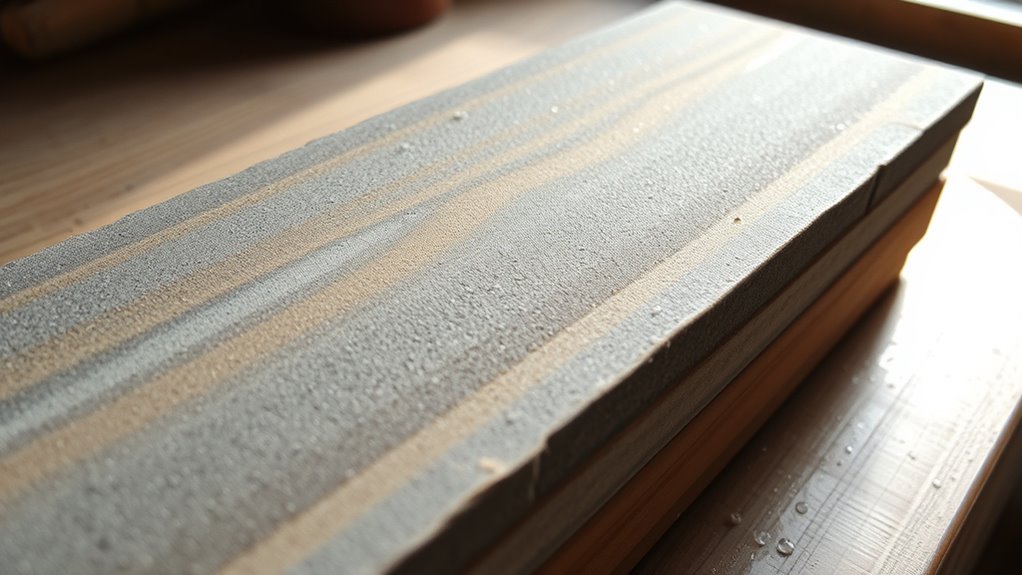
Knowing when to flatten your whetstone is essential for maintaining effective sharpening. You’ll notice a visible depression or hole forming in the center after several uses. Pencil grid lines you draw initially will disappear unevenly, highlighting high and low spots. If your knife edges catch or wobble during sharpening, it’s a sign the stone isn’t flat anymore. Gray marks or discoloration in the tracked areas also indicate uneven wear. When you see these signs, it’s time to flatten the stone. Regularly checking for these cues keeps your whetstone in top condition. Flattening prevents deep grooves from developing and ensures consistent bevels across your blades. Addressing these issues promptly results in sharper, more precise edges and prolongs the life of your sharpening stone. Additionally, understanding the material composition of your whetstone can help you choose the most effective flattening methods. Being aware of stone hardness can also influence the choice of flattening techniques and tools. Incorporating proper maintenance practices into your routine further extends the lifespan of your whetstone and maintains optimal performance.
imarku Japanese Chef Knife - Sharp Kitchen Knife 8 Inch Chef's Knives HC Steel Paring Knife, Unique Gifts for Men and Women, Gifts for Mom or Dad, Kitchen Gadgets with Gift Box, Gyutou Knives
High-Carbon Stainless Steel Blade: It is manufactured from high-quality stainless steel that maintains its functionality for a long...
As an affiliate, we earn on qualifying purchases.
Gathering the Right Tools for the Job
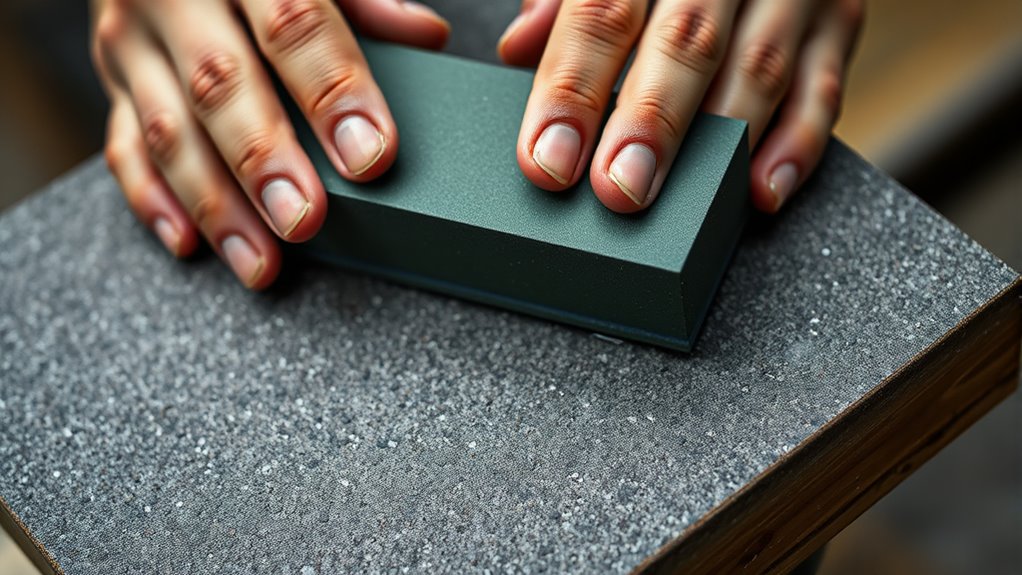
To effectively flatten your whetstone, you need to gather the right tools suited for your stone’s material and your sharpening needs. If you have a softer stone, basic tools like cinder blocks or fire bricks can work well. For harder stones, diamond plates such as Atoma are faster and maintain flatness better. Ceramic plates and self-adhesive wet-dry sandpaper on a flat surface like glass or wood are versatile options. Diamond plates excel in speed and precision, especially for frequent use or professional sharpening. Sandpaper is affordable and adaptable, ideal for occasional flattening. Make sure your tools are clean and flat themselves to prevent uneven flattening. Selecting the right tools ensures efficient, safe, and consistent results during the flattening process.

HOSHANHO Kitchen Knife in Japanese High Carbon Steel, Professional High-Class Chef's Knife 8 inch, Non-slip Ultra Sharp Cooking Knives with Ergonomic Handle
【High-End Japanese Steel Chef's Knife】 HOSHANHO chef's knife is made of Japanese high carbon steel 10Cr15CoMoV, 2x of...
As an affiliate, we earn on qualifying purchases.
Preparing Your Whetstone and Flattening Surface
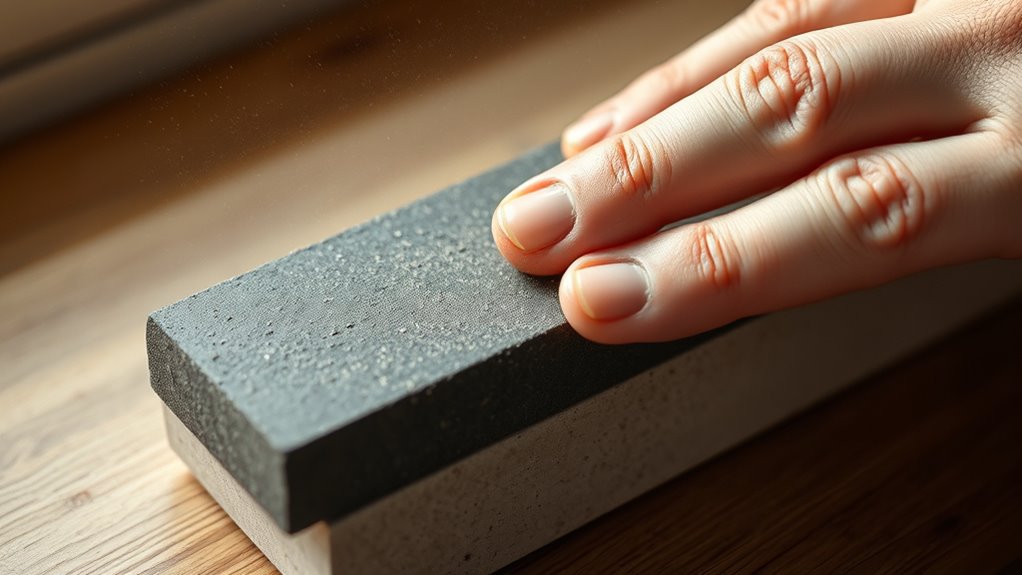
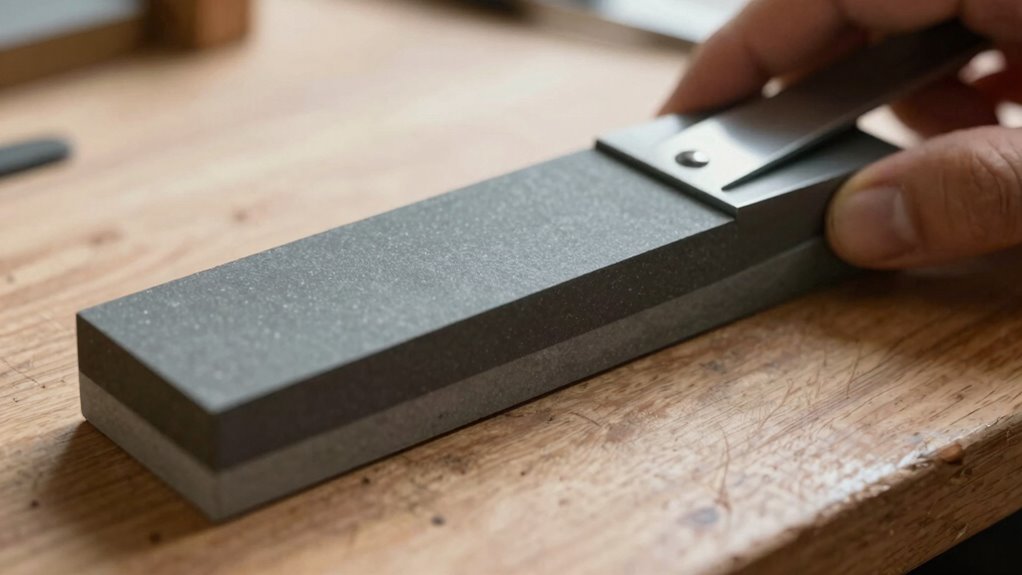
Before you start flattening your whetstone, it’s essential to prepare both the stone and your flattening surface properly. First, soak your whetstone and flattening tool in water to guarantee smooth operation and reduce debris buildup. Draw a grid of vertical and horizontal lines across the stone’s surface with a pencil; this helps you identify high and low spots during flattening. Make sure your flattening surface is perfectly flat—using a known flat surface like a glass, granite slab, or flat stone. Wet both the whetstone and the flattening surface thoroughly. This lubrication minimizes friction, prevents scratches, and makes material removal more predictable. Proper preparation ensures an even, effective flattening process, preserving the stone’s shape for consistent sharpening. Additionally, understanding the importance of contrast ratio can help you assess and improve the lighting conditions in your workspace for better visibility during flattening. Recognizing the natural properties of your whetstone can also influence how you approach the flattening process and achieve the best results. Using the correct abrasion method can further optimize the flattening process and prolong the life of your whetstone. Incorporating proper technique can make your flattening more efficient and help maintain the stone’s flatness over time. Incorporating these maintenance tips into your routine not only preserves your whetstone’s effectiveness but also ensures consistent sharpening results over its lifespan.

Japanese Chef Knife, 8 Inch Damascus Kitchen Knife with VG10 Steel, Handcrafted Sharp Knife with Ergonomic Handle, Cooking Knives for Home Chefs, Cooking Gifts for Men and Women
【Premium Damascus Chef Knife with VG-10 Steel Core】Our Japanese knives feature a VG-10 steel core (60 HRC) for...
As an affiliate, we earn on qualifying purchases.
Step-by-Step Flattening Process

Start by ensuring your whetstone and flattening tool are fully soaked in water. This lubrication helps reduce friction and prevents damage. Place the whetstone on a flat, stable surface, then position your flattening tool—such as a diamond plate or ceramic lapping plate—on top. Use these steps:
- Apply steady, even pressure with your flattening tool across the entire surface, moving in circular or back-and-forth motions.
- Focus on high spots, gently pressing down to level them with the rest of the stone.
- Frequently check your progress by looking for pencil grid lines that have disappeared uniformly.
- Maintain constant water flow to wash away debris and keep the surface lubricated. Continue until the entire surface is flat, with no visible dips or grooves.
- Proper filtration of debris and water flow is essential for maintaining the smoothness and longevity of your whetstone surface. Additionally, understanding material composition can help you choose the best sharpening techniques for your specific stone type.
Finishing Up and Maintaining Your Flattened Whetstone
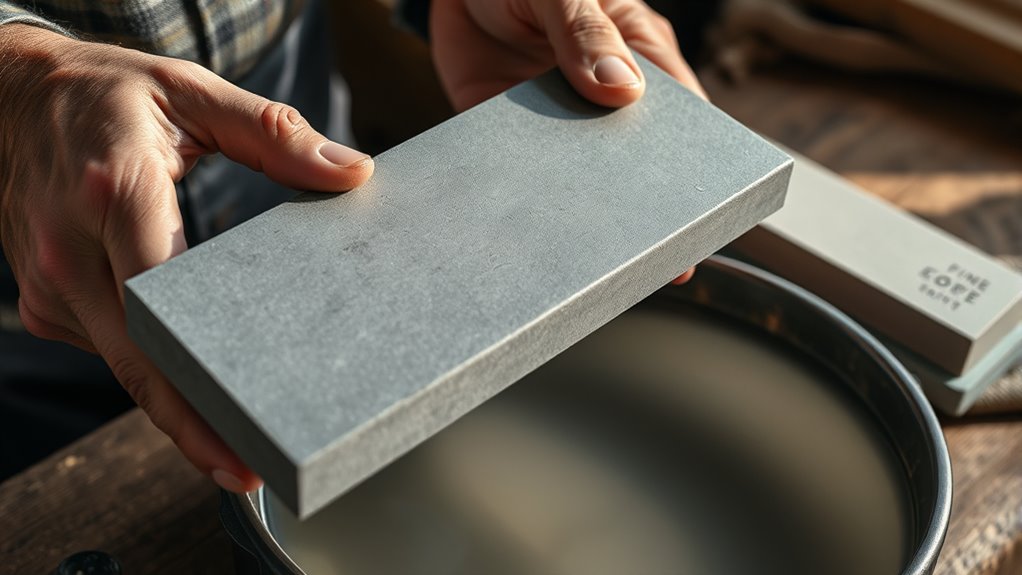
Once you’ve finished flattening your whetstone, it’s vital to give it a thorough rinse to remove any debris and residual grit. This step prevents particles from scratching your blades during future sharpening. Next, dry the stone completely with a soft cloth or towel to avoid water spots or mold. To prevent future dishing, round off the sharp edges on all four corners, making handling safer. Regular maintenance involves flattening every 2-3 sharpening sessions or after a few knives, especially if you notice uneven wear or visual dips. For heavy use, diamond plates are ideal for quick and precise flattening. Keep your whetstone clean, flat, and well-maintained to guarantee consistent, efficient sharpening and prolong its lifespan. Additionally, understanding the importance of whetstone maintenance can help extend its effectiveness over time.
Frequently Asked Questions
How Often Should I Flatten My Whetstone for Optimal Sharpening?
You should flatten your whetstone every 2-3 sharpening sessions or after sharpening a couple of knives. Frequent flattening keeps the surface even, preventing dishing that causes inconsistent bevels and dull edges. If you notice a depression, wobbling, or the pencil grid disappearing unevenly, it’s time to flatten. Using a diamond plate or sandpaper on a flat surface ensures quick, effective results, maintaining your stone’s peak performance.
Can I Use Household Items Instead of Specialized Tools for Flattening?
Yes, you can use household items like cinder blocks, fire bricks, or even glass with sandpaper to flatten your whetstone. Just guarantee these surfaces are flat and smooth. Wet the sandpaper and stone, then rub in circular or back-and-forth motions until the surface is even and the pencil lines disappear. Keep water flowing to remove debris and prevent scratching. With patience, household items work well for maintaining your whetstone.
What’s the Best Grit Size for Maintaining a Flat Whetstone?
Think of maintaining a flat whetstone as tuning a fine instrument. The best grit size for upkeep is around 120 to 220 grit. This range gently smooths out high spots without removing too much material, keeping your stone even and effective. Use coarser grits only for heavy dishing, and finer grits for finishing touches. Regular maintenance with this grit range guarantees consistent sharpening and prolongs your stone’s lifespan.
How Do I Know if My Whetstone Is Perfectly Flat?
You know your whetstone is perfectly flat when the pencil grid lines are completely gone across the entire surface, indicating even contact. Wobbling or catching on edges shows unevenness. Also, if the stone sits steady on a flat surface without rocking, it’s flat. After flattening, rinse and smooth the edges to prevent snagging. Regular checks help maintain consistent sharpening and prevent uneven wear.
Is Flattening Necessary for All Types of Whetstones?
Yes, flattening is necessary for all types of whetstones. Over time, all stones develop dips or grooves from repeated sharpening, which can cause uneven edges and reduce sharpening effectiveness. Regular flattening guarantees the surface stays even, maintaining consistent contact with your blade. Whether you have a natural, synthetic, or ceramic stone, keeping it flat prevents issues like wobbling or uneven wear, ultimately giving you sharper, more precise results every time.
Conclusion
Now that you know how to properly flatten your whetstone, you’ll never have to worry about uneven sharpening again. Think of your whetstone as the heart of your knife skills—the better it’s maintained, the sharper your blades become. By following these simple steps, you’ll keep your tool in top shape, ensuring your edges are as precise as a surgeon’s scalpel. Master this routine, and your knives will cut through anything like a hot knife through butter!