How often you sharpen your chef knife depends on how frequently you cook and how tough the ingredients are. Generally, professionals sharpen every 1-2 weeks and hone daily, while home cooks do so every 1-3 months. Signs like increased effort or tearing suggest it’s time to sharpen. Proper maintenance can extend this interval. Keep going to discover more tips on maintaining your knife’s edge effectively and safely.
Key Takeaways
- Sharpen professional knives every 1-2 weeks, hone daily for optimal performance.
- Home cooks should sharpen every 1-3 months, honing regularly in between.
- Occasional users can sharpen every 3-6 months, focusing on honing more often.
- Beginners are advised to sharpen every 6-12 months, with consistent honing to maintain edge.
- Regular inspection and proper maintenance extend the interval between sharpening sessions.

Intelitopia Complete Knife Sharpening Stone Set – Dual Grit Whetstone 400/1000 3000/8000 Knife Sharpener with Leather Strop, Flattening Stone, Bamboo Base, 3 Non-slip Rubber Bases & Angle Guide
【Complete Knife Sharpening Stone Kit】You don't need to be a Pro to sharpen your blades, all you need…
As an affiliate, we earn on qualifying purchases.
As an affiliate, we earn on qualifying purchases.
Factors Affecting Your Sharpening Frequency
Factors Affecting Your Sharpening Frequency
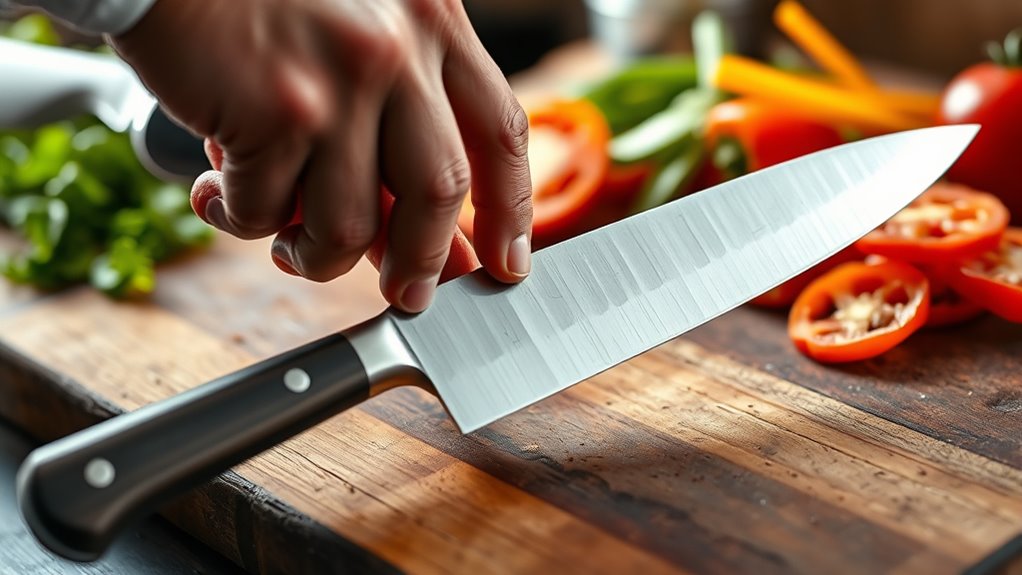
Your sharpening frequency depends largely on how often you use your chef knife and the types of ingredients you cut. Proper knife storage is essential; storing your knife safely prevents unnecessary dulling from knocks or contact with hard surfaces. Avoid storing it loose in drawers, where it can bump against other utensils. Equally important is maintaining your cutting surface—using a soft cutting board like wood or rubber reduces blade wear compared to hard materials like glass or stone. Regularly cleaning and drying your knife after each use also helps preserve its edge. The more frequently you cut tough ingredients or use the knife, the more often you’ll need to sharpen it. Additionally, understanding the wear and tear your knife experiences can help determine the ideal sharpening schedule. Recognizing signs of blade dullness such as increased effort during cutting can also guide when sharpening is necessary. Checking the blade material can also influence how quickly it dulls and how often sharpening is needed. Proper maintenance routines can extend the time between sharpenings, saving you time and effort. Being aware of knife edge retention and how it varies with different steels can further help you plan your sharpening schedule. Paying attention to these factors ensures your knife stays sharp longer and reduces the need for frequent sharpening.

Utopia Kitchen Knife Sharpener Rod 12 Inch, Professional Honing Rod for Knife Sharpening with Hanging Hook, Black
Premium Steel Construction – The steel rod is made of carbon steel and plated with nickel-chrome; the fine…
As an affiliate, we earn on qualifying purchases.
As an affiliate, we earn on qualifying purchases.
Signs That Indicate It’s Time to Sharpen
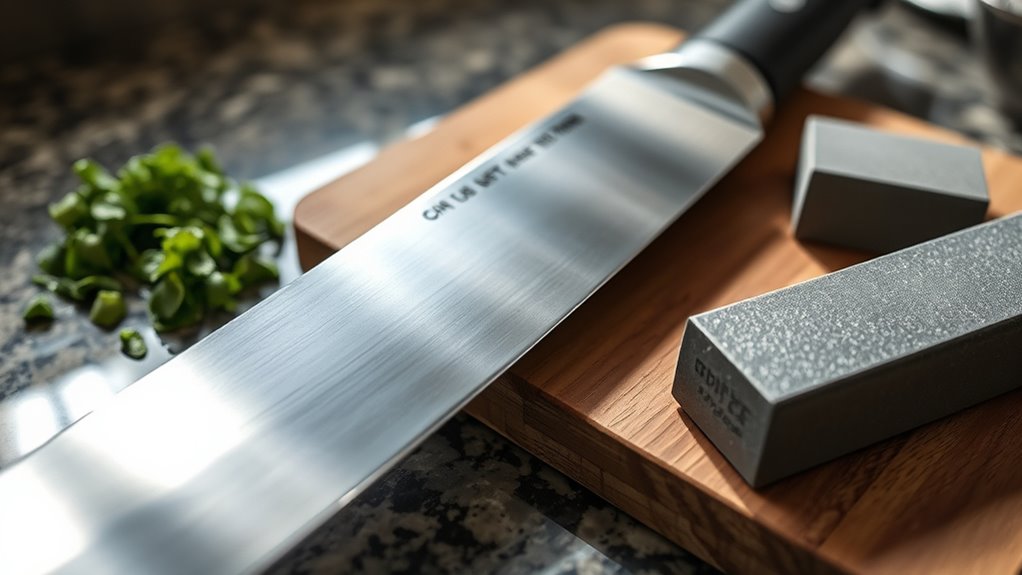
Knowing when to sharpen your chef knife is essential for maintaining its performance. One clear sign is when your knife starts to drag or tear through ingredients instead of slicing smoothly. Dull knives require more pressure, increasing the risk of slips, which compromises sharpening safety. You may also notice uneven cuts or that food sticks to the blade, indicating dullness. Additionally, a dull edge can cause more frequent accidents, highlighting the importance of proper knife maintenance. Regularly inspecting your knife’s sharpness helps prevent unnecessary wear and ensures safety during use. If you observe these signs, it’s time to sharpen your knife to restore its edge and keep your kitchen tasks efficient and safe.
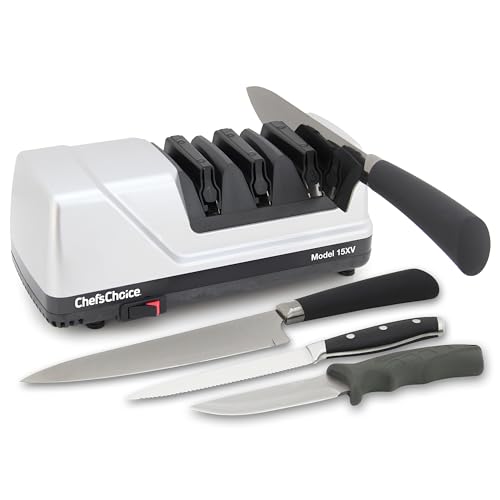
Chef’sChoice 15XV EdgeSelect Professional Electric Knife Sharpener with 100-Percent Diamond Abrasives and Precision Angle Guides for Straight Edge and Serrated Knives, 3-Stage, Gray
CONVERT YOUR KNIVES: Ideal for converting traditional 20-degree factory edges of household knives into high performance Trizor XV…
As an affiliate, we earn on qualifying purchases.
As an affiliate, we earn on qualifying purchases.
Recommended Sharpening Intervals for Different Users

The frequency with which you should sharpen your chef knife depends on how often you use it and the types of ingredients you prepare. If you cook daily with hard vegetables or meats, you’ll need to sharpen more often. For occasional use, honing can maintain sharpness longer, reducing the need for frequent sharpening. Proper knife storage also helps preserve edge quality. Here’s a quick guide:
| User Type | Sharpening Interval | Notes |
|---|---|---|
| Professional Chef | Every 1-2 weeks | Regular sharpening, honing daily |
| Home Cook | Every 1-3 months | Regular honing, sharpen as needed |
| Occasional Cook | Every 3-6 months | Focus on honing, minimal sharpening |
| Beginner | Every 6-12 months | Hone regularly, sharpen when dull |
Maintaining a consistent sharpening schedule ensures your knife stays effective and safe to use.
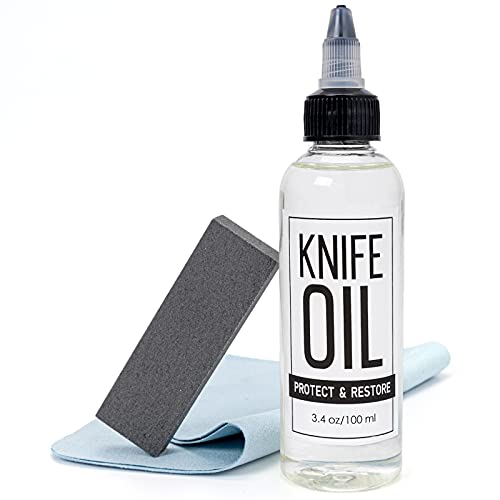
PuGez Knife Oil Rust Eraser Kit, Extra Large Rust Remover for Knives, Sword Maintenance Oil (3.4 oz) for Carbon Steel Blade, Cleaning, Protection And Lubricant Care Set
Professional Maintenance Oil: Specifically designed to maintain steel and carbon steel kitchen knives from rust and wear. Our…
As an affiliate, we earn on qualifying purchases.
As an affiliate, we earn on qualifying purchases.
Tips for Maintaining Sharpness Between Sharpenings
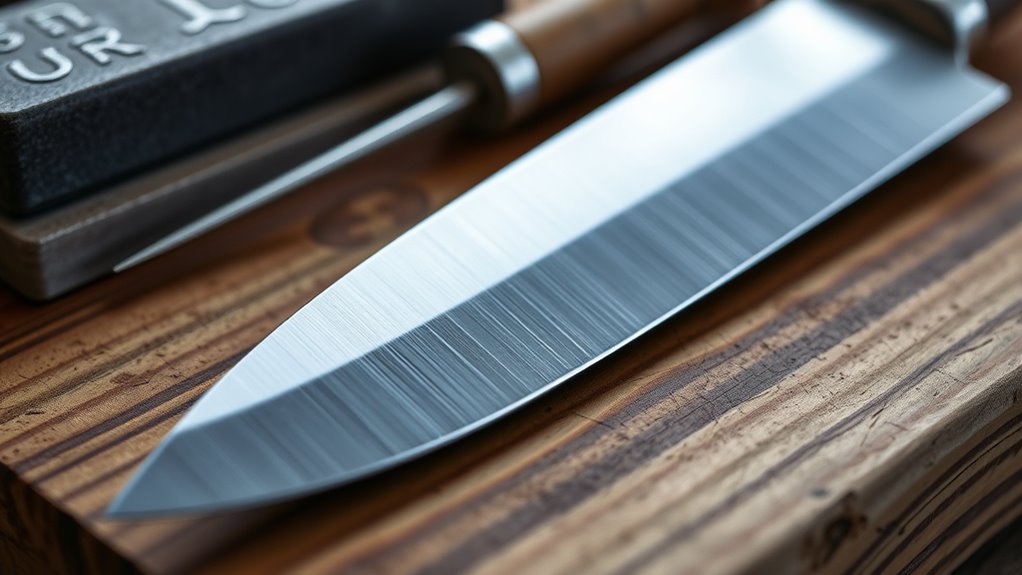
Maintaining your knife’s sharpness between sharpenings is essential for safe and efficient cutting. Proper knife storage prevents dulling caused by knocking or contact with other utensils. Store your chef knife in a dedicated knife block, on a magnetic strip, or in a protective sheath to protect the edge. Additionally, practicing good cutting board maintenance helps preserve sharpness. Use a stable, non-slip cutting surface and avoid cutting on hard surfaces like glass or stone, which can dull the blade quickly. Regularly clean your knife immediately after use to prevent residue buildup that can cause corrosion or dullness. Using smart storage solutions can further protect your knife’s edge by reducing accidental dulling or damage. Proper cutting board maintenance and choosing appropriate surfaces can significantly extend the life of your knife’s edge, reducing the frequency of sharpening and ensuring it stays sharp longer. Being mindful of blade care practices can also help maintain optimal sharpness over time. Incorporating correct sharpening techniques into your routine can make a noticeable difference in maintaining your knife’s performance. Additionally, understanding the thermal behavior of your knives and how it affects blade integrity can help you choose the best methods for maintenance and sharpening.
Choosing the Right Sharpening Tools and Techniques

Choosing the right sharpening tools and techniques is essential for effectively restoring your knife’s edge without causing damage. Start by selecting high-quality sharpening stones suited to your knife’s steel and your skill level. Use a coarse stone for dull edges and a finer stone for finishing touches. Proper knife storage can help maintain your sharpness longer, but when it’s time to sharpen, the right tools matter. Always keep your stones flat and wet them before use to ensure smooth, even sharpening. Techniques like maintaining a consistent angle and applying gentle, controlled pressure will give you better results and extend the life of your knife. Avoid over-sharpening or using the wrong tools, which can dull or chip your blade. Regular maintenance and understanding water-based sharpening techniques can further enhance your knife care routine.
Frequently Asked Questions
Can I Sharpen My Chef Knife at Home or Should I Always Visit a Professional?
You can definitely sharpen your chef knife at home with the right tools, like a sharpening stone or honing rod. Regular sharpening keeps your knife looking sharp and maintains its aesthetics, making it more enjoyable to use. Just make certain proper storage considerations, like using a knife block or magnetic strip, to protect the blade. However, if you’re unsure or want a perfect edge, visiting a professional can be a good option.
How Does the Type of Blade Material Affect Sharpening Frequency?
Did you know high-carbon steel blades can stay sharp up to twice as long as softer stainless steel? The blade material greatly impacts sharpening frequency; tougher materials like carbon steel demand less frequent sharpening and respond well to honing, while softer stainless steel may need more frequent attention. Your sharpening methods should match the blade’s durability—use a whetstone for high-end steel and a ceramic rod for maintenance, ensuring longevity and peak performance.
Is It Better to Sharpen Frequently With a Whetstone or Less Often With a Honing Rod?
It’s better to sharpen less often with a whetstone and use a honing rod regularly for blade maintenance. Whetstones are ideal for restoring a dull edge through proper sharpening techniques, but frequent use can wear down the blade. Honing rods straighten the edge without removing metal, so they’re perfect for daily touch-ups. Combining both methods keeps your knife sharp and prolongs its lifespan effectively.
What Are Common Mistakes to Avoid When Sharpening a Chef Knife?
Think of sharpening as dancing with your knife—don’t rush. One common mistake is changing the blade angle mid-stroke; stick to the proper angle to avoid uneven edges. Also, avoid over-sharpening with too many strokes, which can wear down the blade. Be gentle and consistent, maintaining a steady blade angle and controlled sharpening strokes. This approach keeps your knife sharp and safe, ensuring it performs like a choreographed routine.
How Does the Handle Material Impact the Maintenance and Sharpening Process?
The handle material affects your knife’s maintenance and sharpening because durable handles like wood or resin resist damage, making upkeep easier. Softer materials may wear faster, requiring you to check for cracks or looseness regularly. You should handle your knife carefully to avoid handle damage, which could affect balance and safety. Choosing a handle with good durability guarantees easier maintenance and helps your knife stay sharp longer.
Conclusion
Remember, your chef knife is the loyal steed in your culinary journey—keeping it sharp guarantees a smooth ride through every recipe. By tuning into the signs of dullness and sticking to a realistic sharpening schedule, you’ll master the art of precision and safety. Treat your blade like a trusted partner, nurturing its edge with care and attention. With each sharpened stroke, you’re not just maintaining a tool—you’re forging a sharpness that cuts through the chaos of cooking.