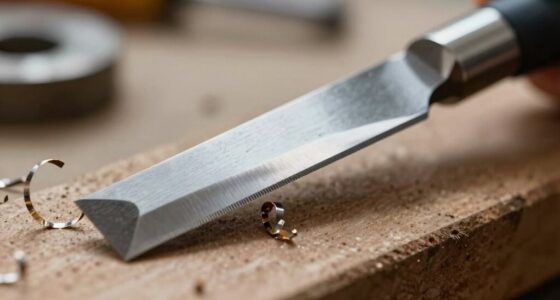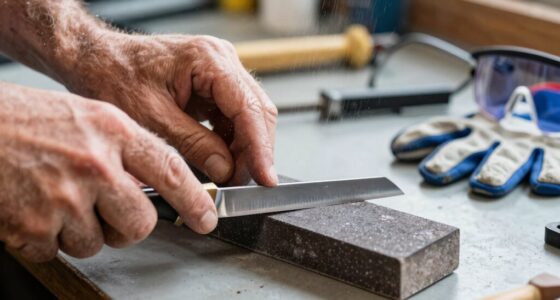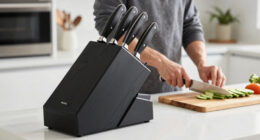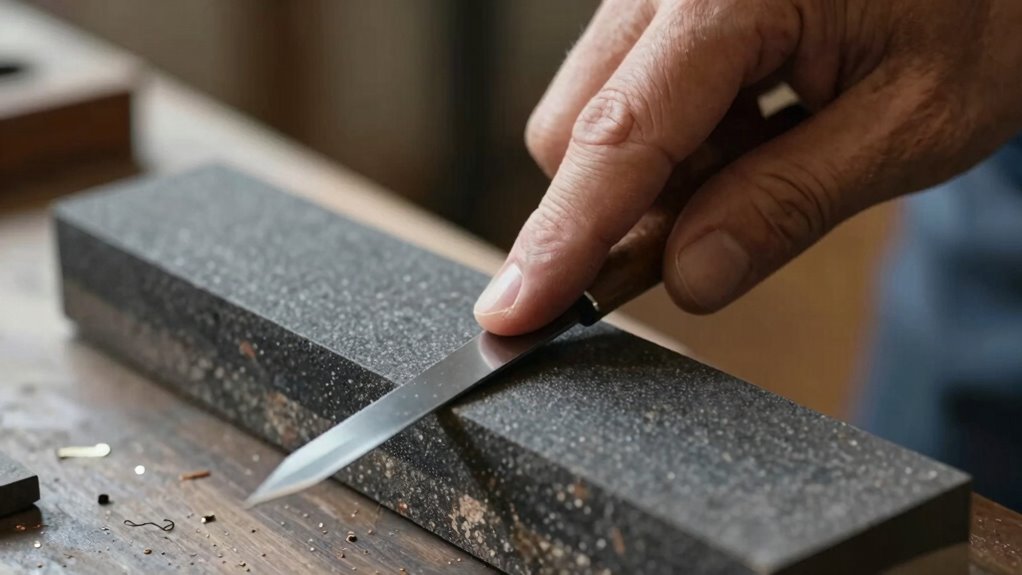
To prevent over-grinding, you should develop a consistent sharpening routine, inspecting tools regularly for dullness or early wear signs. Use proper techniques and only remove the necessary amount of material during each session, setting aside dedicated time for maintenance. By keeping a mindful schedule, you’ll foster discipline that maintains your tools’ sharpness and longevity. Stick to this routine, and you’ll discover secrets to keep your tools in top shape, ready for any task.
Key Takeaways
- Regularly inspect tools to catch early signs of dullness before over-sharpening is necessary.
- Develop a consistent sharpening schedule aligned with tool usage and wear indicators.
- Use proper sharpening techniques to remove minimal material and avoid over-grinding.
- Incorporate routine maintenance into daily workflow to maintain optimal tool edge condition.
- Recognize early wear signs and sharpen promptly to prevent excessive material removal.

Have you ever wondered how top performers stay sharp and consistently improve? It’s not just about working hard or putting in more hours; it’s about developing a sharpening habit that keeps your skills and tools in peak condition. This habit isn’t just about quick fixes but involves a deliberate approach to edge maintenance and tool longevity. When you regularly sharpen your tools and skills, you prevent the wear and tear that leads to over-grinding, which can damage both your equipment and your progress.
Edge maintenance is essential because a dull blade or tool forces you to apply excessive force, increasing the risk of over-grinding. When you keep your tools sharp, you minimize the effort needed, reducing strain and extending their lifespan. Proper edge maintenance ensures that every cut, carve, or task is precise, which saves you time and energy in the long run. It’s a proactive process that involves routine inspections, honing, and sharpening at the right moments—before dullness sets in and forces you into over-compensation. By doing this, you’re not only maintaining the effectiveness of your tools but also practicing discipline and awareness, which translate directly into your skills and performance. Developing a consistent maintenance routine helps reinforce this discipline and keeps your tools in optimal condition.
Regular edge maintenance ensures precision, reduces effort, and extends your tools’ lifespan through proactive care and disciplined routines.
Tool longevity depends heavily on how well you integrate this habit into your routine. When you sharpen regularly, you avoid the damage caused by neglect—such as chips, cracks, or uneven edges—that can render your tools unusable prematurely. Over-grinding occurs most often when you wait too long to sharpen, forcing you to remove more material than necessary to restore the edge. This is counterproductive because it shortens the lifespan of your tools. Instead, by sharpening just enough and often enough, you preserve the integrity of your equipment, ensuring it lasts longer and performs better. This approach also saves you money, as fewer replacements are needed over time. Additionally, understanding the proper techniques for sharpening can help you avoid over-grinding and further extend your tools’ lifespan. Incorporating quality tools into your routine also makes the process more effective and efficient. Regular maintenance also helps you develop a sense of tool awareness, allowing you to identify early signs of wear and address them promptly.
Cultivating a sharpening habit means setting aside time for routine maintenance, understanding the right techniques, and recognizing the signs of wear early. It’s about developing a mindful routine that prevents over-grinding—removing just the right amount of material to keep your edge sharp without sacrificing tool integrity. When you prioritize this habit, you’ll notice that your work becomes more precise, your tools last longer, and you stay ahead of potential setbacks. The key is consistency: a small, daily effort can make a big difference. Ultimately, this habit not only sharpens your tools but also sharpens your mindset, helping you perform at your best every time. Establishing a dedicated maintenance schedule ensures you stay proactive and avoid unnecessary damage.

SHARPAL 162N Double-sided Diamond Sharpening Stone, 8 in. x 3 in.
- Fast, Durable Sharpening: Up to 5x faster than oil or water stones
- Dual Grits for Versatile Sharpening: Coarse 325 grit and extra fine 1200 grit
- Hones Hard Materials: Suitable for HSS, carbide, ceramic, Boron Nitride
As an affiliate, we earn on qualifying purchases.
As an affiliate, we earn on qualifying purchases.
Frequently Asked Questions
How Often Should I Check My Tools’ Sharpness?
You should check your tools’ sharpness regularly, ideally before each use, to maintain proper tool maintenance. This habit ensures safety precautions are met, reducing the risk of slips or accidents caused by dull blades. For high-frequency tasks, inspect more often, like daily or after every few uses. Consistent checks help you identify dullness early, keeping your work efficient and safe while extending the lifespan of your tools.
What Signs Indicate My Tools Need Sharpening?
You’ll know your tools need sharpening when they start to cut less effectively or require more force, which can compromise safety precautions. Dull tools increase the risk of slips and accidents, so good tool maintenance is essential. Look for signs like uneven edges or visible dullness. Regularly inspecting your tools helps prevent over-grinding and guarantees safety. Keep a keen eye on performance, and sharpen promptly to maintain efficiency and safety during your work.
Can Over-Sharpening Damage My Tools?
Yes, over-sharpening can damage your tools. If you sharpen too frequently, especially with softer tool materials, you risk removing too much material or weakening the edge. To avoid this, monitor your tools’ performance and adopt a consistent sharpening frequency. This habit helps maintain a sharp edge without overdoing it, preserving the integrity of your tools and extending their lifespan.
What Are the Best Sharpening Tools or Methods?
Think of sharpening tools as fine-tuning a musical instrument—you want precision, not chaos. For the best results, choose quality sharpening stones or honing guides, and master sharpening techniques that balance grit and angle. Use oil stones for smooth edges or diamond stones for stubborn blades. Remember, proper tool maintenance involves patience and care, ensuring your tools stay sharp without overdoing it. This way, your tools will perform like a symphony every time.
How Does Proper Sharpening Improve Tool Lifespan?
Proper sharpening improves your tool lifespan by maintaining sharp edges, reducing the need for frequent replacements. When you use effective sharpening techniques, you prevent over-grinding, which can weaken the tool’s structure. Regular sharpening is a key part of tool maintenance, ensuring your tools stay in top condition longer. By keeping tools sharp, you minimize stress during use, extend their durability, and achieve better, safer results with every project.
As an affiliate, we earn on qualifying purchases.
Conclusion
By embracing the sharpening habit, you’ll keep your skills as sharp as a freshly honed blade, preventing over-grinding and burnout. Just like a gardener regularly trims their plants to promote healthy growth, this habit guarantees you stay balanced, focused, and ready to tackle challenges. Consistently sharpening your skills keeps you agile and prepared, avoiding the dullness of stagnation. Make this habit a part of your routine, and watch your progress blossom like a well-tended garden.
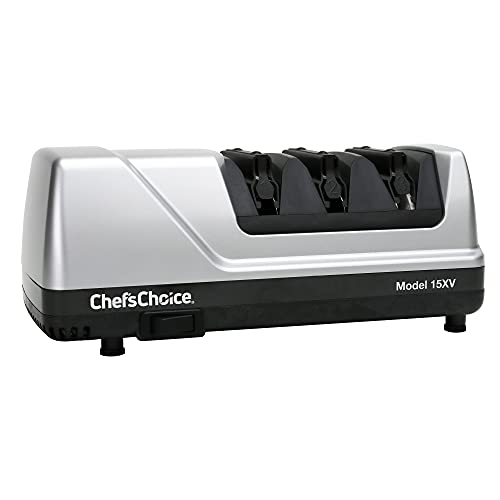
Chef’sChoice 15XV EdgeSelect Professional Electric Knife Sharpener with 100-Percent Diamond Abrasives and Precision Angle Guides for Straight Edge and Serrated Knives, 3-Stage, Gray
- Knife Conversion: Converts factory edges to Trizor XV
- Diamond Abrasives: Features 100% diamond abrasives for sharpening
- User-Friendly Design: Easy to use with flexible guides and on/off switch
As an affiliate, we earn on qualifying purchases.
As an affiliate, we earn on qualifying purchases.
As an affiliate, we earn on qualifying purchases.