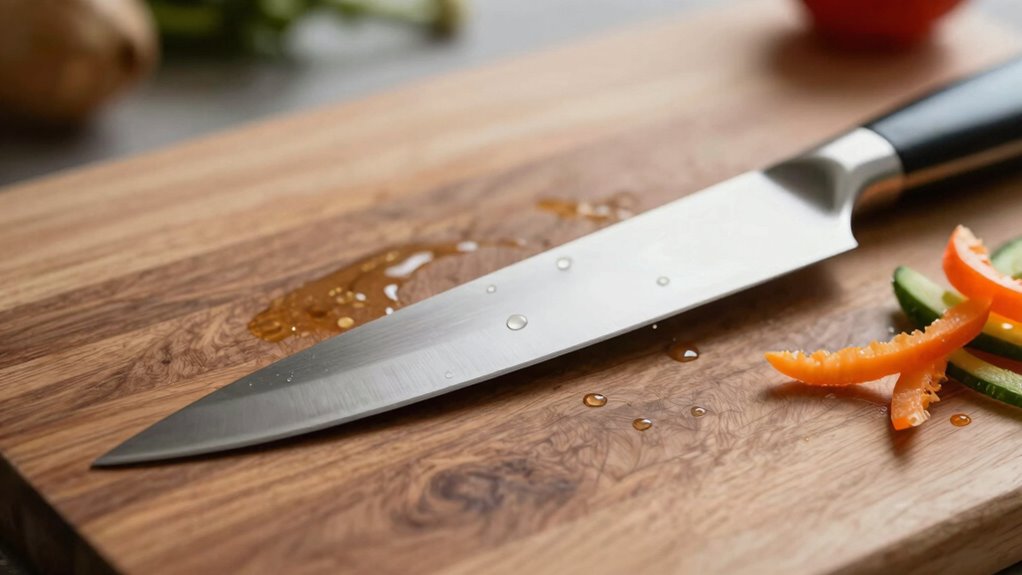
Thin knives cut better because their narrow, sharp blades reduce resistance, allowing for cleaner, more precise cuts. This makes them ideal for delicate ingredients and offers greater control, so your work looks professional. However, their fragility means you need to handle them carefully, avoid excessive force, and store them properly to prevent damage. If you want to learn how to keep your thin knives sharp and in top condition, keep exploring these tips.
Key Takeaways
- Thin blades have sharper, narrower edges that reduce resistance, enabling cleaner and more precise cuts.
- Their delicate construction makes them more prone to chipping, bending, and damage with improper handling.
- Regular honing and careful cleaning are essential to maintain their sharpness and prevent corrosion.
- Proper storage, such as knife blocks or magnetic strips, protects thin blades from accidental impacts.
- Focused maintenance extends their lifespan, ensuring optimal cutting performance despite their fragility.
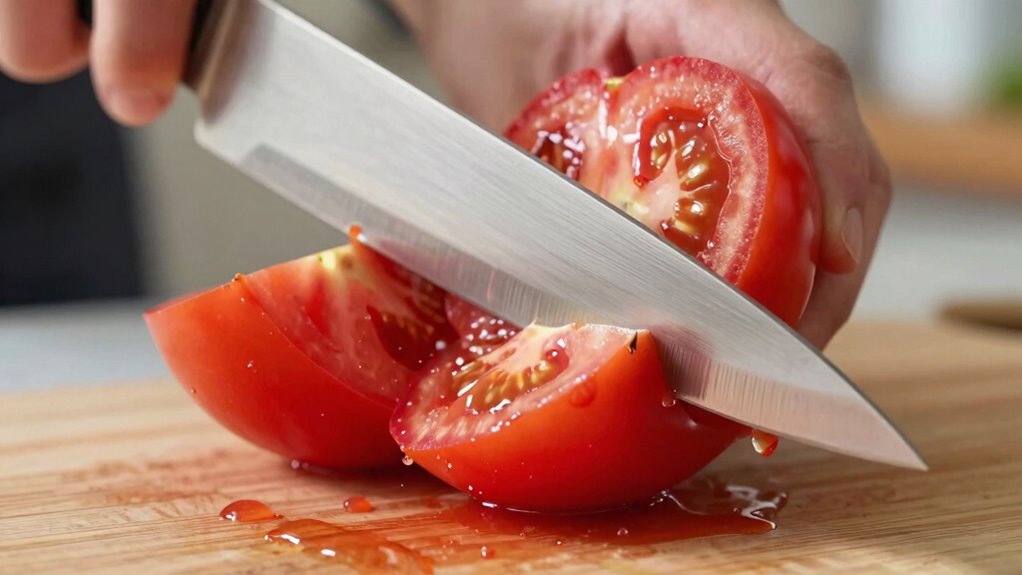
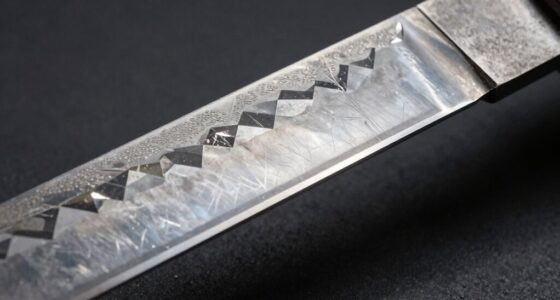
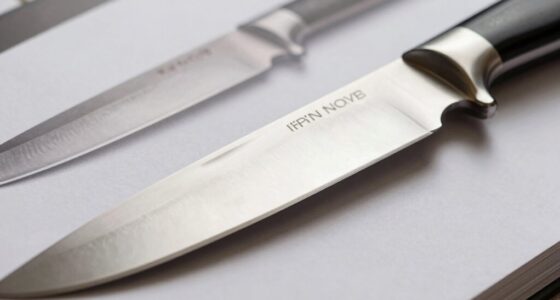
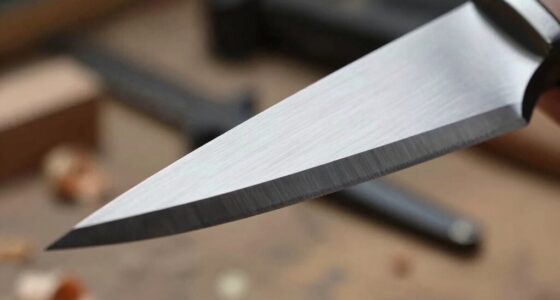
Thin knives cut better because their sharper, narrower blades slice through ingredients with less resistance, this allows for cleaner, more precise cuts. This precision is especially vital when you’re working with delicate herbs, thin vegetables, or finely sliced meats. This reduces effort, giving you more control and resulting in a professional finish every time. However, because these blades are so fine, they tend to be more fragile than their thicker counterparts. Blade durability becomes a key concern; you need to be careful not to apply excessive force that might chip or bend the blade. Proper maintenance, like regular honing and avoiding cutting on hard surfaces, extends the lifespan of these knives, but they will still require more attentive care to stay sharp and effective. Additionally, understanding blade fragility is essential to prevent accidental damage during use or storage. Using the correct technique and handling with care can significantly prolong the life of these delicate blades.
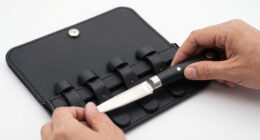
Storage considerations play a significant role in maintaining the performance of thin knives. Since the blades are so delicate, you can’t toss them in a crowded drawer with other utensils. Instead, you should store them in a knife block, on a magnetic strip, or in a protective sheath. This prevents accidental knocks or contact with harder objects that could dull or chip the blade. Proper storage not only preserves blade sharpness but also guarantees safety, reducing the risk of cuts when reaching into your utensil drawer. Keeping your knives separate from other cutlery minimizes wear and tear, helping them retain their precision for longer periods. Regularly inspecting your storage setup and adjusting it as needed can further prevent damage and ensure easy access. Investing in dedicated storage solutions tailored for thin knives can be a worthwhile step to maintain their optimal condition. Maintaining an appropriate storage method also helps prevent blade corrosion, which can be a concern with fine blades if not properly cared for.
You also need to pay attention to how you clean these knives. Hand washing with mild soap and drying immediately helps prevent corrosion and keeps the blade in top condition. Dishwashers are a no-go—they can be harsh and may damage the thin edges over time. Because thin knives are more prone to dulling, honing them regularly with a fine stone or steel sharpener is vital for maintaining their cutting ability. Periodic professional sharpening can also be worth the investment if you want to keep your blades in prime shape. Remember, the better you care for your thin knives, the longer they’ll perform at their best, making that extra effort worthwhile. Proper cleaning techniques and storage are key factors in blade preservation, ensuring your knives stay sharp and reliable for many uses. Being mindful of blade maintenance can help you avoid unnecessary replacements and keep your tools working like new.
As an affiliate, we earn on qualifying purchases.
Frequently Asked Questions
How Do I Safely Sharpen a Thin Knife?
To safely sharpen a thin knife, start by ensuring knife safety: wear cut-resistant gloves and secure your work surface. Use proper sharpening techniques, like maintaining a consistent angle and gentle strokes on a whetstone or sharpening rod. Keep your fingers away from the blade’s edge and work slowly. Regularly check your progress and clean the knife afterward. Following these steps helps prevent accidents and keeps your thin knife sharp and effective.
What Materials Are Best for Thin Knife Blades?
If you want your thin knife to perform flawlessly, choose high-carbon stainless steel or VG-10 steel. These materials balance blade durability and resistance to material corrosion, ensuring your knife stays sharp and reliable. But beware—while these materials excel, they demand careful maintenance. The right choice can make all the difference between a blade that cuts effortlessly and one that quickly dulls, so select wisely for long-lasting precision.
Can Thin Knives Be Used for Heavy-Duty Tasks?
You can use thin knives for heavy-duty tasks, but their blade flexibility makes them less ideal for tough jobs. Thin blades excel in cutting precision, allowing you to make delicate, accurate cuts. However, since they’re more prone to bending or breaking under pressure, you should reserve them for precision tasks rather than heavy-duty work. For demanding jobs, thicker, more durable knives are a better choice to guarantee safety and longevity.
How Often Should I Replace a Thin Knife?
You should replace a thin knife when it becomes dull or damaged, as maintaining its sharpness is vital for effective cutting. Regular knife maintenance, like honing and proper storage, can extend blade longevity, but thin knives are more susceptible to wear and chipping. Keep an eye on its performance, and if you notice difficulty cutting or visible damage, it’s time for a replacement to guarantee safety and precision.
Are Thin Knives Suitable for Left-Handed Users?
A stitch in time saves nine, so yes, thin knives can be suitable for left-handed users. You should look for knives with left-handed ergonomics and handle design, which guarantee comfort and safety while cutting. Many brands now offer ambidextrous or specifically left-handed thin knives. Be sure to choose one that fits your grip comfortably, as proper handle design is key to effective and safe use, regardless of your dominant hand.
professional chef's knife storage
As an affiliate, we earn on qualifying purchases.
As an affiliate, we earn on qualifying purchases.
Conclusion
Just like Icarus flew too close to the sun, thin knives demand your utmost attention and care. Their delicate edges cut better, but one slip can ruin them. Treat your blades with respect—keep them sharp, clean, and stored properly. Remember, the sharpest tools often require the most caution, reminding us that mastery comes with mindfulness. Handle your thin knives wisely, and they’ll serve you well, cutting through tasks with the finesse of a mythic hero.
magnetic knife strip for thin knives
As an affiliate, we earn on qualifying purchases.
As an affiliate, we earn on qualifying purchases.
As an affiliate, we earn on qualifying purchases.