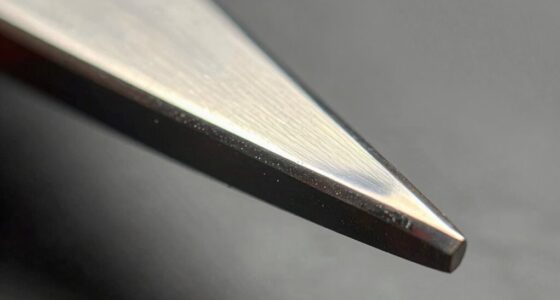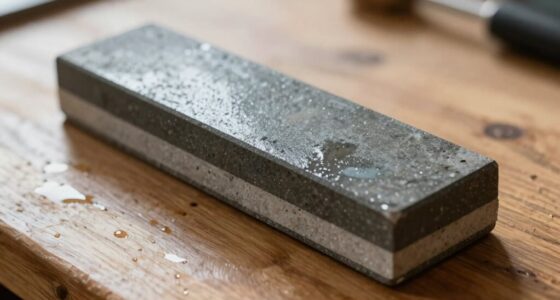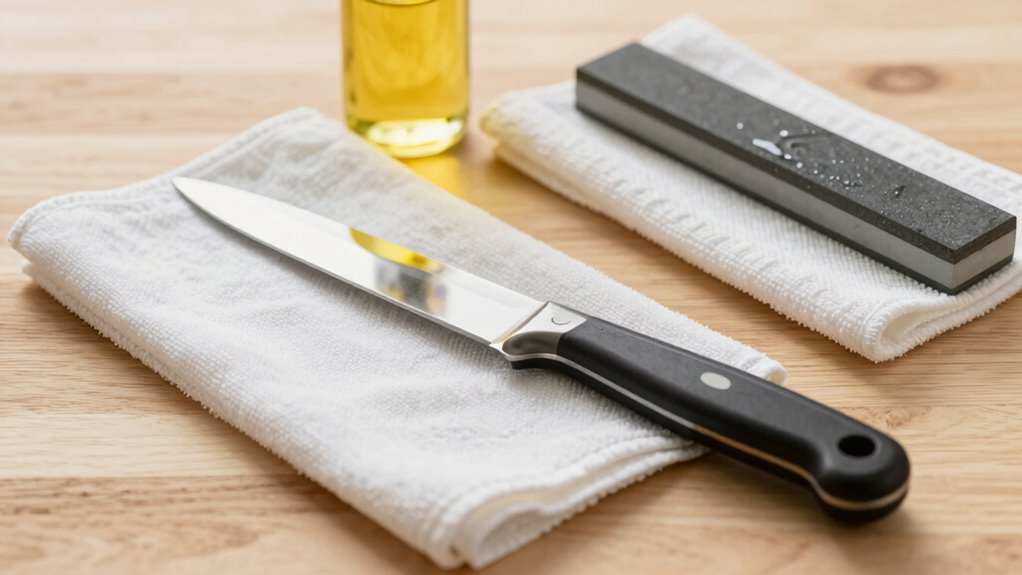

After sharpening your blades, you should first clean off any remaining debris, dust, or residue with a soft cloth to prevent corrosion. Then, dry them thoroughly to avoid rust, paying close attention to the edges. Test their sharpness by cutting a soft material or running your finger cautiously along the edge. Finally, store the blades properly in sheaths or organizers in a dry place. Keep these steps in mind to maintain performance and safety—there’s more to discover if you continue.
Key Takeaways
- Wipe the blade thoroughly with a clean cloth to remove dust, debris, and sharpening residues.
- Dry the blade completely with a dry cloth or paper towel, paying attention to edges and crevices.
- Test the sharpness by running a glove-covered finger along the edge or cutting soft material to ensure proper sharpness.
- Inspect for any remaining rust spots or damage; treat rust immediately and re-sharpen if necessary.
- Store the blade safely in a sheath, guard, or organized tool container in a dry, cool environment to prevent damage.

After a sharpening session, it’s vital to take a few quick steps to make certain your tools stay in top condition. Proper blade maintenance doesn’t end once you’ve run the sharpening stone or grinder over the edge. You need to confirm the blade is clean, dry, and stored correctly to maintain its sharpness and safety. First, inspect your blade carefully. Look for any remaining metal shavings or debris, as these can cause problems during use or even damage the blade itself. Wipe the blade down with a clean cloth to remove dust, oil, or residue left from sharpening. This not only helps maintain the blade’s performance but also prevents corrosion, which can compromise blade integrity over time.
Inspect, clean, and dry your blades after sharpening to ensure safety and optimal performance.
Next, focus on drying the blade thoroughly. Moisture, especially if the blade is made of steel, can lead to rusting and corrosion if left unattended. Use a dry cloth or even a paper towel to wipe it down, paying special attention to the edges and any crevices. If you notice any rust spots, address them immediately with a rust remover or a fine abrasive pad. Proper drying is a key safety precaution; a wet or oily blade can slip during handling or use, increasing the risk of injury. Always handle blades carefully, especially after sharpening, as they tend to be sharper and more vulnerable to accidental cuts. Additionally, understanding the importance of contrast ratio in your tools can help you evaluate their overall performance, especially if you use them in environments with varying lighting conditions.
Once the blade is clean and dry, it’s time to test its sharpness. Carefully run your finger (preferably with a glove) along the edge to gauge the sharpness; it should feel smooth and free of burrs or nicks. You can also do a gentle slice on a piece of paper or soft material to verify it cuts cleanly. If the blade isn’t sharp enough, consider repeating the sharpening process or taking it to a professional. This step guarantees you won’t have to exert excessive force during your next use, keeping safety precautions in check and reducing the chance of accidents.
Finally, store your blade properly. Use a sheath, blade guard, or a dedicated tool organizer to protect the edge and prevent accidental cuts. Store blades in a dry, cool place away from moisture and corrosive elements. Proper storage not only maintains blade sharpness but also enhances safety, especially if you’re handling multiple tools. Regularly checking your storage method helps confirm blades stay in top condition for future use. By adhering to these simple steps—cleaning, drying, testing, and storing—you’ll extend the life of your blades, improve safety precautions, and keep your tools performing at their best every time you need them.

Otis Technology Microfiber Gun Cloth – 3 Pack
Essential Cleaning Cloth: The microfiber gun cloth is perfect for cleaning all surfaces, and is ideal for use…
As an affiliate, we earn on qualifying purchases.
As an affiliate, we earn on qualifying purchases.
Frequently Asked Questions
How Often Should I Sharpen My Tools?
You should hone your tools based on their usage and the tool maintenance tips you follow. Generally, for frequent use, sharpen every few weeks or when you notice dullness. For less frequent use, every few months might suffice. Following sharpening frequency guidelines helps maintain tool efficiency and longevity. Regular checks and proper care ensure your tools stay sharp and ready, preventing damage and making your work easier.
Can I Sharpen Tools at Home Without Professional Help?
Yes, you can do DIY sharpening at home without professional assistance, but it requires proper tools and techniques. Make sure you follow safety guidelines, use the right sharpening stones or systems, and take your time to achieve a sharp edge. If you’re unsure or want perfect results, consulting a professional can save you time and prevent damage. Practice makes perfect, so start with less critical tools until you gain confidence.
What Signs Indicate My Tools Need Sharpening?
You’ll notice your tools need sharpening when you see blade damage or the edge becomes dull. If your cuts aren’t clean, or you have to press harder, that’s a clear sign. A dull edge also causes more friction and can slip easily. Regularly inspecting your tools helps you catch these signs early, ensuring they perform well and stay safe to use.
Is It Necessary to Oil My Tools After Sharpening?
Yes, oil your tools after sharpening as part of your tool maintenance routine. Applying a light coat of oil helps prevent rust and keeps your blades in top condition. Regular sharpening frequency depends on your usage, but oiling after each session ensures longevity and peak performance. Don’t skip this step, especially if you store your tools in humid environments, to maintain their sharpness and prevent corrosion.
What Are Common Mistakes to Avoid During Sharpening?
Beware of making common mistakes during sharpening that could cause blade damage or compromise your edge. You might accidentally use improper technique, like applying uneven pressure or over-sharpening, which can ruin your tool. Always stay focused, keep your strokes consistent, and use the right angle. Skipping these precautions risks damaging your blade, making subsequent sharpening more difficult. Stay vigilant—your tools depend on it.
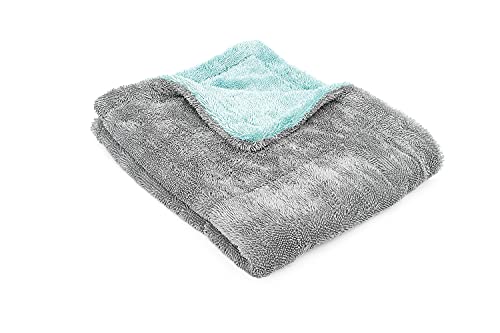
The Rag Company – The Liquid8r – Absorbent 70/30 Blend Microfiber Drying Towel for Cars, Trucks, SUVs, Safe for Detailing + Scratch Free, Twist Loop, 1100gsm, 20in x 24in, Aqua Blue/Grey
☑️ 20" x 24" PREMIUM DOUBLE-TWIST LOOP 70/30 Blend 1,100 gsm Professional Microfiber Drying Towel With Hundreds of…
As an affiliate, we earn on qualifying purchases.
As an affiliate, we earn on qualifying purchases.
Conclusion
After your sharpening session, take a moment to clean, dry, and store your tools properly. Imagine you’re preparing your favorite chef’s knife for a weekend dinner—skipping these steps might lead to rust or dullness later. By following these simple steps, you guarantee your blades stay sharp and ready for action. Think of it as giving your tools a mini spa treatment, so they’re always in top shape whenever you need them.
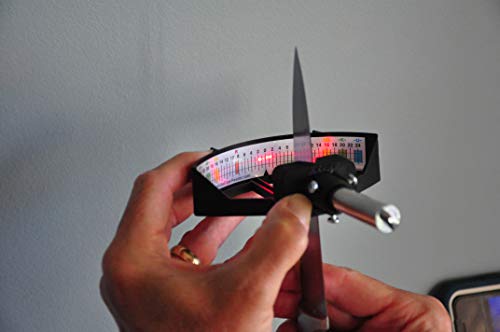
Laser Knife Edge Reader- See how sharp your knife is with laser precision. For use with sharpening stones and professional equipment.
As an affiliate, we earn on qualifying purchases.
As an affiliate, we earn on qualifying purchases.
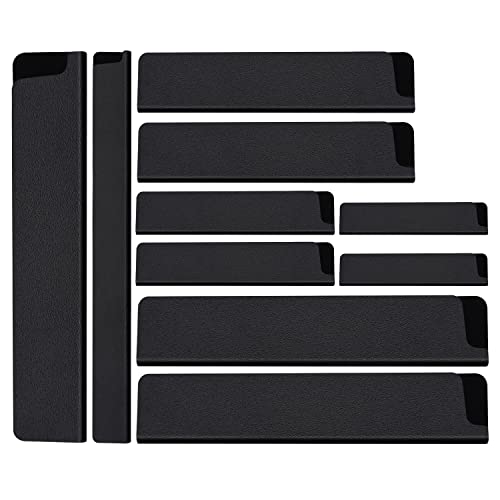
10pcs Universal Knife Edge Guards Set, Non-BPA Knife Sheath, Gentle on Your Blades
【Size and Quantity】- The package includes 2pcs of 4.7" x 1", 2pcs of 6.3" x 1.3", 2pcs of…
As an affiliate, we earn on qualifying purchases.
As an affiliate, we earn on qualifying purchases.