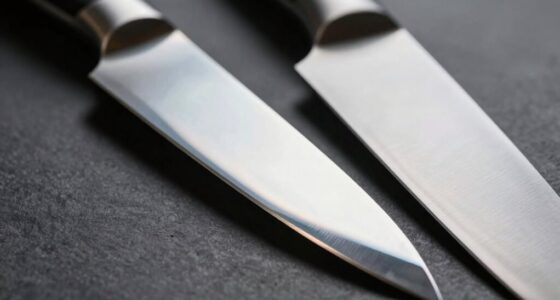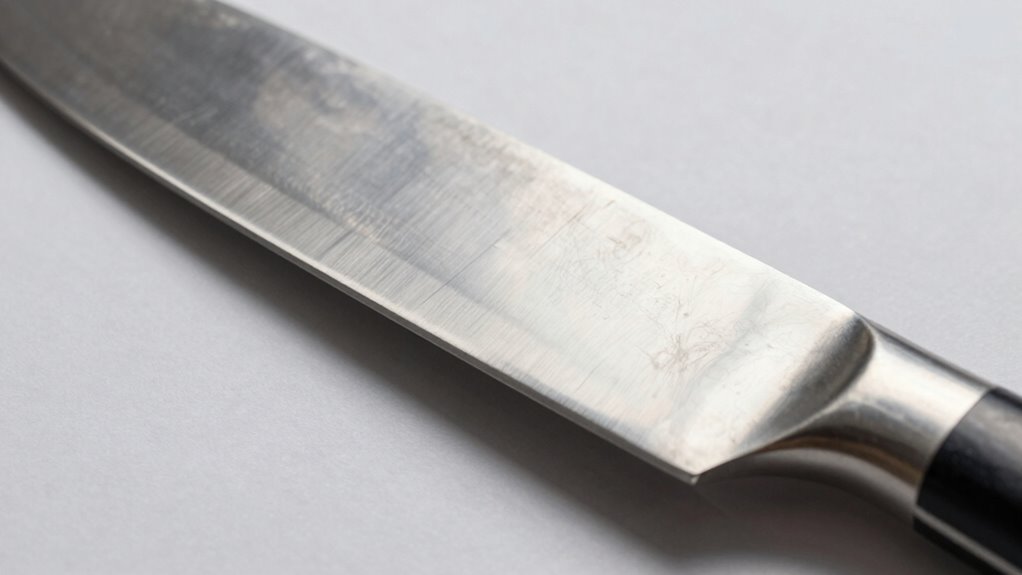
Your knife loses sharpness over time due to wear, deformation, and micro-damage. Regular use causes tiny chips, dents, and surface roughness from corrosion or impact, making the blade less effective. Repeated cutting can flatten or bend the edge, while improper materials or surfaces can deform it further. These issues aren’t just superficial—they weaken the overall structure, meaning your knife struggles to cut smoothly. Keep going to learn how proper care can keep your blade sharp longer.
Key Takeaways
- Regular use causes micro-damage like micro-chipping and surface roughness, impairing the blade’s cutting efficiency.
- Corrosion and rust weaken the metal, creating rough spots that hinder smooth cuts and accelerate dullness.
- Impact from chopping hard foods or accidental knocks leads to micro chipping, disrupting the sharp edge.
- Wear and deformation from repeated use and improper surfaces prevent the blade from maintaining a proper edge.
- Lack of maintenance, such as improper cleaning or infrequent honing, accelerates dullness and reduces overall sharpness.
Over time, knives naturally dull and lose their sharpness, making everyday tasks like slicing and chopping more difficult. This gradual decline happens because of multiple factors, including wear, deformation, and micro-damage to the blade’s edge. One of the main contributors to dullness is blade corrosion. When you use your knife and expose it to moisture, acids, or certain foods, it can develop rust or corrosion. This surface degradation roughens the blade, disrupting its smooth cutting edge and making it less effective. Corrosion not only weakens the metal but also causes tiny pits and rough spots that hinder clean, effortless cuts. As a result, you might notice that slicing through tomatoes or bread takes more effort than it used to, and your knife feels less responsive.
Knives dull over time due to corrosion, wear, and micro-damage, reducing their effectiveness and making cutting more difficult.
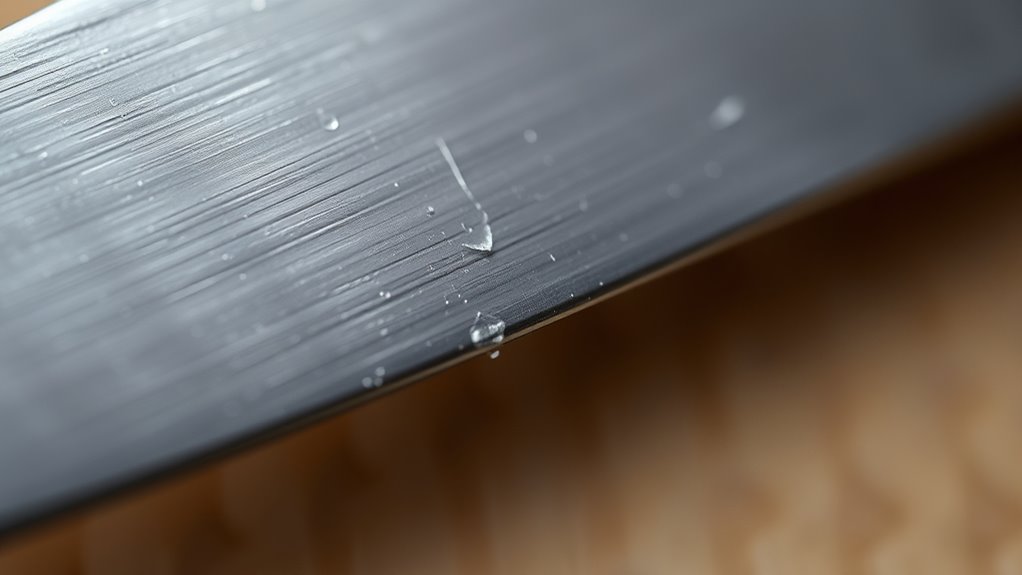
Alongside corrosion, edge micro chipping plays a vital role in losing sharpness. Every time you chop hard foods like bones, frozen items, or even accidentally hit a tough spot, tiny chips can form along the edge. These micro chippings are minuscule fractures that, over time, accumulate and disrupt the blade’s ability to create a clean, precise cut. Instead of slicing smoothly, your knife begins to snag or tear at foods, which is a clear sign that micro-damage has occurred. These tiny fractures weaken the integrity of the edge, making it more susceptible to further damage. Without proper maintenance or honing, micro chipping can spread, increasing dullness and reducing your knife’s lifespan.
Wear and deformation are also pivotal factors. Regular use gradually wears down the blade’s edge, particularly if you’re not sharpening it regularly. The repeated action of cutting causes tiny bits of the steel to flatten or bend, which dulls the edge over time. If you apply uneven pressure or cut on inappropriate surfaces like granite or ceramic, you risk deforming the blade’s shape. Such deformation prevents the edge from returning to its proper alignment, leading to unevenness and making it difficult to achieve sharpness even after sharpening. Over time, this wear and deformation can substantially diminish your knife’s performance, forcing you to replace it sooner than expected.
Additionally, proper blade material selection can influence how resistant a knife is to dulling and damage, making it an important consideration for longevity. In essence, blade corrosion, edge micro chipping, wear, and deformation all contribute to a duller, less effective knife. Proper care—like hand washing, drying thoroughly, avoiding cutting on hard surfaces, and regular honing—helps minimize these issues. Recognizing the signs of corrosion and micro damage early allows you to maintain your knife’s sharpness longer, ensuring it remains a reliable tool in your kitchen.

Utopia Kitchen Knife Sharpener Rod 12 Inch, Professional Honing Rod for Knife Sharpening with Hanging Hook, Black
Premium Steel Construction – The steel rod is made of carbon steel and plated with nickel-chrome; the fine…
As an affiliate, we earn on qualifying purchases.
As an affiliate, we earn on qualifying purchases.
Frequently Asked Questions
Can Sharpening Techniques Restore All Types of Knife Damage?
Sharpening techniques can often restore most knife damage, but not all. If your blade misaligns or suffers significant deformation, sharpening alone might not fix the problem. Proper sharpening improves edge retention and realigns the blade, but deep dents or warping require professional repairs. You should assess the damage first; minor wear and micro-damage are usually fixable, while severe deformation may need more than just sharpening.
How Does the Material of a Knife Affect Its Wear Rate?
Think of your knife’s material as its armor—some materials, like high-carbon steel or ceramic, boast superior wear resistance, meaning they resist dulling longer. Harder materials tend to slow wear rates, but may be more prone to chipping. Your choice impacts durability; softer metals wear faster but sharpen easily. So, selecting the right material depends on balancing wear resistance with your cutting needs, ensuring your knife stays sharp longer.
Are There Specific Foods That Cause More Micro-Damage?
Certain foods cause more micro-damage to your knife. Foods with strong food acids, like citrus or tomatoes, can weaken the blade’s edge over time. Tough ingredients, such as carrots or squash, require more force and can cause micro-chipping or deformation. When you cut these foods frequently, you accelerate micro-damage, leading to a duller edge. To maintain sharpness, use proper technique and consider a knife suited for these tougher or acidic foods.
How Often Should Professional Sharpening Be Performed?
While some might think frequent sharpening keeps your knife perfect, it’s actually about balance. For ideal maintenance, you should schedule professional sharpening every 6 to 12 months, depending on usage. DIY methods work for minor touch-ups, but professional sharpening ensures precise edge restoration and minimizes micro-damage. Regular professional maintenance extends your knife’s lifespan and keeps it performing at its best, so don’t wait until it’s dull to seek expert care.
Does Storing Knives Improperly Impact Their Sharpness Over Time?
Storing knives improperly can markedly impact their sharpness over time. Poor storage causes blades to rub against other utensils or surfaces, leading to micro-damage and dulling. Improper handling, like tossing knives into drawers, increases the risk of deformation and wear. To preserve sharpness, always store knives securely in a knife block, on a magnetic strip, or in a sheath. Proper storage minimizes damage and keeps your knives sharp longer.
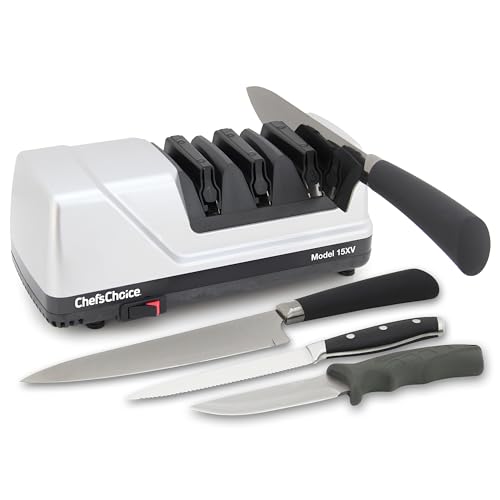
Chef’sChoice 15XV EdgeSelect Professional Electric Knife Sharpener with 100-Percent Diamond Abrasives and Precision Angle Guides for Straight Edge and Serrated Knives, 3-Stage, Gray
CONVERT YOUR KNIVES: Ideal for converting traditional 20-degree factory edges of household knives into high performance Trizor XV…
As an affiliate, we earn on qualifying purchases.
As an affiliate, we earn on qualifying purchases.
Conclusion
So, next time your knife feels dull, ask yourself—are you seeing tiny signs of wear, bending, or micro-damage? These small changes add up, making your blade less effective. By understanding what causes dullness, you can take better care of your knives and keep them sharper longer. Isn’t it worth giving a little extra attention to maintain that perfect, clean cut every time? After all, a sharp knife makes all the difference in your kitchen.

HOPLON Blade Premium Knife Cleaning, Care & Polishing Kit — Synthetic Ester Knife Oil & Pivot Lube, Industry-First Dauber + Needle, 3oz, EDC Pocket Knife Maintenance, Folding & Fixed Blade
Industry-First Sponge-Top Dauber + Needle — 3oz total of premium synthetic knife oil. Competitors charge $51/oz for a…
As an affiliate, we earn on qualifying purchases.
As an affiliate, we earn on qualifying purchases.

Intelitopia Complete Knife Sharpening Stone Set – Dual Grit Whetstone 400/1000 3000/8000 Knife Sharpener with Leather Strop, Flattening Stone, Bamboo Base, 3 Non-slip Rubber Bases & Angle Guide
【Complete Knife Sharpening Stone Kit】You don't need to be a Pro to sharpen your blades, all you need…
As an affiliate, we earn on qualifying purchases.
As an affiliate, we earn on qualifying purchases.