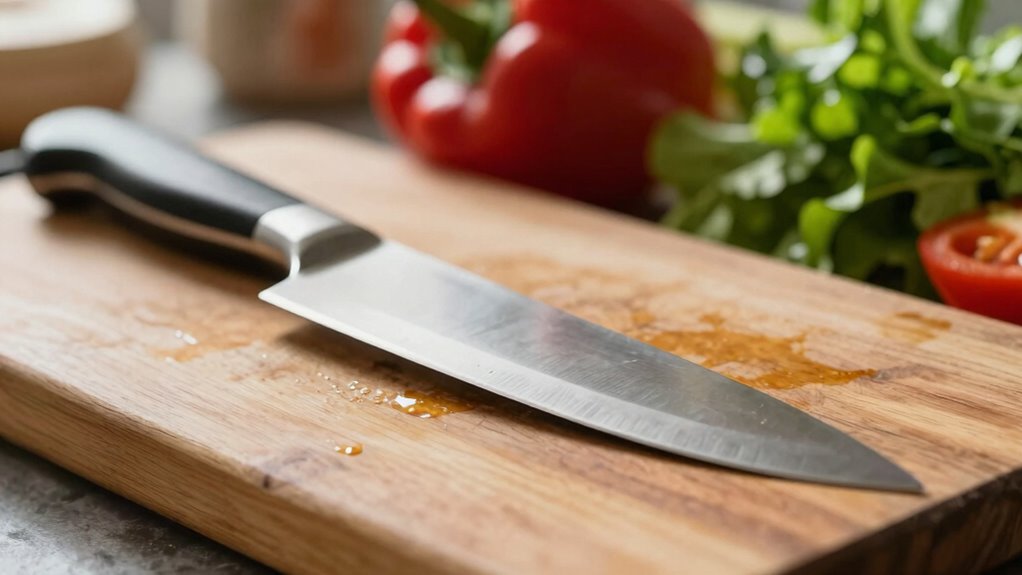
If your chef knife feels awkward after 20 minutes, it’s likely due to poor grip comfort or improper balance. Holding the knife too tightly or with an ill-designed handle causes muscle fatigue and discomfort. An unbalanced or poorly shaped handle can increase effort and reduce control, making extended use tiring. To avoid this, focus on ergonomic handle designs that promote a relaxed grip and better weight distribution. Keep going to discover how to improve your knife’s comfort for longer, more efficient cooking.
Listen free for 30 days with Audible
Thousands of audiobooks and originals — cancel anytime.
As an affiliate, we earn on qualifying purchases.
Key Takeaways
- An improper grip causes muscle fatigue and discomfort after about 20 minutes of continuous use.
- Handle design that is too thick, narrow, or poorly contoured increases tension and reduces control over time.
- Lack of proper handle balance and weight distribution leads to increased effort and awkwardness during extended use.
- Using a handle made of uncomfortable materials or with non-slip surfaces can cause strain and reduce grip efficiency.
- Extended use without ergonomic considerations results in hand fatigue, decreasing precision and making the knife feel awkward.
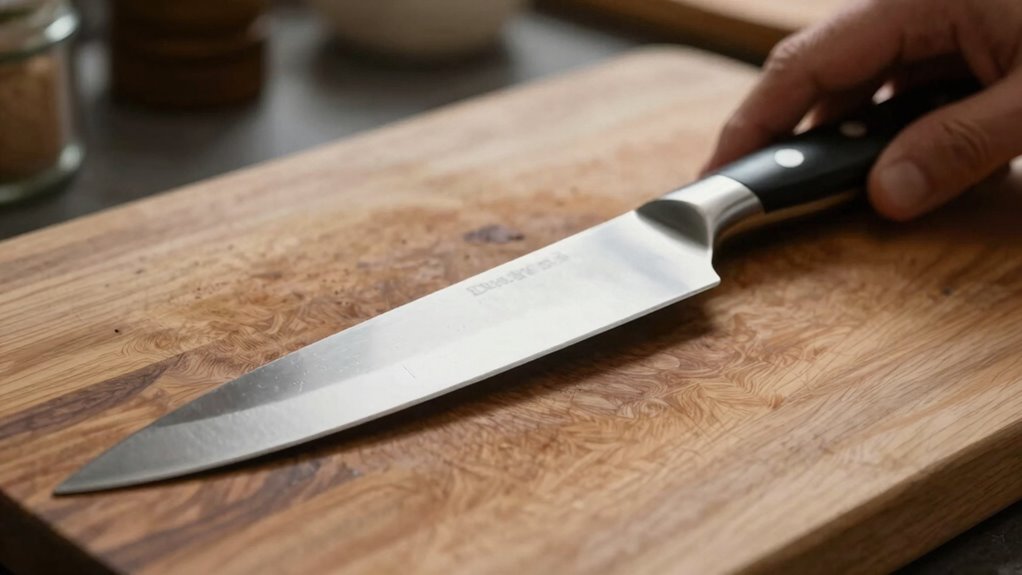
A comfortable chef’s knife can make all the difference in your cooking experience, helping you work efficiently and safely. But even the best knives can start to feel awkward after a while. If your hand begins to tire or your grip feels less secure after about 20 minutes, the problem often lies in how you’re holding the knife and how well the handle fits your hand. The key factors here are your knife grip and handle ergonomics.
Your knife grip is more than just how tightly you hold the handle. It’s about finding a balance that gives you control without causing strain. When you grip the knife too tightly, your hand muscles tire quickly, leading to fatigue and discomfort. Conversely, a grip that’s too loose reduces your control, making precise cuts difficult. The ideal grip involves a firm but relaxed hold, allowing your hand to move naturally with the knife’s motion. This is where handle ergonomics come into play. An ergonomic handle is designed to fit the shape of your hand comfortably, reducing pressure points and minimizing strain during extended use.
If your knife handle is poorly designed or doesn’t suit your hand size, you’ll notice discomfort faster. Handles that are too thick or too narrow can force your fingers into awkward positions, creating tension in your grip. Over time, this tension leads to fatigue and even pain. Conversely, a handle with the right shape, contour, and material provides better grip stability and reduces effort. Look for handles that have a slightly textured surface or non-slip material, especially if your hands tend to be sweaty or wet. These features help you maintain control without needing to squeeze harder. Proper handle design and material can significantly influence your comfort by absorbing shock and reducing hand fatigue. Additionally, paying attention to handle weight distribution can make a noticeable difference in how manageable the knife feels over extended periods.
Another aspect to ponder is the handle’s weight distribution. A well-balanced knife feels lighter and more maneuverable in your hand, reducing fatigue. When the handle feels off-balance or too heavy, you’re forced to use extra effort to keep control, which can quickly become exhausting. Choosing a knife with handle ergonomics that complement your hand size and grip style can dramatically improve comfort during repetitive tasks. Additionally, the material used in the handle can influence how comfortable it feels over extended periods, as some materials are better at absorbing shock and reducing hand fatigue. Proper handle design and material selection are crucial for achieving long-lasting comfort.
In the end, the reason your chef knife feels awkward after a short period isn’t just about the blade but also about how you’re holding it and whether the handle supports your hand comfortably. Adjusting your grip, selecting a knife with an ergonomic handle, and paying attention to handle design can turn a tiring experience into one of effortless precision and enjoyment.
As an affiliate, we earn on qualifying purchases.
Frequently Asked Questions
How Can I Prevent My Knife From Feeling Uncomfortable Over Time?
Your knife shouldn’t feel like a burden after just a few minutes. To prevent discomfort, choose a knife with the right weight for your hand—lighter if you prefer agility, heavier for power. Pay attention to the blade curvature; a well-balanced curve fits your grip comfortably. Regularly adjust your grip and take breaks to avoid fatigue, ensuring your knife feels natural and effortless, not like wielding a weapon of destruction.
Does the Handle Material Affect Long-Term Comfort?
Yes, the handle material impacts long-term comfort. A handle with a shape that fits your hand and good weight distribution reduces fatigue and discomfort. Materials like wood or silicone offer better grip and cushioning, making prolonged use easier. When choosing a knife, consider both handle shape and weight distribution, as these factors work together to provide a comfortable grip and prevent strain during extended chopping or slicing sessions.
What Ergonomic Features Should I Look for in a Chef Knife?
Think of an ergonomic chef knife as a trusted partner in your kitchen. Look for a handle that fits comfortably, balancing knife weight for control without fatigue. Consider blade length to match your prep style—shorter for precision, longer for bulk. Features like a well-shaped bolster support your grip, reducing strain. Ultimately, an ergonomic knife feels natural in your hand, making prep work effortless and enjoyable.
Can Sharpening Technique Influence Comfort During Prolonged Use?
Yes, sharpening technique can influence your comfort during prolonged use by affecting knife balance and blade flexibility. A properly sharpened knife maintains ideal balance, reducing strain on your hand and wrist, while a keen edge enhances control. Conversely, uneven sharpening can cause the blade to feel awkward and less flexible, making extended use uncomfortable. Regular, precise sharpening ensures your knife remains comfortable and efficient, preventing fatigue and improving your overall cutting experience.
Are There Specific Grips That Reduce Fatigue When Using a Chef Knife?
You can keep your grip from wearing out by switching to a pinch grip, which offers better control and reduces fatigue. Focus on knife balance, ensuring the handle isn’t too heavy or light. Use a finger grip technique that distributes pressure evenly, avoiding strain. This way, you won’t just be holding on for dear life—you’ll be slicing smoothly and comfortably, making prep work feel less like a chore and more like a breeze.
As an affiliate, we earn on qualifying purchases.
Conclusion
So, next time your chef knife starts feeling a little too lively, remember, it might just be your grip or technique needing a gentle nudge in the right direction. With a few simple adjustments, you’ll find slicing becomes smoother and more comfortable—almost like an old dance partner. Embrace the subtle changes, and soon, your knife will feel as natural as a whisper, turning every cut into a quiet symphony of precision and ease.
As an affiliate, we earn on qualifying purchases.
As an affiliate, we earn on qualifying purchases.
Fall yard work Picks
leaf blowers
As an affiliate, we earn on qualifying purchases.