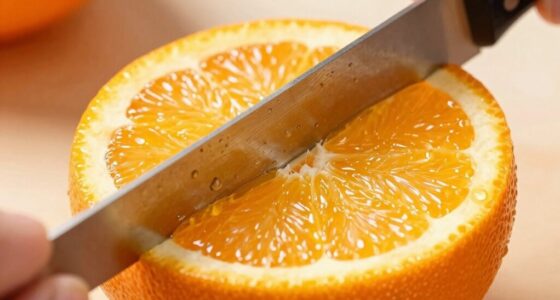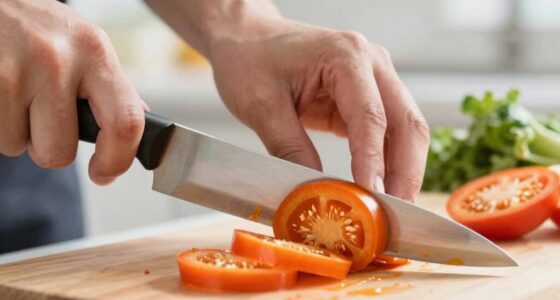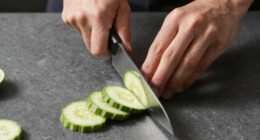
To clear a knife safely with the ‘Knife Wipe’ technique, firmly grip the handle and position the blade against a non-slip surface like a damp towel or silicone mat. Hold a soft cloth in your other hand and wipe from the spine to the edge in a smooth, continuous motion, always away from your body. This method removes debris safely while keeping the edge sharp. Keep exploring to learn more tips for effective and safe knife maintenance.
Key Takeaways
- Grip the handle securely, keeping fingers clear of the blade’s edge before starting the wipe.
- Use a damp, non-slip surface like a towel or silicone mat to stabilize the knife during cleaning.
- Wipe the blade from spine to edge in a single, smooth motion, away from your body for safety.
- Always wipe in one continuous movement, avoiding back-and-forth scrubbing that could cause slips.
- Dry the blade immediately after wiping to prevent rust and check for damage or dull spots.
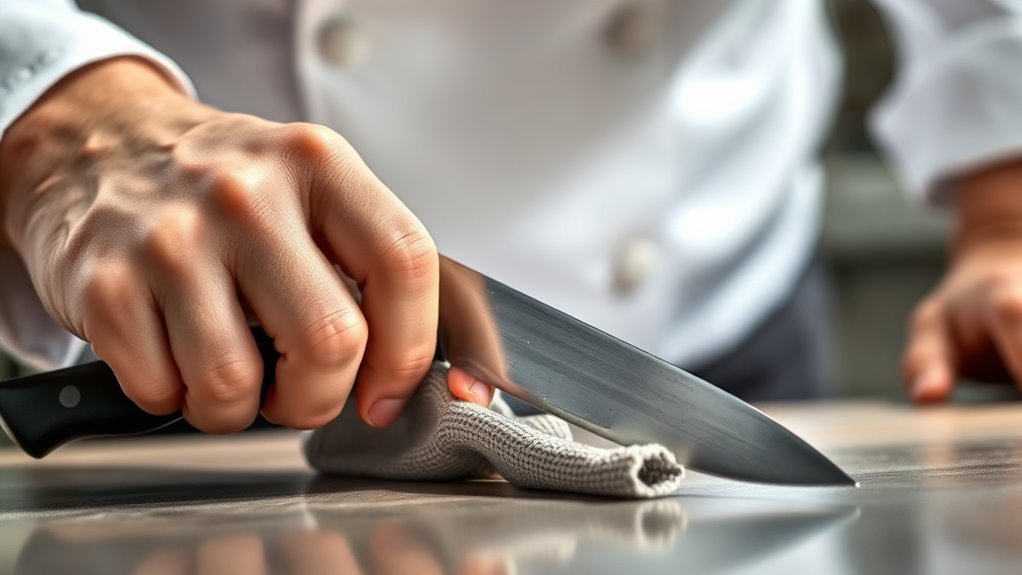
The Knife Wipe Technique is a simple yet effective method to guarantee your knives stay sharp and hygienic. It’s a smart way to handle your blades without risking injury or compromising their edge. When it comes to knife safety, many people overlook how proper cleaning methods can make a big difference in maintaining the longevity of your knives and preventing accidents. Using this technique, you can clean your knife quickly and safely without needing to put down the blade or use bulky tools.
The Knife Wipe Technique keeps knives sharp, hygienic, and safe without bulky tools or risking injury.
To start, grasp the knife firmly by the handle, keeping your fingers clear of the blade’s edge. Instead of trying to wipe the blade with a cloth while holding it, you position the blade against a clean, non-slip surface, like a damp towel or a silicone mat. With your other hand, hold a soft cloth or paper towel, then gently wipe the entire length of the blade from the spine to the edge. This motion helps remove any food debris, sticky residues, or moisture that can cause rust or dullness over time. The key is to wipe in one continuous motion, avoiding any back-and-forth scrubbing that could lead to accidental slips.
Additionally, incorporating a proper storage method, such as keeping knives in a dedicated knife block or sheath, can help preserve the blade’s edge and prevent accidents when not in use. When it comes to cleaning methods, this technique allows you to thoroughly clean your knives without exposing yourself to unnecessary risk. It’s especially useful when you’re working with sharp blades, as it minimizes the need for you to handle the blade directly. If you’re washing your knives in water, do so carefully—never submerge them completely if they aren’t dishwasher-safe, and avoid leaving them in the sink where they can be hidden under other dishes. After wiping, dry the blade immediately with a clean towel to prevent rust and corrosion.
The Knife Wipe Technique also makes it easier to inspect your blades for any damage or dull spots. As you wipe, take note of any nicks, chips, or dull areas that might need professional sharpening. It’s an efficient way to combine cleaning with a quick safety check. Remember, always wipe away from your body to avoid accidental cuts, and never rush the process. Regularly practicing this technique not only keeps your knives in top condition but also promotes safe handling habits in your kitchen.
imarku Chef Knife 7 Inch Kitchen Knife Ultra Sharp Santoku Knife - High Carbon Japanese Chefs Knife, Kitchen Gadgets 2025, Apartment Essentials, Birthday Gifts for Him Her, Best Gifts for Women Men
Professional Santoku Knife: This imarku super sharp santoku knife is made of high carbon stainless steel that resists...
As an affiliate, we earn on qualifying purchases.
Frequently Asked Questions
Can the Knife Wipe Be Used on All Types of Knives?
No, the knife wipe isn’t suitable for all knife materials. Some blades, like those made of certain high-carbon steels or delicate materials, might get damaged by the wiping method. You should evaluate each knife’s material and construction before using the technique. For tougher blades, a proper wiping method ensures safety and prevents damage, but always check manufacturer guidelines to avoid hurting your knife or compromising its edge.
What Should I Do if the Blade Still Has Residue After Wiping?
If the blade still has residue after wiping, you should reapply the cleaning process to improve cleaning effectiveness. Use a damp cloth or a gentle scrubbing tool to remove stubborn residue, paying close attention to the edges and corners. This guarantees the blade is thoroughly cleaned, reducing the risk of contamination. Regularly inspect the blade during cleaning to confirm all residue is gone, maintaining safety and hygiene.
Is the Knife Wipe Technique Suitable for Professional Kitchen Environments?
Think of the knife wipe technique as a swift brushstroke across a canvas—perfectly suited for professional kitchens. It’s a quick, effective method that aligns with high standards of kitchen safety and sanitation. By efficiently removing residue, you reduce contamination risks and maintain cleanliness. This technique guarantees your workspace stays safe and compliant with sanitation standards, making it an ideal practice for busy, safety-conscious culinary environments.
How Often Should I Practice the Knife Wipe Technique for Safety?
You should practice the knife wipe technique daily to guarantee ideal knife safety. Regular practicing helps you develop muscle memory, reducing the risk of accidents during cleaning. Incorporate it into your cleaning frequency routine, especially after each use or before switching tasks. Consistent practice keeps your skills sharp and ensures you handle knives safely, minimizing injuries and maintaining a hygienic, professional kitchen environment.
Are There Specific Cleaning Agents Recommended for Maintaining Knife Blades?
When it comes to cleaning agents, stick with dish soap and warm water for daily maintenance—they’re gentle yet effective. For added protection, apply a thin layer of mineral oil after cleaning to prevent rust and keep the blade smooth. Avoid harsh chemicals that can damage the steel. Remember, a little care goes a long way, and keeping your knife in top shape is like hitting two birds with one stone—long-lasting and safe to use.
imarku Japanese Chef Knife - Sharp Kitchen Knife 8 Inch Chef's Knives HC Steel Paring Knife, Unique Gifts for Men and Women, Gifts for Mom or Dad, Kitchen Gadgets with Gift Box, Gyutou Knives
High-Carbon Stainless Steel Blade: It is manufactured from high-quality stainless steel that maintains its functionality for a long...
As an affiliate, we earn on qualifying purchases.
Conclusion
By mastering the knife wipe technique, you guarantee your safety is always a priority, like a shield protecting you from harm. Remember to keep your movements controlled and deliberate, turning a potentially dangerous task into a simple routine. With practice, this technique becomes second nature—just as a skilled dancer moves effortlessly across the floor. Stay vigilant, stay safe, and let your confidence grow with each wipe, turning knife handling into a safe and seamless part of your culinary routine.

HOSHANHO Kitchen Knife in Japanese High Carbon Steel, Professional High-Class Chef's Knife 8 inch, Non-slip Ultra Sharp Cooking Knives with Ergonomic Handle
【High-End Japanese Steel Chef's Knife】 HOSHANHO chef's knife is made of Japanese high carbon steel 10Cr15CoMoV, 2x of...
As an affiliate, we earn on qualifying purchases.

Japanese Chef Knife, 8 Inch Damascus Kitchen Knife with VG10 Steel, Handcrafted Sharp Knife with Ergonomic Handle, Cooking Knives for Home Chefs, Cooking Gifts for Men and Women
【Premium Damascus Chef Knife with VG-10 Steel Core】Our Japanese knives feature a VG-10 steel core (60 HRC) for...
As an affiliate, we earn on qualifying purchases.