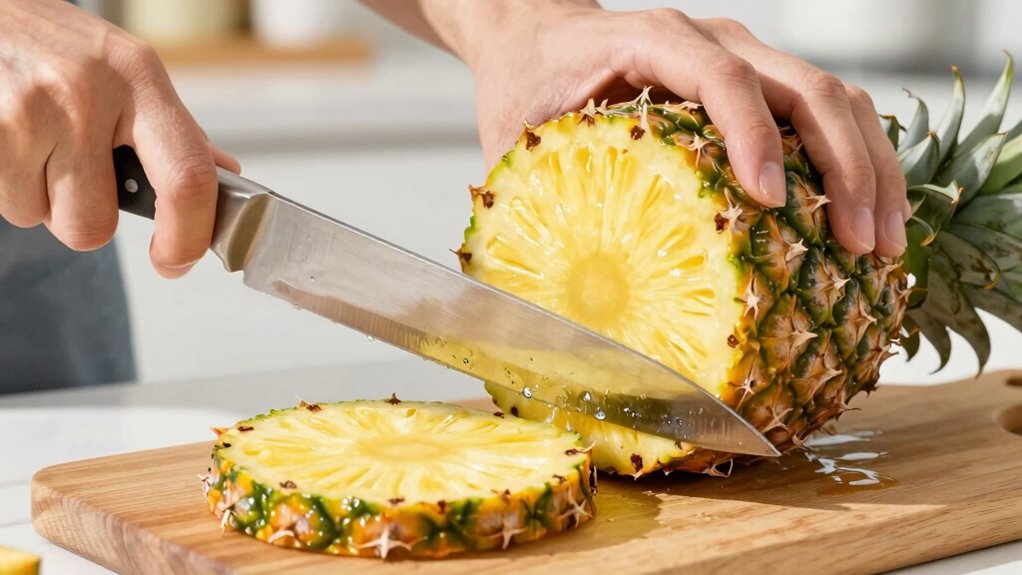
To cut a pineapple safely with minimal slipping and waste, start by stabilizing it on a damp cloth and using a sharp, sturdy knife. Trim off the crown and base, then carefully peel away the skin while following the fruit’s natural contour. Remove the eyes with shallow cuts and cut the pineapple into rings or chunks, always cutting away from your body. For tips on precise techniques and safety, keep exploring further.
Key Takeaways
- Use a stable cutting board with a damp cloth underneath to prevent slipping during cutting.
- Select a sharp, sturdy knife and cut on a flat surface for better control and safety.
- Securely stabilize the pineapple by trimming the crown and bottom before peeling.
- Remove the skin with smooth, controlled motions, keeping fingers tucked away in a claw grip.
- Cut carefully around the core and eyes, using shallow V-grooves to minimize waste and ensure safety.

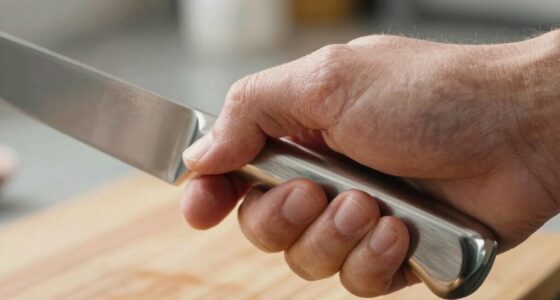
Cutting a pineapple can be tricky if you’re not familiar with the right technique, but with a few simple steps, you can do it safely and efficiently. The key is to prioritize knife safety and use proper cutting techniques to prevent slips and waste. Before you start, make sure your cutting board is stable—place a damp cloth underneath to prevent slipping. Select a sharp, sturdy chef’s knife; a dull blade increases the risk of slipping and makes cutting more difficult. Always hold the pineapple securely and keep your fingers tucked away using a claw grip, which protects your fingertips from the blade’s edge. Maintaining a steady grip and controlled motion is essential for safe slicing. Begin by trimming off the top and bottom of the pineapple. Set the fruit upright on the cutting board and carefully slice off the crown and the base, creating flat surfaces. This step stabilizes the pineapple and makes it easier to work with. Next, stand the pineapple upright and carefully slice downward along the sides, following the contour of the fruit to remove the tough outer skin. Use smooth, controlled cutting motions rather than forcing the knife through. This approach enhances knife safety and ensures you don’t slip. Once the skin is removed, you’ll notice the eyes—those brown spots scattered across the flesh. To remove them efficiently and reduce waste, cut a shallow V-shaped groove along each row of eyes. This cutting technique not only makes the pineapple more visually appealing but also minimizes the amount of fruit discarded. When slicing the pineapple into rings or chunks, keep the cuts consistent to avoid uneven pieces that can slip and cause accidents. Always cut away from your body and keep your fingers clear of the blade’s path. If you’re cutting into rings, lay the pineapple flat after removing the core, then slice evenly to create rings of your desired thickness. For chunks, stand the pineapple upright again and make vertical cuts, then cut horizontally to create uniform pieces. When removing the core, make a vertical cut around it and lift it out to avoid waste. Throughout the process, maintain control of your knife with a firm grip, and work slowly if you’re new to using knives for fruit. Paying attention to cutting techniques ensures safety and reduces waste while preparing your pineapple efficiently.
Frequently Asked Questions
Can I Cut Pineapple With a Dull Knife Safely?
You shouldn’t cut pineapple with a dull knife because dull knife safety is jeopardized, increasing the risk of slips and accidents. A dull blade requires more force, making your cutting technique less precise and more dangerous. Always sharpen your knife before cutting pineapple, and use controlled, steady pressure to avoid slips. This ensures safety, reduces waste, and makes slicing easier and more efficient.
What’s the Best Way to Store Leftover Pineapple?
Think of your leftover pineapple as treasure waiting to be savored later. To keep it fresh, store it in airtight storage containers that lock in flavor like a secret. Place the containers in your fridge, where coolness preserves the sweetness and prevents spoilage. Pineapple preservation becomes easy when you seal the deal with the right container, ensuring every bite remains juicy and vibrant for days to come.
How Do I Prevent Pineapple Juice From Dripping?
To prevent pineapple juice mess, place a paper towel or silicone mat under your cutting area to catch drips. As you juice or cut, keep a juicing sponge nearby for quick cleanup of any spills. When finished, wipe down surfaces immediately with the sponge to avoid sticky residue. This simple step keeps your workspace tidy, minimizes waste, and makes cleanup faster, so you can enjoy your pineapple without the sticky aftermath.
Is It Safe to Use a Serrated Knife for Pineapple?
Using a serrated knife for pineapple can be safe if you follow proper safety precautions and choose the right knife. The serrated edge helps grip the tough skin and soft flesh, making cutting easier. However, make certain you handle the knife carefully, keep your fingers away from the blade, and stabilize the pineapple firmly. Proper knife selection and safety precautions are key to preventing slips and injuries while slicing pineapple.
How Do I Peel a Pineapple Without Wasting Fruit?
To peel a pineapple without wasting fruit, start by cutting off the top and bottom, then stand it upright. Use a sharp knife to slice downward, removing the skin along the contours. For pineapple core removal, cut around the tough center to minimize fruit waste. Carefully trim away any remaining flesh close to the core, ensuring you get the most fruit possible while reducing waste. This method keeps your pineapple juicy and waste-free.
Conclusion
Remember, patience is a virtue when cutting pineapple safely. Take your time, follow the steps carefully, and avoid rushing. Using the right tools and techniques helps prevent slips and waste. As the saying goes, “A stitch in time saves nine.” By being cautious and precise, you’ll enjoy perfectly cut pineapple without accidents or leftovers. Happy slicing!