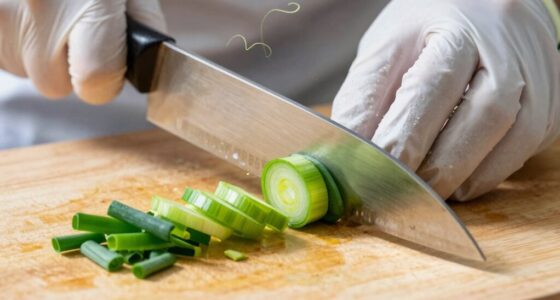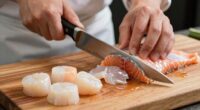
Paysanne cuts are thin, flat slices of vegetables about 1/8 inch thick, giving your dishes a rustic yet polished look. They’re perfect for ensuring even cooking in sautés, soups, or stews, highlighting the natural beauty and flavor of fresh produce. This technique not only enhances presentation but also helps ingredients cook uniformly, preventing mushiness. Mastering paysanne cuts can elevate simple recipes into visually appealing creations, and if you keep exploring, you’ll discover even more ways to use this charming, traditional style.
Key Takeaways
- Paysanne cuts are thin, flat slices approximately 1/8 inch thick, promoting even cooking and consistent texture.
- Their uniform shape and size help ingredients cook evenly in sautés, soups, and stews.
- The technique enhances flavor melding and preserves the vegetable’s natural shape and visual appeal.
- Paysanne slices are ideal for traditional dishes like ratatouille, ensuring consistent doneness throughout.
- The rustic, artisanal appearance elevates simple vegetables into attractive, well-presented dishes.
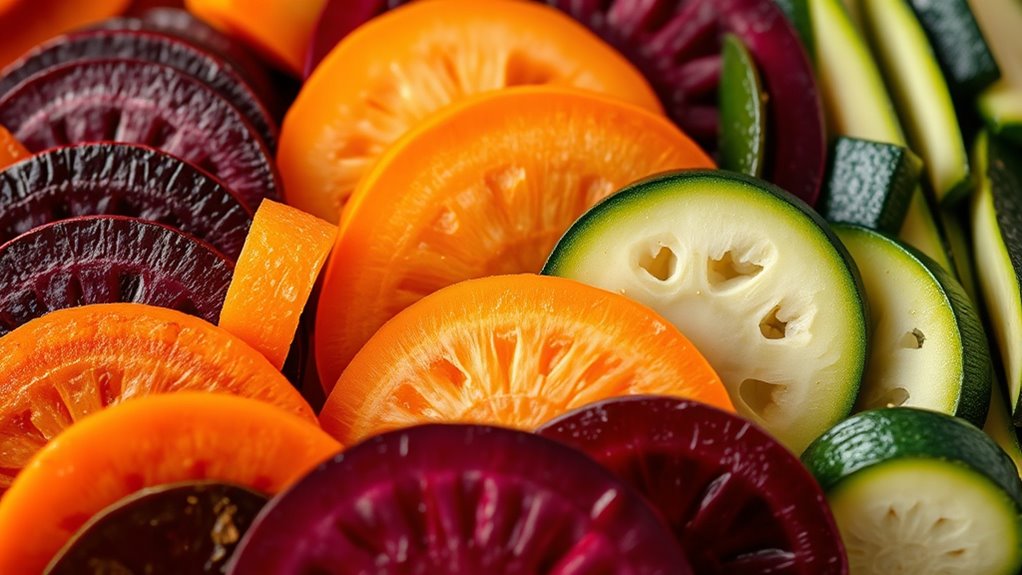
Have you ever wondered what sets paysanne cuts apart from other vegetable preparations? It’s all about their distinctive shape, size, and the way they elevate your culinary presentation. Paysanne cuts involve slicing vegetables into thin, flat, round or square pieces that typically measure about 1/8 inch thick. This method isn’t just about aesthetics; it’s rooted in traditional recipes that emphasize simplicity and flavor. These cuts allow vegetables to cook evenly, making them perfect for sautés, soups, and rustic stews. When you use paysanne cuts, you’re combining functionality with visual appeal, giving your dishes a charming, artisanal look that resonates with both home cooks and professional chefs.
One of the key reasons paysanne cuts stand out is their versatility in traditional recipes. Think about classic French dishes like ratatouille or vegetable tarts, where uniformly sliced vegetables ensure consistent cooking and a harmonious texture. The thinness of these slices allows flavors to meld quickly and thoroughly, enhancing the overall taste. Plus, their rustic appearance adds a layer of authenticity to your presentation. When served, these slices create a layered, colorful display that’s both inviting and appetizing. They’re especially effective when you want to showcase fresh, seasonal produce, giving a dish a homemade, traditional vibe that elevates the dining experience.
Mastering paysanne cuts can truly transform your approach to vegetable preparation. It’s not just about cutting; it’s about respecting the integrity of the ingredients while making them visually appealing. As you practice, you’ll notice how the uniform slices cook more evenly, preventing some pieces from becoming mushy while others remain underdone. This precision in preparation can make a significant difference in the final dish, especially when you’re aiming for a polished, professional-looking presentation. Furthermore, using paysanne cuts can inspire you to explore more traditional recipes, allowing you to connect with culinary roots and honor time-tested techniques.
In addition, the aesthetic appeal of paysanne slices can turn a simple vegetable dish into a centerpiece. Whether you’re plating a vegetable medley or a delicate tart, their consistent size and shape contribute to a refined, rustic charm. This method encourages creativity, as you can layer or arrange the slices artistically to showcase the natural beauty of each vegetable. Ultimately, incorporating paysanne cuts into your cooking repertoire allows you to combine tradition with artistry, creating dishes that are not only delicious but also visually compelling. It’s a simple technique that makes a big impact, enhancing both the flavor and the presentation of your culinary creations.
Frequently Asked Questions
Can Paysanne Cuts Be Used for Grilling?
Yes, you can use paysanne cuts for grilling. Their thin, rustic slices help them cook evenly with proper grilling techniques, ensuring they don’t burn or dry out. Plus, the shape enhances flavor by increasing surface contact, leading to better flavor enhancement. Just remember to keep an eye on them and flip frequently to prevent charring, so you get perfectly grilled slices every time.
What Vegetables Are Best Suited for Paysanne Cuts?
Think of paysanne cuts as a dance where vegetable textures shine. You’re best suited using firm vegetables like carrots, zucchini, potatoes, and turnips, which hold their shape well. The cutting technique creates thin, rustic slices that cook evenly, making them perfect for roasting, sautéing, or adding visual appeal to salads. Choosing vegetables with sturdy textures guarantees they won’t fall apart, turning your dish into a harmonious symphony of flavor and presentation.
How Do Paysanne Cuts Affect Cooking Time?
Paysanne cuts help vegetables cook more evenly by reducing their thickness, which affects vegetable texture and guarantees consistent cooking times. When you use these rustic slices, you’ll notice they cook faster and more uniformly, preventing overcooking or undercooking. This method improves cooking consistency, making your dishes more visually appealing and flavorful. So, by choosing paysanne cuts, you control the texture and achieve perfect results every time.
Are Paysanne Cuts Suitable for Raw Dishes?
Yes, paysanne cuts are suitable for raw dishes because they give you appealing raw vegetable textures that enhance freshness. Their rustic, thin slices create an attractive presentation aesthetic, making salads and veggie platters more visually appealing. Since they’re sliced evenly, you’ll enjoy consistent textures and flavors throughout your dish. These cuts are perfect for highlighting the natural beauty and crunch of raw vegetables, elevating your culinary presentation effortlessly.
What Tools Are Recommended for Making Paysanne Cuts?
Did you know a sharp knife reduces prep time by 40%? For paysanne cuts, you should use a chef’s knife or a mandoline for precision and safety. Always prioritize kitchen safety by keeping your blades sharp, which makes cutting easier and safer. Regular knife sharpening ensures clean, even slices, preventing slips and accidents. Invest in a good quality knife and sharpening tool to make your paysanne cuts effortless and safe.
Conclusion
Now that you’ve mastered paysanne cuts, you can confidently prepare your dishes with a rustic charm, ensuring even cooking and charming presentation. Think of it as your culinary secret weapon—like having a trusty Swiss Army knife in the kitchen, but for vegetables. So go ahead, channel your inner chef, and turn simple ingredients into a gourmet masterpiece. Who knew that a little slice of history could make your cooking feel so timeless and fun?