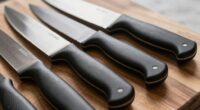
To carve a roast without dry slices, start by selecting a well-marbled cut for tenderness. Rest the meat for 10-15 minutes to let juices redistribute. Use a sharp knife and secure your cutting surface. Slice against the grain in thin, even cuts, about ¼ inch thick. Begin from the narrow end and work across, maintaining a steady hand. Proper technique and order help keep slices moist—keep going to discover more tips.
Key Takeaways
- Rest the roast for at least 10-15 minutes to allow juices to redistribute before carving.
- Use a sharp, serrated, or carving knife to make clean, smooth cuts against the grain.
- Slice the roast into thin, uniform pieces approximately ¼ inch thick for optimal moisture retention.
- Carve from the narrow end of the roast, working across the meat for even portions.
- Maintain steady, deliberate strokes and avoid sawing to prevent shredding and dry slices.
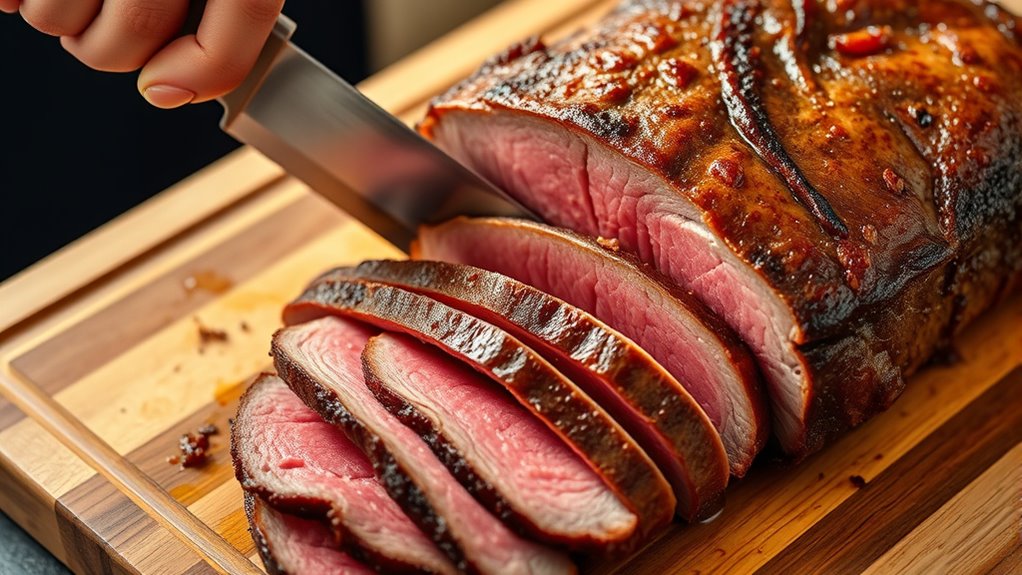
Carving a roast may seem intimidating, but with the right technique, you can serve perfectly sliced meat every time. The key lies in mastering proper slicing techniques and understanding meat selection. When you choose the right cut of meat, it becomes easier to carve clean, even slices that retain moisture and flavor. For example, a well-marbled ribeye or tenderloin will give you a tender, juicy result, whereas a leaner cut might require more careful slicing to prevent it from drying out.
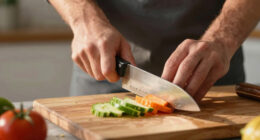
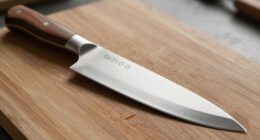
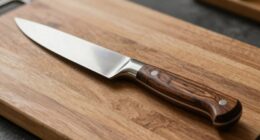
Before you start slicing, let the roast rest for at least 10-15 minutes. Resting allows the juices to redistribute, making the meat more moist and easier to carve. Once rested, place the roast on a sturdy cutting board, ensuring it’s stable. Use a sharp, serrated knife or a carving knife designed for meat. A dull blade will tear the fibers, resulting in uneven, dry slices, so always keep your knife sharp.
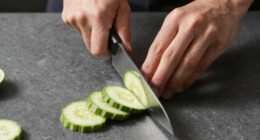
When you begin slicing, aim to cut against the grain. This means you should identify the direction of the muscle fibers and make your cuts perpendicular to them. Cutting against the grain shortens the muscle fibers, making each slice more tender and less chewy. Hold the roast steady with a fork or tongs, and use smooth, deliberate strokes. Avoid sawing back and forth, as this can shred the meat and cause uneven slices. Instead, focus on clean, even strokes that slice through the meat with minimal resistance.
The order in which you carve also influences the final presentation and moisture retention. Start from the narrow end of the roast and work your way across, slicing thin portions. This approach helps maintain the integrity of the roast and prevents unnecessary drying. If you’re serving guests, slice the meat into uniform pieces, about ¼ inch thick, to ensure everyone gets a tender, manageable portion. Additionally, choosing a properly rested roast can significantly improve the overall slicing experience and presentation.

Cutluxe Brisket Knife – 12" Carving & Slicing Knife for Meat & BBQ – Razor Sharp German Steel, Sheath Included, Ergonomic Full Tang Handle Design, Grilling Gifts for Men – Artisan Series
PREMIUM PERFORMANCE – Perfectly engineered slicing carving knife tapered to a razor-sharp edge for effortless carving and slicing…
As an affiliate, we earn on qualifying purchases.
As an affiliate, we earn on qualifying purchases.
Frequently Asked Questions
What Is the Best Type of Knife for Carving Roasts?
You should use a sharp, long, and thin carving knife, like a slicer or a carving knife, for the best results. These carving tools help you make precise cuts and prevent meat tenderization issues that can lead to dry slices. A properly honed, high-quality knife guarantees smooth, even slices, making your roast look professional and stay juicy. Invest in a good carving knife for effortless, clean cuts every time.
How Can I Tell When My Roast Is Perfectly Cooked?
You can tell your roast is perfectly cooked by checking its internal temperature and meat tenderness. Use a meat thermometer to measure the cooking temperature—typically 145°F for medium rare or 160°F for medium. When the meat feels tender and the temperature hits your desired level, it’s ready. Remember, resting the roast allows juices to distribute, ensuring it stays moist and flavorful when you carve.
Should I Rest the Meat Before Carving?
Resting your meat is essential; studies show resting for 10-15 minutes improves juiciness and flavor. You should rest your roast before carving to allow juices to redistribute, which prevents dry slices. Follow temperature guidelines for your specific cut, and don’t skip this step. During resting, the internal temperature stabilizes, making your slices tender and moist. So, take that extra time—it’s worth the delicious results!
How Do I Prevent Meat Juices From Spilling During Carving?
To prevent meat juices from spilling during carving, use your carving knife to make smooth, steady strokes, keeping the blade close to the meat’s surface. Carving tips include resting the meat first, then slicing against the grain, which minimizes juice loss. Also, let the meat rest after carving to allow juices to redistribute. This keeps your slices tender and juicy, ensuring your presentation stays appealing and flavorful.
Can I Carve a Frozen Roast Safely?
Carving a frozen roast isn’t safe, as food safety guidelines recommend thawing meat properly first. Did you know that bacteria can grow rapidly between 40°F and 140°F? Attempting to carve a frozen roast risks uneven slicing and injury. Always thaw your meat in the refrigerator, cold water, or microwave, ensuring safe food handling and better results. Thawing prevents contamination and helps you carve smoothly.

Stainless Steel Roast Beef Cutting Tongs Meat Bread Slicing Tong Onion Tomato Holder For Slicing Vegetable Fruits Cutting Kitchen Aid
Make even slices from roasts, hams to breads, vegetables and fruits, this stianless steel tong allows the carver…
As an affiliate, we earn on qualifying purchases.
As an affiliate, we earn on qualifying purchases.
Conclusion
Mastering the right carving technique guarantees juicy, tender slices every time. Remember, slicing against the grain and following the proper order prevents dry, tough pieces. Did you know that properly carved meats retain up to 25% more moisture? By paying attention to your knife skills and carving sequence, you’ll serve up perfect, flavorful portions that impress your guests and keep everyone coming back for more. Happy carving!
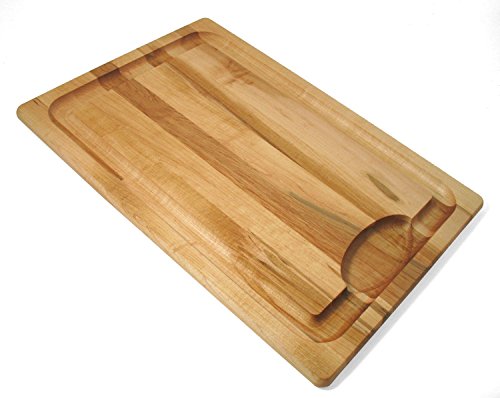
J.K. Adams 20-Inch-by-14-Inch Maple Wood Farmhouse Carving Board with Juice Groove, Brown
MADE IN VERMONT,USA from sustainably grown and harvested North American hardwoods.
As an affiliate, we earn on qualifying purchases.
As an affiliate, we earn on qualifying purchases.

Alpha Grillers Meat Thermometer Digital – Instant Read Food Thermometer for Cooking & Grilling – Professional Kitchen Gift for Men, Dad & Mom
Instant Read Food Thermometer | Our instant read thermometer features a temperature probe and advanced, highly accurate technology…
As an affiliate, we earn on qualifying purchases.
As an affiliate, we earn on qualifying purchases.