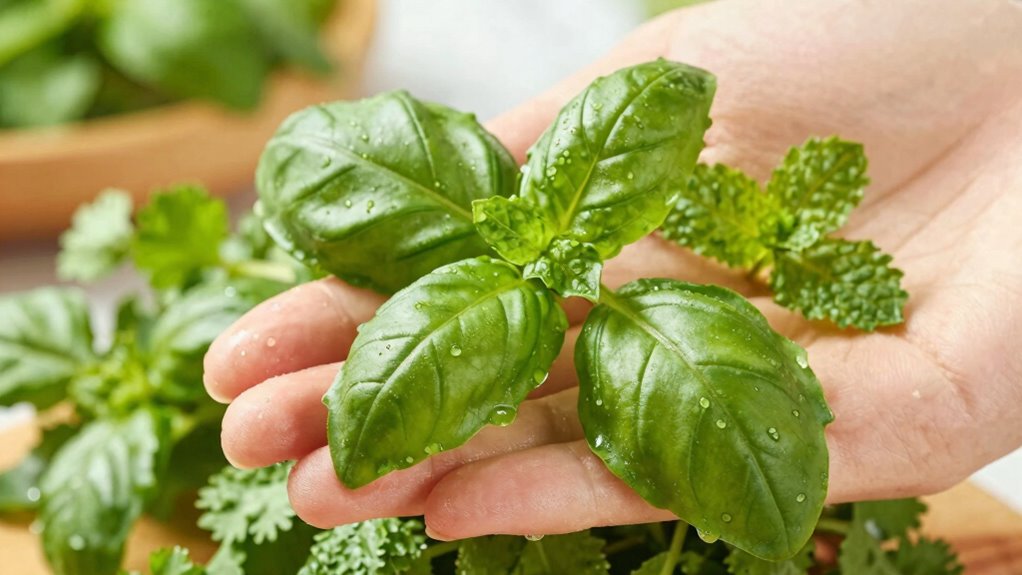
To prevent bruising when cutting fresh herbs like basil, mint, or cilantro, use a sharp knife or scissors and handle the herbs gently. Wash them under cold water, pat dry thoroughly, and work on a firm yet gentle grip. Slice or snip with controlled, quick motions, avoiding excess force or sawing. Using proper tools and techniques helps preserve their flavor and appearance—continue exploring to master all the best ways to handle herbs carefully.
Key Takeaways
- Use sharp, clean scissors or a sharp knife to minimize crushing the herbs.
- Handle herbs gently, avoiding excessive squeezing or pressing during cutting.
- Cut herbs just before use to reduce exposure to air and prevent bruising.
- Snip herbs directly over the dish or cutting board instead of crushing them first.
- Work in small batches for better control and to prevent bruising from overcrowding.

Fresh herbs add vibrant flavor to any dish, and knowing how to cut them properly guarantees you get the most out of their aroma and taste. When working with delicate herbs like basil, mint, and cilantro, your goal is to preserve their freshness while avoiding bruising. To do this effectively, start with good herb storage tips. Store your herbs properly by wrapping them loosely in a damp paper towel and placing them in a plastic bag or airtight container in the refrigerator. This keeps them fresh longer and prevents wilting. Using the right kitchen utensil essentials also makes a difference; sharp scissors or a clean, sharp chef’s knife are your best tools for cutting herbs without crushing their leaves.
Before you cut, wash your herbs gently under cold water to remove any dirt or debris, then pat them dry with a paper towel or a clean kitchen towel. Wet herbs are more prone to bruising when chopped, so ensuring they’re dry helps maintain their structure. When it’s time to chop, hold the herbs firmly with your fingertips, but avoid gripping too tightly, which can cause bruising. Instead of tearing or crushing, use a gentle rocking motion with your knife, moving back and forth across the herbs. This method keeps the leaves intact and releases their aroma without damaging their cell structure, which is key to preserving flavor. Additionally, understanding how to handle herbs with proper cutting techniques can make a significant difference in maintaining their quality.
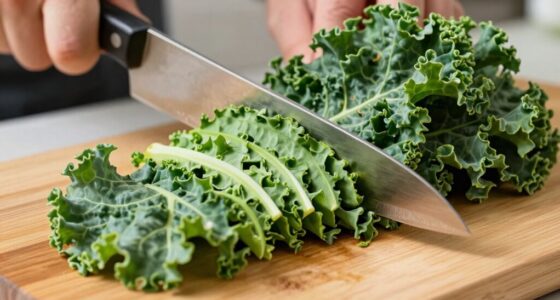
If you prefer smaller pieces, gather the herbs into a loose bunch and slice them with a sharp knife, working from top to bottom. For herbs like cilantro and mint, where you want a fine chop, use a quick, controlled motion—don’t saw back and forth excessively. Instead, keep your knife sharp, and use a gentle, fluid motion to avoid bruising. When using scissors, snip the herbs directly over your dish or a cutting board, which reduces the risk of crushing delicate leaves. This technique is especially handy for herbs like basil, which can bruise easily when chopped with a dull knife.
Top picks for "fresh herb bruise"
Open Amazon search results for this keyword.
As an affiliate, we earn on qualifying purchases.
Frequently Asked Questions
Can I Use Scissors Instead of a Knife?
Yes, you can use scissors instead of a knife for herb trimming, but you should prioritize scissor safety and handle them carefully to avoid accidents. Use sharp, clean scissors to make precise cuts, which helps prevent bruising. This method is especially helpful for herbs like basil, mint, and cilantro, as it promotes gentle trimming and preserves their delicate leaves. Just make certain you trim evenly and avoid crushing the herbs in the process.
How Do I Store Chopped Herbs to Keep Them Fresh?
To keep your chopped herbs fresh, store them properly using good herb preservation and storage techniques. Place the herbs in an airtight container or a glass jar with a damp paper towel to maintain moisture. Keep the container in the refrigerator’s crisper drawer. Change the paper towel if it dries out. This method helps preserve flavor and freshness, ensuring your herbs stay vibrant and ready to use longer.
Should Herbs Be Washed Before Cutting?
Washing herbs before cutting is like rinsing a delicate fabric—necessary to preserve their freshness and flavor. You should gently rinse herbs to remove dirt and debris, then pat them dry thoroughly using herb drying techniques like air drying or a salad spinner, to prevent bruising. This helps preserve herb flavor and ensures your herbs stay vibrant, fresh, and flavorful for cooking. Skipping washing can introduce bacteria, so always clean them first.
What Is the Best Type of Knife for Herb Cutting?
You should use a sharp, small paring knife or a serrated knife for herb chopping techniques, as they give you precise control and minimize bruising. Always prioritize knife safety tips by keeping your fingers tucked and cutting on a stable surface. A sharp blade reduces the force needed, preventing slips and damage to delicate herbs. This way, you guarantee clean cuts and vibrant herbs for your dishes.
How Do I Prevent Herbs From Browning After Cutting?
To prevent herbs from browning after cutting, focus on proper herb preservation with gentle cutting techniques. Use a sharp knife and cut herbs just before you need them to minimize oxidation. Avoid crushing or bruising leaves, and consider soaking cut herbs in cold water or wrapping them in a damp paper towel in the fridge. These methods help maintain freshness and color longer, keeping your herbs vibrant and flavorful.
Conclusion
Remember, a gentle hand and sharp tools make all the difference when cutting fresh herbs. By handling basil, mint, or cilantro with care, you preserve their vibrant flavors and delicate textures. As the saying goes, “Haste makes waste,” so take your time to get it right. With these tips, you’ll always have beautifully cut herbs ready to elevate your dishes without bruising. Happy herb chopping!