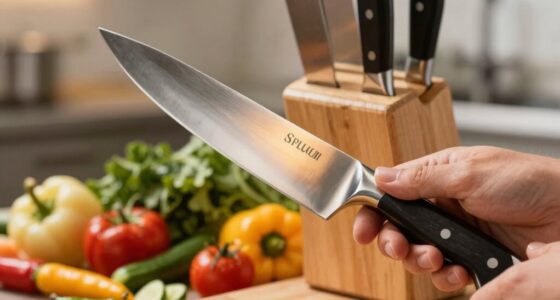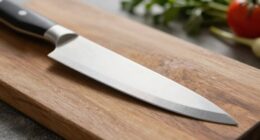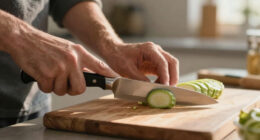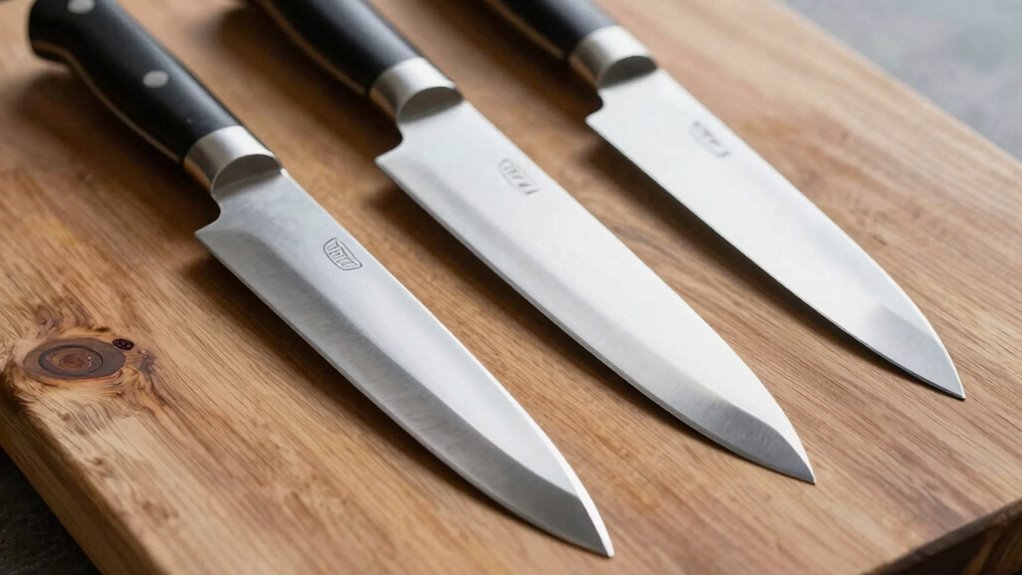
For quick weeknight prep, choosing between a Gyuto, Nakiri, and Santoku depends on your food prep style. The Gyuto is versatile with a curved blade, great for meats and slicing tasks. The Nakiri excels at vegetable chopping with its rectangular shape, while the Santoku offers a balanced, easy-to-handle option for various ingredients. Picking the right tool improves your efficiency—continue exploring to find which knife fits your kitchen best.
Key Takeaways
- Gyuto offers unmatched versatility for slicing meats, fish, and large ingredients, making it ideal for diverse weeknight meals.
- Nakiri excels at vegetable prep with precision, perfect for quick, clean cuts on leafy greens, roots, and herbs.
- Santoku provides a balanced, easy-to-handle option for vegetables, fruits, and boneless proteins in tight kitchen spaces.
- Handle comfort, balance, and maintenance needs influence ease of use and longevity for each knife type.
- Choose based on your typical ingredients, prep style, kitchen space, and ergonomic preferences for efficient weeknight cooking.

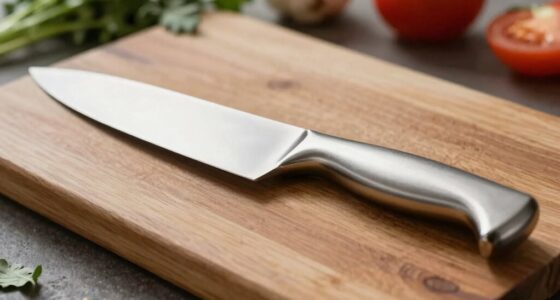
MITSUMOTO SAKARI 8 inch Gyuto Chef Knife, Japanese Hand Forged Kitchen Chef's Knives, 3-Layer 9CR18MOV High Carbon Steel, Rosewood Handle & Sandalwood Box
JAPANESE TRADITIONAL HAND FORGED: Professional chef knife blends traditional handmade forging craft with advanced tech and premium materials….
As an affiliate, we earn on qualifying purchases.
As an affiliate, we earn on qualifying purchases.
Understanding the Design and Construction of Each Knife
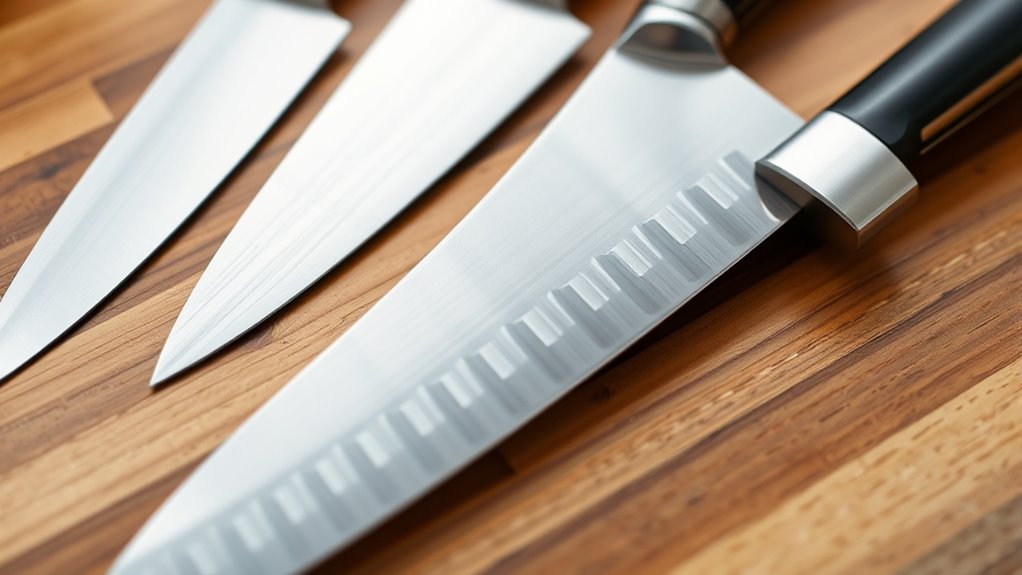
Understanding the design and construction of each knife reveals how their unique features serve different culinary needs. The Gyuto, inspired by European chef knives, features a curved blade belly that supports rocking cuts and fluid slicing. Its pointed tip allows for piercing tasks like removing tendons or silverskin. Typically, the blade length ranges from 210 to 300mm, making it versatile for larger cuts and high-volume prep. In contrast, the Santoku has a straighter edge and a sheepsfoot or rounded tip, ideal for push cuts and precise control in tight spaces. Its shorter length, usually 150-180mm, offers better handling for delicate tasks. The Nakiri’s rectangular blade is designed specifically for vegetables, with a flat edge optimized for vertical push cuts, emphasizing precision and ease in vegetable prep. European-inspired design enhances the Gyuto’s versatility for diverse culinary techniques.

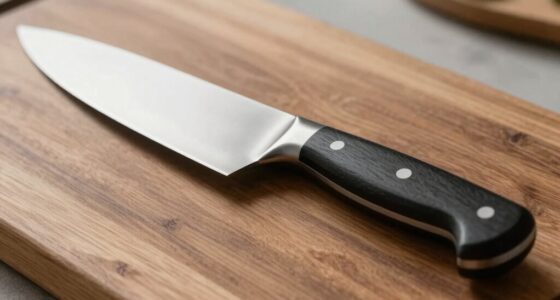
HOSHANHO 7 Inch Nakiri Knife, Japanese High Carbon Stainless Steel Chef Knife, Multipurpose Meat Vegetable Sharp Kitchen Knife with Ergonomic Pakkawood Handle
【Ultra Sharp Blade】 Each Japanese nakiri knife is hand-polished by experts to achieve a sharp 15 degree edge…
As an affiliate, we earn on qualifying purchases.
As an affiliate, we earn on qualifying purchases.
Comparing the Versatility and Primary Uses in the Kitchen
When choosing between Gyuto, Santoku, and Nakiri knives, it’s important to contemplate how versatile each is and their primary roles in the kitchen. The Gyuto is your all-rounder, excelling at slicing meats, fish, and larger ingredients thanks to its curved belly and pointed tip. It handles both delicate and heavy-duty tasks, making it ideal for versatile prep work. The Santoku is perfect for vegetables, fruits, and boneless proteins, especially in tight spaces; its flat edge and balanced weight promote precise push cuts. The Nakiri specializes in vegetable prep, with its rectangular blade designed for straight-down chopping without rocking. While each knife has its strengths, the Gyuto offers the most flexibility, with the Santoku and Nakiri excelling in specific tasks. Mastering knife techniques can further enhance your efficiency and confidence in using these versatile tools, especially when understanding cutting techniques that optimize each blade’s design.
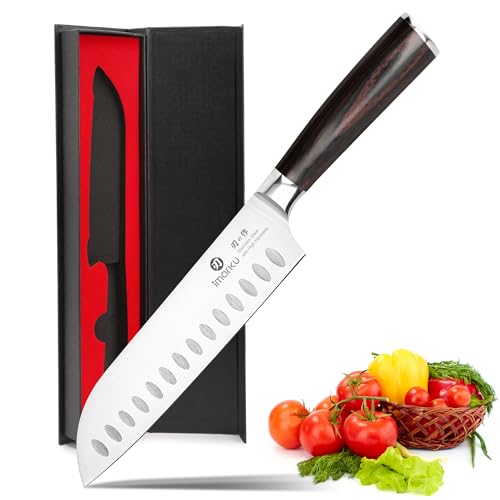
imarku Chef Knife 7 Inch Kitchen Knife Ultra Sharp Santoku Knife – High Carbon Japanese Chefs Knife, Kitchen Gadgets 2025, Apartment Essentials, Birthday Gifts for Him Her, Best Gifts for Women Men
Professional Santoku Knife: This imarku super sharp santoku knife is made of high carbon stainless steel that resists…
As an affiliate, we earn on qualifying purchases.
As an affiliate, we earn on qualifying purchases.
How Blade Shape Affects Cutting Techniques and Efficiency
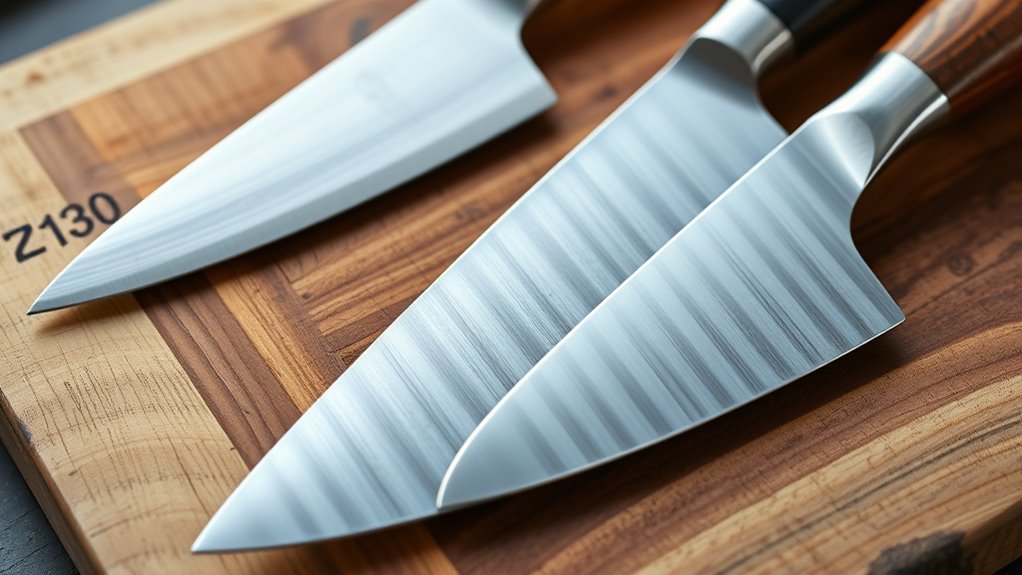
The shape of a knife blade directly influences how you cut and how efficiently you can work in the kitchen. A curved blade, like the Gyuto’s, supports rocking cuts and fluid slicing, making it great for larger meats and dense foods. In contrast, a flat or straight edge, as seen on the Santoku, enables precise push cuts and smooth food transfers. The Nakiri’s rectangular profile is perfect for vertical chopping, improving accuracy and speed when prepping vegetables.
Knife shapes influence cutting style and efficiency: curved for rocking, straight for push cuts, rectangular for vertical chopping.
- Curved blades support rocking techniques and slicing fluidity
- Straight edges allow for controlled push cuts and clean slices
- Rectangular blades excel at vertical, straight-down chopping
- Blade shape determines whether you need to saw or push through ingredients

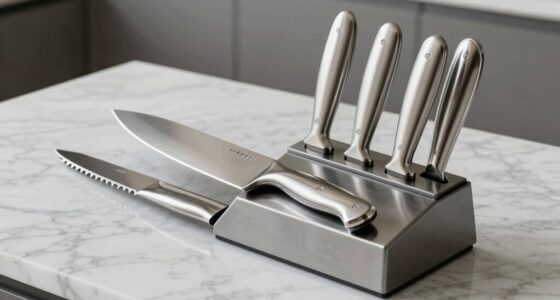
Dfito Chef Knife Sets with Roll Bag, 9 Pieces Professional Knife Set, High Carbon Stainless Steel Kitchen Chef Knife Set, Red Pakkawood Handle, Dishwasher Safe
Super Sharp Blade: The super sharp blade is made of high-quality German stainless steel, with a chromium content…
As an affiliate, we earn on qualifying purchases.
As an affiliate, we earn on qualifying purchases.
The Ideal Food Types for Gyuto, Nakiri, and Santoku
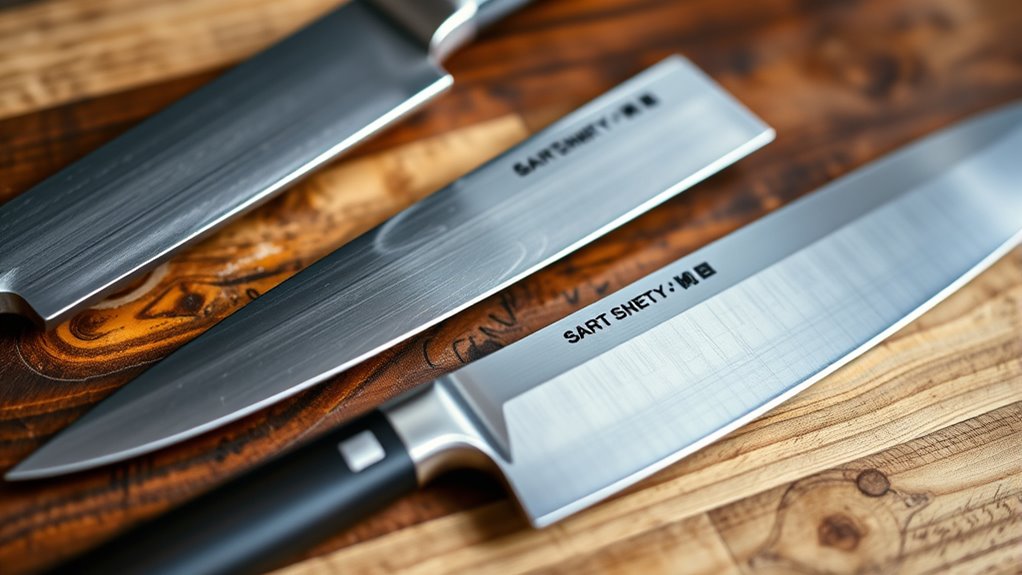
Gyuto knives excel at handling a wide variety of foods, making them versatile tools in any kitchen. Their curved blade and pointed tip allow for slicing, dicing, and piercing a range of ingredients efficiently. You’ll find them perfect for large meats, fish, and dense produce like squash or cabbage. In contrast, Nakiri excels with vegetables, offering clean, vertical cuts thanks to its flat edge. It’s ideal for chopping herbs, root vegetables, and leafy greens. The Santoku shines with smaller, delicate foods such as fruits, boneless proteins, and herbs, providing control and safety on cramped boards. Here’s a quick comparison:
| Food Type | Best Knife | Why |
|---|---|---|
| Large Meat | Gyuto | Piercing tip, rocking cuts |
| Vegetables | Nakiri | Precise, straight-down cuts |
| Fruits | Santoku | Thin slices, control |
| Fish | Gyuto | Filleting, slicing |
| Herbs | Santoku | Push chopping, safety |
Additionally, the Gyuto’s versatility makes it suitable for all-purpose cutting tasks, ensuring it remains a staple in both professional and home kitchens.
Handling and Balance: Which Knife Feels Right for Your Hands?
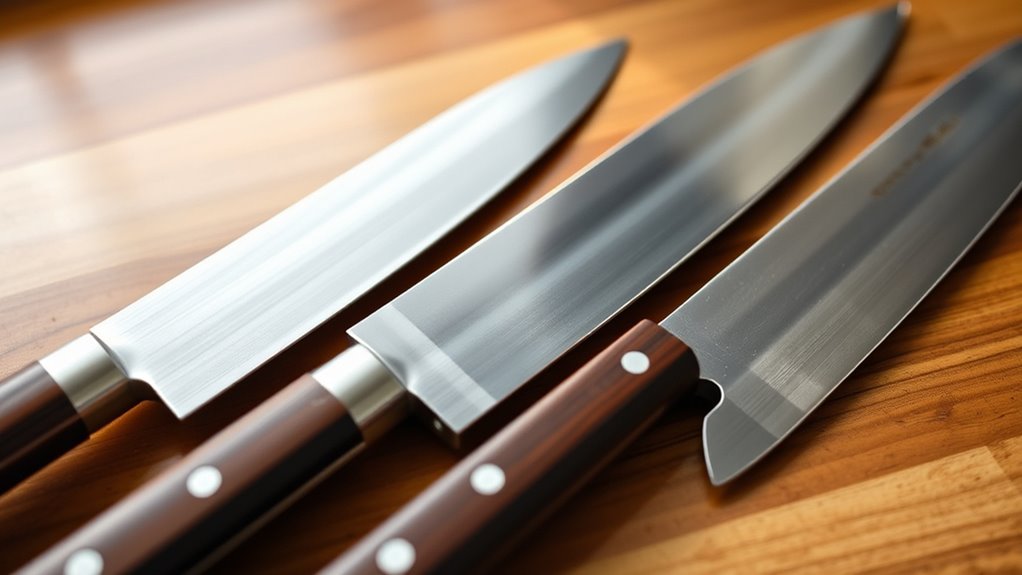
Choosing the right knife comes down to how it feels in your hand; comfort and control are key. You’ll want to contemplate its balance and weight distribution to match your cutting style and grip. Ultimately, the knife that feels natural will help you work more efficiently and with less fatigue.
Grip Comfort and Control
Selecting a chef knife that feels comfortable in your hand hinges on understanding its handling and control. The right grip allows you to cut confidently without fatigue or slipping. Gyuto knives, with their curved blades, often offer a natural pinch grip and smooth rocking motion, giving you excellent control for slicing large cuts. Santoku knives, with their shorter, straighter blades, fit comfortably for push cuts and precise work, especially on cramped boards. Nakiri knives, designed with a rectangular shape, provide a stable grip ideal for straight-down vegetable cuts. Your comfort depends on how the handle fits your hand, the knife’s weight, and how it balances during use. Consider these factors to choose a knife that feels secure and natural in your grip:
- Handle shape and material
- Knife weight and balance
- Blade length relative to your hand size
- Overall ergonomic design
Balance and Weight Distribution
Finding a knife that feels balanced in your hand is key to controlling your cuts and reducing fatigue. A well-balanced knife distributes weight evenly, making it easier to maneuver and less tiring during extended prep. The Gyuto tends to be front-heavy, which helps when slicing dense foods or using rocking motions, giving you power and control. The Santoku usually offers a more centered balance, ideal for precise push cuts and quick chopping, especially on cramped boards. The Nakiri’s even weight distribution makes vertical vegetable cutting smooth and effortless. When selecting your knife, hold it comfortably, checking how it feels in your grip. A balanced knife should feel natural, without tipping forward or backward. Comfort and control come from finding the right weight distribution for your style and needs.
Maintenance and Care for Longevity and Performance
Ever wondered how to keep your chef knives performing like new? Proper maintenance is key to ensuring longevity and top performance. Regularly hand wash your knives with warm water and mild soap, then dry immediately to prevent rust. Hone your blades often with a honing steel to realign the edge, and sharpen occasionally using a whetstone or professional service for a razor-sharp edge. Store your knives in a knife block or on a magnetic strip to avoid dulling. Avoid dishwasher use, as harsh detergents and high heat damage blades. Additionally, understanding knife storage can help you preserve your knives’ sharpness and safety over time. Incorporating routine maintenance practices can significantly extend the lifespan of your knives, keeping them in excellent condition for years to come. Furthermore, understanding home appliance maintenance can help you keep your kitchen tools in optimal condition, ensuring they last longer and work efficiently.
Choosing the Right Knife Based on Your Cooking Style and Space
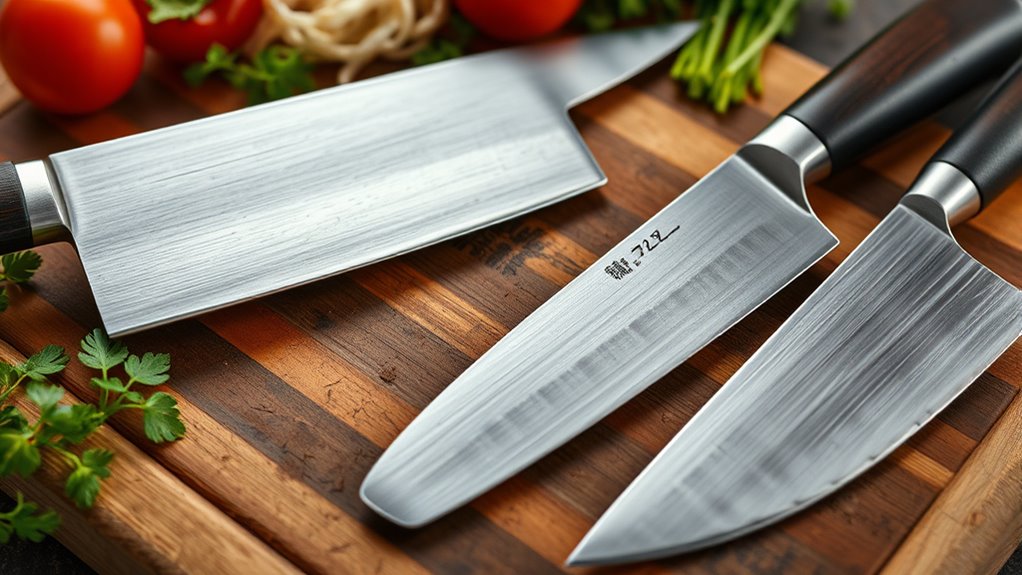
When choosing a knife, consider your available kitchen space and how often you cook. If you prepare a variety of dishes daily, a versatile Gyuto might suit you best, while smaller spaces may benefit from a compact Santoku or Nakiri. Matching your cooking style with your workspace guarantees efficiency and makes meal prep more enjoyable. Incorporating smart appliances can further enhance your kitchen’s efficiency and streamline your prep process. Additionally, selecting the right knife can be influenced by your kitchen organization and storage options, ensuring easy access and safe handling during meal prep. Optimizing your kitchen layout with connected storage solutions can also support quick and safe knife retrieval. Understanding market options for different knives can help you make more informed decisions tailored to your needs.
Kitchen Space Compatibility
Choosing the right chef knife depends heavily on your available kitchen space and your cooking habits. If your kitchen is compact, a Santoku with its shorter blade and wider, more controllable design might be ideal. For small countertops, the Nakiri’s compact shape makes vegetable prep efficient without taking up extra room. Larger kitchens with ample space can comfortably accommodate a Gyuto, which offers versatility for a variety of tasks. Consider your storage options—if you have limited drawer or knife rack space, a shorter, more manageable knife simplifies handling. Also, think about the workspace needed for different cutting techniques.
- Compact kitchens benefit from shorter, versatile blades
- Limited storage favors smaller, lightweight knives
- Spacious kitchens can handle larger, multipurpose blades
- Your prep style influences how much space you need for handling
Cooking Style Alignment
Your cooking style considerably influences which chef knife suits your space and workflow. If you prefer preparing large cuts of meat, the Gyuto’s curved blade and longer reach make it ideal for efficient slicing and rocking cuts, especially in high-volume settings. For those focused on vegetable prep, the Nakiri’s flat edge and rectangular shape excel at precise, vertical cuts without rocking, perfect for quick, clean chopping. If your style involves a mix of tasks, especially in tight spaces or for detailed work, the Santoku offers versatility with its balanced weight and control. It handles vegetables, boneless proteins, and delicate tasks comfortably. Ultimately, matching your preferred techniques and the types of ingredients you handle daily guarantees your knife complements your cooking rhythm.
Versatility for Daily Tasks
Selecting the right chef knife depends on your daily cooking tasks and the space you work in. If you have limited counter space, a shorter Santoku offers control and safety. For versatile use across various ingredients, a Gyuto handles meat, fish, and larger cuts efficiently. If your focus is vegetable prep, a Nakiri provides precision and ease for straight-down chopping. Consider your typical tasks and kitchen layout to choose the best fit:
- Limited space: Opt for a shorter Santoku for maneuverability
- All-around prep: Gyuto covers a variety of tasks with its curved blade
- Veggie-focused cooking: Nakiri excels at clean, precise vegetable cuts
- High-volume prep: Gyuto’s length and versatility make it ideal for larger quantities
Making the Final Decision: Which Knife Reigns Supreme for Weeknight Dinners?
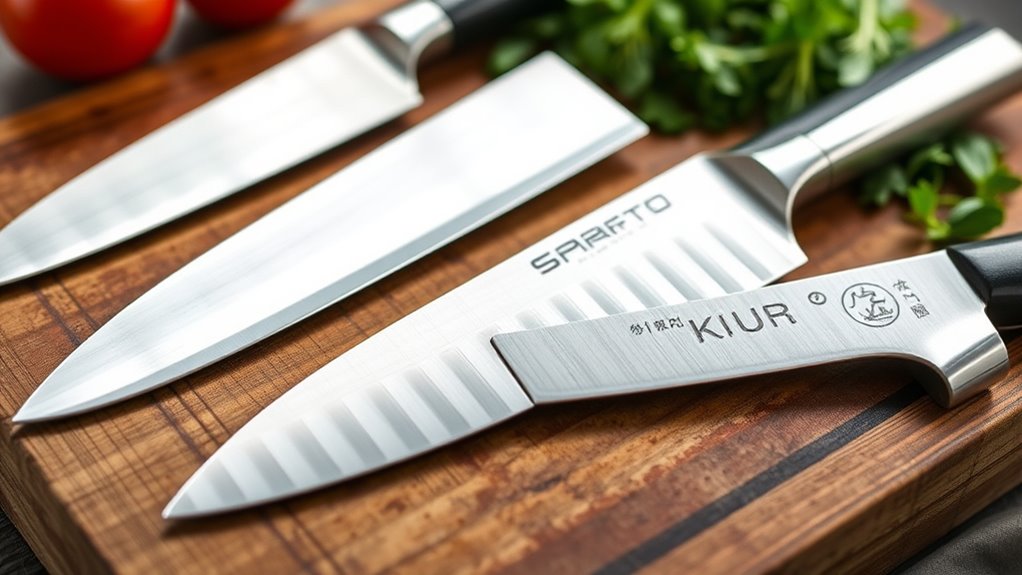
When it comes to weeknight dinners, the right knife can make meal prep faster and safer. If you frequently cook a variety of proteins, vegetables, and quick sauces, a Gyuto is your best bet. Its versatile curved blade handles slicing, dicing, and chopping with ease, reducing prep time. If you mainly prep vegetables or fruits, a Nakiri offers precision and efficiency, especially for straight-down cuts. It’s ideal for quick, clean vegetable prep. For those who prefer a balanced, all-around tool for small tasks and delicate cuts, a Santoku is a solid choice. Its shorter, stable blade excels in repetitive chopping and push cuts. Ultimately, your decision depends on your typical ingredients and prep style—choose the knife that best fits your weeknight routine for faster, safer cooking. Environmental considerations, such as sustainable practices, can also influence your choice if you prioritize eco-friendly kitchen tools. Additionally, selecting knives made with high-quality materials can ensure longevity and better performance over time.
Frequently Asked Questions
Can I Use a Gyuto for Vegetable Chopping?
Yes, you can use a gyuto for vegetable chopping. Its curved blade belly makes rocking cuts easy, and its length allows you to handle large quantities efficiently. The pointed tip helps with intricate tasks like deseeding or peeling, while the overall balance supports precise control. Though designed as a versatile chef’s knife, a gyuto works well for vegetables, especially if you prefer a multi-purpose tool that can handle both prep and more substantial cuts.
Is a Nakiri Safer Than a Gyuto or Santoku?
Yes, a Nakiri is generally safer than a Gyuto or Santoku because its rectangular, flat blade design minimizes the risk of slipping during vertical push cuts. Its shorter, rigid blade offers more control, especially for vegetable prep. You’ll find it easier to maintain a steady cutting motion, reducing accidents. While all knives require proper technique, the Nakiri’s design makes it a safer choice for high-precision vegetable chopping.
Which Knife Is Best for Beginner Cooks?
If you’re a beginner, a Santoku is your best choice. It’s shorter, lighter, and has a rounded tip, making it safer and easier to control. Its straight edge simplifies chopping and slicing, especially for vegetables and small ingredients. Plus, its balanced weight reduces fatigue. As you gain experience, you can explore the Gyuto or Nakiri, but for starting out, the Santoku helps you build confidence and develop proper technique.
Do These Knives Require Special Sharpening Tools?
You’ll need specific sharpening tools for these knives. A whetstone or ceramic stone works well for maintaining the sharp edge of your Gyuto, Santoku, and Nakiri. Honing rods can help realign the edges between sharpenings. Avoid using dull or incompatible tools that could damage the blades. Regular sharpening preserves their performance and prolongs their life, so invest in the right equipment and learn proper techniques for each knife type.
How Do I Choose Based on My Limited Kitchen Space?
If space’s tight, opt for a Santoku or Nakiri. These knives have shorter blades, making storage easier and handling more comfortable on small countertops. The Nakiri’s rectangular shape is great for straight veggie cuts, while the Santoku’s versatile design suits many tasks without taking up much room. The Gyuto’s longer, curved blade is less ideal for compact kitchens, but still manageable if you have a dedicated spot.
Conclusion
Ultimately, choosing the right knife depends on your cooking style and kitchen space. Don’t worry if you’re undecided—each knife offers unique benefits that can boost your weeknight prep. With a bit of practice, you’ll find the perfect fit for your needs. Remember, it’s not about having the “best” knife, but the one that feels comfortable and makes your cooking easier. So, pick what suits you best and enjoy your time in the kitchen!