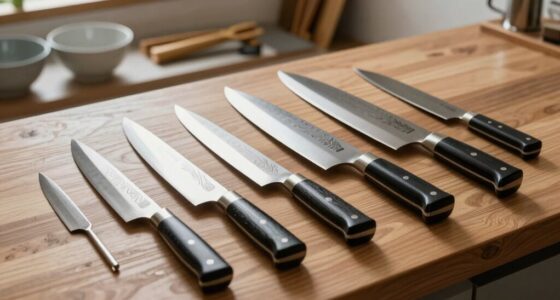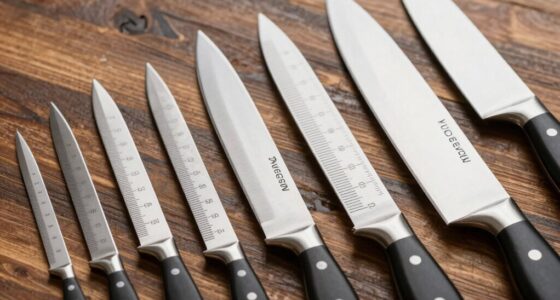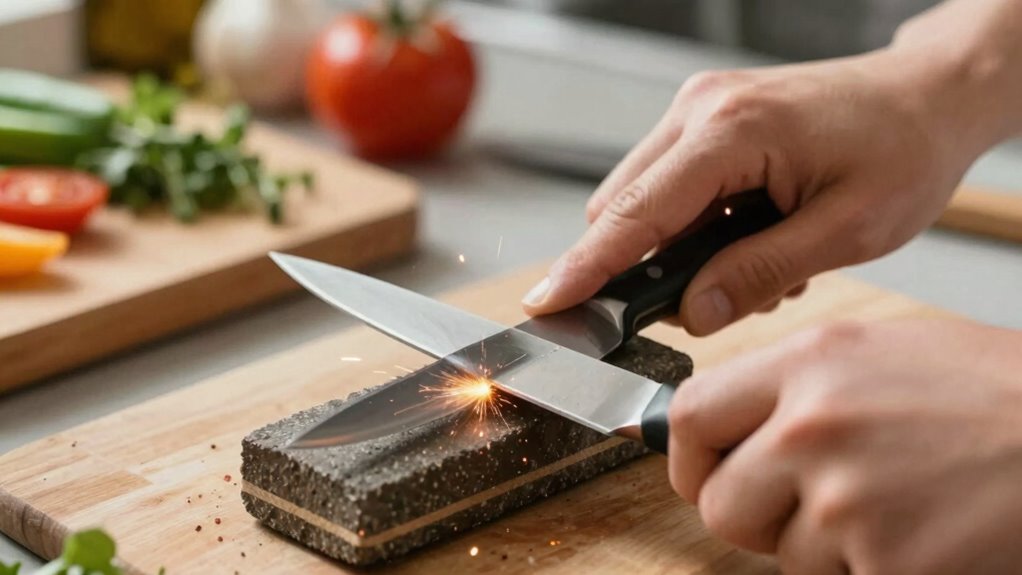

To build knife confidence quickly, start by mastering safe handling practices. Focus on controlling the knife with a firm but comfortable grip, and guarantee your workspace is secure. Keep your knives sharp, as this makes cuts smoother and safer—learn proper sharpening techniques to boost your skill. Begin with simple tasks like slicing soft vegetables, and practice regularly to develop muscle memory. If you keep practicing safely, you’ll gain confidence faster—there’s more to discover to accelerate your progress.

Get kitchen gear delivered free with Prime
- Fast, free delivery on millions of items
- Prime Video, Amazon Music and more included
- Member-only deals all year
Key Takeaways
- Start with simple, soft ingredients like cucumbers or tomatoes to build control and confidence.
- Master proper grip and cutting techniques, keeping fingers tucked and using stable surfaces.
- Regularly sharpen and hone your knife to ensure safety and responsiveness during cuts.
- Practice consistently in short, focused sessions to develop muscle memory and control.
- Prioritize safety and patience, gradually progressing to tougher ingredients and more complex cuts.
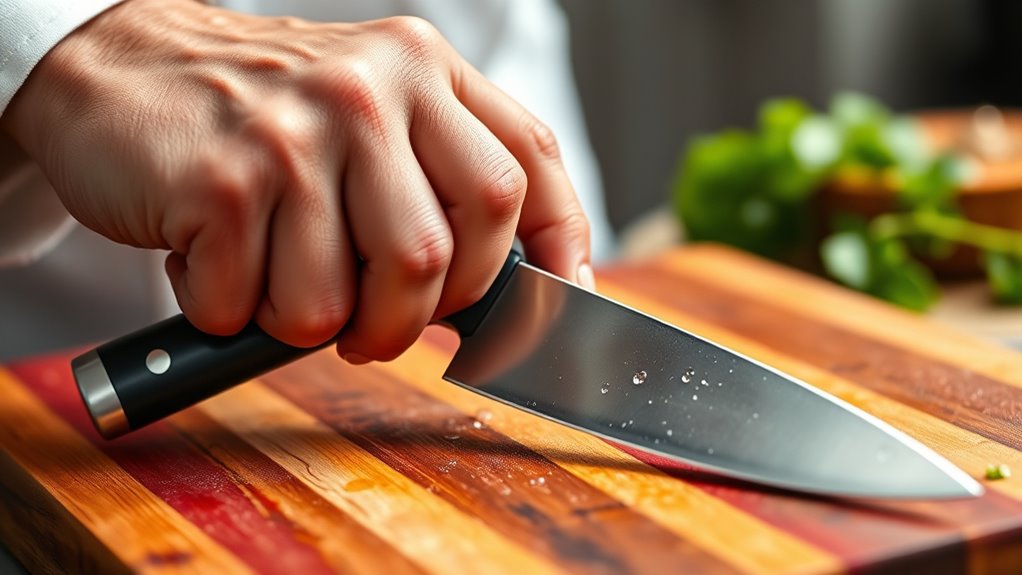
Ever wondered how to become confident with your knife skills quickly? The key starts with mastering knife safety. Before you even think about slicing or dicing, make sure you’re comfortable handling your knife properly. Always grip your knife firmly but comfortably, keeping your fingers tucked away from the blade’s edge. Use a stable cutting board and avoid the temptation to rush; secure your workspace to prevent slips. Respect the knife’s sharpness—dull knives are more dangerous because they require more force and can slip easily. Developing good habits around knife safety not only protects you but also builds your confidence as you learn to control the blade with precision.
Master knife safety first to build confidence and control in your cutting skills.
Once you have safety down, focus on sharpening techniques. A sharp knife is essential for confident, efficient cutting. Dull blades require more pressure, increasing the risk of accidents and making your work more frustrating. Invest in a good sharpening stone or honing rod, and learn how to use it correctly. Proper sharpening techniques involve maintaining the correct angle and applying consistent pressure, which can dramatically improve your knife’s performance. Regularly honing your knife keeps the edge aligned and prevents it from becoming dull, which is *vital* during your early practice stages. As you become more comfortable, you’ll notice that a well-sharpened knife feels more responsive and easier to control, boosting your confidence with each use.
Start with simple tasks as you build your skills. Practice slicing through soft vegetables like cucumbers or tomatoes, focusing on maintaining a steady, even cut. Keep your fingers curled under your hand, guiding the knife with your knuckles, so you avoid accidental cuts. As you gain control and comfort, gradually challenge yourself with more complex cuts and tougher ingredients. Remember, patience is key—rushing can lead to mistakes and diminish your confidence. Take your time to refine your technique, paying close attention to how your knife responds and adjusting your grip or pressure as needed. Incorporating proper technique into your routine will help you develop consistency and trust in your skills.
Consistent practice is the fastest way to build confidence. Incorporate daily or regular sessions where you focus on safe handling, proper sharpening, and precise cutting. Over time, your muscle memory will improve, and what once seemed intimidating will become second nature. Confidence doesn’t happen overnight, but by prioritizing knife safety and sharpening techniques, you create a solid foundation that supports your growth. Keep your focus on small, manageable improvements, and you’ll find yourself slicing with ease and assurance before you know it.
professional sharpening stone for knives
As an affiliate, we earn on qualifying purchases.
As an affiliate, we earn on qualifying purchases.
Frequently Asked Questions
What Safety Gear Is Essential for Beginner Knife Practice?
You should wear protective gloves and eye protection whenever you practice with knives. Gloves help prevent cuts if the blade slips, and eye protection shields your eyes from potential splashes or flying debris. Always prioritize safety gear to reduce risks and build your confidence quickly. Make sure your gloves fit well and your eye protection is clear and snug, so you can focus on your technique without worry.
How Often Should I Practice to See Quick Progress?
Think of your progress like planting seeds; the more consistent you are, the faster they grow. You should practice daily or at least every other day, focusing on skill drills that reinforce proper technique. Regular practice helps build muscle memory and confidence quickly. Remember, steady effort wins the race—so keep practicing consistently, stay patient, and you’ll see noticeable improvements in your knife skills in no time.
Are There Specific Knives Better for Beginners?
Yes, there are specific beginner knives that make knife handling easier and safer. Look for knives with a comfortable grip, lightweight design, and a balanced feel. Beginner knives often have a sturdy, non-slip handle and a moderate-sized blade to help you control your cuts better. Investing in quality beginner knives boosts confidence quickly, allowing you to practice more effectively and develop your skills without feeling overwhelmed or risking injury.
How Do I Handle Mistakes or Slips Safely?
When you make a mistake or slip, stay calm, practice technique refinement, and focus on mental resilience. Immediately stop and assess the situation, cut away from your body, and gently disengage the knife. Keep your mind clear, learn from each slip, and reinforce safe habits. Building confidence is about handling accidents with control, refining your skills, and maintaining resilience—turning mistakes into opportunities for growth and mastery.
Can I Build Confidence With Only Basic Knife Skills?
Yes, you can build confidence with only basic knife skills by practicing proper knife grip and simple cutting techniques. Focus on maintaining a secure grip, using a controlled motion, and honing your precision. Repeating these fundamental skills regularly helps you become more comfortable and confident. As you improve, gradually introduce more advanced techniques, but mastering the basics creates a solid foundation for safe and effective knife handling.
As an affiliate, we earn on qualifying purchases.
Conclusion
Remember, practice makes perfect. As you follow this beginner progression, you’ll notice your confidence growing with each cut and carve. Stay patient and persistent—don’t rush the process. The more you practice, the sharper your skills become. Keep in mind, even a journey of a thousand miles begins with a single step. Stick with it, and soon you’ll be slicing like a pro. Confidence in the kitchen comes with time, so enjoy the learning process!
As an affiliate, we earn on qualifying purchases.
cutting board with non-slip grip
As an affiliate, we earn on qualifying purchases.
As an affiliate, we earn on qualifying purchases.
Halloween Picks
halloween
As an affiliate, we earn on qualifying purchases.