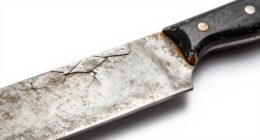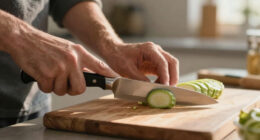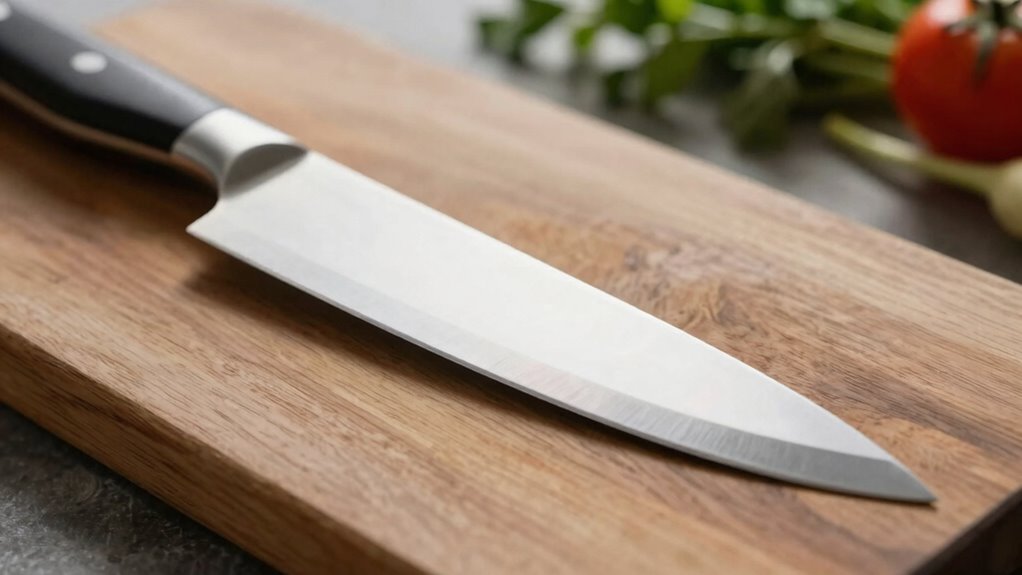

Thinner kitchen knives offer precise, effortless cuts, making them ideal for delicate tasks. However, this slender design also makes them more fragile and prone to chipping or breaking if you apply too much pressure. While they cut sharper and easier, they require careful handling and more maintenance to stay in good shape. Balancing these factors means considering your cooking style and how much forgiveness you need—there’s more to uncover about this tradeoff.
Key Takeaways
- Thinner knives offer precise, effortless cuts but are more prone to chipping and breakage under stress.
- Thicker blades are more forgiving, providing durability and resistance to damage during tough tasks.
- Edge retention tends to be better in thicker blades, reducing the frequency of sharpening.
- Handling and maintenance are crucial to protect fragile thin blades from damage.
- Choosing between thinness and forgiveness depends on cooking style, ingredient delicacy, and desired longevity.
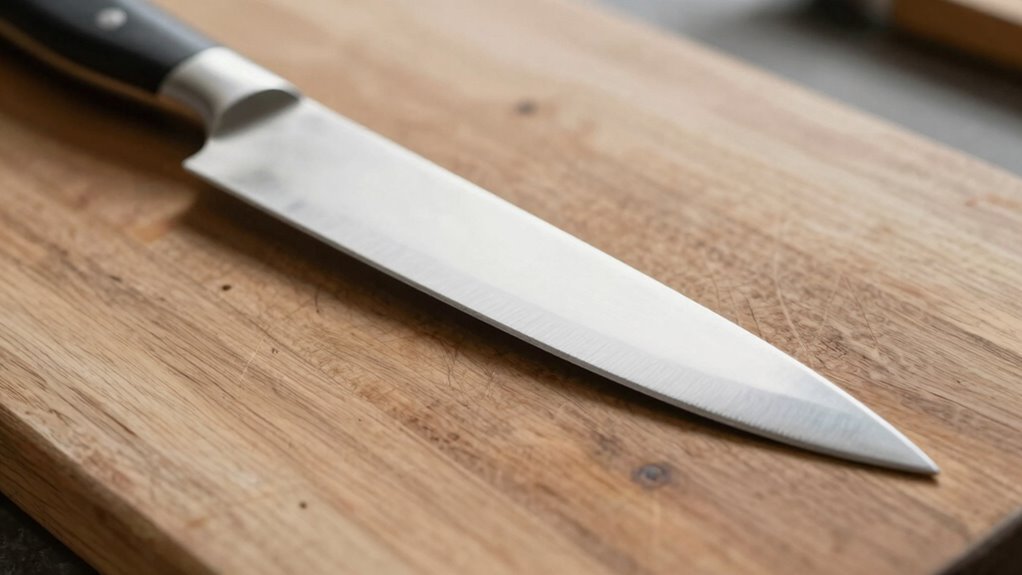
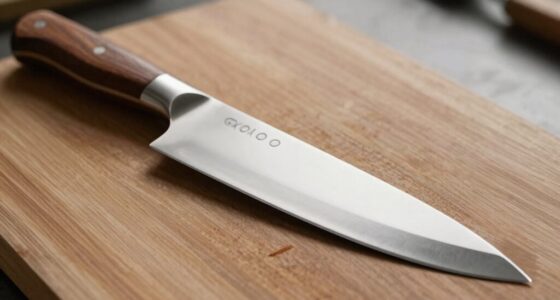
When choosing a kitchen knife, you might assume that a thinner blade always means better performance, but there’s a hidden tradeoff at play. Thin blades are often praised for their precision and effortless slicing, but they come with compromises that can affect your overall experience. Two key factors to contemplate are blade durability and edge retention. While a thinner blade may cut more easily, it’s typically more fragile and prone to damage if not handled carefully. This fragility is especially relevant when considering the material properties of the steel used, which can significantly influence these traits, further complicating the decision. Edge retention is another critical aspect influenced by blade thickness. Thinner blades tend to lose their sharpness faster because their edge is more delicate and susceptible to dulling through regular use. You may find yourself needing to sharpen your knife more often, which can be inconvenient and time-consuming. Conversely, thicker blades usually maintain their edge longer because they have a sturdier profile that resists dulling. However, this strength can come at the expense of the finesse and precision that thin blades offer, making them less suitable for delicate slicing tasks. The importance of handling techniques also plays a significant role in how well a knife performs over time, especially for thinner blades. Proper technique can help mitigate some vulnerabilities of thinner blades by reducing undue stress during use. The tradeoff becomes even more apparent when you weigh the forgiveness of the blade. A thicker knife provides a bit more forgiveness if you accidentally apply extra pressure or encounter tougher ingredients. It’s less likely to chip or break under stress, giving you a more forgiving tool that can handle a variety of tasks without immediate damage. Additionally, understanding the manufacturing process of your knife can help you better assess its durability and performance over time. Proper care and maintenance can also extend the lifespan of thinner blades and mitigate some of their vulnerabilities. Choosing the right knife often involves balancing these factors. If you prioritize precision and are willing to sharpen more frequently, a thinner blade could serve you well. But if durability and longevity are more important, a slightly thicker blade might be the better choice. Keep in mind that the quality of the steel and manufacturing process also influence these traits, so don’t rely solely on thickness. Ultimately, understanding the hidden tradeoff between thinness and forgiveness helps you select a knife that matches your cooking style and maintenance preferences, ensuring it performs reliably over time.

HOSHANHO Kitchen Knife in Japanese High Carbon Steel, Professional High-Class Chef's Knife 8 inch, Non-slip Ultra Sharp Cooking Knives with Ergonomic Handle
【High-End Japanese Steel Chef's Knife】 HOSHANHO chef's knife is made of Japanese high carbon steel 10Cr15CoMoV, 2x of…
As an affiliate, we earn on qualifying purchases.
As an affiliate, we earn on qualifying purchases.
Frequently Asked Questions
How Does Knife Material Affect Thinness and Forgiveness?
Your knife material directly influences its thinness and forgiveness. Softer metals, like high-carbon steel, allow for thinner blades with greater cutting precision, but they may lack blade flexibility, making them prone to damage. Harder materials, such as ceramics or powdered steels, maintain thinness longer and enhance precision but reduce forgiveness, increasing the risk of chipping or breaking. Choose based on your balance between flexibility and cutting accuracy.
Can a Thicker Knife Be Just as Sharp as a Thinner One?
A thicker knife can be just as sharp as a thinner one if it’s properly crafted and maintained. You’ll notice that knife ergonomics and blade aesthetics influence sharpness, as well-designed blades distribute force evenly, reducing dulling. While thinner knives often cut more effortlessly, a well-made thicker knife with a sharp edge can perform equally well, offering durability and a sturdy feel without sacrificing cutting ability or visual appeal.
What Maintenance Practices Improve a Knife’s Forgiveness?
To improve your knife’s forgiveness, focus on maintenance practices that enhance blade flexibility and edge stability. Regular honing helps realign the edge, maintaining stability and flexibility. Avoid aggressive sharpening, which can weaken the blade. Proper cleaning and drying prevent corrosion, preserving blade integrity. Use a honing steel frequently to keep the edge aligned, reducing the risk of chipping and ensuring the knife remains forgiving during use.
Are There Specific Knife Brands That Balance Thinness and Forgiveness?
Like the classic duel between Achilles and the tortoise, balancing thinness and forgiveness in knives is essential. Brands like Wüsthof and Shun excel, offering knives with superior knife ergonomics and blade flexibility. These brands craft knives that are thin enough for precision yet forgiving enough for easy handling. If you seek a reliable balance, look for those that prioritize blade flexibility without sacrificing edge retention and comfort.
How Does Handle Design Influence Knife Performance and Durability?
Handle design considerably impacts knife performance and durability. Good blade ergonomics guarantee a comfortable grip, reducing fatigue and enhancing control during use. Handle materials like wood, G10, or composite blends influence durability and maintenance, with sturdy options resisting moisture and wear. A well-designed handle balances the knife, providing stability and safety, while high-quality materials extend the tool’s lifespan, making reliable performance even with frequent use.

BAOUROUGE' Precision Slicing Knife (Right-Handed) – 8 and 1/4 Inches Stainless Serrated Blade With Cutting Guide for Exact Slices Up To 5/8 Inch Thick
Slicing / Carver knife with adjustable aluminum guide for cutting widths of 1-16 mm (3/64″ to 0.62")
As an affiliate, we earn on qualifying purchases.
As an affiliate, we earn on qualifying purchases.
Conclusion
Imagine your kitchen knife as a delicate tightrope walker—thinner blades offer precision but risk wobbling under pressure, while thicker ones provide stability but lack finesse. Just like the tightrope walker balances carefully, you must choose your blade’s design with awareness of its tradeoff. Embrace the dance between thinness and forgiveness, understanding that in the domain of knives, as in life, every choice has its weight. Balance wisely, and your culinary journey will be a graceful performance.
HOSHANHO Kitchen Knife in Japanese High Carbon Steel, Professional High-Class Chef's Knife 8 inch, Non-slip Ultra Sharp Cooking Knives with Ergonomic Handle
【High-End Japanese Steel Chef's Knife】 HOSHANHO chef's knife is made of Japanese high carbon steel 10Cr15CoMoV, 2x of…
As an affiliate, we earn on qualifying purchases.
As an affiliate, we earn on qualifying purchases.
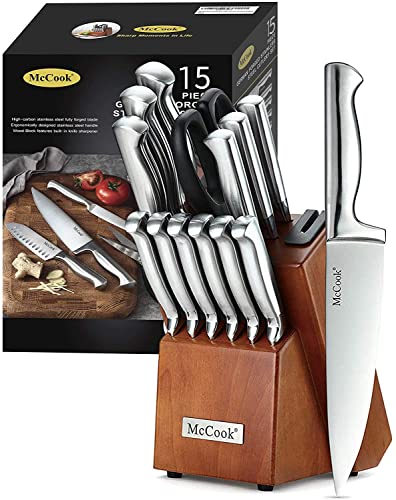
McCook® Knife Sets, German Stainless Steel Kitchen Knife Block Sets with Built-in Sharpener
【Exclusive Built-in Sharpener】Kitchen knife set with sharpener is amazing. The self-sharpening block keeps the knives razor sharp effectively….
As an affiliate, we earn on qualifying purchases.
As an affiliate, we earn on qualifying purchases.