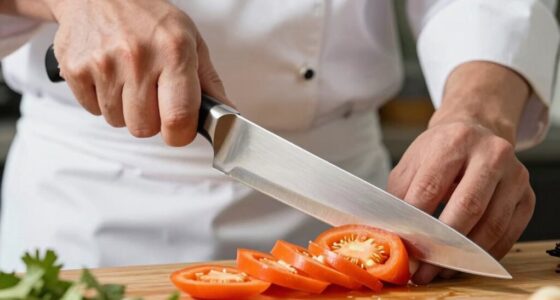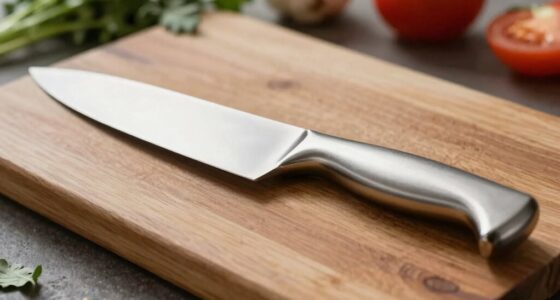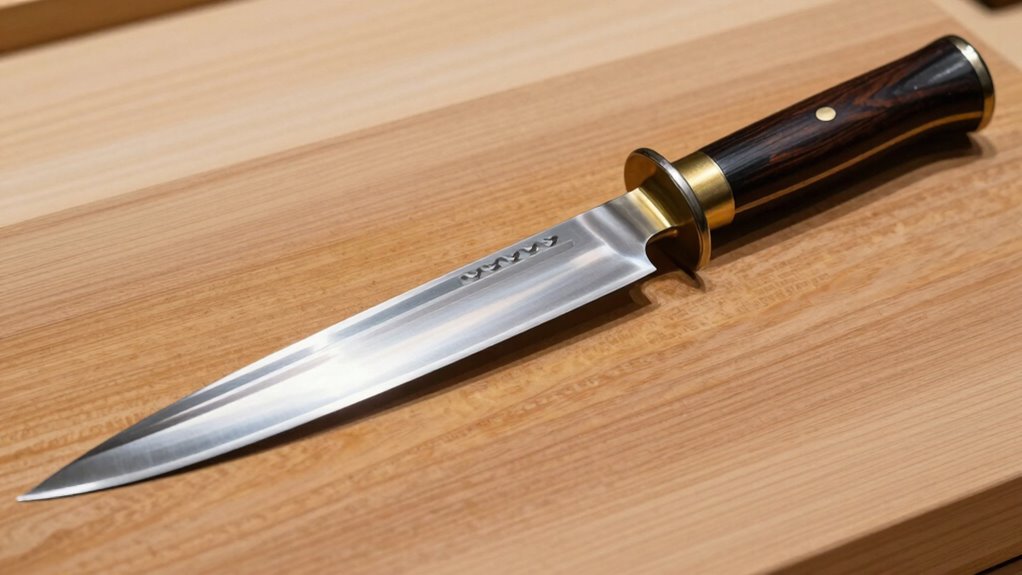
When choosing a traditional Japanese knife, focus on the blade’s shape, material, and intended use. Knives like the Gyuto are versatile, while others like the Yanagiba excel in specific tasks like slicing sashimi. Pay attention to blade bevels, thickness, and handle ergonomics for comfort and precision. The craftsmanship, materials, and maintenance habits also matter for durability. If you explore further, you’ll discover how to select the perfect knife to elevate your culinary skills.

Get kitchen gear delivered free with Prime
- Fast, free delivery on millions of items
- Prime Video, Amazon Music and more included
- Member-only deals all year
Key Takeaways
- Choose the right knife type (e.g., Gyuto, Santoku, Nakiri) based on your specific culinary tasks.
- Consider the blade material and hardness for optimal sharpness, durability, and ease of maintenance.
- Pay attention to bevel types (single or double bevel) to match your cutting technique and precision needs.
- Ensure ergonomic handle design and material for comfortable grip and control during extended use.
- Regularly sharpen and properly store your knife to maintain performance and extend its lifespan.
As an affiliate, we earn on qualifying purchases.
Understanding the Key Features of Japanese Knives
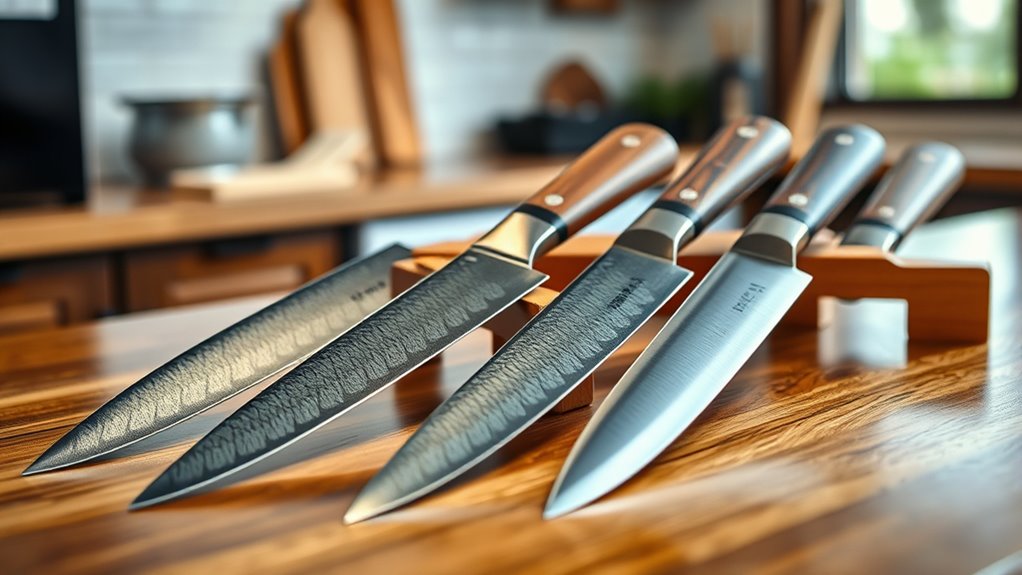
Japanese knives are renowned for their precision and craftsmanship, thanks to several key features that set them apart from Western styles. You’ll notice their single or double bevel blades, which provide razor-sharp edges tailored for specific tasks. Single bevel blades are sharpened on one side only, making them perfect for delicate cuts like sashimi or precise vegetables. Double bevel blades are sharpened on both sides, offering versatility for various kitchen tasks. These knives have flatter, straighter profiles with an acute cutting angle, enabling clean vegetable and fish slices. They are also thinner than Western knives, reducing wrist strain and allowing for thinner slices. The distal taper narrows the spine from handle to tip, improving balance and control, essential for precise, effortless cuts. Additionally, understanding knife maintenance is crucial for preserving their sharpness and longevity over time. Proper honing and sharpening techniques help maintain their edge retention and performance, ensuring your knives remain in optimal condition for years to come.
As an affiliate, we earn on qualifying purchases.
Exploring Common Types and Their Uses
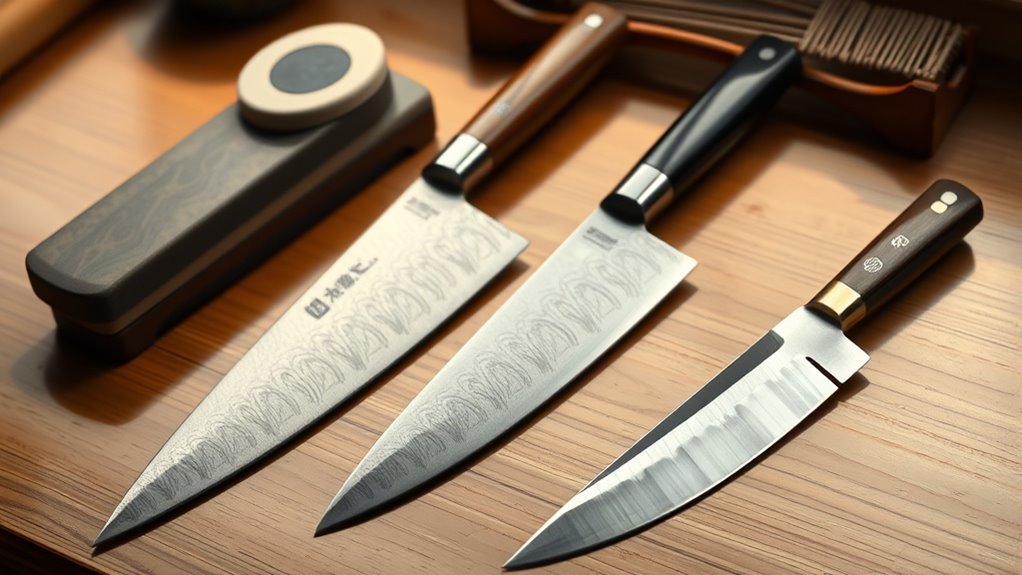
You’ll notice that Japanese knives come in various types, each designed for specific tasks like slicing fish or chopping vegetables. Their blade designs vary, with some offering single bevels for precision and others double bevels for versatility. Understanding these differences helps you choose the right knife for your cooking needs.
Knife Types Overview
Understanding the different types of traditional Japanese knives is essential for selecting the right tool for each task. Gyuto, the Japanese version of a chef’s knife, is versatile for slicing, dicing, and chopping meats and vegetables. Santoku offers a shorter, multipurpose blade perfect for precision cuts and up-and-down chopping. Nakiri features a flat, wide blade designed specifically for vegetables, making julienne and shredding effortless. Deba is a sturdy, heavy knife used for filleting fish and cutting through bones. Yanagiba, long and slender, excels at sashimi preparation with single-bevel precision. Specialized knives like Usuba, Honesuki, and Kiritsuke serve specific regional or culinary purposes, each crafted for precise, expert tasks. Knowing these types helps you choose the ideal knife for your cooking style. Additionally, understanding the different knife styles and their specific uses can enhance your overall cooking experience and ensure you select the most appropriate tool for each culinary challenge. Recognizing the various knife designs can also inform your choice based on the tasks you perform most frequently, ensuring efficiency and accuracy in your kitchen. Furthermore, being aware of the blade construction and materials can impact the knife’s durability and performance over time.
Specific Usage Purposes
Are you choosing the right knife for specific kitchen tasks? Picking the right Japanese knife makes all the difference. For slicing sashimi with precision, the Yanagiba’s long, single-bevel blade is unmatched. The Gyuto is your versatile all-rounder, perfect for chopping, dicing, and slicing meats and vegetables. Nakiri excels at vegetable prep, offering flat edges for clean cuts. The Deba handles fish and meat with strength, while the Santoku’s balanced design suits everyday chopping and slicing. Here’s a quick guide:
| Knife | Primary Use | Best For |
|---|---|---|
| Gyuto | Versatile slicing and chopping | Meat, fish, vegetables |
| Santoku | All-purpose, fine cuts | Vegetables, herbs |
| Nakiri | Vegetable prep | Julienne, shredding |
| Deba | Heavy-duty fish/meat work | Filleting, butchering |
Blade Design Variations
Blade design variations among traditional Japanese knives substantially influence their performance and suitability for specific tasks. Single bevel blades, sharpened on one side, offer unmatched precision, making them perfect for sashimi or vegetable peeling. Double bevel blades, sharpened on both sides, provide versatility for chopping, slicing, and general use across knives like Gyuto and Santoku. The blade profile also matters: flatter, straighter edges excel at clean vegetable and fish cuts, while a slight curve on Gyuto knives allows versatile rocking or push cuts. Thinner blades reduce wrist strain and enable thin, delicate slices, essential for presentation. Distal tapers improve balance and control, especially in long knives like Yanagiba or Kiritsuke. Understanding these design differences helps you choose a knife tailored to your specific culinary needs.
As an affiliate, we earn on qualifying purchases.
Recognizing Specialized Knives for Specific Tasks

Recognizing specialized Japanese knives is essential for selecting the right tool for specific tasks in the kitchen. These knives are designed with unique features to excel in particular roles, making your prep work more efficient and precise. For example, a Yanagiba’s long, thin single-bevel blade is perfect for sashimi, offering clean, delicate slices. The Usuba, with its single bevel and flat edge, excels in vegetable carving and katsuramuki peeling. Meanwhile, the Honesuki’s narrow, pointed blade makes deboning poultry quick and accurate. Understanding these differences helps you choose the right knife for each task, ensuring better results and less frustration. Additionally, contrast ratio influences how well you can see fine details in your ingredients, which is especially important when preparing precise cuts. Recognizing the importance of cutting techniques tailored to each knife type can further improve your efficiency and the quality of your culinary creations.
As an affiliate, we earn on qualifying purchases.
Importance of Blade Construction and Materials
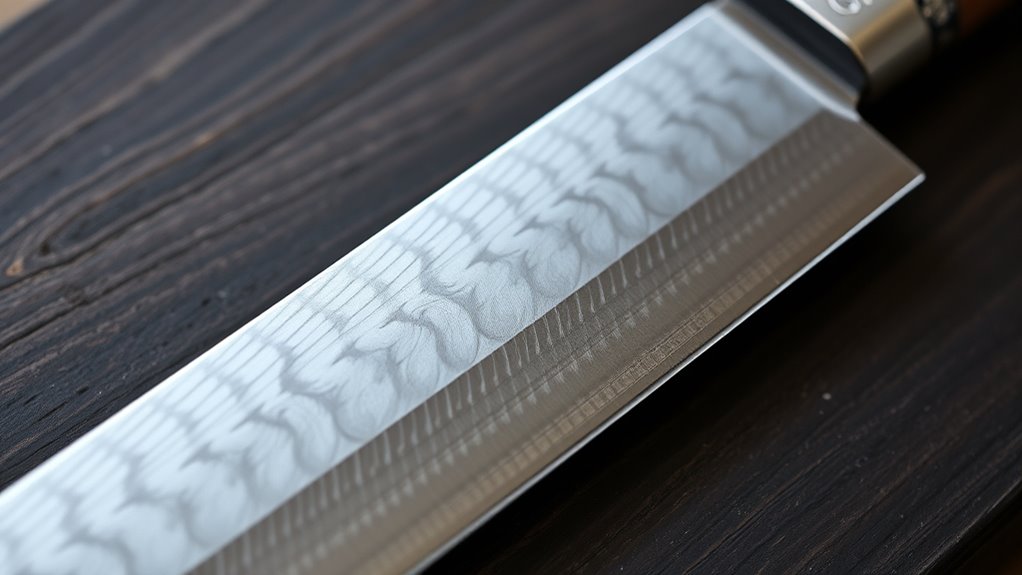
The quality of Japanese knives depends heavily on the steels used and how they’re crafted. You’ll find that high-hardness steels like Tamahagane provide exceptional sharpness and edge retention, but require expert craftsmanship to guarantee durability. Understanding these materials and techniques helps you choose a knife that performs reliably in busy kitchens. Additionally, home maintenance practices can extend the lifespan of your knife and ensure safe, effective use over time. Regular honing and proper storage are essential components of effective knife care to prevent damage and maintain optimal performance. Being aware of steel types and their properties can further inform your selection process for different culinary needs. Recognition of expert craftsmanship allows you to distinguish between high-quality and lower-grade Japanese knives. Moreover, understanding steel hardness can help you select a knife suited to your specific cutting tasks and maintenance routines.
Steel Types and Hardness
Steel types and hardness play a crucial role in determining a Japanese knife’s performance and durability. The steel’s composition influences sharpness, edge retention, and resistance to chipping. High-carbon steels like White #2 or Blue #2 are common, offering exceptional sharpness but requiring careful maintenance. Hardness, measured on the Rockwell scale, typically ranges from 58 to 65 HRC, affecting how long the edge stays sharp and how easily it can be sharpened.
Key points to consider:
- Harder steels retain sharpness longer but are more brittle.
- Softer steels are more forgiving but require frequent sharpening.
- Traditional craftsmanship balances hardness with toughness for maximum performance.
Craftsmanship and Durability
Mastering the craftsmanship behind Japanese knives is vital for guaranteeing their durability and performance. High-quality blades are forged from premium steels like Tamahagane, offering exceptional sharpness and edge retention. Skilled bladesmiths hand-hammer and temper each knife, creating a resilient structure that withstands daily kitchen use. Single bevel blades are chisel-ground with a small angle, providing razor-thin precision, while double bevels are sharpened on both sides for versatility. The blade’s spine, typically 1.5-3.5mm thick, is designed for balance and strength, sometimes with a concave back for better control. These meticulous construction techniques ensure your knife remains sharp longer and resists chipping or bending, making craftsmanship a vital factor when choosing a durable, reliable Japanese knife. Additionally, understanding the latest in knife materials can help you select a blade that combines tradition with modern enhancements for optimal performance. Incorporating advanced steel alloys can further improve the longevity and corrosion resistance of your knife. Proper blade maintenance is also crucial to extend the life of your investment and maintain its cutting edge over time.
Choosing the Right Handle and Ergonomic Design
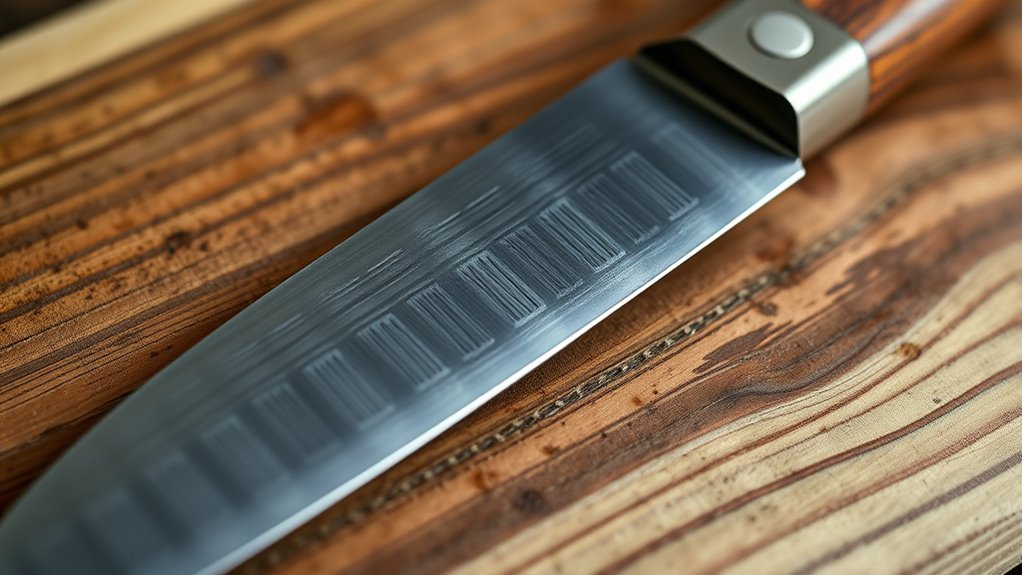
Choosing the right handle and ergonomic design is essential for comfortable, precise knife work. Your grip impacts control, safety, and fatigue, so selecting a handle that fits your hand and cutting style matters. Japanese handles vary in shape and material, influencing balance and comfort. Additionally, considering how smart home technology can assist in your culinary space—such as automated lighting or temperature controls—can enhance your overall cooking environment. Consider these factors:
- Handle shape: oval, D-shape, or octagonal, each offering different grip styles and control.
- Material: wood, resin, or composite, affecting grip texture and durability.
- Balance and weight: a handle that complements the blade’s weight ensures steady, effortless cuts.
Testing different handles helps you find what feels best, reducing strain during extended use. Proper ergonomic design enhances precision and makes your kitchen work more enjoyable.
Techniques and Tips for Proper Knife Usage
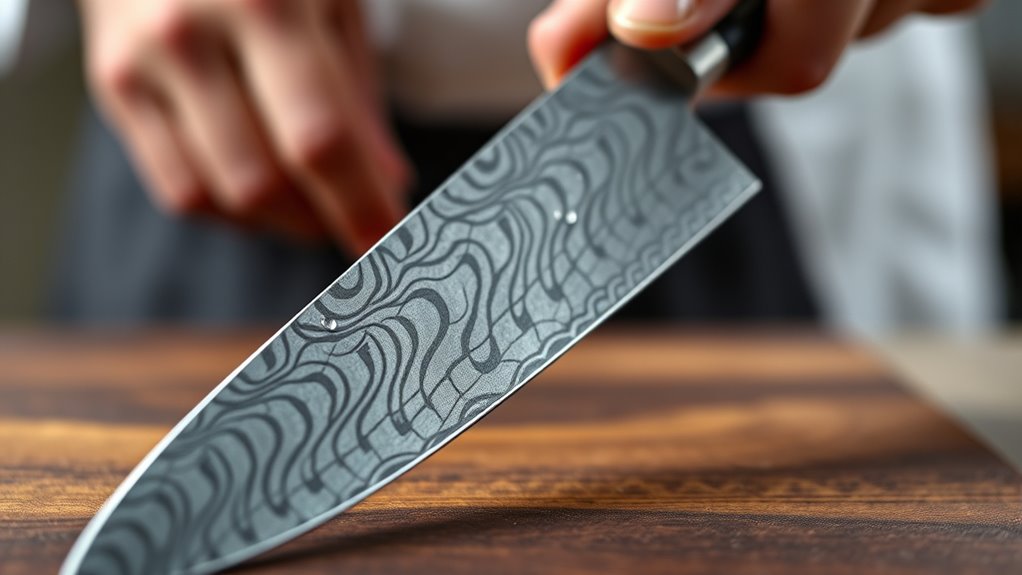
Using proper technique is essential to maximize the performance and longevity of your Japanese knives. Always cut with a controlled, smooth motion, avoiding forceful sawing. For slicing fish or vegetables, use a gentle push or pull stroke, maintaining the blade’s angle. When chopping, employ a straight downward motion with minimal rocking, especially with Nakiri or Santoku blades. Keep your fingers curled under your guiding hand to prevent accidents and ensure stability. For single-bevel knives like Yanagiba, use a single, clean stroke, pulling the knife towards you for precise cuts. Regularly maintain your edge with proper sharpening, focusing on the specific bevel angle. Proper technique not only improves your results but also preserves the sharpness and structure of your knife over time, and understanding technique fundamentals can greatly enhance your overall skill and safety. Additionally, being aware of blade maintenance practices will help you keep your knives in optimal condition for years to come. Developing a consistent cutting rhythm and motion can further improve your efficiency and reduce fatigue during extended prep sessions. Incorporating proper grip techniques can also help you control the knife more effectively and reduce strain on your hand muscles. Practicing mindful cutting posture can further prevent fatigue and promote better control during extended use.
Factors to Consider When Selecting Your Ideal Knife
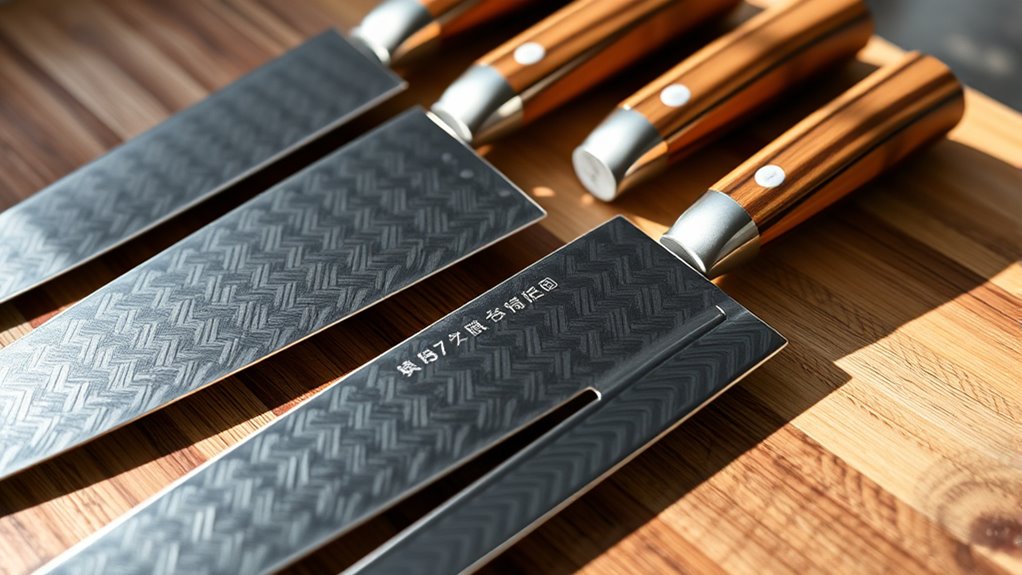
When selecting your ideal Japanese knife, it’s important to contemplate the specific tasks you’ll be performing and how the knife’s features align with those needs. Think about the type of cuts you make most often and choose a blade suited for that purpose. Consider the blade’s bevel, length, and profile to match your skill level and comfort. For delicate slicing like sashimi, a Yanagiba might be ideal, while a Gyuto suits versatile kitchen tasks. The handle style and weight also influence control and fatigue during prolonged use. Understanding blade profiles can help you choose a knife that matches your culinary style and needs. Additionally, evaluating the style of the knife can greatly impact your comfort and efficiency in the kitchen, ensuring that your choice complements your cooking habits.
Being aware of blade material options is also crucial, as different steels offer varying levels of sharpness retention and ease of maintenance.
Frequently Asked Questions
How Do I Maintain and Sharpen Japanese Knives Properly?
To maintain and sharpen your Japanese knives properly, you should regularly hone them with a ceramic or leather strop to keep the edge aligned. Use a whetstone with a fine grit for sharpening, holding the blade at the correct angle—typically 15-20 degrees. Be gentle, sharpen only when needed, and clean your knives thoroughly afterward to prevent rust. Proper storage also prevents dulling and damage.
What Are the Differences Between Single and Double Bevel Blades?
You’ll notice that single bevel blades are sharpened on one side only, offering precise, clean cuts, perfect for sashimi or vegetable peeling. Double bevel blades are sharpened on both sides, making them more versatile for general tasks like chopping and slicing. Single bevel knives require skilled technique for accuracy, while double bevels are easier for most users. Your choice depends on your specific cutting needs and skill level in the kitchen.
Can I Use a Japanese Knife for Western-Style Cooking?
Sure, you can use a Japanese knife for Western cooking—if you’re feeling brave and enjoy a challenge. Their precision and thin blades excel for delicate tasks like slicing fish or vegetables, but they might feel awkward for heavy-duty chopping or rocking motions. You’ll need to adapt your technique, and don’t forget, these knives are sharper than Western counterparts, so handle with care—or risk a trip to the ER.
How Do Handle Types Affect Knife Balance and Comfort?
Handle types profoundly influence your knife’s balance and comfort. An oval or D-shaped handle fits comfortably in your grip, offering better control and reducing fatigue during prolonged use. Octagonal handles provide a secure grip, especially when wet, while traditional wa-handle offers a natural feel. Choosing the right handle enhances your precision, minimizes strain, and makes your cutting experience more enjoyable, whether you’re chopping vegetables or slicing fish.
Are Japanese Knives Suitable for Beginner Cooks?
Yes, Japanese knives are suitable for beginners, but with some caveats. Their sharpness and precision can be intimidating initially, yet they teach you proper technique and control. You’ll find lighter handles and thinner blades easier to maneuver. Start with versatile options like a Gyuto or Santoku. As you gain confidence, explore specialized knives. With patience and practice, these tools will elevate your cooking game and reveal their true potential.
Conclusion
Choosing the right Japanese knife is like finding the perfect partner in your culinary journey—each one brings unique strengths to elevate your cooking. By understanding key features, types, and materials, you’ll make an informed decision that suits your needs. Remember, your knife isn’t just a tool; it’s an extension of your passion. So, trust your instincts, and let the blade guide you to create culinary masterpieces that speak to your soul.
Fall Picks
fall essentials
As an affiliate, we earn on qualifying purchases.