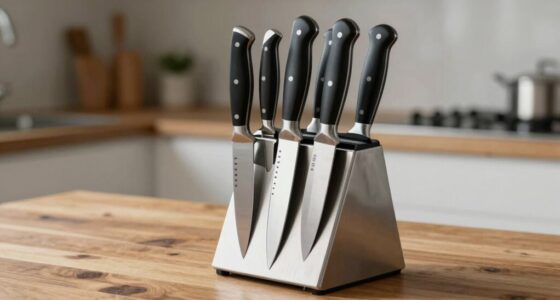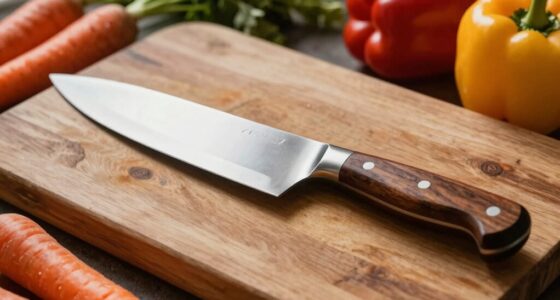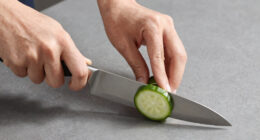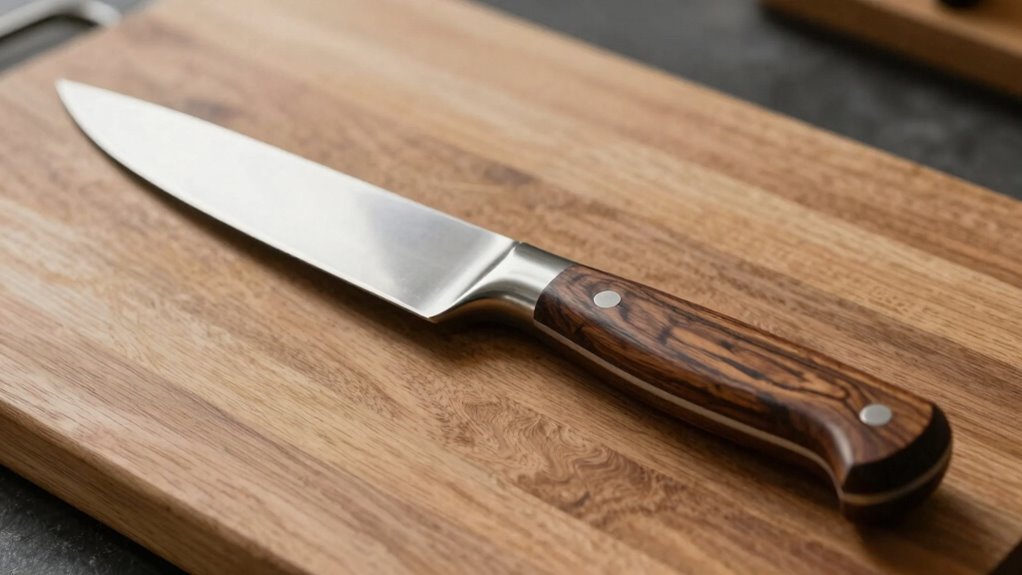

To make a knife feel stable instead of twitchy, focus on proper weight distribution so the center of gravity aligns with the blade’s midpoint. An ergonomic handle that fits your hand and provides a secure grip is essential. Confirm your knife’s blade is sharp and well-connected to the handle to prevent wobbling. When these elements work together, the knife feels like an extension of your hand, making every cut more precise and confident. Keep exploring for more tips.
Key Takeaways
- Proper blade balance centers the weight for natural, steady handling.
- Ergonomic handles with textured grips prevent slips and enhance control.
- Sharp blades reduce twitchiness by ensuring clean, precise cuts.
- Minimal play between blade and handle ensures responsiveness and stability.
- Overall design harmony aligns the knife’s weight and balance with user movement.

A knife that feels steady instead of twitchy gives you confidence and control with every cut, but achieving that steadiness involves more than just choosing the right blade. It’s about how the knife’s blade balance and handle ergonomics work together to create a seamless cutting experience. When a knife has proper blade balance, the weight distribution feels natural in your hand. You won’t feel as if the blade wobbles or shifts unexpectedly; instead, it moves smoothly through ingredients. A well-balanced knife typically has its center of gravity aligned with the midpoint of the blade, making it easier to control and reducing fatigue over extended use. This balance guarantees that your wrist and forearm aren’t forced into unnatural positions, which can cause twitchiness or instability. Blade weight distribution plays a crucial role in how a knife responds during use, ensuring a more controlled and comfortable experience. Handle ergonomics play an essential role in how stable a knife feels. If the handle fits well in your hand, allows for a secure grip, and feels comfortable during prolonged use, you’re less likely to experience slips or awkward movements. An ergonomic handle is designed to match the natural contours of your hand, with enough grip texture to prevent slipping, even when your hands are wet or greasy. When you’re using a handle that conforms to your grip, the knife naturally follows your movements, providing a sense of steadiness and precision. Additionally, material choice can influence the grip and overall feel of the handle, contributing to stability during use. A well-designed handle also considers balance point to ensure the knife’s weight distribution feels natural. Proper attention to blade sharpness is also vital, as a dull blade can cause uneven cuts and instability. Conversely, a poorly designed handle can cause fatigue or strain, making your cuts more twitchy and inconsistent. The play between blade and handle plays a significant role in how confident you feel while cutting, as a harmonious connection minimizes unwanted movement. The interplay between blade balance and handle ergonomics influences how confidently you wield your knife. If either element is off, you might find yourself compensating with extra effort, leading to unsteady cuts. But when both are optimized, you’ll notice a marked difference. The knife feels like an extension of your hand, responding intuitively to your movements. This harmony allows you to make precise cuts with minimal effort, maintaining control even during complex tasks. Ultimately, a stable, twitch-free cutting experience depends on the thoughtful design of both the blade’s weight distribution and the handle’s shape and grip. When these factors align, your confidence in your skills increases, making your time in the kitchen more enjoyable and efficient.
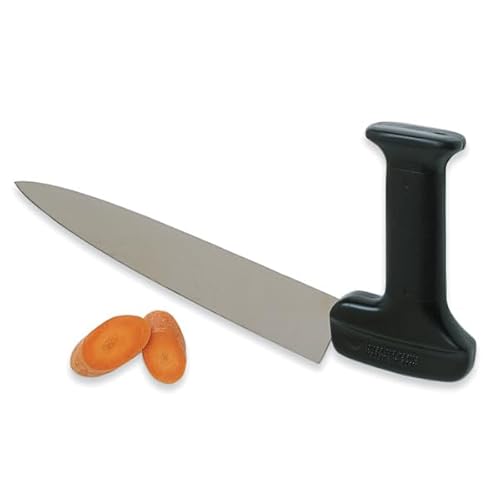
Swedish Steak Knife – Ergonomic Kitchen Chef's Knife
As an affiliate, we earn on qualifying purchases.
As an affiliate, we earn on qualifying purchases.
Frequently Asked Questions
How Does Handle Material Influence Knife Stability?
Handle material greatly influences knife stability by providing an ergonomic grip and ideal handle texture. When you choose a handle made from materials like rubber or textured G-10, you get better control, reducing twitchiness during cutting. A comfortable, non-slip handle helps you maintain steady pressure, minimizing hand fatigue and enhancing overall stability. This guarantees safer, more precise cuts, making your knife feel more secure and reliable during use.
Can Blade Length Affect How Stable a Knife Feels?
Think of a knife’s blade length as the keel of a ship—longer blades can sway more, making the knife feel less stable. You’ll notice that a well-balanced blade with an ergonomic grip offers steadiness, regardless of length, by distributing weight evenly and fitting comfortably in your hand. Shorter blades often feel more controlled, while longer ones need precise handling to prevent twitchiness and maintain stability during cuts.
What Role Does Weight Distribution Play in Stability?
Weight distribution plays a vital role in a knife’s stability by influencing its balance point and center of gravity. When the weight is evenly distributed, the knife feels more controlled and less twitchy during use. A well-balanced knife allows you to maneuver smoothly, reducing fatigue and improving precision. Focus on a design where the center of gravity aligns with your hand’s grip, ensuring a stable, confident cutting experience.
Do Different Cutting Techniques Impact Knife Stability?
Different cutting techniques do impact knife stability, but your grip makes all the difference. If you use an ergonomic grip, it provides better control and reduces blade flex, making the knife feel rock-solid. Sharp, precise cuts with smooth, controlled motions keep the knife stable—almost like it’s glued to your hand. Avoid erratic motions; otherwise, you’ll feel like you’re battling a wild beast instead of a steady tool.
How Does Sharpening Angle Affect a Knife’s Twitchiness?
A sharper sharpening angle reduces twitchiness by creating a more precise edge, which feels more controlled in your hand. Pair this with an ergonomic grip that fits comfortably, giving you better leverage and reducing hand fatigue. Also, consider the blade curvature; a gentle curve provides smoother cuts and enhances stability, preventing sudden movements. Together, these factors make your knife feel steadier, more responsive, and easier to control during cutting tasks.

SHAN ZU 8 Inch Japanese Chef Knife, Hand Forged Gyuto Knife 9 Layers High Carbon 10CR18MOV Steel Kitchen Knife Ultra Sharp & Durable Professional Japanese Sashimi Knife with Ergonomic Rosewood Handle
Professional-Grade Construction – 9-Layer Clad Steel for Durability| The blade is constructed from 9 layers of high-carbon stainless…
As an affiliate, we earn on qualifying purchases.
As an affiliate, we earn on qualifying purchases.
Conclusion
In the end, feeling confident with your knife comes down to balance, grip, and blade control—think of it as your trusty sword in a modern-day quest. When your knife feels stable, you won’t be flailing like a flapper at a speakeasy. Instead, you’ll glide through your tasks with the grace of a Jedi. So, take your time, adjust your grip, and trust your skills—soon, your knife will feel just right, like a well-oiled automaton.

Brewin Professional Kitchen Knives, 3PC Chef Knife Set Sharp Knives for Kitchen High Carbon Stainless Steel, Japanese Cooking Knife with Gift Box
MUTI-PURPOSE CHEF KNIFE SET – The Brewin 3pc Professional Kitchen Knife Set comes with 1× chef’s knife, 1×…
As an affiliate, we earn on qualifying purchases.
As an affiliate, we earn on qualifying purchases.

HOSHANHO Kitchen Knife in Japanese High Carbon Steel, Professional High-Class Chef's Knife 8 inch, Non-slip Ultra Sharp Cooking Knives with Ergonomic Handle
【High-End Japanese Steel Chef's Knife】 HOSHANHO chef's knife is made of Japanese high carbon steel 10Cr15CoMoV, 2x of…
As an affiliate, we earn on qualifying purchases.
As an affiliate, we earn on qualifying purchases.