
The idea of self-sharpening knives is a myth; in reality, your knife’s edge dulls over time due to use and cutting on hard surfaces. To keep it sharp, you need proper care, such as honing regularly and sharpening when performance declines. This process realigns the microscopic teeth, restoring the edge. There’s no magic—just consistent technique. If you’re curious about how to truly maintain your knives and avoid dulling, you’ll find useful tips ahead.
Key Takeaways
- Self-sharpening mechanisms only realign tiny burrs; they do not replace proper sharpening or regular maintenance.
- Regular honing helps maintain a sharp edge by realigning microscopic teeth, reducing the need for frequent sharpening.
- Proper sharpening involves consistent angles and gentle pressure to restore a dull edge effectively.
- Dulling occurs from everyday use and hard surfaces, requiring routine sharpening to keep knives performing well.
- The myth of self-sharpening knives is false; consistent, skilled care is essential to keep knives sharp.
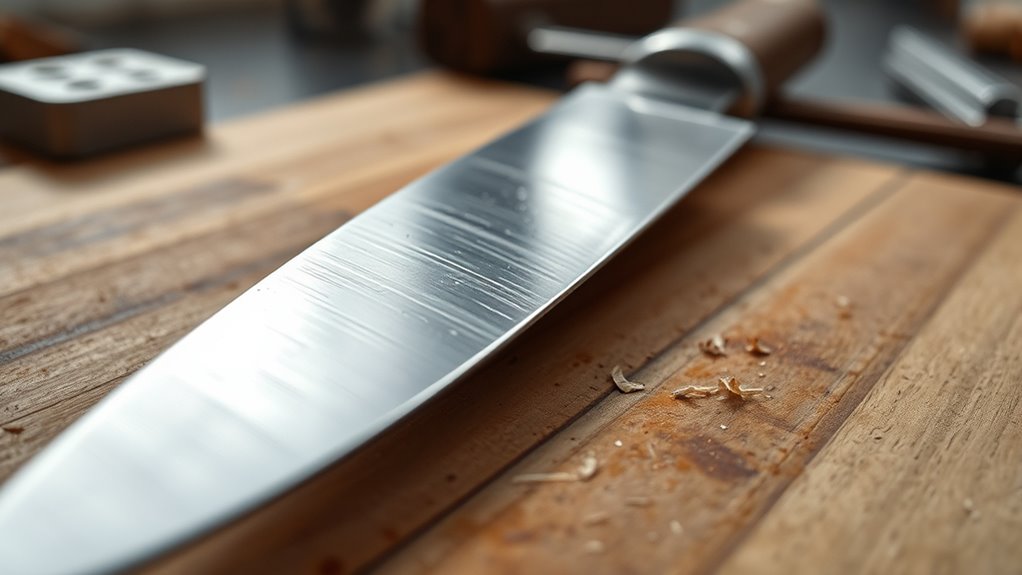
Many people believe that “self-sharpening” knives automatically maintain their edge through special mechanisms, but this is a myth. There’s no magic involved in keeping your knives sharp without effort. Instead, maintaining a keen edge hinges on proper edge maintenance and sharpening techniques. No matter how advanced a knife might seem, it still needs regular attention to stay at its best.
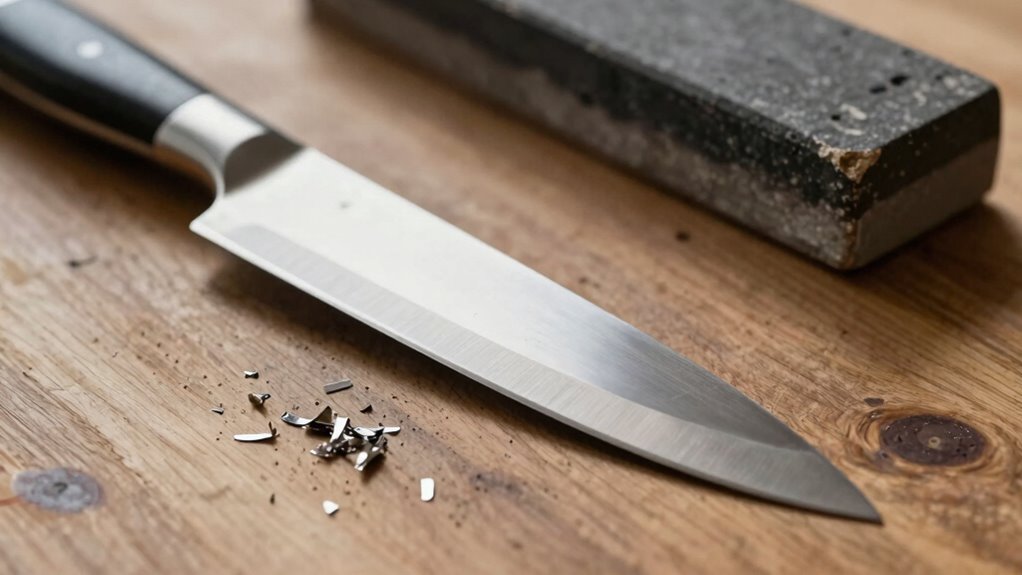
First, understanding edge maintenance is vital. Over time, a knife’s edge dulls because of everyday use—cutting through tough ingredients, slicing on hard surfaces, or even just frequent use. The idea of a self-sharpening system might suggest that the knife can somehow hone itself, but in reality, these mechanisms only help realign or remove tiny burrs; they don’t replace proper sharpening. To keep your knives in prime condition, you need to develop a routine that includes regular honing and occasional sharpening. Honing aligns the edge, straightening the microscopic teeth that make slicing effortless. Sharpening, on the other hand, actually removes metal to restore a dull edge, usually with sharpening stones or electric sharpeners.
Your sharpening techniques determine how effectively you maintain your knife’s performance. When you sharpen correctly, you not only restore the edge but also prolong your knife’s lifespan. For best results, use a consistent angle—generally around 15 to 20 degrees—and ensure you’re applying even pressure. Many home cooks underestimate the importance of technique, but a steady hand and patience make a big difference. Using the right sharpening tools, such as a whetstone or ceramic rod, ensures a sharper, cleaner edge compared to cheap or worn-out sharpeners. Remember, it’s better to sharpen more frequently with a gentle touch than to wait until the knife is painfully dull and then try to restore it with aggressive grinding.
Even with the best sharpening techniques, no knife stays sharp forever without some attention. Regular honing keeps the edge aligned, minimizing the need for frequent sharpening. When you notice a decline in cutting performance, that’s your cue to sharpen. The combination of proper edge maintenance and skilled sharpening techniques is what truly keeps your knives performing like new. So forget about the myth of self-sharpening knives—your best tool for a razor-sharp edge is consistent care through proper technique. Developing a good understanding of edge durability and regular maintenance routines can greatly extend your knife’s performance. With a little effort, you’ll enjoy effortless cuts and a longer-lasting, better-performing knife.
Frequently Asked Questions
Can Ceramic Knives Sharpen Themselves Naturally Over Time?
Ceramic knives can’t sharpen themselves naturally over time. Despite their high durability, ceramic blades experience natural wear, which gradually dulls the edge. Unlike steel, ceramics don’t have self-sharpening properties; they rely on regular maintenance, like honing or professional sharpening, to stay sharp. Over time, the abrasive forces of cutting cause tiny chips and dullness, so you need to actively sharpen ceramic knives to maintain their cutting performance.
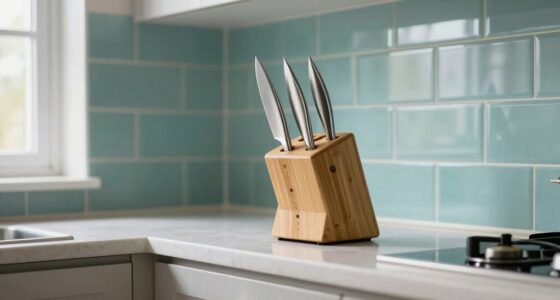
Do Self-Sharpening Knife Blocks Really Maintain Edge Sharpness?
Imagine slicing through a ripe tomato effortlessly; a self-sharpening knife block isn’t magic, but it does help maintain blade durability and sharpening effectiveness. It uses built-in abrasive slots to realign and slightly sharpen blades with each use. While it won’t keep your knives razor-sharp forever, it does assist in preserving their edge longer than unprotected storage, reducing the need for frequent professional sharpening.
How Often Should I Manually Sharpen My Knives for Optimal Performance?
You should sharpen your knives every 2 to 4 weeks, depending on how often you use them. Regular knife maintenance helps keep the edge sharp and prevents dullness. For frequent use, sharpen more often, and for lighter use, extend the sharpening frequency. Use a honing steel between sharpenings to maintain the edge. This routine guarantees your knives stay sharp, safe, and effective for all your kitchen tasks.
Are There Any Benefits to Using Self-Sharpening Knives Despite the Myth?
Self-sharpening knives may seem convenient, offering perceived maintenance benefits, but they don’t truly sharpen themselves. The myth suggests they do, but in reality, they rely on special mechanisms that only help maintain edge consistency temporarily. While they offer the convenience of less frequent sharpening, you still need to manually hone or sharpen them periodically. So, enjoy the perceived ease, but don’t rely solely on self-sharpening features for long-term sharpness.
What Materials Are Used in Self-Sharpening Knife Blocks?
Self-sharpening knife blocks use materials like diamond coating and embedded abrasives. The diamond coating, a hard and durable material, sharpens your knives as you insert and remove them. Embedded abrasives, often made of ceramic or other abrasive particles, help maintain the edge by gently honing the blade. These materials work together to keep your knives sharp without the need for separate sharpening tools, making your kitchen prep easier and safer.
Conclusion
So, next time you hear about “self-sharpening” knives, remember they’re just a myth. While it’s tempting to believe your knife can stay sharp on its own, reality proves otherwise. Like a finely tuned engine, your blade needs regular maintenance to perform at its best. In the end, the myth of effortless sharpness is just that—myth. True longevity comes from your effort, not false promises of self-sufficiency.