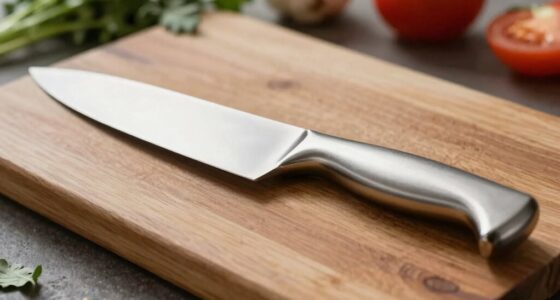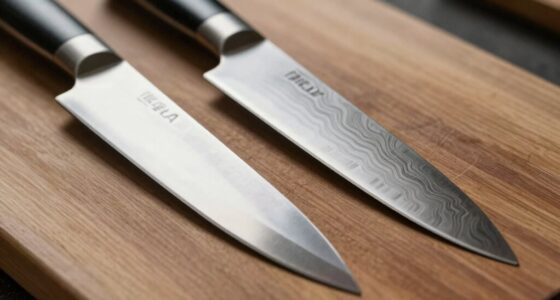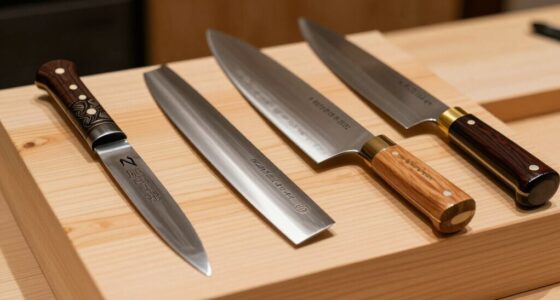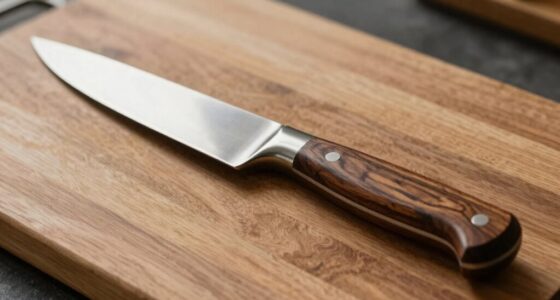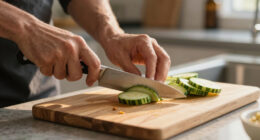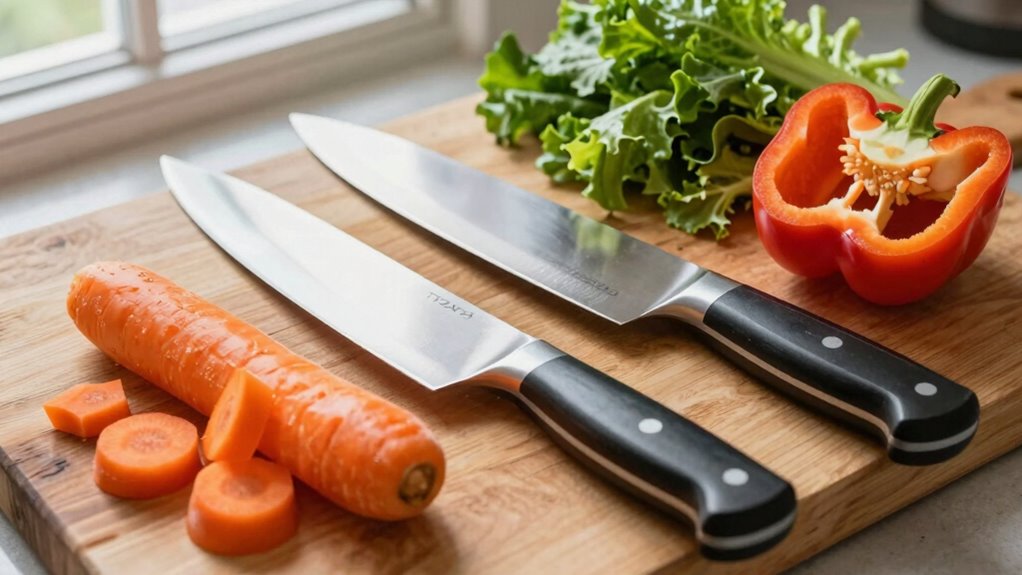
When choosing between a Nakiri and a Santoku for vegetable prep, consider your tasks. The Nakiri’s straight, flat blade offers precise, uniform cuts and excellent control for delicate vegetables, perfect for garnishes and thin slices. The Santoku’s curved edge is versatile, suitable for chopping, slicing, and dicing a wider range of produce. To maximize your skills, understanding their designs and techniques will help you pick the right tool—continue exploring to master each.
Key Takeaways
- Nakiri excels in precise, straight cuts for uniform vegetable slices, ideal for garnishing and julienne tasks.
- Santoku offers versatility with curved edge support for chopping, slicing, and dicing a variety of vegetables.
- Nakiri’s flat, full contact blade reduces cell damage, preserving flavor and presentation during delicate vegetable prep.
- Santoku’s rocking motion and beveled edge facilitate efficient, smooth slicing for broader vegetable handling.
- Maintenance and sharpness retention are straightforward for Nakiri, making it suitable for frequent vegetable-focused use.

HOSHANHO 7 Inch Nakiri Knife, Japanese High Carbon Stainless Steel Chef Knife, Multipurpose Meat Vegetable Sharp Kitchen Knife with Ergonomic Pakkawood Handle
【Ultra Sharp Blade】 Each Japanese nakiri knife is hand-polished by experts to achieve a sharp 15 degree edge…
As an affiliate, we earn on qualifying purchases.
As an affiliate, we earn on qualifying purchases.
Blade Design and Its Impact on Vegetable Cutting Precision
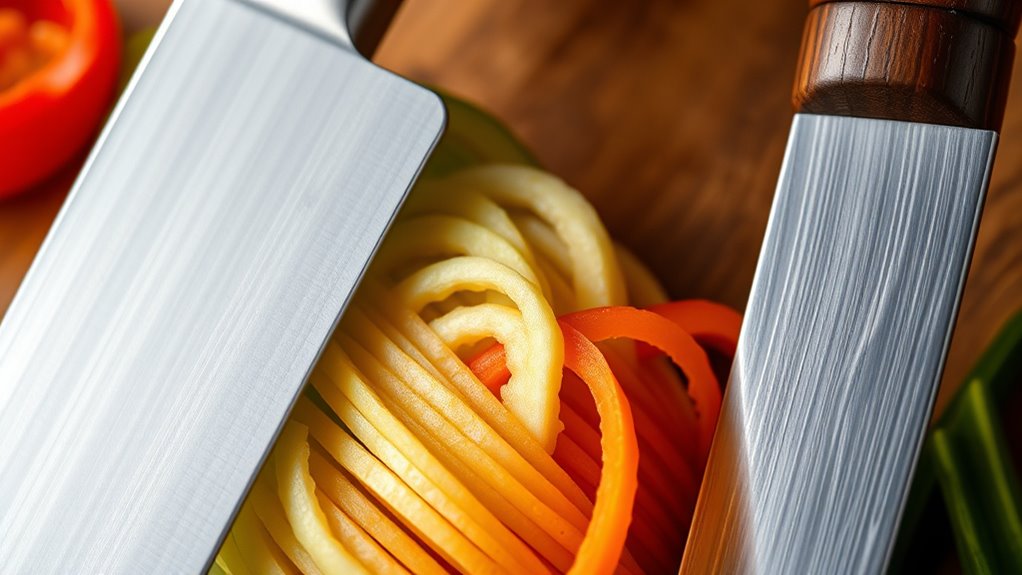
The design of a knife’s blade directly influences how precisely you can cut vegetables. With a Nakiri, the straight edge and squared-off tip give you clean, uniform cuts. Its rectangular shape allows for full contact with the cutting board, making push cuts effortless and accurate. The thin, flat blade minimizes bruising and preserves the vegetable’s cell structure, resulting in better flavor and appearance. In contrast, the Santoku’s curved spine and semi-flat edge support a rocking motion, but still enable precise slicing when used correctly. Its slightly thinner, beveled edge enhances control during push cuts and mincing. Both blades are designed to optimize specific cutting styles, but their shapes dramatically impact the accuracy, surface quality, and overall finesse of your vegetable prep. Blade design significantly impacts the effectiveness of your cutting technique and the final presentation. Additionally, understanding the blade geometry helps in selecting the right knife for specific tasks, ensuring optimal performance and safety. Proper blade maintenance also plays a crucial role in maintaining cutting precision and extending the lifespan of your knives.
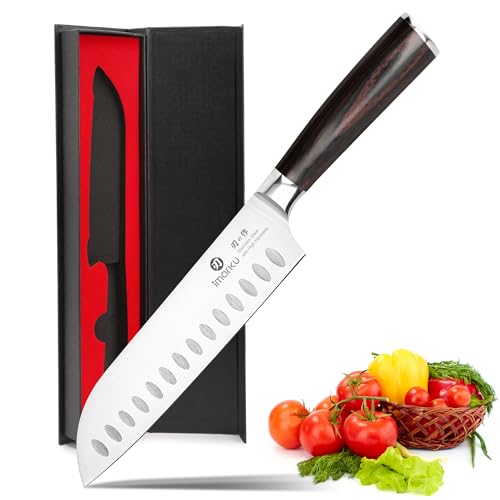
imarku Chef Knife 7 Inch Kitchen Knife Ultra Sharp Santoku Knife – High Carbon Japanese Chefs Knife, Kitchen Gadgets 2025, Apartment Essentials, Birthday Gifts for Him Her, Best Gifts for Women Men
Professional Santoku Knife: This imarku super sharp santoku knife is made of high carbon stainless steel that resists…
As an affiliate, we earn on qualifying purchases.
As an affiliate, we earn on qualifying purchases.
Optimal Techniques for Vegetables With Nakiri and Santoku

To get the most precise vegetable cuts with a Nakiri, focus on pushing straight down and forward with a flat, smooth motion, keeping the blade in full contact with the cutting board. Use your non-dominant hand to guide the vegetable, applying gentle pressure for control. For a Santoku, employ a rocking motion or push-cut technique, using the curved spine to glide smoothly through produce. The Santoku’s beveled edge supports this movement, making it ideal for slicing herbs and soft vegetables. Incorporating proper cutting techniques will enhance your efficiency and safety with both knives. Additionally, understanding the technology behind different types of projectors can help you select the best equipment for your home setup.
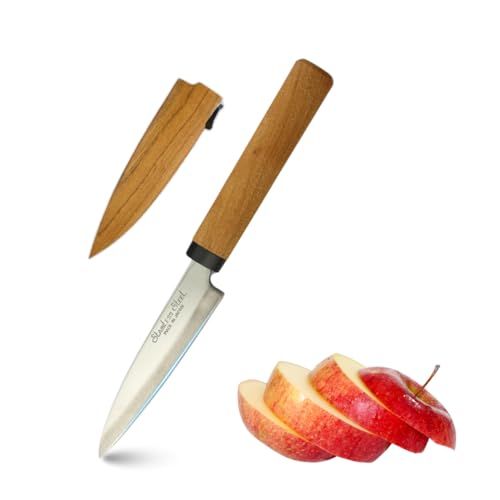
Japanese Paring Knife 4-Inch, High Carbon Stainless Steel Fruit Knife with Wooden Handle and Sheath, Small Utility Kitchen Knife for Peeling, Coring, Mincing, Made in Japan
Precision Japanese Paring Knife – 4-inch high carbon stainless steel blade with a pointed tip, perfect for peeling…
As an affiliate, we earn on qualifying purchases.
As an affiliate, we earn on qualifying purchases.
Handling and Maneuverability for Delicate Produce
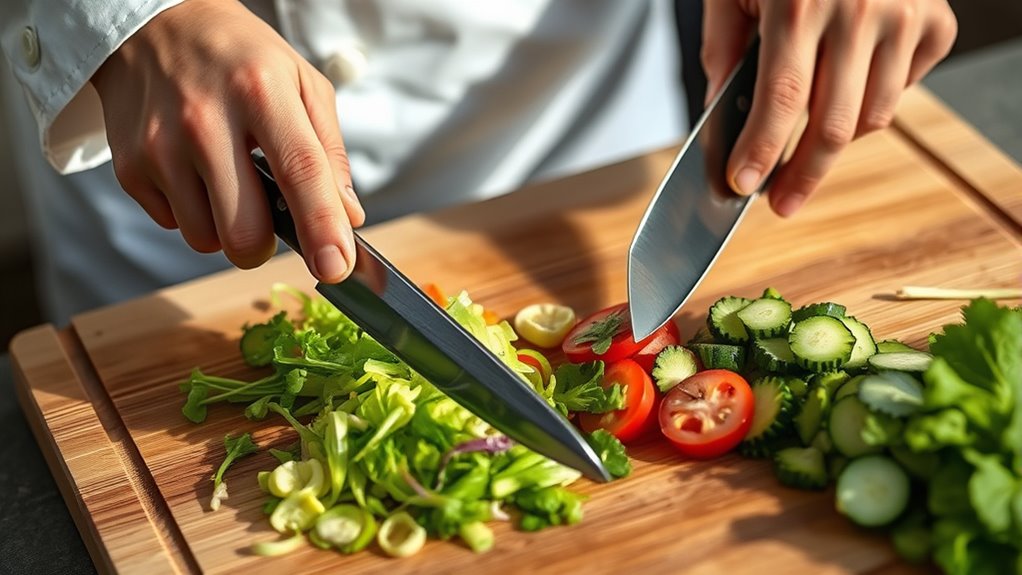
When working with delicate produce like herbs, soft fruits, or tender greens, your choice of knife impacts both control and safety. The Nakiri’s straight, flat blade gives you precise control, making it easier to handle fragile items without crushing or bruising. Its lightweight design allows swift, delicate movements, reducing fatigue during extended prep. The broad blade also helps scoop herbs or greens directly onto the cutting board. In comparison, the Santoku’s curved spine and beveled edge support more versatile handling, especially with push cuts. Its slightly heavier weight offers stability for controlled force. Additionally, the Nakiri’s ergonomic design enhances comfort during extended use, especially when performing precise, delicate tasks. The blade shape of the Nakiri is specifically optimized for vegetable prep, offering better control over thin, even slices.

BAOUROUGE' Precision Slicing Knife (Right-Handed) – 8 and 1/4 Inches Stainless Serrated Blade With Cutting Guide for Exact Slices Up To 5/8 Inch Thick
Slicing / Carver knife with adjustable aluminum guide for cutting widths of 1-16 mm (3/64″ to 0.62")
As an affiliate, we earn on qualifying purchases.
As an affiliate, we earn on qualifying purchases.
Versatility in Vegetable Preparation Tasks
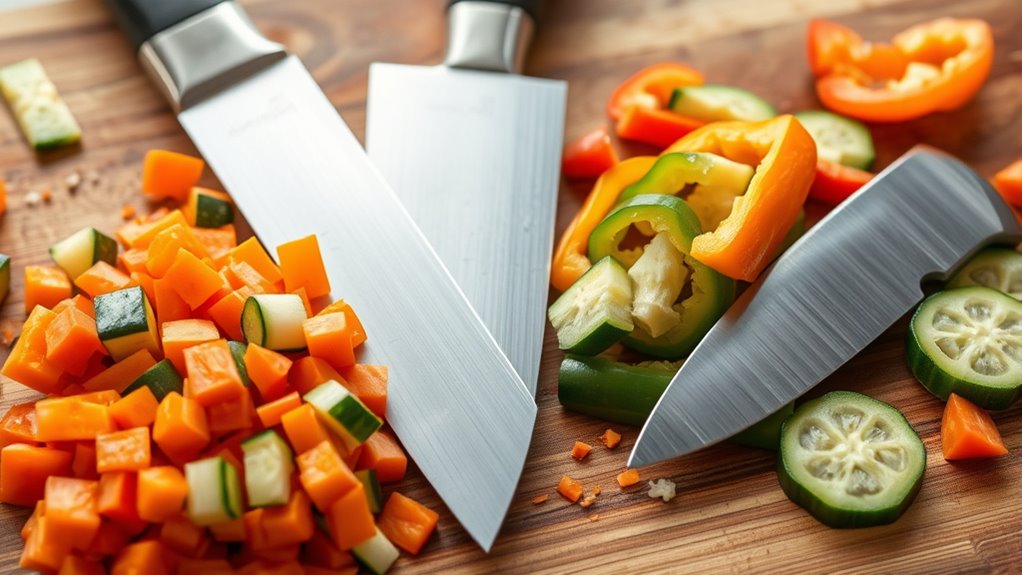
Both Nakiri and Santoku knives excel in different aspects of vegetable preparation, but their versatility varies based on the tasks you tackle. The Nakiri is ideal for precise, straight cuts on vegetables, herbs, and fruits, making it perfect for tasks like julienne, brunoise, or garnishing. Its flat blade ensures full contact with the cutting board, resulting in uniform slices with minimal cell damage. On the other hand, the Santoku’s curved edge and double-bevel design support a wider range of tasks, including chopping, slicing, and dicing vegetables, as well as handling fish and meats. Its versatility makes it suitable for everyday kitchen needs. If you need a knife that adapts to multiple tasks, the Santoku offers more flexibility, while the Nakiri shines in specialized vegetable prep.
Advantages for Specific Vegetables and Garnishing

Nakiri knives excel at preparing delicate vegetables and garnishes because their straight, flat blades allow for precise, clean cuts that preserve the shape and texture of ingredients. This makes them perfect for slicing thin, uniform pieces of vegetables like cucumbers, radishes, or herbs, which are essential for garnishing. The flat edge ensures full contact with the cutting board, reducing bruising and maintaining the integrity of fragile produce. You’ll find it easier to create uniform julienne or brunoise cuts, perfect for presentation. Additionally, the ergonomic design of Nakiri knives enhances control during detailed vegetable prep, making them a preferred choice for chefs emphasizing precision in presentation. For those focused on vegetable presentation, the Nakiri’s design offers superior control and finesse. Using a sharp, well-maintained blade further improves cutting efficiency and reduces the effort needed, leading to cleaner cuts and less damage to the produce. Moreover, the blade geometry of Nakiri knives is optimized for slicing through vegetables with minimal resistance, which can significantly improve your prep speed. A suitable technique can also help maximize the benefits of the Nakiri’s design for delicate cuts.
Maintenance and Ease of Sharpening for Vegetable Focused Use
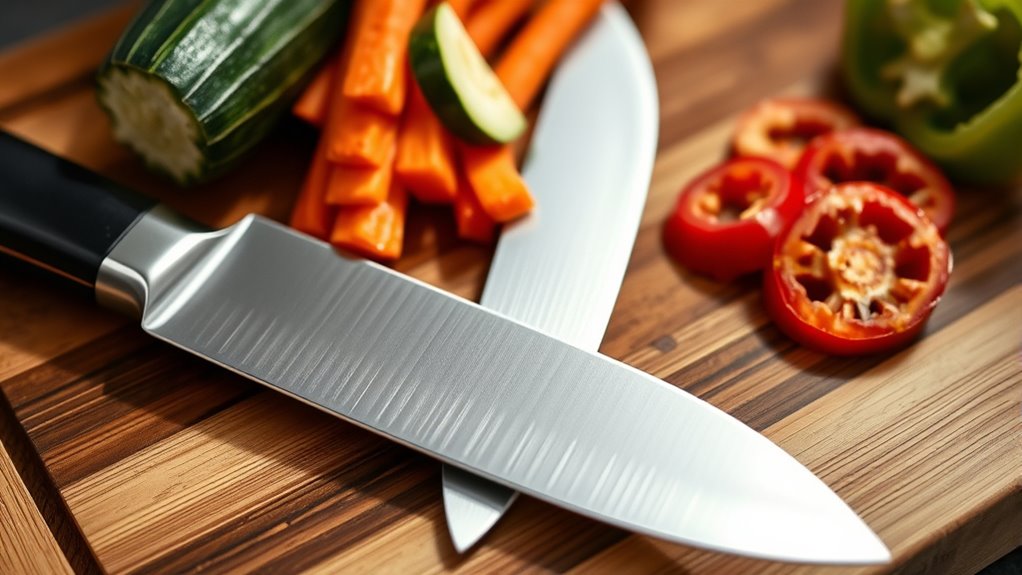
Maintaining a sharp edge on your vegetable-focused knife is key to achieving clean, precise cuts with minimal effort. Nakiri blades, with their straight, flat edge, are straightforward to sharpen using a whetstone or honing rod. Their simple bevels make honing quick, and their thin profile retains sharpness longer with proper care. Santoku knives, with their double-bevel edges, are also easy to sharpen and hone, but might require more attention to maintain an even edge. Both knives benefit from regular honing to keep edges aligned and periodic sharpening to restore sharpness. Since they’re used primarily for vegetable prep, maintaining their sharpness ensures effortless slicing and minimizes damage to delicate produce. Proper maintenance prolongs blade life, making your vegetable prep faster and more efficient.
Frequently Asked Questions
Which Knife Is Better for Slicing Soft Vegetables Like Tomatoes?
You should choose the santoku for slicing soft vegetables like tomatoes. Its thinner, beveled edge allows for smooth, precise cuts without crushing delicate produce. The curved spine and rounded tip help you glide through the tomato’s skin effortlessly, giving you clean, uniform slices. Plus, its versatility means you can easily switch between slicing tomatoes and other tasks, making it a practical choice for everyday kitchen use.
Can Either Knife Effectively Handle Julienne or Matchstick Cuts?
You can use either knife for julienne or matchstick cuts, but your choice affects ease and precision. Picture sliding a sharp blade through crisp vegetables, creating perfect matchsticks. The Nakiri’s straight edge and flat profile give you control and uniformity, especially for delicate veggies. The Santoku’s curved spine and beveled edge support smooth, quick cuts, making it versatile. Both work well if you focus on steady, controlled slicing.
Are There Specific Storage Tips for Maintaining Vegetable-Focused Blades?
To keep your vegetable-focused blades sharp and in top shape, always store them properly. Use a knife block, magnetic strip, or blade guards to prevent dulling or chipping. Avoid tossing them in drawers with other utensils. Regularly clean and dry your knives after use to prevent rust. Storing your blades correctly maintains their edge, ensures safety, and extends their lifespan, so you can enjoy precise, effortless vegetable prep every time.
How Does the Weight Difference Affect Prolonged Vegetable Prep Sessions?
Imagine your hand as a conductor guiding a symphony of vegetables. When you use a lighter nakiri, fatigue stays at bay, allowing you to glide effortlessly through hours of prep. Heavier santoku, though stable, can weigh on you, causing strain over time. Your choice influences your rhythm—light blades keep your performance graceful, while heavier ones demand more strength and patience.
Which Knife Is More Suitable for Beginners Learning Vegetable Chopping Techniques?
You should choose a Santoku if you’re a beginner learning vegetable chopping. Its shorter, more manageable size and double-bevel edge make it easier to control and sharpen. The curved spine supports rocking motions, helping you develop proper techniques. Plus, its versatility allows you to try other kitchen tasks, boosting your confidence. Overall, a Santoku is a user-friendly option that helps you build skills without feeling overwhelmed.
Conclusion
So, whether you go for the Nakiri’s straight-edge precision or the Santoku’s versatile flair, your vegetable prep game is about to get a serious upgrade. Just remember, no knife can turn stubborn carrots into butter—unless you’re secretly a superhero. Choose wisely, sharpen often, and embrace the chaos of kitchen experiments. After all, in the world of veggies, the real skill is pretending you’re a professional chef—while secretly just winging it.