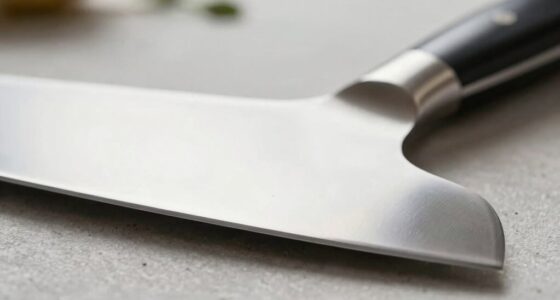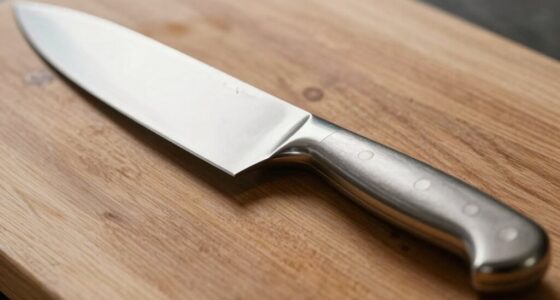
Up to $500, mid-range chef knives give you better materials, craftsmanship, and blade design that boost durability, sharpness, and control. You’ll find handles crafted for comfort, balanced weight for ease, and aesthetic touches to match your style. These knives often come from reputable brands with good warranties, ensuring long-term reliability. Proper care maximizes their lifespan, making them a smart investment. To learn how all these details come together, keep exploring what makes these knives stand out.
Key Takeaways
- Mid-range chef knives feature high-quality steels and craftsmanship that improve sharpness, durability, and edge retention.
- They offer ergonomic handles and balanced weight distribution for better control and reduced fatigue during extended use.
- Customizable aesthetic options and reputable brand warranties enhance visual appeal and provide long-term reliability.
- Proper maintenance like hand washing and honing extends the knife’s lifespan and preserves performance over time.
- Overall, these knives deliver excellent value through superior materials, craftsmanship, and longevity without exceeding $500.
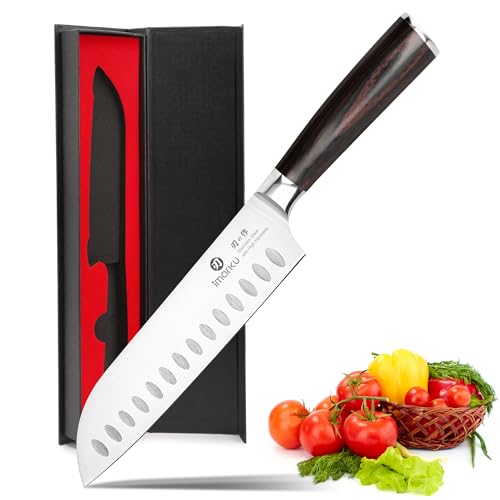
imarku Chef Knife 7 Inch Kitchen Knife Ultra Sharp Santoku Knife - High Carbon Japanese Chefs Knife, Kitchen Gadgets 2025, Apartment Essentials, Birthday Gifts for Him Her, Best Gifts for Women Men
Professional Santoku Knife: This imarku super sharp santoku knife is made of high carbon stainless steel that resists...
As an affiliate, we earn on qualifying purchases.
Material Quality and Blade Composition
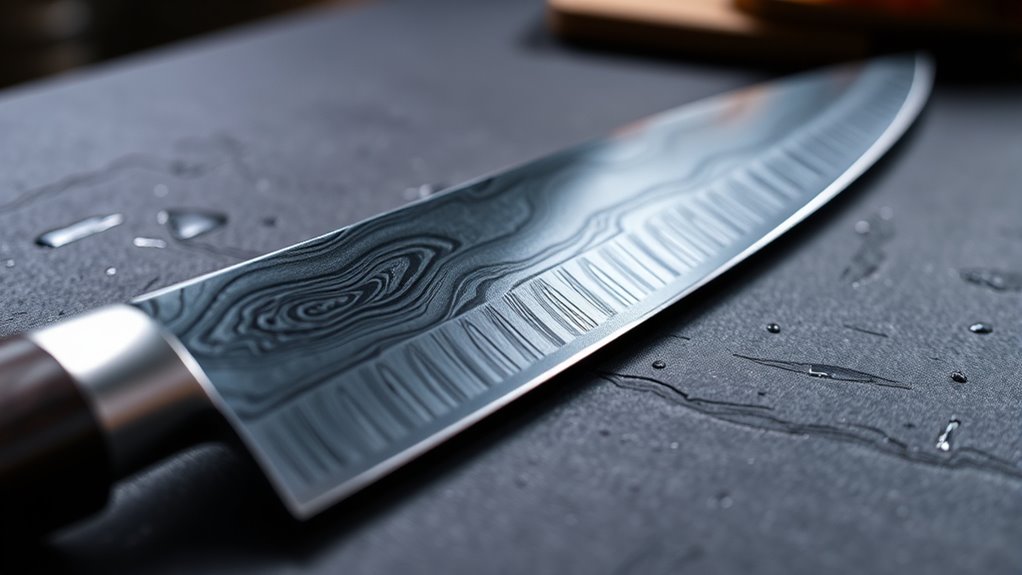
When choosing a mid-range chef knife, the material quality and blade composition are crucial factors that directly impact performance and durability. The type of blade steel determines how well the knife holds its edge, resists corrosion, and withstands sharpening. High-quality steel, such as VG-10 or 154CM, offers a good balance of sharpness and toughness. Handle materials also matter; comfortable, non-slip options like pakkawood, resin-infused wood, or reinforced synthetic materials improve control during use and ensure longevity. Cheaper handle materials may crack or degrade over time, affecting safety and grip. By paying attention to both blade steel and handle materials, you ensure your knife performs reliably, maintains its edge longer, and provides a comfortable, secure grip during demanding kitchen tasks.
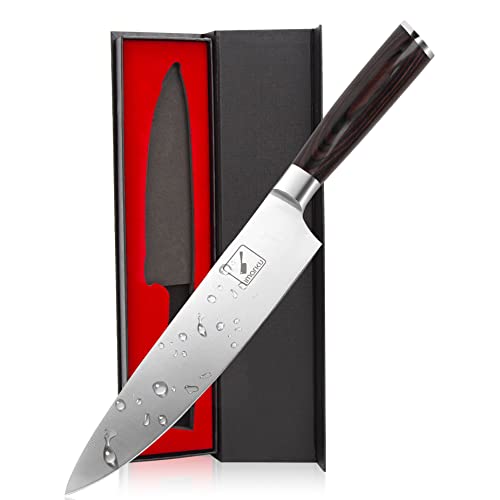
imarku Japanese Chef Knife - Sharp Kitchen Knife 8 Inch Chef's Knives HC Steel Paring Knife, Unique Gifts for Men and Women, Gifts for Mom or Dad, Kitchen Gadgets with Gift Box, Gyutou Knives
High-Carbon Stainless Steel Blade: It is manufactured from high-quality stainless steel that maintains its functionality for a long...
As an affiliate, we earn on qualifying purchases.
Blade Geometry and Edge Performance

The shape and design of a knife’s blade markedly influence its cutting performance and ease of use. Blade geometry determines how effectively you can slice, chop, or mince, with factors like blade width and edge angle playing key roles. A narrower blade typically offers more precision, ideal for delicate tasks, while a wider blade provides stability for heavy-duty chopping. The edge angle affects sharpness and durability; a steeper angle yields a sharper edge but may dull faster, whereas a wider angle enhances longevity. Consider the table below for clarity:
| Blade Width | Edge Angle |
|---|---|
| Narrow (e.g., 2-3mm) | Steep (15°-20°) |
| Wide (e.g., 4-6mm) | Shallow (20°-25°) |
Understanding these elements helps optimize your knife’s performance for specific tasks.

HOSHANHO Kitchen Knife in Japanese High Carbon Steel, Professional High-Class Chef's Knife 8 inch, Non-slip Ultra Sharp Cooking Knives with Ergonomic Handle
【High-End Japanese Steel Chef's Knife】 HOSHANHO chef's knife is made of Japanese high carbon steel 10Cr15CoMoV, 2x of...
As an affiliate, we earn on qualifying purchases.
Craftsmanship and Manufacturing Techniques

You’ll notice that quality mid-range chef knives are crafted using precise methods and advanced manufacturing techniques. These processes guarantee consistent blade strength, sharpness, and durability. Understanding how these methods work helps you appreciate the craftsmanship behind each knife you consider.
Precision Crafting Methods
Precision crafting methods are at the heart of producing reliable and high-performing mid-range chef knives. These techniques ensure each blade is carefully shaped, balanced, and sharpened for maximum performance. When knives are crafted with attention to detail, they cut through ingredients effortlessly, enhancing your culinary versatility. Proper craftsmanship also considers knife storage, with some designs featuring reinforced handles or full tangs that increase durability and safety. The use of high-quality steels and precise forging methods results in blades that stay sharp longer and resist chipping. You’ll notice that well-crafted knives not only improve your kitchen efficiency but also feel more comfortable and confident to use. Ultimately, these meticulous manufacturing techniques distinguish mid-range knives from cheaper alternatives, offering better reliability and a consistent cutting experience.
Advanced Manufacturing Processes
Advanced manufacturing processes elevate the quality and consistency of mid-range chef knives by combining traditional craftsmanship with modern technology. Techniques like diamond sharpening guarantee blades maintain sharpness longer and achieve a finer edge, enhancing performance. Modern processes also allow for the incorporation of decorative patterns directly into the steel, giving your knife a unique aesthetic without sacrificing durability. These patterns are created through specialized forging or etching, adding visual appeal that reflects craftsmanship. Automated precision controls help maintain uniformity across batches, reducing defects and assure you get reliable quality. By blending these advanced techniques with time-honored methods, manufacturers deliver knives that perform well, look attractive, and last longer, giving you better value for your investment.

Japanese Chef Knife, 8 Inch Damascus Kitchen Knife with VG10 Steel, Handcrafted Sharp Knife with Ergonomic Handle, Cooking Knives for Home Chefs, Cooking Gifts for Men and Women
【Premium Damascus Chef Knife with VG-10 Steel Core】Our Japanese knives feature a VG-10 steel core (60 HRC) for...
As an affiliate, we earn on qualifying purchases.
Handle Materials and Ergonomics
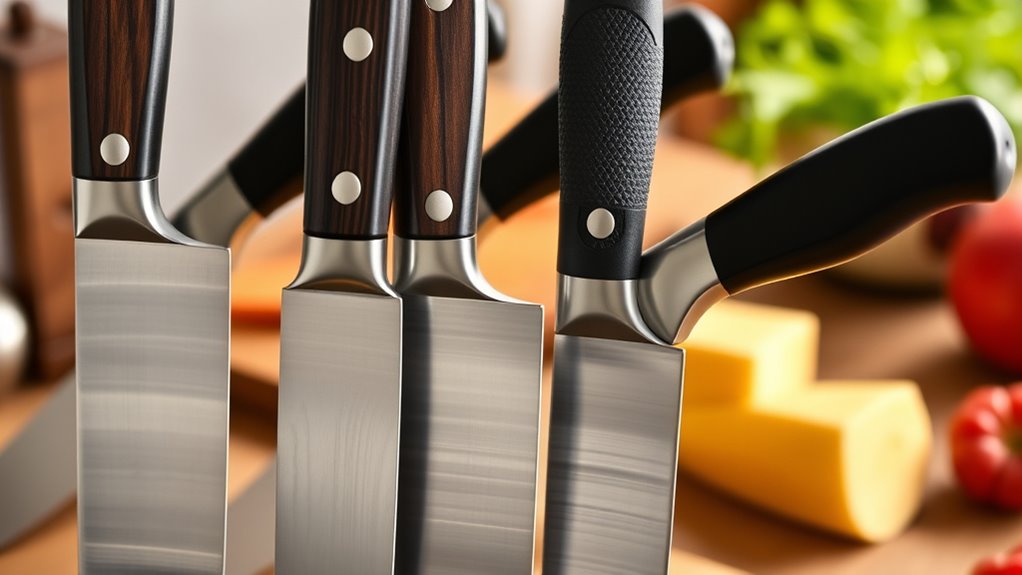
The handle material you choose affects how the knife feels in your hand, so it’s worth considering your preferences carefully. Comfort and grip design also play a big role in how effectively you can maneuver the knife during prep work. By paying attention to these details, you’ll find a handle that offers both control and comfort for everyday use.
Material Choices and Feel
Choosing the right handle material can substantially impact how comfortable and secure you feel while using a mid-range chef knife. The handle’s ergonomics and material influence your grip, control, and overall comfort during prep. For example, a handle made from wood offers a warm, traditional feel, while synthetic options like G-10 or composite provide durability and slip resistance. These choices complement the blade material, such as high-carbon stainless steel or VG10, ensuring a balanced, well-weighted knife. The table below highlights common handle materials and their feel:
| Handle Material | Feel & Benefits |
|---|---|
| Wood | Warm, traditional, good grip |
| G-10/Composite | Durable, slip-resistant, modern feel |
| Micarta | Sturdy, comfortable grip |
| Plastic | Lightweight, affordable |
Your choice affects both handling and longevity.
Comfort and Grip Design
A well-designed handle not only enhances your comfort but also improves your control over the knife during prep. An ergonomic grip ensures your hand stays comfortable during long use, reducing fatigue. Handle comfort depends on materials like wood, composite, or rubber, which offer different tactile sensations. A good grip minimizes slipping, even when your hands are wet. Consider the handle’s shape and size to match your hand’s natural contours, boosting precision. Features such as finger guards or textured surfaces add extra security. The right ergonomic design helps you cut more accurately and safely, making your prep work smoother and more enjoyable. Focus on handles that balance comfort and control to get the most out of your mid-range chef knife.
Balance and Weight Distribution
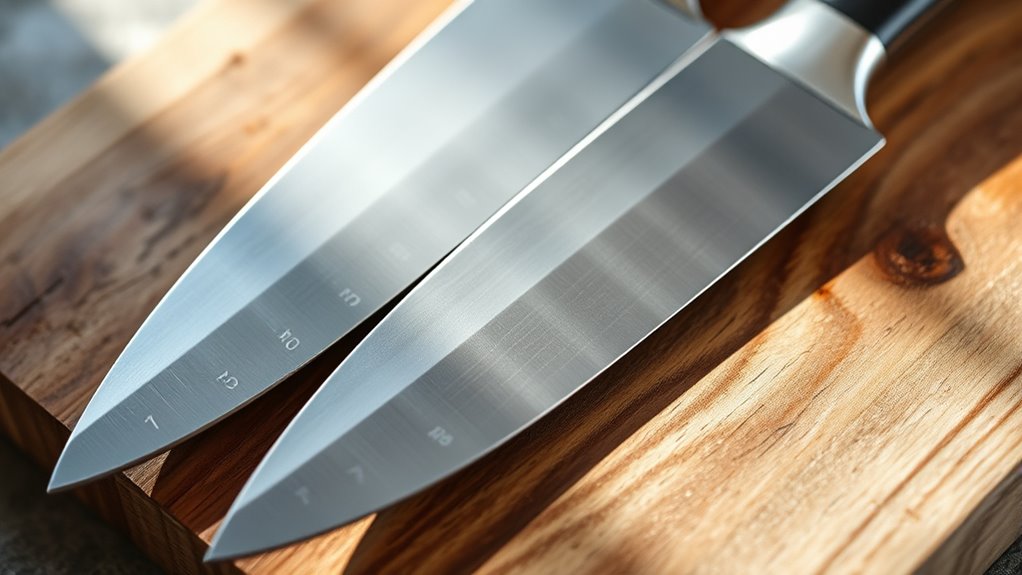
Balance and weight distribution are essential factors that influence how comfortably and efficiently you can handle a mid-range chef knife. The weight distribution determines whether the knife feels balanced in your hand, affecting control and fatigue. The key is the balance point, typically located near the bolster or handle. A well-balanced knife allows you to apply pressure without strain, making chopping and slicing smoother. If the weight leans toward the blade, you’ll notice increased fatigue, while a handle-heavy knife may feel unwieldy. Choosing a knife with an ideal balance point helps you work longer with less effort. When evaluating mid-range options, pay close attention to how the weight is distributed, ensuring it aligns with your cutting style and hand comfort.
Precision and Sharpness Retention
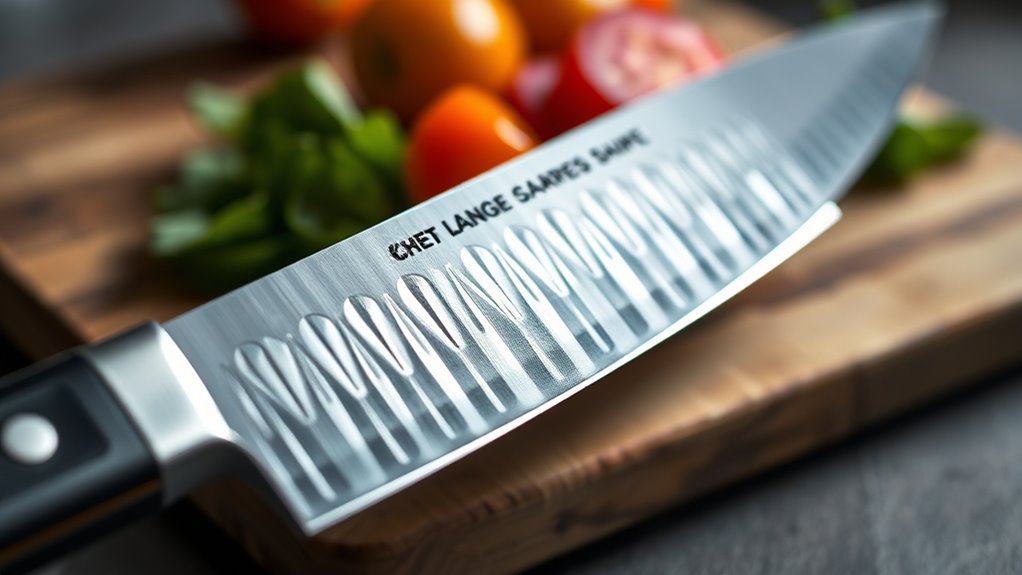
You’ll want a knife that stays sharp longer and maintains precision through every cut. Enhanced edge durability guarantees your blade resists dulling, saving you time and effort. With longer sharpness periods, you can rely on your knife to perform consistently, meal after meal.
Enhanced Edge Durability
Enhanced edge durability is essential for maintaining precision and sharpness over time, especially with mid-range chef knives. A durable blade edge ensures your knife retains sharpness longer, directly boosting cutting performance during busy kitchen tasks. When your blade edge resists dulling, you spend less time sharpening and more time preparing. Factors like high-quality steel and proper heat treatment improve durability, helping the knife withstand daily use. This means your cuts stay clean and precise, reducing the effort needed for each task. Investing in a knife with enhanced edge durability provides consistent performance, saves time, and maintains your confidence in the kitchen. With a tough blade edge, you’ll enjoy reliable cutting power and precision that lasts through countless meals.
- High-carbon stainless steel construction
- Advanced heat treatment processes
- Harder steel alloys for longevity
- Proper honing and sharpening techniques
- Resistance to corrosion and chipping
Longer Sharpness Period
Achieving longer sharpness retention is essential for maintaining consistent cutting performance with your mid-range chef knife. When your blade has excellent flexibility, it adapts better to different ingredients, reducing unnecessary stress that dulls the edge. This flexibility helps the blade maintain its sharpness longer, so you don’t need to sharpen it frequently. Additionally, handle aesthetics play a role, as a well-designed handle provides better control, minimizing miscuts that can chip or dull the blade. A quality handle also encourages proper technique, which supports the knife’s longevity. Combined, blade flexibility and an appealing handle aesthetic ensure your knife stays sharper for extended periods, making your prep work easier, safer, and more efficient over time.
Customization and Aesthetic Details
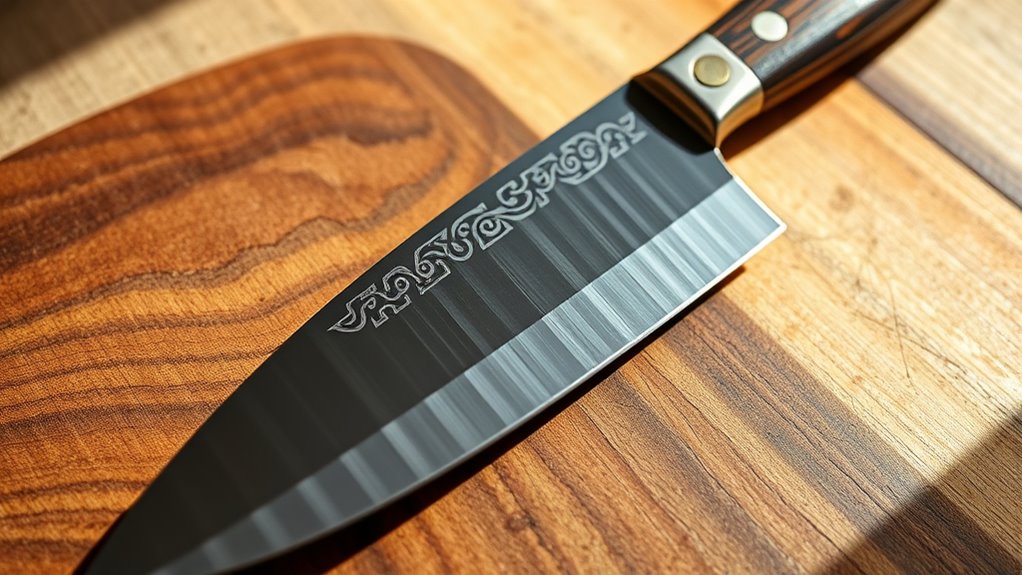
Customization options allow you to personalize your mid-range chef knife to better suit your style and preferences. You can choose from a variety of aesthetic color options to make your knife stand out in the kitchen. Additionally, personalized engravings add a unique touch, turning your knife into a one-of-a-kind piece or a thoughtful gift. These details not only enhance visual appeal but also reflect your personality and culinary identity. Many brands offer options like custom handle materials, decorative patterns, or laser-engraved logos. Whether you prefer sleek, modern designs or traditional motifs, customization helps you craft a knife that feels truly yours. These aesthetic details elevate your kitchen experience, making your daily prep more enjoyable and visually satisfying.
Brand Reputation and Warranty Policies

When choosing a mid-range chef knife, it’s important to take into account the brand’s reputation and warranty policies. A brand with strong prestige often indicates consistent quality and customer satisfaction, giving you confidence in your purchase. Look for brands known for their craftsmanship and positive reviews, as this reflects their commitment to reliability. Warranty coverage is equally essential; a good warranty protects you against defects and manufacturing issues, saving you money and hassle down the line. Some brands offer detailed warranties that cover repairs or replacements, ensuring your investment remains protected. Ultimately, prioritizing reputable brands with solid warranty policies helps you select a knife that combines quality, durability, and peace of mind.
Maintenance and Care Requirements

Maintaining your mid-range chef knife properly guarantees it performs well and lasts for years. Regular care includes hand washing and drying immediately afterward to preserve the blade’s sharpness. Avoid dishwasher safety; dishwashers can dull blades and cause damage. Use proper storage solutions, like a knife block or magnetic strip, to prevent nicks and maintain edge integrity. Hone your knife regularly with a honing steel to realign the edge, and occasionally sharpen it with a whetstone or professional service. Keep the blade dry to prevent rusting, especially with high-carbon steel knives. Handle with care, avoiding cutting on hard surfaces like glass or stone. Proper maintenance ensures your investment remains sharp, safe, and ready for any culinary challenge.
Overall Value and Long-Term Durability
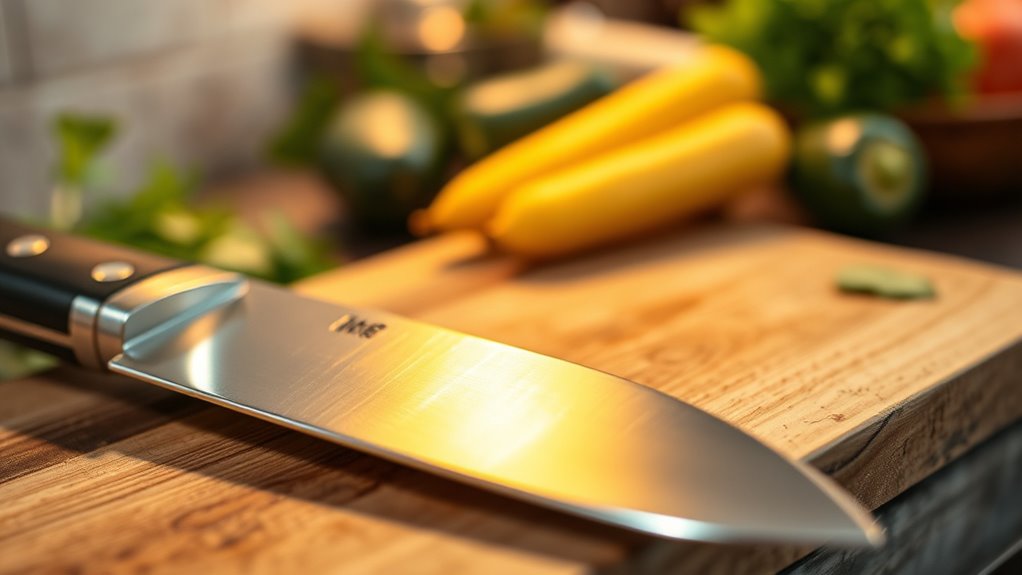
Mid-range chef knives offer an excellent balance of quality and affordability, making them a smart investment for both home cooks and aspiring professionals. Their overall value depends on durability and how well they maintain performance over time. Blade thickness plays a key role; thicker blades often provide strength and support, while handle design affects comfort and control. A well-designed handle ensures safety and reduces fatigue during prolonged use. Investing in a knife with sturdy materials and thoughtful construction means you’ll enjoy consistent cuts and longevity. Below is a comparison that highlights these features:
| Feature | Benefits |
|---|---|
| Blade Thickness | Enhances strength and stability |
| Handle Design | Improves grip, safety, and comfort |
| Material Quality | Ensures durability and corrosion resistance |
| Edge Retention | Maintains sharpness longer |
| Overall Build | Contributes to long-term performance and value |
Frequently Asked Questions
How Do Mid-Range Knives Compare to High-End Professional Options?
Mid-range knives perform well but slightly lag behind high-end professional options in edge retention and overall sharpness. You’ll find they require regular knife maintenance to keep them in top shape, especially since high-end blades often use superior steel. Also, the knife handle materials in mid-range options are durable but may not match the premium comfort and grip of high-end knives. Overall, you get good value, but professional-grade knives excel in longevity and craftsmanship.
Are There Specific Brands Known for Best Mid-Range Chef Knives?
Like a trusted compass, certain brands stand out for mid-range chef knives. Consider Victorinox, known for their durable, high-quality stainless steel, and Wüsthof, praised for excellent craftsmanship and material quality. These brands have strong reputations for balancing affordability with performance. You’ll find that their knives offer great edge retention and comfort, making them reliable choices without breaking the bank. Trust these names to elevate your cooking without the premium price tag.
What Features Should I Prioritize for Home Cooking Versus Professional Use?
For home cooking, prioritize an ergonomic handle for comfort and a durable blade material like high-carbon stainless steel for easy maintenance. You don’t need the same level of precision or durability as a professional, so focus on balance and ease of use. For professional use, opt for a knife with a high-quality blade material capable of withstanding heavy daily use and an ergonomic handle for prolonged comfort during long shifts.
Can Mid-Range Knives Be Customized or Personalized?
Yes, mid-range knives can be customized or personalized. You can choose personalized handles to match your style or add a unique touch, making your knife more comfortable and visually appealing. Additionally, many brands offer options for custom engravings, whether it’s your name, a special message, or a logo. These customizations add a personal touch, making your knife truly unique and enhancing your overall cooking experience.
How Do I Identify Genuine Quality Versus Overhyped Features?
Think of a quality knife as a finely tuned orchestra; genuine craftsmanship sings through every note. To spot real quality, examine the knife handle materials—sturdy, well-finished handles show durability. Check the blade’s steel quality and learn proper sharpening techniques, which reveal if the edge maintains sharpness over time. Overhyped features often ignore these core aspects, so focus on the basics and trust your hands to tell the difference.
Conclusion
Investing in a mid-range chef knife up to $500 is like choosing a reliable compass in a bustling kitchen—guiding your skills with precision and confidence. With quality materials, expert craftsmanship, and thoughtful design, you’ll carve through tasks effortlessly, turning everyday cooking into a culinary dance. Think of it as a trusted partner that sharpens your craft and endures the test of time, making each meal a masterpiece you’re proud to serve.