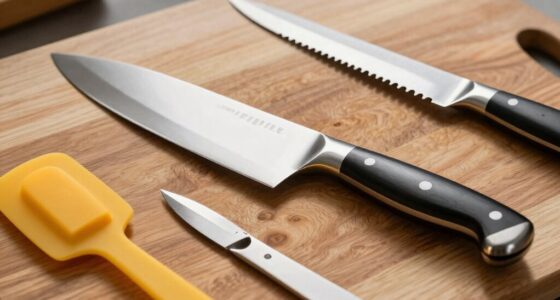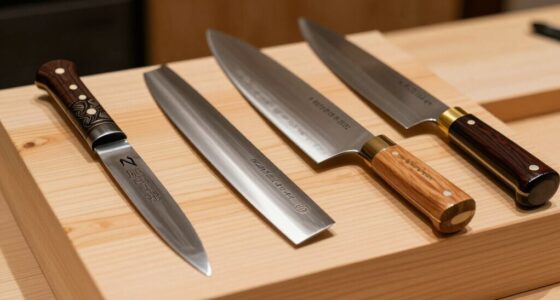
When shopping for knives, ignore marketing buzzwords like “cutting edge,” “premium quality,” and “professional-grade,” as they’re often vague or unsubstantiated. These phrases are designed to persuade rather than inform, so focus instead on actual features like steel type, craftsmanship, and handle design. Recognizing these common sales tactics helps you make smarter choices. Stick around, and you’ll discover how to identify true quality and avoid being fooled by empty claims.

Get kitchen gear delivered free — and shop member deals
- Fast, free delivery on millions of items
- Access to Prime Big Deal Days deals on October 6–7
- Prime Video, Amazon Music and more included
Key Takeaways
- Terms like “cutting edge” and “premium quality” are often vague and unsubstantiated marketing hype.
- Focus on specific features like steel type, craftsmanship, and handle design instead of broad claims.
- “Professional-grade” can be misleading; verify actual performance and build quality.
- Marketing buzzwords typically aim to persuade, not inform, so rely on concrete product details.
- Trust reviews and manufacturer info over vague promotional language for better knife choices.

When shopping for a knife, you might notice a flurry of marketing words promising superior quality or ultimate performance. Terms like “cutting edge,” “premium quality,” and “professional-grade” are thrown around to catch your attention. While these words can seem convincing, they often serve more to persuade than to inform. It’s essential to recognize that such phrases are often marketing buzzwords, not necessarily indicators of a better knife. Just because a knife boasts “cutting edge” technology doesn’t mean it’s the best choice for your kitchen. The same goes for “premium quality” — it’s a vague term that can be used to elevate even average products.
Beware marketing buzzwords; focus on actual features like steel quality and craftsmanship for better knife choices.
A lot of these words aim to create a perception of innovation and superiority, but that doesn’t mean every knife labeled as “cutting edge” actually has the latest technology. Sometimes, it’s just a marketing term used to make a product sound more advanced than it really is. You should be wary of claims that sound too good to be true, especially when they’re not backed up by specific features or certifications. Instead of getting caught up in the hype, focus on the actual material, balance, and craftsmanship of the knife. These qualities often matter more than marketing claims.
Similarly, “premium quality” is a phrase that can be applied to a wide range of knives, from high-end to mid-range. It’s a vague label that’s often used to justify a higher price without offering concrete reasons why the product is notably better. Don’t let this marketing word sway your decision—look for detailed information about the steel type, handle construction, and edge retention. These specifics give you a clearer picture of the knife’s true quality and performance rather than relying on broad, unsubstantiated claims. Understanding the material composition of a knife can help you gauge its durability and performance more effectively. This is especially important because manufacturing processes can vary greatly and impact the final product. A well-made knife relies on consistent quality control to ensure it performs as advertised.
In the end, the words you should pay more attention to are those describing the actual features—like the steel grade, handle ergonomics, and the manufacturer’s reputation. These details tell you more about how the knife will perform and how long it will last. The marketing words are designed to appeal to your emotions, but your decision should be based on facts. Recognize that phrases like “cutting edge” and “premium quality” are often just buzzwords meant to persuade, not inform. Focus on what truly matters, and you’ll make a smarter choice. Additionally, seeking honest reviews from trusted sources can provide real-world insights into the performance of a knife beyond marketing claims.
As an affiliate, we earn on qualifying purchases.
Frequently Asked Questions
Are These Marketing Words Harmful to Consumers?
These marketing buzzwords can be harmful to you, as they often create false expectations and manipulate consumer trust. When you encounter exaggerated or vague language, it might lead you to make impulsive decisions or overpay for a product. By ignoring these words and focusing on clear, honest descriptions, you protect yourself from deception and build genuine consumer trust, ensuring you make informed, confident choices.
How Can I Identify Genuine Knife Quality?
To identify genuine knife quality, focus on knife craftsmanship and material authenticity. Look for knives with a solid, well-forged construction and a full-tang design, which indicate better durability. Check the material—high-quality steel or Damascus patterns suggest authenticity and sharpness retention. Avoid flashy marketing words; instead, examine the knife’s weight, balance, and brand reputation. Authentic knives prioritize craftsmanship and honest materials, ensuring you get a reliable, long-lasting tool.
Do These Words Influence Pricing Strategies?
Yes, these words influence pricing strategies. You’ll notice that brand names and marketing tactics can lead to price inflation, making knives seem more valuable than they are. Effective branding tactics create perceived quality, allowing sellers to charge higher prices. As a buyer, you should be cautious, recognizing that some words are designed to boost perceived value, not necessarily reflect actual quality.
Are There Legal Regulations on Knife Marketing Language?
Yes, there are legal restrictions on marketing language for knives. You need to follow regulations that prevent deceptive or misleading claims, especially about safety or effectiveness. Authorities like the Federal Trade Commission (FTC) and Consumer Product Safety Commission (CPSC) set rules to ensure truthful advertising. Make certain your marketing language complies with these laws to avoid penalties and maintain trust. Always review local and federal regulations before promoting your knives.
How Do Experienced Chefs Perceive These Marketing Terms?
You might think experienced chefs take marketing terms at face value, but they see through branding illusions and sales tactics. They understand that exaggerated words like “razor-sharp” or “professional-grade” are often just marketing tricks. Instead of relying on flashy language, they focus on a knife’s true performance and craftsmanship. For them, genuine quality speaks louder than sales tactics, and they can spot the difference easily.
As an affiliate, we earn on qualifying purchases.
Conclusion
Just like the sirens’ tempting songs, many marketing words for knives lure you in with promises that often fall flat. Don’t let the hype blind you—trust your own instincts and focus on what truly matters: quality, craftsmanship, and your needs. Remember, even Odysseus knew when to resist the siren’s call. Cut through the noise and choose a knife that genuinely serves you, not just one that’s loudest in the marketing chorus.
As an affiliate, we earn on qualifying purchases.
As an affiliate, we earn on qualifying purchases.
Evergreen bestsellers Picks
bestsellers
As an affiliate, we earn on qualifying purchases.