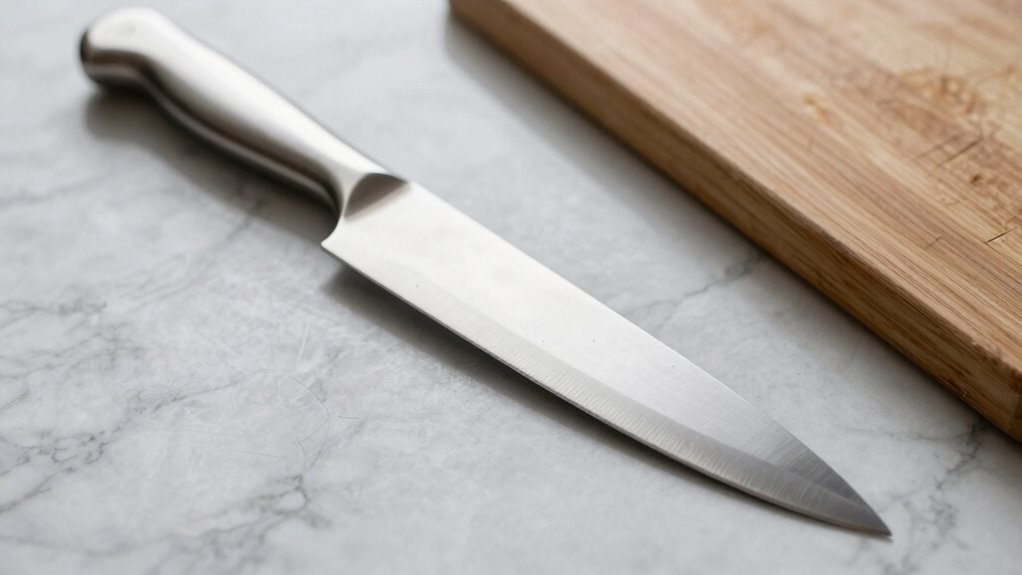
To tell if a knife is too fragile for your habits, consider its material and hardness—softer blades like ceramic are more prone to chipping if you do heavy chopping. Look for signs of wear such as cracks or dents, and test its flexibility by gently bending the blade; delicate blades will bend or snap easily. Keep in mind your typical tasks, and if a knife shows signs of fragility, it may not suit your needs—more details will help you choose wisely.

Get kitchen gear delivered free — and shop member deals
- Fast, free delivery on millions of items
- Access to Prime Big Deal Days deals on October 6–7
- Prime Video, Amazon Music and more included
Key Takeaways
- Check the blade material; ceramic and carbon steel are more prone to chipping under heavy use.
- Observe if the blade chips, cracks, or shows signs of damage after regular tasks.
- Consider your cooking habits—frequent chopping and dicing require more durable blades.
- Test flexibility; a fragile knife may bend or snap when subjected to pressure.
- Review manufacturer guidelines on blade hardness and recommended usage for your knife type.
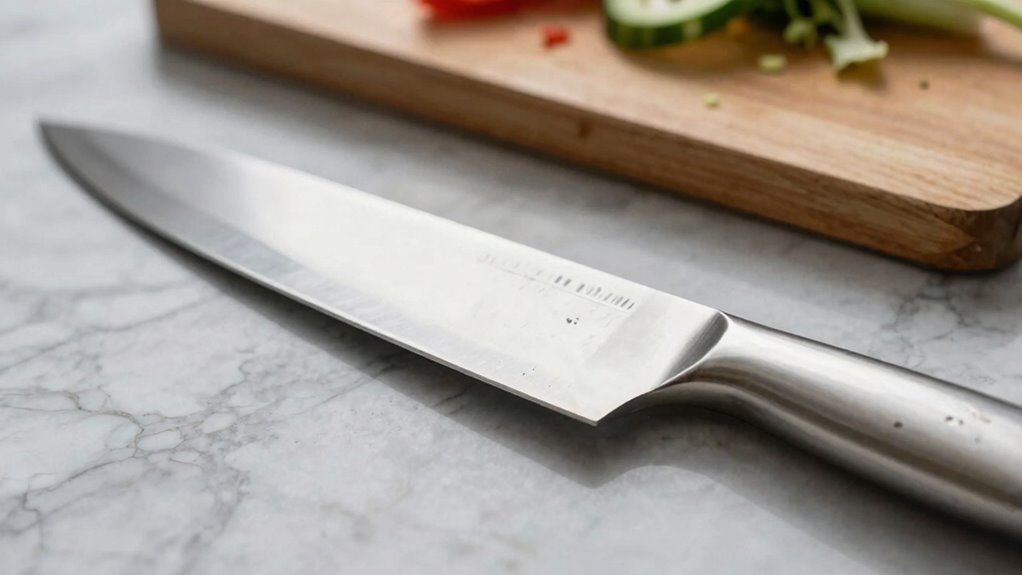
Choosing the right knife can considerably impact your cooking experience, but if the blade is too fragile, it may not withstand your daily habits. The key to selecting a durable knife lies in understanding blade materials. High-quality materials like stainless steel, carbon steel, or ceramic often produce blades that can handle rigorous use without chipping or breaking. Stainless steel is popular because it’s resistant to rust and corrosion, making it suitable for everyday tasks. Carbon steel blades are renowned for their sharpness and edge retention but can be more prone to damage if not cared for properly. Ceramic knives, while extremely hard and sharp, tend to be more delicate and susceptible to chipping or breaking if dropped or used improperly. Knowing the strengths and weaknesses of these blade materials helps you determine whether a knife can keep up with your habits, especially if you frequently chop, dice, or carve. It’s also helpful to understand how blade hardness impacts a knife’s resilience and performance under demanding conditions. Additionally, understanding the impact of material properties can guide you in selecting a knife that balances durability and performance for your specific cooking style. For example, some blade materials may be more vulnerable to chipping and cracking under heavy use, so knowing this can help you make a more informed choice. Moreover, considering how blade flexibility affects the overall stability of the knife during use can prevent accidental breakage and improve safety.
Beyond understanding blade materials, safety precautions are crucial to prevent damage to the knife and avoid injury. A fragile knife can become a hazard if you’re not cautious, so always handle it with care. Avoid using excessive force when cutting, as this can cause a delicate blade to chip or snap. Properly sharpening and honing your knife also plays a role in maintaining its integrity; dull blades require more pressure and increase the risk of breakage. When washing and storing your knife, use a soft cloth and avoid stacking it with other utensils that might scratch or weaken the blade. Don’t put fragile knives in the dishwasher—hot water, detergent, and jostling can compromise blade materials over time. Instead, wash by hand and dry thoroughly to prevent corrosion and damage. Regularly inspecting your knives for signs of wear is also advisable to ensure they remain safe and functional.
As an affiliate, we earn on qualifying purchases.
Frequently Asked Questions
Can a Knife’s Fragility Improve Its Cutting Precision?
Yes, a knife’s fragility can improve its cutting precision if it offers ideal blade flexibility, allowing smoother cuts through delicate ingredients. However, if the handle isn’t stable, it can hinder control and cause mishaps. You want a blade that’s slightly flexible but still sturdy, paired with a handle that provides solid grip and stability. Balance these factors to enhance your cutting accuracy without risking breakage or loss of control.
How Does Knife Material Affect Its Fragility?
Your knife’s material greatly influences its fragility, with blade composition playing a key role. High-quality materials like stainless steel or carbon steel usually offer better durability, reducing the risk of breakage during use. Softer metals may be more fragile, making them prone to chipping or bending. To guarantee your knife withstands your habits, choose a blade with solid material durability suited to your cutting tasks, avoiding overly fragile options.
Are Fragile Knives Suitable for Professional Chefs?
Fragile knives are like delicate glass—they’re not ideal for professional chefs who need durability. You should prioritize knife durability for safety considerations; a fragile blade can chip or break, risking injury or damage during busy kitchen work. While they might excel in precision tasks, they often lack the robustness required for heavy-duty use. For safety and efficiency, choose a knife built to withstand the demands of professional culinary environments.
How Long Does a Fragile Knife Typically Last?
A fragile knife typically lasts around 1 to 3 years, depending on your usage and care. If you frequently cut hard materials or don’t handle it carefully, its longevity decreases. Durability concerns arise because fragile knives are more prone to chipping or breaking. To extend knife longevity, avoid excessive force, hand wash gently, and store properly. Recognize signs of wear early to prevent sudden breakage and guarantee safe, effective use.
Can Fragile Knives Be Safely Repaired or Reinforced?
You can often reinforce fragile knives with proper knife reinforcement techniques, but safety precautions are essential. Use epoxy or specialized adhesive to strengthen weak points, ensuring you follow manufacturer instructions. If the knife’s integrity is markedly compromised, it’s safer to replace it rather than risk injury. Always wear protective gloves and work in a well-ventilated area during reinforcement. When in doubt, consult a professional for repair options.
As an affiliate, we earn on qualifying purchases.
Conclusion
In the end, choosing the right knife is like finding a trusty sidekick for your kitchen adventures. If your knife keeps chipping or bending, it’s crying out for help — and your habits might be too rough for its delicate spirit. Don’t settle for a fragile blade that can’t keep up; otherwise, you risk turning your culinary dreams into a disaster zone. Pick wisely, or prepare for a kitchen catastrophe of epic proportions!
As an affiliate, we earn on qualifying purchases.
As an affiliate, we earn on qualifying purchases.
Fall Picks
fall essentials
As an affiliate, we earn on qualifying purchases.