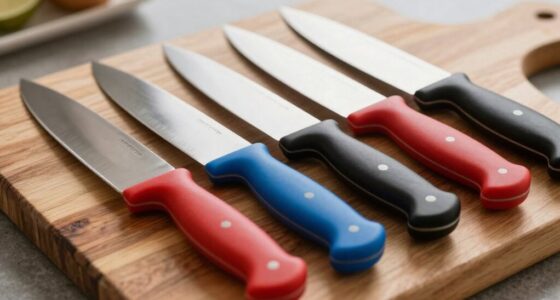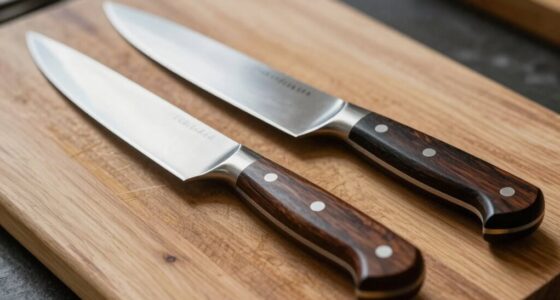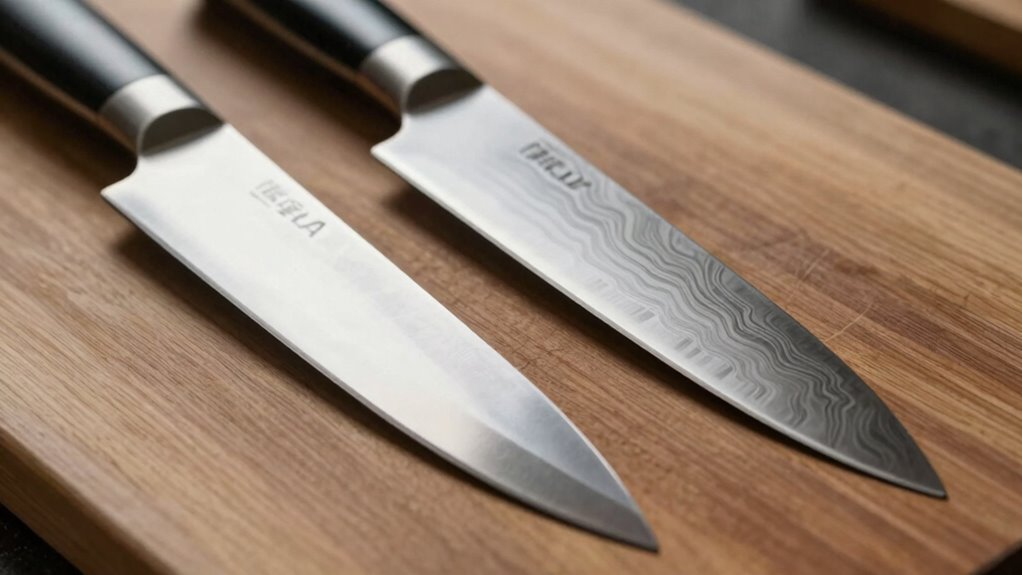
Switching between German and Japanese chef knives changes how you handle and control your cuts. With a Japanese knife, you’ll notice a lighter, more precise feel, encouraging finesse and delicate slicing. A German knife offers a more balanced, sturdy grip, ideal for powerful chopping and heavy-duty tasks. These differences influence your technique, confidence, and safety. To master each style’s unique approach and optimize your skills, explore further to discover the subtle yet impactful distinctions.
Key Takeaways
- Japanese knives offer lightweight, balanced handling that enhances precision, finesse, and agility in cutting techniques.
- German knives provide a more stable, robust feel, supporting powerful chopping and heavy-duty tasks with added control.
- Handle design influences grip comfort and control, affecting how comfortably and accurately you maneuver the knife.
- Blade geometry and bevel angles change the force needed and control, impacting technique and safety during use.
- Overall, the knife’s build and balance influence your comfort, control, and confidence in executing various culinary tasks.

HOSHANHO Kitchen Knife in Japanese High Carbon Steel, Professional High-Class Chef's Knife 8 inch, Non-slip Ultra Sharp Cooking Knives with Ergonomic Handle
【High-End Japanese Steel Chef's Knife】 HOSHANHO chef's knife is made of Japanese high carbon steel 10Cr15CoMoV, 2x of…
As an affiliate, we earn on qualifying purchases.
As an affiliate, we earn on qualifying purchases.
The Design Philosophy Behind German and Japanese Knives

While both German and Japanese knives are crafted for precision, their design philosophies reflect very different approaches to cooking. German knives typically feature a more pronounced blade curvature, which makes rocking cuts and slicing easier, emphasizing versatility. Their handles prioritize ergonomics with a focus on comfort for prolonged use, often larger and more robust to provide a secure grip. In contrast, Japanese knives usually have a straighter blade with minimal curvature, optimized for precise, straight cuts. Handle designs tend to be slimmer and more lightweight, enhancing control and agility. This reflects a philosophy that values precision and finesse over brute force. Additionally, the attention to detail in craftsmanship ensures each knife meets high standards of quality, catering to different culinary needs. Many Japanese knives are crafted using traditional methods that focus on blade geometry, which influences their cutting performance and sharpness. The craftsmanship involved often includes meticulous hand-finishing techniques that contribute to their superior edge retention. Understanding these differences helps you choose a knife that aligns with your cooking style and comfort preferences.
HOSHANHO Kitchen Knife in Japanese High Carbon Steel, Professional High-Class Chef's Knife 8 inch, Non-slip Ultra Sharp Cooking Knives with Ergonomic Handle
【High-End Japanese Steel Chef's Knife】 HOSHANHO chef's knife is made of Japanese high carbon steel 10Cr15CoMoV, 2x of…
As an affiliate, we earn on qualifying purchases.
As an affiliate, we earn on qualifying purchases.
Material Composition and Its Impact on Performance

Your choice of steel substantially affects how well a knife holds its edge and resists corrosion. German knives often use high-carbon stainless steel, while Japanese knives typically feature high-quality carbon steels with different alloy compositions. Understanding these differences helps you select a knife that best matches your performance needs and maintenance preferences. Additionally, the piercing care and hygiene practices used for body piercings highlight the importance of choosing materials that are biocompatible and resistant to corrosion, much like selecting the right steel for optimal knife performance. Recognizing the European cloud innovation in material development can further inform your decision, ensuring durability and safety in your tools. Moreover, advancements in metal alloy technology enable manufacturers to produce steels with improved strength and corrosion resistance, benefiting both culinary and industrial applications.
Steel Types and Quality
Steel quality plays a crucial role in determining the performance and durability of German and Japanese chef knives. Metal hardness influences how well a knife holds its edge and resists chipping, so higher hardness typically means a sharper, longer-lasting blade. Japanese knives often use high-carbon steel, which can be very hard but may require more maintenance. German knives usually incorporate softer steel layers, making them more flexible and easier to sharpen. Steel layering also impacts performance; layered steel, or Damascus, combines different steel types for strength and aesthetic appeal. This layering can improve flexibility and resistance to damage while maintaining a sharp edge. Ultimately, understanding steel types and quality helps you choose a knife that matches your cooking style and maintenance preferences.
Impact on Edge Retention
The material composition of a chef’s knife directly influences how well it retains its edge during use. Steel hardness plays a key role; harder steels typically hold an edge longer but can be more brittle. Japanese knives often feature higher hardness levels, which improve edge retention but require more delicate sharpening techniques to avoid chipping. German knives, with slightly softer steel, may need more frequent sharpening but are often easier to maintain without risking damage. Your sharpening approach impacts edge retention as well—using proper, consistent techniques helps maximize the steel’s potential. Detecting passive voice can help ensure clarity and active sentence structure in your writing. Additionally, advancements in AI-driven solutions are revolutionizing how we understand and optimize material performance in cutlery. For example, material science innovations are enabling manufacturers to develop steels with ideal combinations of hardness and toughness, enhancing overall durability. Incorporating advanced manufacturing techniques further improves the consistency and quality of the steel used in high-performance knives. Ultimately, choosing a knife with the right steel hardness for your skill and cutting style ensures better edge longevity and performance in your kitchen.
Corrosion Resistance Differences
Japanese knives often feature high-carbon steels that excel in edge retention but are more susceptible to corrosion if not properly cared for. Their rust resistance is lower compared to German knives, which typically use stainless steels with added chromium for better corrosion resistance. This means you’ll need to be more diligent with maintenance, such as drying the knife immediately after use and periodically oiling it. German knives generally offer easier maintenance because their steel composition naturally resists rust, making them more forgiving for everyday use. Understanding these differences helps you choose a knife that matches your cooking style and willingness to perform regular upkeep. While Japanese knives demand careful handling, their superior edge retention can outweigh the need for extra maintenance if you’re committed to proper care.

Rondauno Sashimi Knife Yanagiba Sushi Knife 10 inch Japanese High Carbon Stainless Steel for Precision Fish Slicing and Filleting with Ergonomic Wooden Handle
First Quality Steel: Our sashimi knives are made from high carbon Japanese stainless steel, offering excellent corrosion resistance…
As an affiliate, we earn on qualifying purchases.
As an affiliate, we earn on qualifying purchases.
Blade Geometry and Its Effect on Cutting Techniques
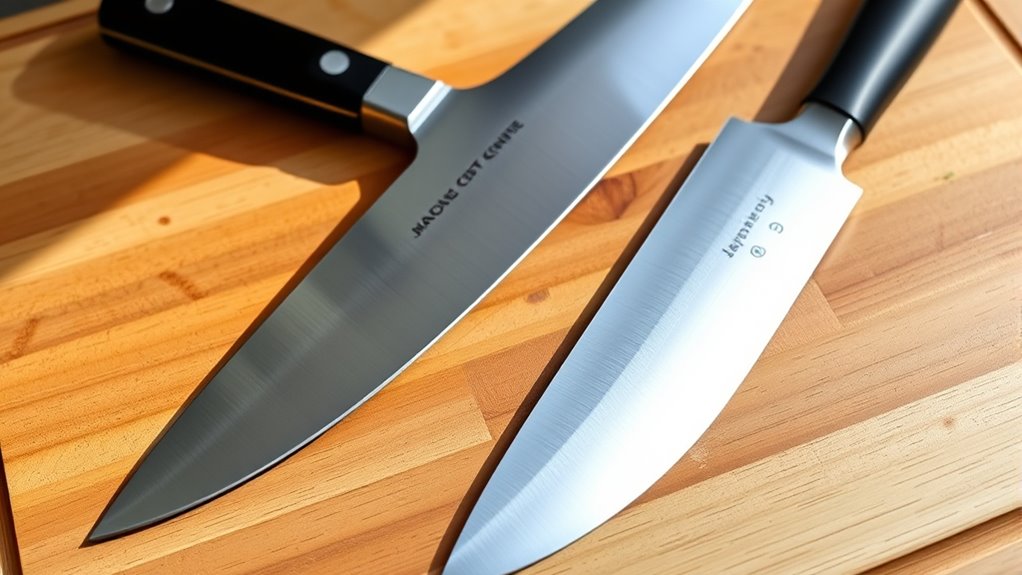
Blade geometry plays a crucial role in determining how effectively you can execute different cutting techniques. The blade shape influences the ease of slicing and precision—Japanese knives often have a thinner, more tapered profile, enhancing delicate cuts, while German blades tend to be broader for heavier chopping. The bevel angle also matters: a sharper, narrower bevel (around 15 degrees) on Japanese knives creates a finer edge ideal for precision work but may require more care. Conversely, a wider bevel (around 20 degrees) on German knives offers durability and strength for tougher tasks. Your choice of blade geometry impacts the force needed, control, and overall technique. Understanding these differences helps you select the right knife for specific tasks, improving efficiency and safety in the kitchen. Regular practice and familiarity with blade geometry and its impact on performance can further improve your cutting skills and technique mastery. Additionally, being aware of how blade angle influences edge retention can guide your maintenance routines, and knowing the differences in steel composition can help you choose knives that match your durability needs.

Mueller 7-Inch Meat Cleaver Butcher Knife – German High Carbon Steel, Laser-Tested Razor-Sharp Blade, Heavy Duty Bone Chopper for Meat & Vegetables, Home & Restaurant, Gift for Him
LASER-TESTED GERMAN STEEL EDGE — Mueller's 7-inch cleaver is precision-forged from premium high-carbon German stainless steel and hand-sharpened…
As an affiliate, we earn on qualifying purchases.
As an affiliate, we earn on qualifying purchases.
Weight Distribution and Balance in Hand
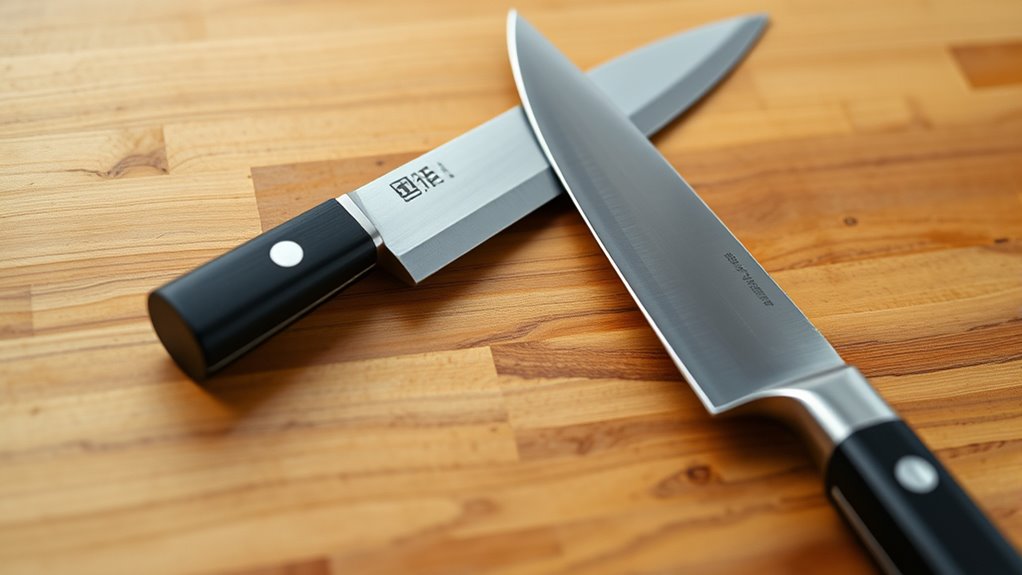
When choosing a chef knife, understanding how weight distribution and balance feel in your hand can markedly improve your cutting precision. A well-balanced knife with proper handle ergonomics allows for effortless control, reducing fatigue during extended use. Japanese knives often have a forward-weighted balance, making them feel nimble, while German knives tend to be more balanced or slightly handle-heavy for stability. To visualize, consider this:
| Knife Type | Balance Point | Handle Ergonomics |
|---|---|---|
| Japanese | Near the blade | Slim, lightweight |
| German | Closer to handle | Larger, contoured |
This balance influences your grip and maneuverability. An ergonomic grip ensures comfort, helping you apply force precisely where needed, without strain. Your hand’s feel for the knife’s weight distribution directly impacts your control and efficiency. Proper knife maintenance also plays a vital role in preserving balance and performance over time, ensuring your knife remains well-balanced and reliable during use. Additionally, understanding the performance metrics of different knife types can help you select the best tool for your needs.
Edge Sharpness and Maintenance Requirements
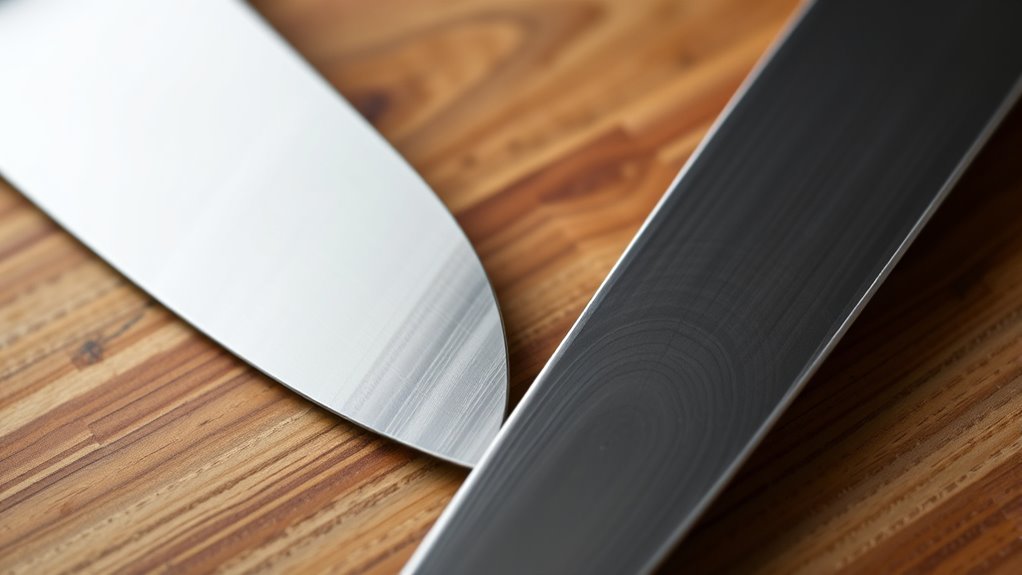
Edge sharpness directly impacts your cutting precision and efficiency. A sharper knife slices through ingredients with less effort and more control, enhancing your overall technique. Japanese knives often maintain their edge longer due to their harder steel, but require careful honing and sharpening to preserve blade aesthetics. German knives, with softer steel, tend to dull faster and need more frequent sharpening, affecting their brand reputation for durability. Keeping your knife sharp involves proper tools and techniques, ensuring minimal damage to the blade. Regular maintenance not only prolongs sharpness but also keeps the knife looking its best. Additionally, steel hardness plays a significant role in how long each knife stays sharp, influencing maintenance routines and performance expectations. Proper care extends the lifespan of your knives, ensuring they remain effective and safe to use over time. Using the correct sharpening techniques can also make a substantial difference in maintaining the edge quality and longevity. Proper care sustains brand reputation and performance, and understanding the materials used can help you choose the right maintenance approach. Being aware of blade geometry can also optimize cutting performance and longevity.
Handling and Control: How Each Knife Influences Technique
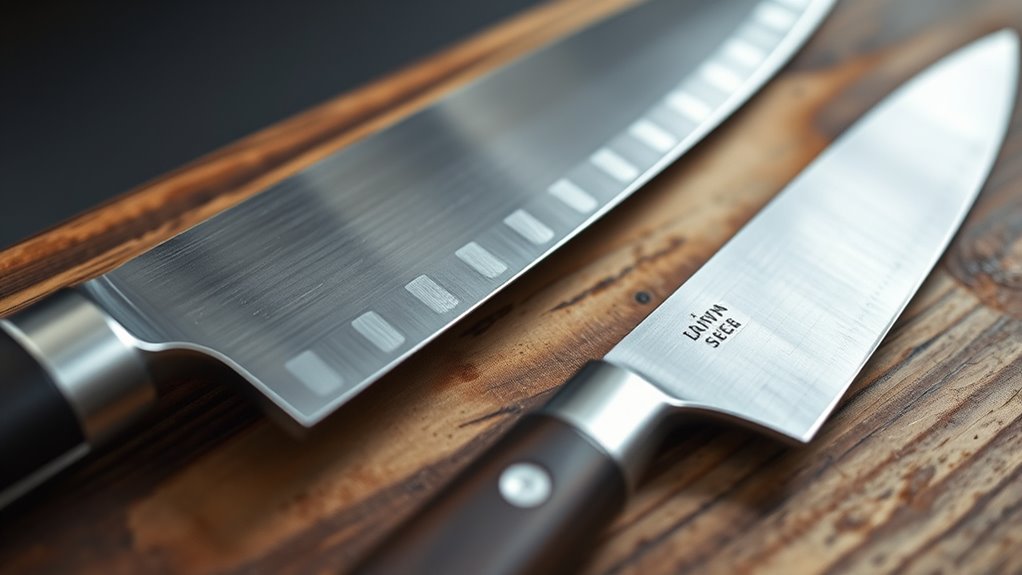
Your technique depends heavily on the knife’s balance and weight distribution, which affects how comfortably you control your cuts. The grip and handle design also play a vital role, influencing your precision and ease of movement. Additionally, the way each knife guides your cutting motion impacts your flow and efficiency in the kitchen.
Balance and Weight Distribution
Balance and weight distribution are crucial factors that directly affect how comfortable and precise you are when handling a chef’s knife. A well-balanced knife offers ergonomic comfort, reducing fatigue during long tasks, and enhances your control. Japanese knives often have a center-balanced design, giving you a sense of agility and finesse. German knives tend to be heavier towards the handle, providing stability and power for tougher cuts. Consider these aspects:
- Feel of the knife in your hand: Is it balanced or tip-heavy?
- Visual aesthetics: Does the design look sleek and harmonious?
- Ease of control: Can you maneuver it smoothly without strain?
- Precision in cuts: How well does the weight distribution support your technique?
- Understanding weight distribution principles can help you select a knife that truly matches your handling style.
Choosing the right balance improves your technique and makes your culinary tasks more enjoyable.
Grip and Handle Design
The design of the handle considerably influences how comfortably and precisely you can control each cut. An ergonomic grip ensures your hand feels natural, reducing fatigue during extended use and enhancing precision. Japanese knives often feature slimmer, lighter handles made from lightweight materials like wood or resin, promoting a delicate, agile grip. German knives typically have thicker, more robust handles crafted from durable materials such as polymer or wood, offering a secure, confident hold. The handle material also affects grip stability, with textured surfaces providing better control, especially when your hands are wet. Ultimately, the handle design shapes your technique, making it easier to perform delicate or forceful cuts with confidence. Choosing the right handle depends on your hand size, comfort, and cutting style.
Cutting Motion and Flow
Japanese knives are designed for precise, delicate cuts that require a smooth, flowing motion, making them ideal for tasks like thin slicing and julienning. The ergonomic grip and lightweight handle materials encourage a seamless, controlled technique. With a focus on finesse, your cutting flow becomes more natural, reducing fatigue and improving accuracy. You’ll notice that the handle shape promotes a fluid wrist movement, allowing your knife to glide effortlessly through ingredients. In contrast, German knives often promote a more forceful chopping motion due to their heavier, more robust handle design. To optimize your technique, consider these aspects:
- Smooth wrist movements enhance precision
- Handle materials influence grip comfort
- Ergonomic grip reduces fatigue
- Flow depends on handle balance and weight
Durability and Longevity: What to Expect Over Time
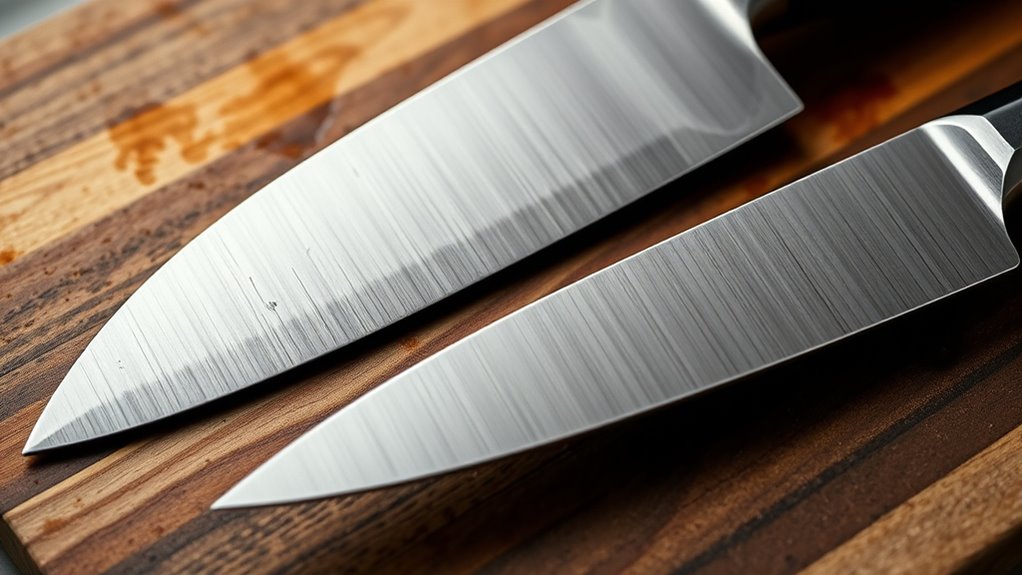
When it comes to durability and longevity, both German and Japanese chef knives are built to last, but they do so in different ways. German knives typically feature thicker blades, which provide more resistance to chipping and bending over time, ensuring they stay sharp longer under heavy use. Japanese knives often have thinner blades, which can be more delicate but maintain their edge with proper care. Handle ergonomics also play a role; a well-designed handle can prevent fatigue and damage, extending the knife’s lifespan. With regular sharpening and proper storage, you can expect both styles to serve you reliably for years. However, understanding these differences helps you choose the right knife for your needs and maintain it for maximum longevity.
Safety Considerations When Using Different Styles
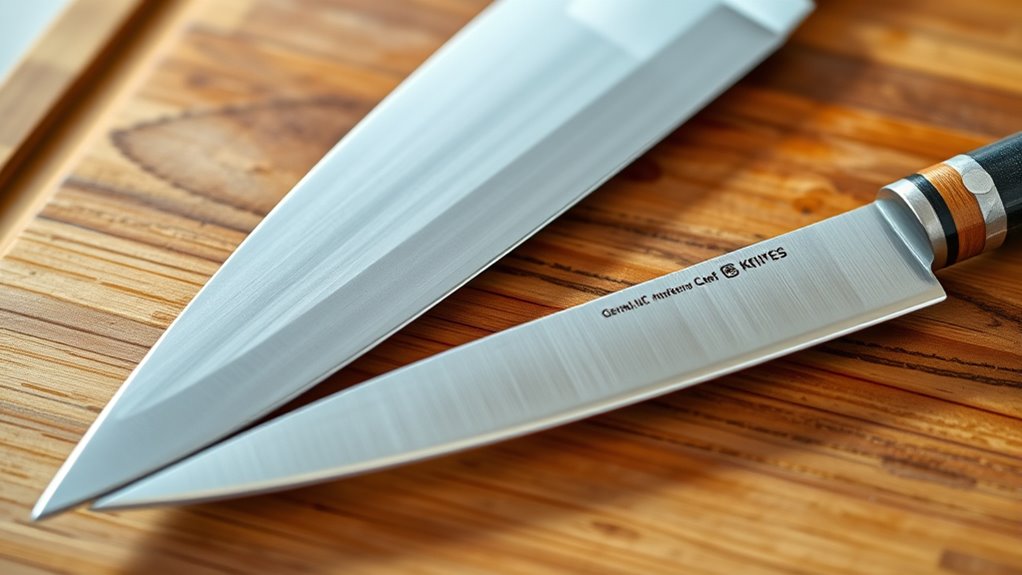
While both German and Japanese chef knives are designed for precision, safety considerations vary due to their differing constructions. You need to be mindful of handling techniques and storage to prevent accidents. Japanese knives, often thinner and sharper, require careful attention during use and sharpening techniques to avoid slips. German knives, with their sturdier build, are more forgiving but still demand proper grip and cutting angles. Proper knife storage is essential: use a knife block or magnetic strip to prevent dulling and accidental cuts. Keep your blades sharp; dull knives increase the risk of slips. Always cut away from your body and use a stable cutting surface. Regularly inspect and maintain your knives to guarantee safety during every use.
Choosing the Right Knife for Your Cooking Style
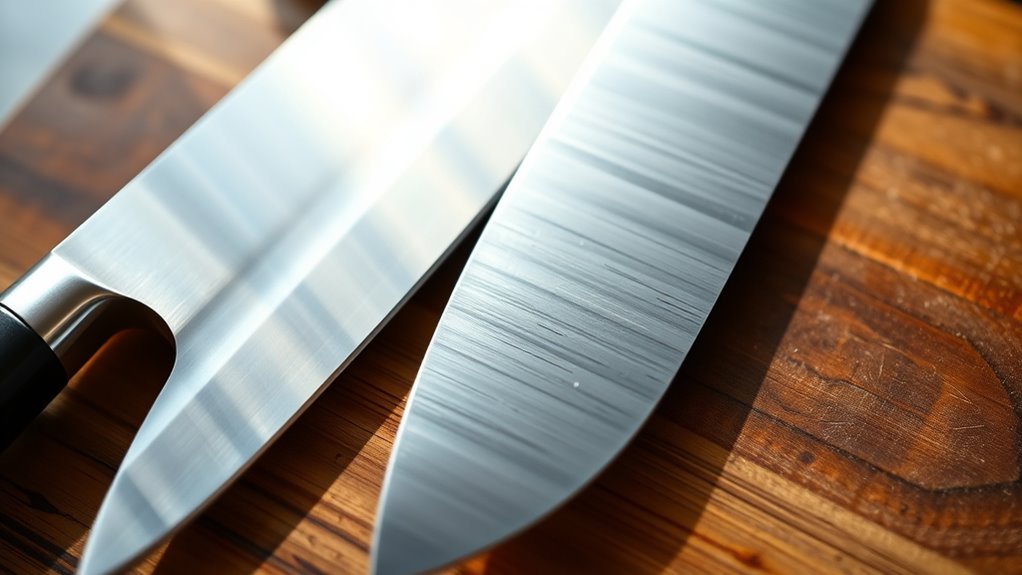
Choosing the right knife depends heavily on your cooking style and the types of dishes you prepare most often. If you focus on culinary artistry and intricate prep work, a Japanese knife with a sharp, precise edge may suit you best. Its lighter weight and fine balance enhance control, supporting delicate slicing and detailed work. On the other hand, if you prioritize kitchen ergonomics and tackle larger tasks like butchering or heavy chopping, a German knife with a sturdier build offers durability and comfort during extended use. Consider your preferred techniques and the knife’s feel in your hand. The right choice can elevate your skills, improve efficiency, and make cooking more enjoyable. Ultimately, selecting a knife aligned with your style fosters better culinary expression and confidence.
Frequently Asked Questions
How Do Cultural Cooking Styles Influence Knife Design Preferences?
Cultural influences shape your knife preferences by guiding design evolution to suit specific cooking styles. For example, Japanese knives feature thin, precise blades ideal for delicate slicing, reflecting their emphasis on presentation and finesse. In contrast, German knives are robust with thicker blades, perfect for heavy-duty tasks. These design differences directly align with culinary traditions, ensuring your tools enhance your technique and adapt seamlessly to cultural cooking styles.
Can a Chef Switch Between German and Japanese Knives Easily?
Yes, you can switch between German and Japanese knives, but it requires adjusting your knife grip and cutting technique. German knives often have a more traditional grip and a rocking cut, while Japanese knives typically favor a pinch grip and a slicing motion. Practice helps you adapt, allowing you to maintain precision and safety. With time, you’ll become comfortable using both, leveraging their unique advantages for different tasks.
What Training Is Recommended for Mastering Each Knife Style?
Think of mastering each knife style as learning a new dance. You should practice specific knifemaking techniques and refine your culinary skill development through classes or workshops tailored to German or Japanese knives. Start with foundational skills, then progress to style-specific techniques like precise slicing or rocking cuts. This focused training helps you develop dexterity, control, and confidence, enabling you to switch seamlessly between styles and elevate your culinary artistry.
How Do Maintenance Routines Differ for German Versus Japanese Knives?
You’ll find that maintenance routines differ mainly in blade sharpening and handle durability. For German knives, you should sharpen the blade less frequently but focus on preserving handle stability through gentle cleaning. Japanese knives require more frequent sharpening to keep their edges fine, and their handles often need careful cleaning to maintain durability. Regular honing and proper storage will help both, but tailoring your routine to each knife’s design ensures longevity.
Are There Health Considerations When Choosing Between These Knife Types?
When choosing between German and Japanese knives, consider health factors like ergonomic grip and knife weight. An ergonomic grip reduces strain on your hand and wrist, preventing discomfort and injuries. Japanese knives are often lighter, which can lessen fatigue during extended use, while German knives tend to be heavier, offering better control but potentially causing more strain. Select a knife that fits comfortably in your hand to support your health and efficiency in the kitchen.
Conclusion
So, whether you fancy German’s sturdy, weighty precision or Japanese’s nimble, razor-sharp finesse, just remember: your choice of knife isn’t about culinary enlightenment, but about which hand feels like it’s wielding a sword from a samurai epic or a German tank. Either way, you’re now armed—literally—to chop, slice, and dice your way through dinner, all while secretly dreaming of becoming a kitchen ninja or a master chef. Happy slicing!